Tsukudo Shrine (Chiyoda Ward, Tokyo) Complete Guide | A Historic Shrine in Kudanshita Dedicated to Taira no Masakado
Tsukudo Shrine, located in Kudankita, Chiyoda Ward, Tokyo, is a historically significant shrine dedicated to Taira no Masakado. It is also revered as the guardian shrine of the Nippon Budokan, attracting many worshippers seeking blessings for martial prowess and good fortune in competitions. This article provides a detailed overview of Tsukudo Shrine, including its history, enshrined deities, highlights within the grounds, information on its Goshuin (shrine stamp), and access methods.
Overview and Basic Information of Tsukudo Shrine
Tsukudo Shrine is located at 1-14-21 Kudankita, Chiyoda Ward, Tokyo, and its former shrine rank was that of a village shrine. Commonly known as “Tsukudo Myojin” or “Tsukudo Myojin,” it has been deeply rooted in the community as the guardian shrine of the former Tayasu-go (around Kudan and Iidabashi).
Basic Information
Location: 1-14-21 Kudan-Kita, Chiyoda-ku, Tokyo
Phone: 03-3261-3365
Nearest Station:
- Approximately 2 minutes on foot from Exit 1 of Kudanshita Station (Tokyo Metro Tozai Line, Hanzomon Line, Toei Shinjuku Line)
- Approximately 10 minutes on foot from the West Exit of Iidabashi Station (JR Chuo/Sobu Line)
Shrine Rank: Former Village Shrine
Deities Enshrined: Amatsuhikohononinigi-no-Mikoto, Taira no Masakado no Rei
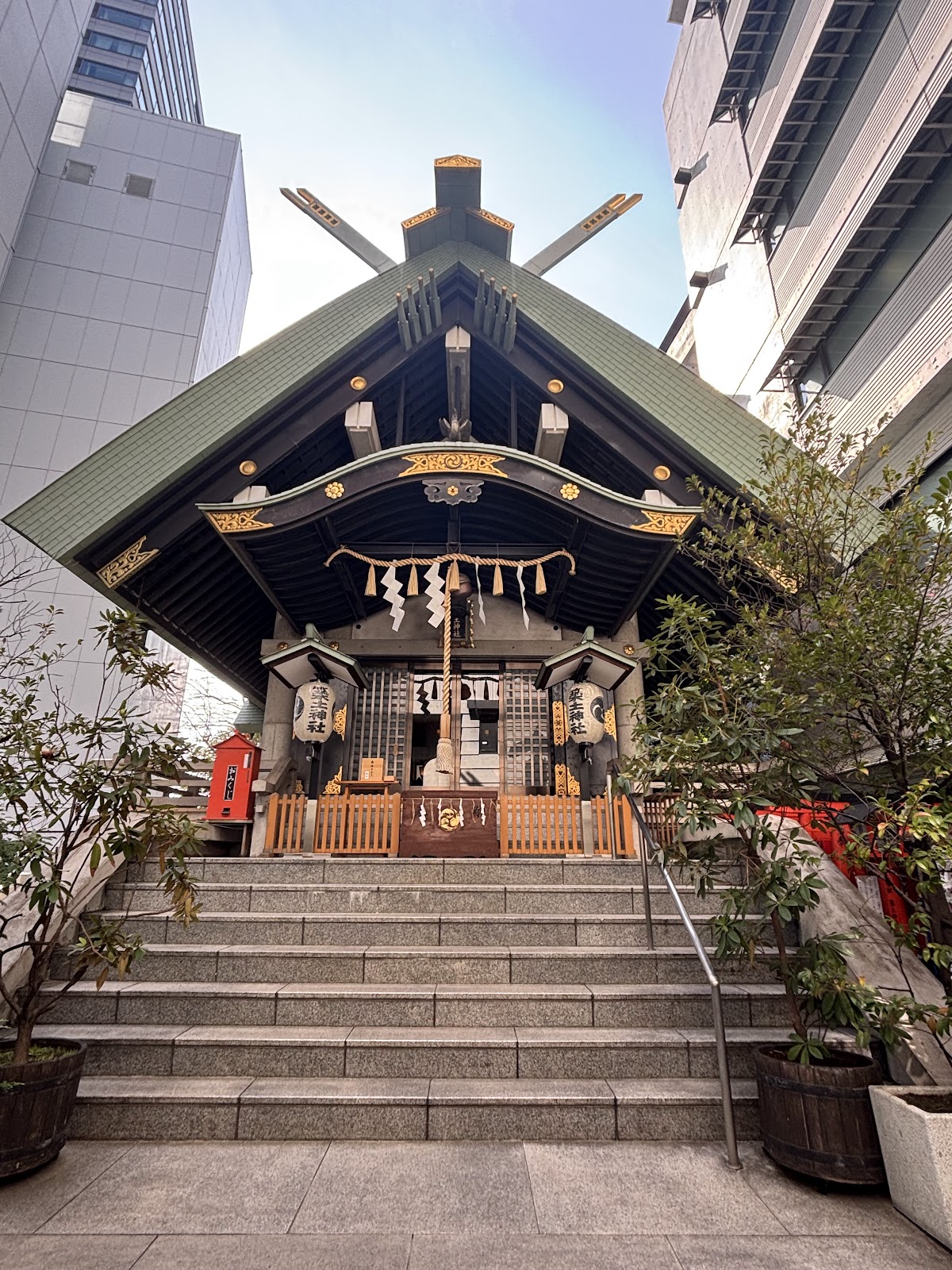
Despite being in the heart of the city, the shrine grounds maintain a tranquil atmosphere, displaying a dignified presence even amidst the surrounding buildings.
History and Origins of Tsukudo Shrine
Origin of Founding and Taira no Masakado
The history of Tsukudo Shrine dates back to the 3rd year of Tenkei (940 AD). It is said that after Taira no Masakado was defeated by Fujiwara no Hidesato and others, his head was displayed in Kyoto, then secretly taken away in a head container, and enshrined in Tsukudo, Kamihirakawa Village, Toshima District, Musashi Province (present-day Otemachi area). This is the origin of the name “Tsukudo Myojin.”
Taira no Masakado was a military commander of the mid-Heian period, known for aiming for the independence of the Kanto region. Although he was labeled a “traitor” for rebelling against the imperial court, he has been revered in Kanto as a hero who protected the people. Tsukudo Shrine was founded to appease the spirit of Masakado and to commemorate his bravery.
Construction of the Shrine by Ota Dokan
In 1478 (Bunmei 10), Ota Dokan, who built Edo Castle, deeply revered Tsukudo Shrine and constructed a shrine building on Tayasudai (near present-day Kitanomaru Park), which is in the northwest direction of Edo Castle. During this period, Tsukudo Shrine held an important position as the guardian shrine of Edo Castle and the patron deity of the Ota family.
A History of Numerous Relocations
Tsukudo Shrine has experienced numerous relocations (changes in location) throughout its long history.
- Tenkei 3 (940): Founded in Tsukudo, Kamihirakawa Village, Toshima District, Musashi Province (present-day Otemachi area)
- Bunmei 10 (1478): Relocated to Tayasudai (present-day Kitanomaru Park area) by Ota Dokan
- Meiji 7 (1874): Relocated to Iidabashi (within the grounds of Tsukudo Hachiman Shrine) due to Meiji government policies
- Showa 20 (1945): Shrine building destroyed by fire during the war
- Showa 29 (1954): Relocated to the current location (Kudan Kita 1-14-21), shrine building rebuilt
In this way, Tsukudo Shrine has continued to uphold its faith in Taira no Masakado, even as its location has changed with the times.
Alternative Names for Edo Myojin and Tayasu Myojin
Due to its location and historical background, Tsukudo Shrine has been known by several alternative names, including “Tsukudo Daimyojin,” “Edo Myojin,” and “Tayasu Myojin.” In particular, during its time located on Tayasudai, it was widely known as “Tayasu Myojin,” indicating its deep connection to Edo Castle.
Deities and Blessings
Amatsuhiko Hononinigi no Mikoto
Amatsuhiko Hononinigi no Mikoto is the grandson of Amaterasu Omikami and a deity known from the myth of the descent of the heavenly grandchild. As a god sent from Takamagahara to govern Japan, he is believed to bestow blessings such as national peace and security, abundant harvests, and prosperity of descendants.
The Spirit of Taira no Masakado
Taira no Masakado is known as a warrior of exceptional bravery, and his spirit is worshipped as a god of long-lasting military fortune, success in competitions, and protection from evil. He is particularly revered by athletes, martial artists, and those seeking success in business.
Main Benefits
- Long-lasting Military Fortune and Good Luck in Competitions: Drawing on the martial prowess of Taira no Masakado, success in all kinds of competitions.
- Protection from Evil and Disaster: Exorcism through the powerful spiritual energy of Masakado.
- Business Prosperity: Success in business and business development.
- National Peace and Abundant Harvest: Peace and tranquility of the land through Amatsuhikoho Ninigi no Mikoto.
- Fulfillment of Wishes: Fulfillment of wishes made with strong will.
Highlights of the Shrine Grounds
Shrine Building
The current shrine building was rebuilt in 1954 (Showa 29). While constructed of reinforced concrete, it retains the traditional style of shrine architecture. Despite being surrounded by the skyscrapers of the city center, the grounds maintain a tranquil atmosphere, providing a peaceful space for visitors.
The shrine building is relatively compact, but it is meticulously maintained and has a clean appearance. Guardian lion-dogs (komainu) are positioned in front of the main hall, welcoming visitors.
Victory Charm (Kachimamori)
The “Victory Charm (Kachimamori)” is particularly popular at Tsukudo Shrine. Inspired by the martial prowess of Taira no Masakado, this charm is believed to bring success in competitions and is popular with a wide range of people, including athletes, students taking exams, and business professionals.
As it is also the tutelary shrine of the Nippon Budokan, many martial arts practitioners and performers at events held at the Budokan visit the shrine and receive the Victory Charm.
Stone Monuments and Information Boards Related to Taira no Masakado
Within the shrine grounds, there are information boards and stone monuments related to Taira no Masakado, allowing visitors to learn about the shrine’s history and Masakado’s achievements. Historical sites related to Masakado are scattered throughout Tokyo, and Tsukudo Shrine is considered one of the important ones.
Water Basin for Purification
A water basin for purification before worship is also provided. Although small, the shrine is kept very clean, and visitors can purify their minds and bodies according to the proper etiquette before offering their prayers.
Goshuin (Shrine Seal) Information
About the Issuance of Goshuin
Tsukudo Shrine offers goshuin to visitors. They are available at the shrine office, and the offering fee is usually around 300 to 500 yen.
The goshuin features the calligraphy and red seal of “Tsukudo Shrine,” creating a simple yet powerful impression. It is a valuable goshuin that allows you to feel the history of the shrine as a place dedicated to Taira no Masakado.
About Goshuincho (Shrine Seal Book)
Tsukudo Shrine also offers its own original goshuincho. The design may change depending on the season, so please check with the shrine office for details when you visit.
Issuance Hours
The shrine office is generally open from 9:00 to 17:00, but this may change due to festivals and events. If you want to be sure to receive a goshuin, it is recommended to check by phone in advance.
Annual Events and Grand Festival
Grand Festival
The Grand Festival of Tsukudo Shrine is held every September. Traditional festival events, such as a portable shrine procession and Kagura (sacred dance) performances, take place, attracting local residents and worshippers.
New Year’s Visit
During the first three days of the New Year, the shrine is bustling with visitors praying for safety and prosperity in the coming year. Due to its convenient location in the city center, it attracts many worshippers.
Other Annual Events
- Saitansai (January 1st): A festival celebrating the New Year
- Setsubunsai (around February 3rd): A ritual to ward off evil spirits, including bean-throwing
- Natsukoshi no Oharae (June 30th): A Shinto ritual to purify oneself of the impurities accumulated over the past six months
- Toshikoshi no Oharae (December 31st): A Shinto ritual to purify oneself of the impurities accumulated over the past year and welcome the New Year
For detailed dates and information, please check the official website of Tsukudo Shrine or contact them by phone.
Access and Transportation Information
Access by Train
Tsukudo Shrine is located in the city center and is easily accessible by public transportation.
Nearest Stations:
- Kudanshita Station (Tokyo Metro Tozai Line/Hanzomon Line, Toei Shinjuku Line): Approximately 2 minutes on foot from Exit 1 (closest)
- Iidabashi Station (JR Chuo/Sobu Line): Approximately 10 minutes on foot from the West Exit
- Iidabashi Station (Tokyo Metro Yurakucho Line/Namboku Line, Toei Oedo Line): Approximately 8 minutes on foot from Exit B2a
Access from Kudanshita Station is the most convenient. Exit from Exit 1 and walk west along Yasukuni-dori Street for a short distance; you will see the shrine’s torii gate on your right.
Walking Route (from Kudanshita Station)
- Exit from Exit 1 of Kudanshita Station
- Walk west along Yasukuni-dori Street (towards Ichigaya)
- After approximately 150m, you will see the torii gate of Tsukudo Shrine on your right.
- Arrival
Access by Car/Parking
Tsukudo Shrine does not have its own parking lot. If you are visiting by car, please use the nearby coin-operated parking lots. However, since it is in the city center, parking fees may be expensive, so we recommend using public transportation.
Nearby Tourist Attractions and Shrines/Temples
Yasukuni Shrine
Located about a 5-minute walk from Tsukudo Shrine, Yasukuni Shrine is known as a shrine that enshrines those who died in wars since the Meiji Restoration. The vast grounds also include the Yushukan Museum, making it a must-see spot for those interested in history.
Nippon Budokan
Located in the parish area of Tsukudo Shrine, the Nippon Budokan is famous as a sacred place for martial arts and as a concert venue. Tsukudo Shrine is also the guardian shrine of the Budokan, and many people visit before martial arts tournaments and events.
Kitanomaru Park
Kitanomaru Park, which includes the Nippon Budokan, is a metropolitan park located north of the Imperial Palace. It has lush green walking paths and is a popular oasis in the heart of the city. The Tayasudai area, where Tsukudo Shrine was once located, is also within this area.
Tsukudo Hachiman Shrine
Tsukudo Hachiman Shrine, located towards Iidabashi, is a shrine where Tsukudo Shrine was temporarily enshrined. Although they now exist as separate shrines, they share a historical connection.
Kagurazaka
A short walk from Iidabashi Station leads to Kagurazaka, a charming street lined with cobblestones. Stylish cafes and long-established restaurants line the street, making it a pleasant place for a stroll.
Historical Sites Associated with Taira no Masakado
Several historical sites associated with Taira no Masakado exist within Tokyo. A historical walk starting from Tsukudo Shrine and visiting places associated with Masakado is highly recommended.
Masakado Mound (Otemachi)
Masakado Mound, located in Otemachi, Chiyoda Ward, is the legendary site where Taira no Masakado’s head is said to have flown and fallen. Despite being in a business district, it is still carefully preserved. This location is also close to the founding site of Tsukudo Shrine.
Kanda Myojin (Kanda Shrine)
Kanda Myojin also enshrines Taira no Masakado as one of its deities. It is widely revered as the guardian shrine of Edo (present-day Tokyo) and is known for its blessings of business prosperity and matchmaking.
Torigoe Shrine
Torigoe Shrine, located in Torigoe, Taito Ward, is also said to have a connection to Masakado. Visiting these shrines allows you to experience the spread and depth of history of the Masakado faith.
Manners and Etiquette for Visiting a Shrine
Basic Etiquette for Visiting a Shrine
- Bow before passing through the torii gate: Bow respectfully before entering the sacred area.
- Purify yourself at the water basin: Purify your left hand, right hand, and mouth in that order, and finally purify the handle of the ladle.
- Avoid walking in the center of the path: The center is considered the path of the gods.
- Etiquette in front of the main hall:
- Quietly place your offering in the offering box.
- Ring the bell if there is one.
- Two bows, two claps, one bow (bow deeply twice, clap twice, bow deeply once).
- Bow when leaving: Turn around and bow before leaving the torii gate.
Regarding Photography
Photography is generally permitted within the shrine grounds, but please refrain from taking pictures inside the shrine buildings or during festivals. Also, please be considerate of other visitors.
The Charm and Characteristics of Tsukudo Shrine
A Quiet Environment in the Heart of the City
Despite being located in Kudanshita, a prime location in the heart of Tokyo, the shrine grounds maintain a tranquil atmosphere. It’s a precious space where you can escape the hustle and bustle of the business district and pray in peace.
A Center for the Worship of Taira no Masakado
While there are several historical sites in Tokyo associated with Taira no Masakado, Tsukudo Shrine is particularly important as its founding directly derives from the enshrinement of his spirit. It is a valuable presence that conveys the faith in Masakado to this day.
Deep Connection to the Budokan
As the guardian shrine of the Nippon Budokan, it is revered by martial arts practitioners and those involved in events held at the Budokan. It holds special significance for those praying for good fortune in competitions and long-lasting military success.
Excellent Accessibility
Its location, just a 2-minute walk from Kudanshita Station, is a major attraction for visitors. It’s easy to stop by between sightseeing or business, and its location makes it easy to incorporate into a tour of shrines in central Tokyo. ## Summary: A Recommendation to Visit Tsukudo Shrine
Tsukudo Shrine is a venerable shrine with a history of over 1000 years, dedicated to Taira no Masakado. Despite numerous relocations, its history of maintaining faith in Masakado tells the story of Tokyo’s transformations.
It’s a shrine worth visiting for various reasons, including those seeking blessings for military success and good fortune in competitions, those interested in the history of Taira no Masakado, and those seeking tranquility in a quiet city shrine. Its convenient location, just a 2-minute walk from Kudanshita Station, makes it easy to combine a visit with sightseeing in the surrounding area, such as Yasukuni Shrine, Kitanomaru Park, and Kagurazaka.
For those collecting Goshuin (shrine stamps), it’s a must-add to your list of places to visit, as it offers a valuable Goshuin related to Taira no Masakado.
Tsukudo Shrine offers a peaceful place to pray while feeling the history and culture of Tokyo. Why not pay a visit sometime?