Suiten-gu Shrine (Chuo Ward, Tokyo) Complete Guide | A Thorough Explanation of its History, Access, and Benefits for Safe Childbirth
Located in Kakigaracho, Nihonbashi, Chuo Ward, Tokyo, Suiten-gu Shrine has been revered since the Edo period as a deity of safe childbirth and fertility. Founded in 1818 (Bunsei 1) as a branch shrine of Kurume Suiten-gu Shrine in Kurume City, Fukuoka Prefecture, it has been cherished by the people of Tokyo for over 200 years.
This article comprehensively covers everything you need to know before visiting Suiten-gu Shrine, including its history, enshrined deities, benefits, highlights within the grounds, how to worship, and access information.
Table of Contents
- Overview of Suiten-gu Shrine
- Deities and Divine Virtues
- History of Suiten-gu Shrine
- Highlights of the Shrine Grounds
- Shrines Outside the Grounds
- Annual Festivals
- Prayers and Worship Methods
- Access and Opening Hours
- Nihonbashi Seven Lucky Gods Pilgrimage
- Frequently Asked Questions
Overview of Suiten-gu Shrine
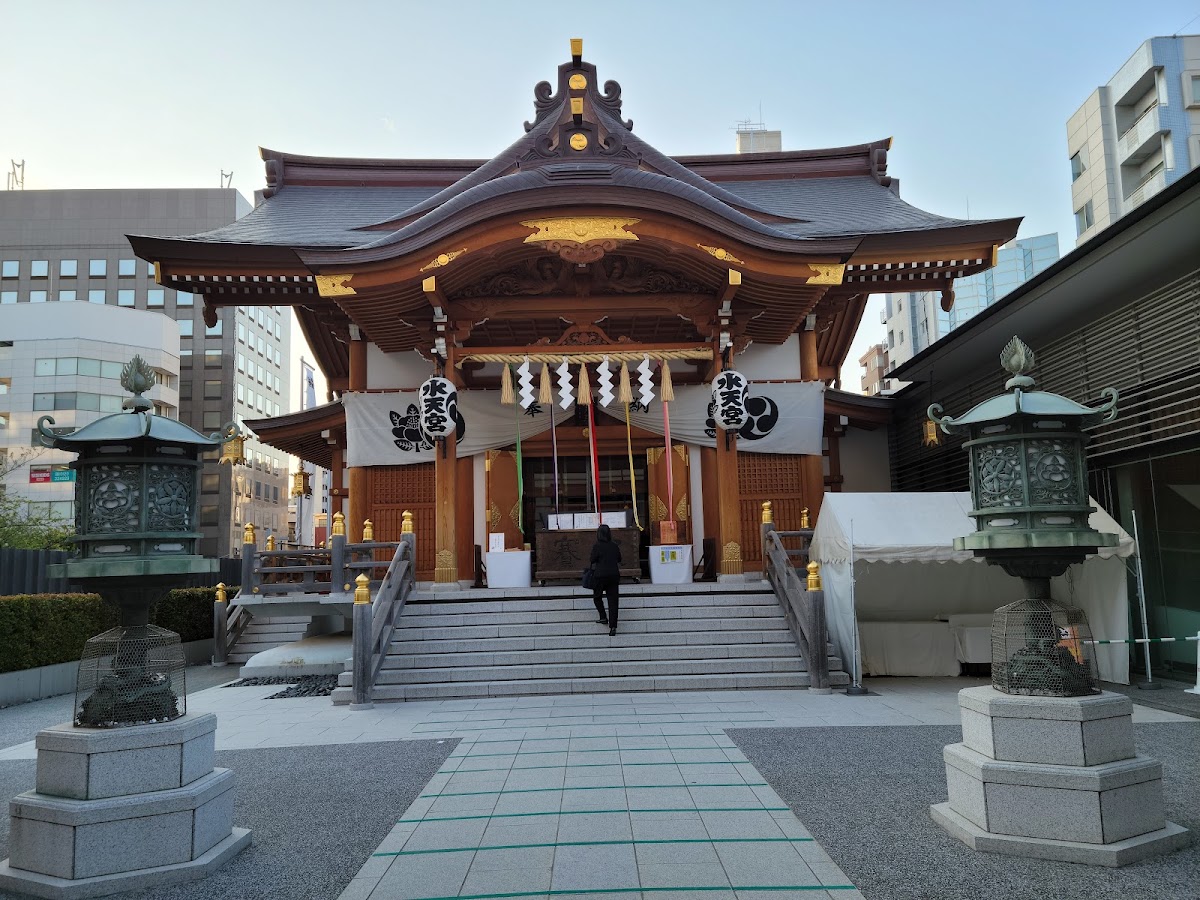
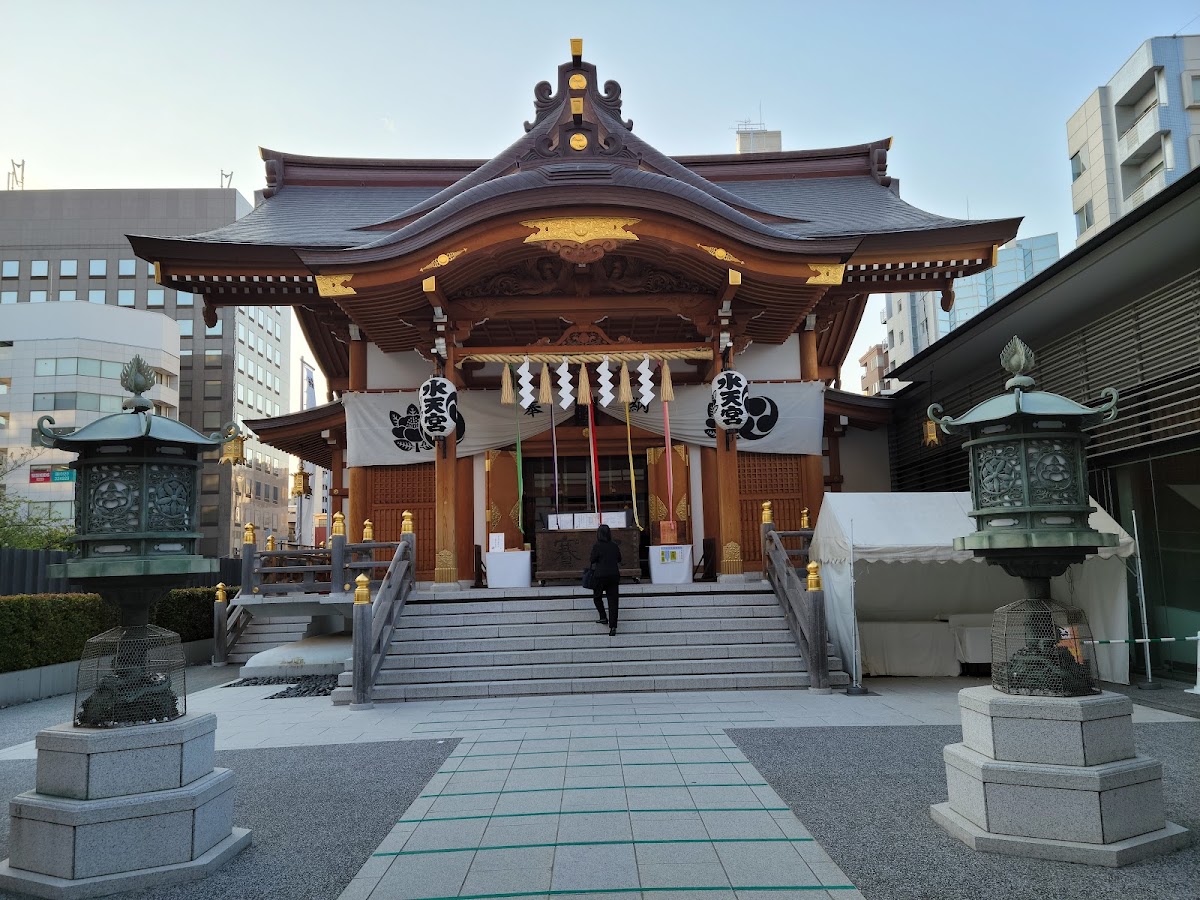
Suiten-gu Shrine is a shrine in the heart of Tokyo, directly connected to Suitengumae Station on the Tokyo Metro Hanzomon Line. Despite its central location, it boasts a lush, tranquil atmosphere and is a popular spot for worship. The shrine buildings were newly rebuilt in 2016, resulting in a modern and clean shrine grounds.
Basic Information
- Location: 2-4-1 Nihonbashi Kakigaracho, Chuo-ku, Tokyo
- Religious Corporation: Suiten-gu Shrine
- Former Shrine Rank: Unranked Shrine (Shrine within the Arima family’s residence)
- Founded: Bunsei 1 (1818)
- Headquarters: Kurume Suiten-gu Shrine (Kurume City, Fukuoka Prefecture)
Suiten-gu Shrine originated as a branch shrine of Kurume Suiten-gu Shrine, enshrined within the residence of the Arima family, the lords of the Kurume domain, during the Edo period. Initially, as it was a shrine within the domain’s residence, it was not open to the public. However, as faith among the people of Edo grew, it eventually became open to the public only on the “5th of each month.”
Deities and Divine Virtues
Main Deities
The following four deities are enshrined at Suiten-gu Shrine.
- Amenominakanushi-no-kami: The primordial deity of the universe, one of the three creation gods
- Emperor Antoku: The 81st Emperor of Japan, at the end of the Heian period
- Kenreimon-in: Mother of Emperor Antoku, daughter of Taira no Kiyomori
- Nii-no-Ama (Taira no Tokiko): Grandmother of Emperor Antoku, wife of Taira no Kiyomori
Divine Virtues, Blessings, and Faith
The main blessings of Suiten-gu Shrine are as follows:
Prayers for Safe Childbirth and Conception
Suiten-gu Shrine is best known for its worship as a deity of safe childbirth and conception. Since Kenreimon-in safely gave birth to Emperor Antoku, the shrine has been revered as a deity of safe childbirth. Many pregnant women and their families visit the shrine, especially on the “Day of the Dog” in the fifth month of pregnancy.
Protection from Water-Related Disasters
As the name “Suitengu” suggests, this shrine is dedicated to the god of water and offers protection from water-related disasters. It enjoys strong devotion from those involved in shipping and fishing, and many visitors come to pray for safe voyages.
Prosperity in Water-Related Businesses
Many visitors pray for prosperity in all water-related businesses, especially those in the food and beverage industry. Located in Nihonbashi, a commercial center, many business owners pray for business success.
Children’s Growth and Health
In addition to prayers for safe childbirth, many families visit for events celebrating children’s growth, such as shrine visits for newborns and Shichi-Go-San (a traditional Japanese rite of passage for children). The shrine grounds are equipped with nursing rooms and diaper changing stations, creating a safe and comfortable environment for visitors with young children.
History of Suitengu
From its Founding to the Edo Period
The history of Suitengu in Tokyo began in 1818 (Bunsei 1). The origin of Suiten-gu Shrine dates back to when Arima Yorinori, the 9th lord of the Kurume Domain at the time, invited a divided spirit from the Suiten-gu Shrine (the main shrine) in Kurume, his territory, to Mita Akabane (present-day Mita, Minato-ku), where the domain’s Edo residence was located.
Initially, it was enshrined as a private shrine within the Arima family’s residence, and ordinary people were not allowed to visit. However, faith in Suiten-gu Shrine grew among the common people of Edo, and it is said that people constantly threw offerings over the wall.
In response to the fervent faith of these people, the Arima family began opening their residence to the public on the 5th of each month, allowing general worship. This is the origin of the phrase “Arima’s Suiten-gu Shrine of Compassion.”
Relocation during the Meiji Era
In 1868 (Meiji 1), when the Arima family’s residence moved to Aoyama (present-day Minami Aoyama, Minato-ku), Suiten-gu Shrine was also relocated. Subsequently, in 1872 (Meiji 5), the shrine was relocated to its current location in Kakigaracho, Nihonbashi, Chuo-ku, where it remains today.
This relocation to Nihonbashi made Suiten-gu Shrine completely open to the public, allowing anyone to freely worship. Its location in Nihonbashi, the commercial center of Edo/Tokyo, attracted even more worshippers.
Changes during the Taisho and Showa Eras
The shrine building was destroyed in the Great Kanto Earthquake of 1923 (Taisho 12), but was rebuilt in 1925 (Taisho 14). It was again destroyed in the Tokyo air raids of 1945 (Showa 20), and a reinforced concrete shrine building was constructed in 1967 (Showa 42) after the war.
Major Renovations during the Heisei Era
From 2013 (Heisei 25) to 2016 (Heisei 28), reconstruction work on the shrine building was carried out. During the construction period, worshippers visited a temporary shrine, but the new shrine building was completed on April 8, 2016, and now stands in its current form.
The new shrine building is a modern two-story above ground and one-story underground structure with seismic isolation technology. It features barrier-free design with elevators, ramps, and a nursing room. A green space has also been created on the rooftop, serving as an oasis in the heart of the city.
Highlights of the Shrine Grounds
Shrine Building
Completed in 2016, the new shrine building maintains the style of traditional shrine architecture while incorporating modern technology. The cypress wood main hall exudes dignity, instilling a sense of solemnity in worshippers.
The spacious worship area in front of the shrine is designed to allow for comfortable worship even on the busy “Day of the Dog” (Inu no Hi).
Fertility Dog (Dog for Conception)
One of the most popular spots on the shrine grounds is the statue of the “Fertility Dog.” Twelve zodiac puppies are arranged around a mother dog, and it is believed that stroking the puppy corresponding to one’s own zodiac sign brings blessings for safe childbirth, fertility, and good health.
Many visitors can be seen taking commemorative photos in front of this fertility dog, making it a symbolic presence at Suiten-gu Shrine.
Statue of the Kappa for Safe Childbirth and Child-Rearing
There is also a statue of the “Kappa for Safe Childbirth and Child-Rearing” on the shrine grounds. This statue, depicting a kappa parent and child, is also believed to bring blessings for safe childbirth and child-rearing, and many visitors come to see it.
Hōshō Benzaiten (Hōshō Benzaiten)
Hōshō Benzaiten, one of the shrines within the grounds, is believed to bring blessings for improvement in performing arts and increased wealth. Benzaiten is also one of the Seven Lucky Gods, and this shrine is one of the pilgrimage sites for the Nihonbashi Seven Lucky Gods.
Shrines within and outside the grounds
In addition to the main shrine dedicated to the principal deity, there are several smaller shrines within the grounds of Suiten-gu Shrine.
Hōshō Benzaiten
As mentioned above, she is worshipped as the goddess of performing arts and wealth. The Hatsu-Benten Festival is held every January.
Akiba Shrine and Takao Shrine
Akiba Shrine, the god of fire prevention, and Takao Shrine, the god of matchmaking, are also enshrined within the grounds.
Annual Festivals
Various festivals are held at Suiten-gū throughout the year.
Main Annual Festivals
- January 1st-7th: First Shrine Visit of the Year / New Year’s Day Festival
- January 5th: First Benten Festival
- February (Setsubun Festival): Setsubun Festival
- March (Spring Equinox): Spring Grand Festival
- May 5th: Tango Festival
- July: Tanabata Festival
- September (Autumn Equinox): Autumn Grand Festival
- November 15th: Shichi-Go-San Festival
- December 31st: Great Purification Ceremony / New Year’s Eve Festival
Visiting on the Day of the Dog
The busiest day at Suitengu Shrine is the “Day of the Dog.” Because dogs are known for their fertility and easy births, it’s customary to wear a maternity belt and pray for a safe delivery on the Day of the Dog in the fifth month of pregnancy.
On the Day of the Dog (Inu no Hi), many pregnant women and their families visit early in the morning to receive prayers for a safe delivery. Especially on Saturdays and Sundays, the Day of the Dog is extremely crowded, so it is recommended to choose a weekday Day of the Dog or a lucky day (Taian).
Festival Days on the 5th
As a tradition dating back to the Edo period, the 5th, 15th, and 25th of each month are considered special days known as “Days of the 5th.” This is a remnant of the time when the shrine was only open to the public on the 5th, and even today, many worshippers visit on these days.
Prayers and Worship Methods
Types of Prayers
At Suitengu Shrine, you can receive the following types of prayers:
- Prayer for safe childbirth
- Prayer for conception
- First shrine visit (Omiyamairi)
- Shichi-Go-San (7-5-3) ceremony
- Protection from evil
- Family safety
- Business prosperity
- Safe voyages
- Other various prayers
Prayer reception hours
Normally, prayers are accepted from 8:00 AM to 3:30 PM (the final reception time may change, so we recommend checking the official website).
Offering fee
The offering fee for prayers varies depending on the prayer content, but generally starts from 8,000 yen. Please contact the shrine directly for details.
Reservations
Reservations are not required for regular visits, but on days when crowds are expected, such as for prayers for safe childbirth on the Day of the Dog, there may be long waiting times. We recommend checking the crowd situation on the official website before visiting.
Proper Worship Etiquette
- Bow before passing through the torii gate
- Cleanse your hands and mouth at the water basin
- Place your offering in front of the main hall
- Bow twice, clap twice, and bow once
- Visit the sights within the grounds, such as the fertility dog statue
- Bow again at the torii gate when leaving
Access and Opening Hours
Location
Address: 2-4-1 Nihonbashi Kakigaracho, Chuo-ku, Tokyo 103-0014
Access by Train
Nearest Station:
- Tokyo Metro Hanzomon Line “Suitengumae Station”: Directly connected to Exit 5 (1 minute walk)
- Tokyo Metro Hibiya Line “Ningyocho Station”: 7 minute walk from Exit A1
- Toei Subway Asakusa Line “Ningyocho Station”: 7 minute walk from Exit A3
- Tokyo Metro Tozai Line “Kayabacho Station”: 10-minute walk from Exit 4a
A major advantage is that it’s directly connected to Suitengumae Station, allowing access without getting wet even on rainy days.
Access by Bus
Several bus routes, including Toei Bus and Tokyo Metro Bus, stop at the “Suitengumae” bus stop.
Access by Car
Approximately 5 minutes from the Shuto Expressway Inner Circular Route “Hakozaki IC”
Parking: There is a parking lot for visitors on the temple grounds (spaces are limited, so using public transportation is recommended).
Opening Hours
- Normal: 7:00 AM – 6:00 PM
- Prayer Reception: 8:00 AM – 3:30 PM (last reception)
*Hours may change depending on the season. Please check the official website for the latest information.
Nihonbashi Seven Lucky Gods Pilgrimage
Suitengu Shrine is one of the pilgrimage sites for the “Nihonbashi Seven Lucky Gods Pilgrimage.” The Hōshō Benzaiten shrine within the temple grounds is counted as one of the Seven Lucky Gods, Benzaiten.
What is the Nihonbashi Seven Lucky Gods Pilgrimage?
The Nihonbashi Seven Lucky Gods Pilgrimage is a pilgrimage for good fortune that visits eight shrines scattered throughout the Nihonbashi area of Chuo Ward. It attracts a particularly large number of visitors during the New Year period (January 1st to 7th).
Pilgrimage Sites for the Seven Lucky Gods
- Suiten-gu Shrine: Benzaiten (Hōshō Benzaiten)
- Chanoki Shrine: Hotei
- Sugimori Shrine: Ebisu
- Kasama Inari Shrine: Jurojin
- Suehiro Shrine: Bishamonten
- Matsushima Shrine: Daikokuten
- Koami Shrine: Fukurokuju and Benzaiten
- Takarada Ebisu Shrine: Ebisu
The entire pilgrimage takes about two hours, allowing you to enjoy the historic streets of Nihonbashi.
Nearby Attractions
Ningyocho Shopping Street
Ningyocho Shopping Street, within walking distance of Suiten-gu Shrine, is a charming shopping street lined with long-established restaurants and Japanese confectionery shops. It’s recommended to visit after your pilgrimage. ### Amazake Yokocho
Located near Ningyocho Station, Amazake Yokocho is a street that retains the atmosphere of the Edo period, lined with long-established restaurants and souvenir shops.
Hamacho Park
A spacious park along the Sumida River, perfect for strolls and picnics.
Suitengu Shrine’s Offerings
Amulets
Suitengu Shrine offers a variety of amulets.
- Safe Childbirth Amulet: A classic amulet for praying for a safe delivery.
- Fertility Amulet: For those wishing for children.
- Children’s Amulet: For praying for the healthy growth of children.
- Traffic Safety Amulet: For praying for traffic safety.
- Maritime Safety Amulet: Popular among those involved in shipping.
Goshuin (Shrine Seals)
Suitengu Shrine offers beautiful goshuin (shrine seals). In addition to regular goshuin, there are also periods when limited edition goshuin are available.
Maternity Belt (Iwata Belt)
During prayers for a safe delivery, you will be given a blessed maternity belt (Iwata Belt). The custom of wearing a maternity belt on the Day of the Dog in the fifth month of pregnancy is a tradition that has continued since the Edo period.
Points to Note When Visiting
How to Avoid Crowds
- The Day of the Dog, especially if it falls on a weekend or public holiday, is extremely crowded.
- Weekday mornings are relatively less crowded.
- The 5th, 15th, and 25th of each month also tend to be crowded.
- The New Year’s visit period (January 1st to 7th) is extremely crowded.
Clothing
When receiving prayers, it is preferable to wear clothing that is not too casual. Especially for prayers for a safe delivery, prioritizing the pregnant woman’s comfort is important, so comfortable clothing is acceptable, but please avoid extremely casual attire such as sandals and T-shirts.
Photography
Photography is generally permitted on the temple grounds, but consideration should be given to avoiding disturbing other visitors. Photography inside the shrine and during prayers is prohibited.
Barrier-Free Accessibility
The new shrine building is designed with barrier-free access in mind, including elevators, ramps, multi-purpose restrooms, and a nursing room. Visitors in wheelchairs and with strollers can also visit.
Summary
Since its founding in 1818 (Bunsei 1), Suiten-gu Shrine has attracted the faith of many people as a deity of safe childbirth and fertility for over 200 years. Starting as a shrine within the Arima clan’s residence during the Edo period, it was relocated to its current location in Nihonbashi Kakigaracho during the Meiji era. After a major renovation in the Heisei era, it is now a beautiful shrine where tradition and modernity harmonize.
With its excellent accessibility (directly connected to Suitengumae Station on the Tokyo Metro Hanzomon Line), barrier-free facilities, and deep faith dating back to the Edo period, Suiten-gu Shrine is a power spot in the heart of Tokyo that you’ll want to visit not only for those considering prayers for safe childbirth or a baby’s first shrine visit, but also when strolling through Nihonbashi.
As a shrine to visit at important life milestones such as prayers for safe childbirth on the Day of the Dog, shrine visits for newborns, Shichi-Go-San (a traditional rite of passage for children), and New Year’s visits, it will continue to be cherished by many people.
Frequently Asked Questions (FAQ)
Q1: When is the best time to visit Suiten-gu Shrine for prayers for safe childbirth?
A1: Generally, it is customary to visit on the “Day of the Dog” in the fifth month of pregnancy. The Day of the Dog is chosen because dogs are known for their prolific and easy births. However, if you are not feeling well, please do not force yourself; visiting on a different day is perfectly acceptable. Prayers for safe childbirth are accepted on days other than the Day of the Dog.
Q2: Is a reservation necessary?
A2: Reservations are not required for regular prayers; you can apply at the reception desk on the day of your visit. However, it can get crowded on the Day of the Dog and on weekends and holidays, so there may be long waiting times. We recommend checking the official website for congestion information before visiting.
Q3: How do I get to Suiten-gu Shrine? A3: It is directly connected to Exit 5 of Suitengumae Station on the Tokyo Metro Hanzomon Line and is accessible in 1 minute on foot. It is also about a 7-minute walk from Ningyocho Station on the Tokyo Metro Hibiya Line and Toei Asakusa Line. Because it is directly connected to the station, it is convenient to visit without getting wet even on rainy days.
Q4: Is there parking?
A4: There is a parking lot for visitors, but the number of spaces is limited. It gets especially crowded on the Day of the Dog and on holidays, so we recommend using public transportation. There are also coin-operated parking lots nearby.
Q5: When is the best time to visit for a baby’s first shrine visit?
A5: Generally, it is said that boys should have their first shrine visit on the 31st day after birth, and girls on the 32nd day, but this varies depending on the region and family. Many people prioritize the health of the baby and mother and choose a convenient day between 1 and 3 months after birth.
Q6: What are the opening hours of Suitengu Shrine?
A6: The shrine is usually open from 7:00 AM to 6:00 PM. Prayer requests are accepted from 8:00 AM to 3:30 PM (last request). However, these hours may change depending on the season, so we recommend checking the official website for the latest information before visiting.
Q7: Can I get a Goshuin (shrine stamp)?
A7: Yes, you can get a Goshuin at Suiten-gu Shrine. You can leave your Goshuincho (stamp book) at the shrine office and request one. There may be a waiting time during busy periods. Special limited-edition Goshuin are also sometimes available.
Q8: What is the Kodama Inu (baby dog)?
A8: It’s a statue of a mother dog and twelve puppies representing the Chinese zodiac, located within the shrine grounds. It is believed that stroking the puppy representing your zodiac sign brings blessings for safe childbirth, fertility, and good health. It’s a popular spot at Suiten-gu Shrine, and many visitors take commemorative photos there.
Q9: Can I visit for Shichi-Go-San (a traditional Japanese rite of passage for children)?
A9: Yes, Suitengu Shrine accepts Shichi-Go-San prayers. It’s busiest around November 15th, but Shichi-Go-San prayers are possible from October to December. We recommend contacting them in advance.
Q10: What is the Nihonbashi Seven Lucky Gods Pilgrimage?
A10: It’s a pilgrimage to eight shrines in the Nihonbashi area for good fortune. Suitengu Shrine is counted as one of the Seven Lucky Gods as Hōshō Benzaiten. While it’s generally done during the New Year period (January 1st to 7th), it can be done throughout the year. The entire route takes about two hours on foot.