Complete Guide to Teppozu Inari Shrine: The History and Blessings of the Kyobashi Guardian Deity Since the Heian Period
Teppozu Inari Shrine, located in Minato 1-chome, Chuo-ku, Tokyo, is an ancient shrine boasting a history of over 1180 years, founded in 841 during the early Heian period. It is deeply revered by local residents as the guardian deity of the Kyobashi area and is also known for its annual winter swimming festival in January and its miniature Mount Fuji within the shrine grounds. This article comprehensively introduces information useful for visiting Teppozu Inari Shrine, including its history, blessings, highlights within the grounds, annual events such as the grand festival, and access methods.
History of Teppozu Inari Shrine: From the Heian Period to the Present
Founding in the 8th Year of the Jōwa Era and the “Gensei Ōkami” Worship
The founding of Teppozu Inari Shrine dates back to April 15th, the 8th year of the Jōwa Era (841 AD), during the reign of Emperor Ninmyō. At that time, the residents of this region suffered from years of continuous cold weather and poor harvests. The residents of Sakurada Village (present-day Chūō Ward area) on the Edo Bay coast worshipped Ukanomitama-no-kami, the deity of abundant harvests, and prayed for a bountiful year, which is considered the origin of the shrine.
In the 23rd year of the Tenbun Era (1554 AD) during the Muromachi period, under the rule of Ashikaga Yoshiteru, the land in the Kyōbashi area was reclaimed. At this time, Teppozu Inari Shrine came to be revered as “Gensei Ōkami” (Inari Great Deity), the tutelary deity of the newly formed land. A local guardian deity is a god who protects people born in a particular area throughout their lives and serves as a spiritual pillar for the local community.
Prosperity as “Minato Inari” in the Edo Period
During the Edo period, Teppozu Inari Shrine was located on the riverbank near Inari Bridge. This location faced a port where ships from various provinces came and went, making it a thriving area for maritime trade. Therefore, it was affectionately known as “Minato Inari” (Port Inari) and was deeply revered by sailors and merchants as a guardian deity for maritime safety and business prosperity.
Utagawa Hiroshige’s ukiyo-e print “One Hundred Famous Views of Edo” depicts the shrine as “Teppozu Inari Bridge Minato Shrine,” conveying the bustling atmosphere of the Edo period. Furthermore, the “Edo Meisho Zue” (Illustrated Guide to Famous Places of Edo) also records the shrine in detail, suggesting it was a popular spot that attracted the faith of the common people of Edo.
Changes Through the Meiji, Showa, and Heisei Eras
Even after the Meiji era, Teppozu Inari Shrine continued to exist as the guardian deity of the region. In 1937 (Showa 12), the shrine building was renovated, forming the foundation of the current structure. However, the shrine building was destroyed in the Tokyo air raids of 1945 (Showa 20). During the post-war reconstruction period, it was rebuilt through the enthusiasm of local residents, and the shrine building was restored in 1952 (Showa 27).
Even in the Heisei era, maintenance and repairs to the shrine grounds have been continuously carried out. In 1993 (Heisei 5), a large-scale renovation of the main hall and worship hall was carried out, and in 2011 (Heisei 23), the shrine office was renovated. Even now, in the Reiwa era, as an ancient shrine boasting a history of over 1180 years since its founding, it continues to attract unwavering reverence from local residents and worshippers.
Deities and Benefits
Main Deity: Ukanomitama-no-kami
The main deity of Teppozu Inari Shrine is Ukanomitama-no-kami. This deity is worshipped nationwide as an Inari god and is associated with abundant harvests, business prosperity, and industrial development. “Uka” means grain and food, and this deity has been revered since ancient times as the god who governs the fundamental power that nurtures life.
Enshrined Deities and Diverse Benefits
In addition to the main deity, the following deities are enshrined:
- Amaterasu Omikami: The sun goddess and ancestral deity of the Imperial family. Benefits include national peace and prosperity, and good fortune.
- Tsukuyomi-no-mikoto: The god of the moon. Benefits for maritime safety and protection of voyages
- Okuninushi-no-Mikoto: Benefits for matchmaking, business prosperity, and medical care/health
- Sukunahikona-no-Mikoto: God of medicine and hot springs. Benefits of Healing from Illness and Longevity
By enshrining these deities, Teppozu Inari Shrine is believed to bring a variety of benefits, including:
- Business Prosperity and Success: The inherent divine virtue of Inari-sama
- Abundant Harvests and Industrial Development: Prosperity of agriculture, fisheries, and all industries
- Maritime Safety and Protection at Sea: Protection of sailors as a port shrine
- Matchmaking and Family Safety: The divine virtue of Okuninushi-no-Mikoto
- Healing from Illness and Longevity: The power of Sukunahikona-no-Mikoto as a god of medicine
- Good Fortune and Protection from Evil: Comprehensive protection as a local guardian deity
Highlights of the Shrine Grounds
Shrine Building: Showa Era Reconstruction Architecture
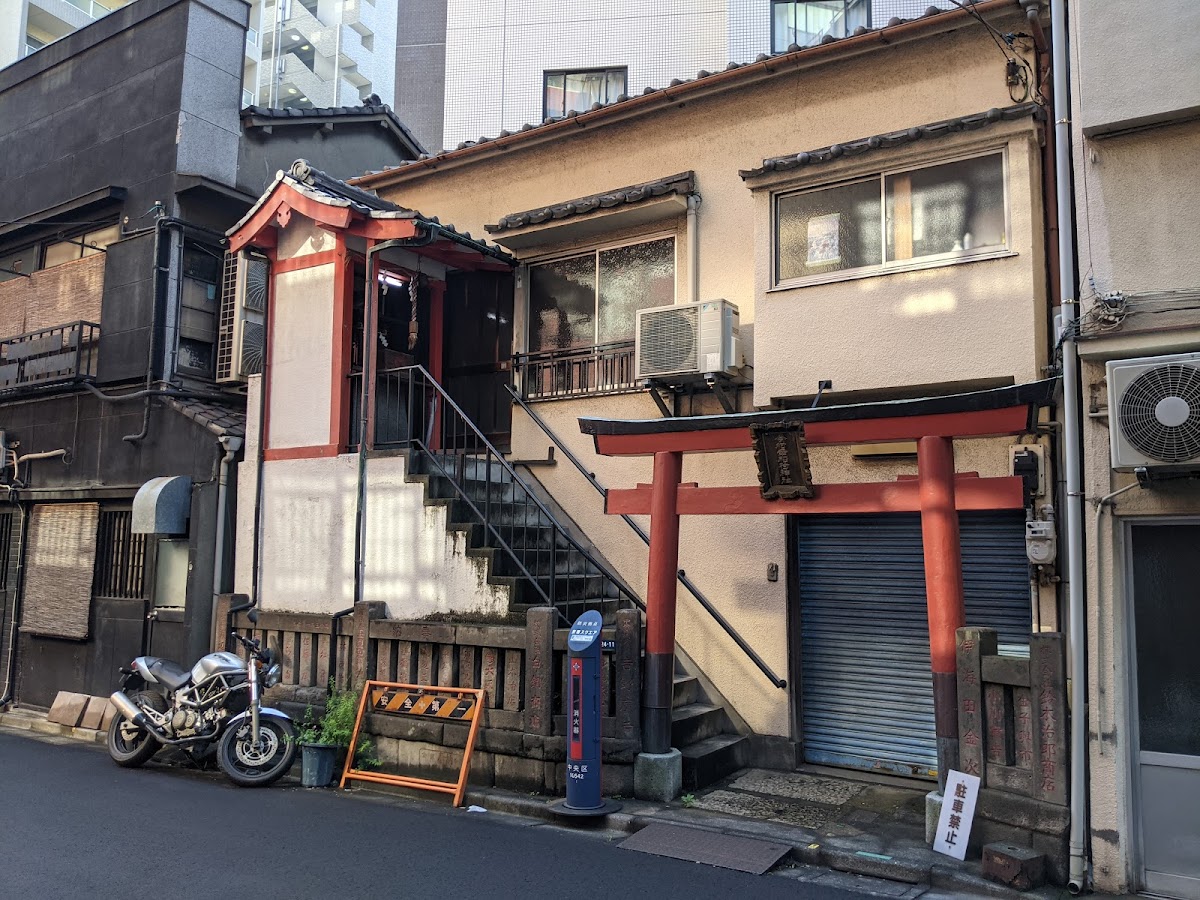
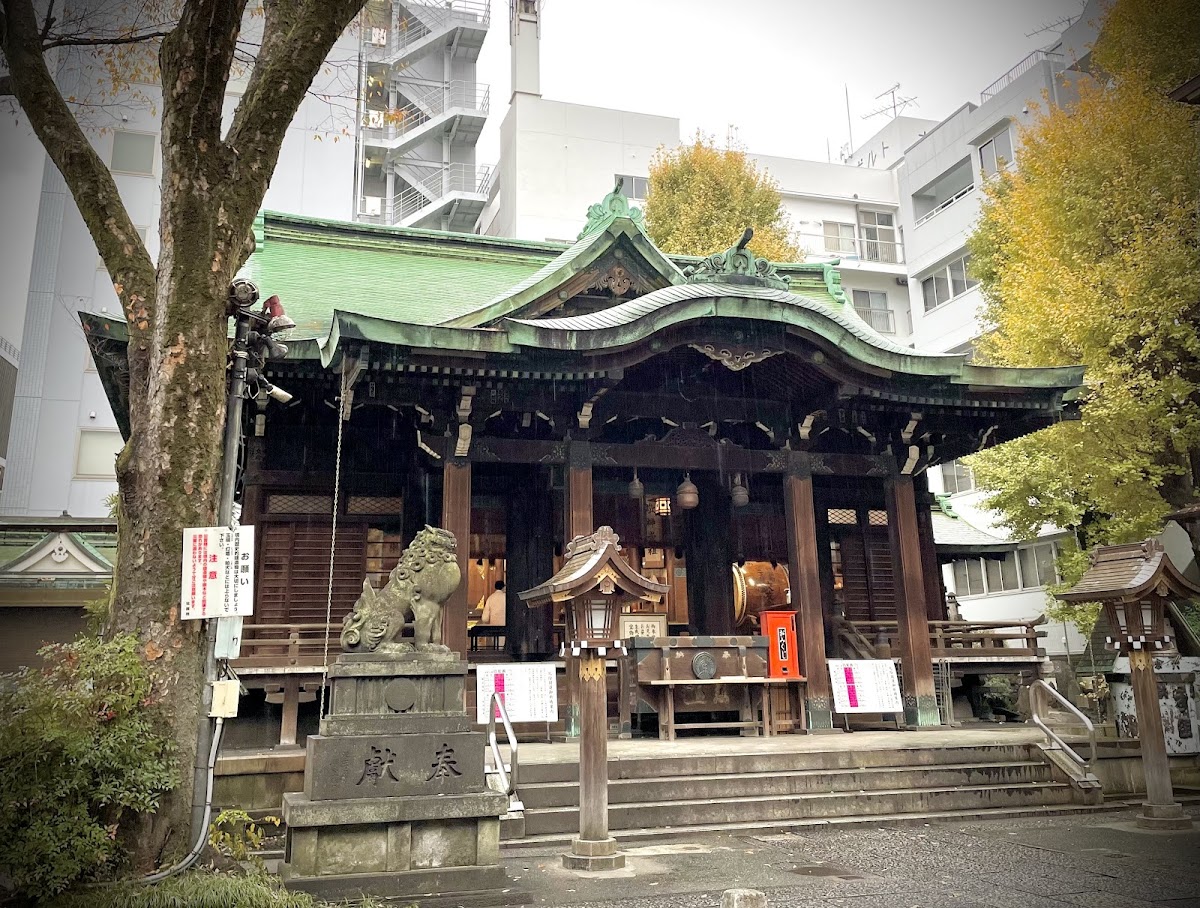
The current shrine building was rebuilt in 1952 (Showa 27) and underwent extensive restoration in 1993 (Heisei 5). Despite being made of reinforced concrete, it features a refined construction that follows the traditional style of shrine architecture. The carvings and decorations of the main hall showcase the skill of craftsmen, creating a solemn atmosphere despite its urban location.
Fujizuka: A Preservation of Edo-Period Fuji Worship
A “Fujizuka” (artificial mound resembling Mount Fuji) is constructed in the northwestern part of the shrine grounds. A Fujizuka is an artificial mound built by Fuji worship groups (groups of believers) to resemble Mount Fuji, and was a popular form of worship among common people during the Edo period. In an era when climbing Mount Fuji was difficult, it was believed that climbing a Fujizuka would grant the same blessings as climbing Mount Fuji.
The Fujizuka at Teppozu Inari Shrine is registered as a cultural property of Chuo Ward and is a valuable historical site that conveys the state of Fuji worship during the Edo period. A small stone shrine is erected at the top of the mound, enshrining Asama-no-Okami, the god of Mount Fuji. Lava rocks are arranged on the surface of the mound, a technique used to recreate the atmosphere of Mount Fuji.
Shrines and Stone Monuments
Several shrines and monuments are scattered throughout the temple grounds:
- Hachiman Shrine: Benefits for long-lasting military fortune and success in competitions
- Tenman Shrine: Benefits for academic success and passing exams
- Monuments: Several monuments donated by successive parishioners and devotees have been erected.
By visiting these shrines, you can receive a wider variety of blessings.
Water Basin and Komainu (Guardian Dogs)
At the entrance to the temple grounds is a magnificent water basin where you can purify yourself before praying. A pair of guardian dogs (komainu) stand guard in front of the main shrine, watching over worshippers. These dogs were donated in the early Showa period and possess a dignified appearance that reflects their age.
Annual Events and Festivals
Winter Water Bathing Festival: A Traditional Shinto Ritual in January
The most famous ritual at Teppozu Inari Shrine is the “Winter Water Bathing Festival,” held annually on the second Sunday of January at 11:00 AM. This ritual is a purification ceremony and a prayer for good health. By bathing in cold water during the harsh winter, participants cleanse their minds and bodies and pray for good health throughout the year.
Participants, dressed in white robes, bathe in cold water after a Shinto priest recites prayers. As a traditional event dating back to the Edo period, it is a winter tradition often featured in local media. General participation is possible; anyone can participate with prior registration.
Grand Festival: A Grand Festival During Golden Week
The Grand Festival of Teppozu Inari Shrine is held annually during Golden Week (May 2nd to May 5th). During the main festival, held once every three years, the sacred palanquin (Gohoren) and the shrine’s portable shrine (Mikoshi) are carried in a procession, enveloping the entire Kyobashi area in festive spirit.
In 2026 (Reiwa 8), the “1186th Anniversary Grand Festival” is planned to be held on a grand scale, with preparations underway, primarily led by the local parishioners’ organization, the “Teppozu Inari Shrine Yayoi-kai.” During the festival, numerous stalls line the shrine grounds, and kagura (sacred dance) and taiko drumming performances are offered.
Other Annual Events
- Hatsumode (January 1st-3rd): Many worshippers visit for New Year’s prayers.
- Setsubun Festival (February 3rd): Bean-throwing and prayers for warding off evil.
- Natsukoshi no Oharae (June 30th): A Shinto ritual to purify oneself of the impurities accumulated over the past six months.
- Shichi-Go-San (November): A visit to celebrate the growth of children.
- Toshikoshi no Oharae (December 31st): Purification of the impurities of the past year and preparation for welcoming the New Year.
These events are held regularly every year and are an integral part of the daily life of the local residents.
Goshuin (Shrine Seals) and Amulets
Types of Goshuin and Reception Hours
At Teppozu Inari Shrine, in addition to the regular goshuin, limited edition goshuin are given out during special periods such as the annual festival. Goshuin are available at the shrine office, and the offering fee is usually 500 yen. The Goshuin (temple/shrine stamp) features the calligraphy of “Teppozu Inari Shrine” and the shrine’s seal, characterized by a simple yet powerful style. Goshuin notebooks are also available, and the shrine’s original designs are popular as souvenirs of visits.
The reception hours are usually from 9:00 AM to 5:00 PM, but may be extended during festival periods.
Amulets and Souvenirs
Teppozu Inari Shrine offers a variety of amulets and souvenirs:
- Business Prosperity Amulet: Popular with business owners and shopkeepers wishing for success
- Maritime Safety Amulet: For sailors and those involved in fishing
- Health Amulet: For those wishing for recovery from illness and longevity
- Academic Success Amulet: For students and those taking exams
- Traffic Safety Amulet: Amulet for cars and motorcycles
- Matchmaking Amulet: For those wishing for a good relationship
In addition, Shinto talismans (ofuda), Hama-ya (demon-repelling arrows), and Kumade (rakes) are also available. Special gifts are also prepared during the New Year and the annual festival.
Location and Access
Basic Information
- Location: 1-6-7 Minato, Chuo-ku, Tokyo
- Phone Number: 03-3551-2647
- Opening Hours: Always open (Shrine office: 9:00 AM – 5:00 PM)
- Admission Fee: Free
Access by Train
Teppozu Inari Shrine is accessible from several train lines:
Nearest Stations:
- Tokyo Metro Hibiya Line “Hatchobori Station”
- Approximately 5 minutes on foot from Exit A3
- Most convenient access method
- Tokyo Metro Yurakucho Line “Shintomicho Station”
- Approximately 8 minutes on foot from Exit 7
- JR Keiyo Line “Hatchobori Station”
- Approximately 7 minutes on foot from Exit B3
- Toei Oedo Line “Kachidoki Station”
- Approximately 10 minutes on foot from Exit A2a
Access by Bus
If using Toei Bus:
- Get off at the Minato 2-chome bus stop and walk for approximately 3 minutes.
- From Tokyo Station Yaesu Exit, you can use the Toei Bus Route 05 (Tokyo Station – Harumi Wharf).
Access by Car and Parking
Approximately 5 minutes from the “Kyobashi Exit” or “Shintomicho Exit” of the Metropolitan Expressway Inner Circular Route. However, there is no dedicated parking lot on the temple grounds, so please use nearby coin-operated parking lots.
Main nearby parking lots:
- Times Minato 1-chome
- Mitsui RePark Minato 1-chome
- NPC24H Minato 1-chome 2nd Parking
During peak seasons such as the annual festival, we strongly recommend using public transportation.
Nearby Tourist Attractions
Around Teppozu Inari Shrine, there are numerous spots where you can experience the history and culture of Chuo Ward:
Tsukiji Market Site & Toyosu Market
Within walking distance is the former site of the Tsukiji Market, which is currently undergoing redevelopment. Toyosu Market is about a 10-minute drive away and is a popular tourist destination as a center of food culture.
Sumida River Terrace
A 10-minute walk from the shrine will take you to the promenade along the Sumida River. A stroll along the river is pleasant, and the scenery is especially beautiful during cherry blossom season.
Tsukudajima & Tsukishima
Across the Sumida River are Tsukudajima, which retains the atmosphere of the Edo period, and Tsukishima, famous for its monjayaki (a type of savory pancake). Visiting these in conjunction with a visit to Teppozu Inari Shrine is highly recommended.
St. Luke’s International Hospital & St. Luke’s Garden
St. Luke’s Garden, located about a 15-minute walk away, is a complex facility where you can enjoy shopping and dining. It’s perfect for a break after visiting the shrine.
Manners and Etiquette for Visiting a Shrine
Basic Etiquette for Visiting a Shrine
When visiting Teppozu Inari Shrine, please observe the following etiquette:
- Bow before the Torii Gate: Bow before entering the shrine grounds.
- Purify yourself at the Water Basin: Purify your left hand, right hand, and mouth in that order.
- Walk along the edge of the path: The center is considered the path for the gods.
- Etiquette in front of the Main Hall: The basic procedure is two bows, two claps, and one bow.
- Bow deeply twice.
- Clap your hands twice.
- Pray sincerely.
- Finally, bow deeply once.
Regarding Photography
Photography is generally permitted on the shrine grounds, but please note the following:
- Photography inside the shrine building may be prohibited.
- Refrain from taking photos during prayers or Shinto rituals.
- Be considerate of other visitors.
- Avoid using flash photography.
Cultural Value of Chuo Ward
Teppozu Inari Shrine holds an important position as a cultural property of Chuo Ward. In particular, the Fujizuka (miniature Mount Fuji) is registered as a “Chuo Ward Citizen’s Cultural Property” and is protected as a valuable historical site that conveys the popular beliefs of the Edo period.
Registration Criteria and Cultural Significance
The Fujizuka was registered based on the following criteria:
- Historical Value: A concrete structure that demonstrates the reality of Fuji worship in the Edo period
- Regional Relevance: An element that constitutes the historical landscape of the Kyobashi area
- Condition of Preservation: Maintained in a relatively good condition
- Educational Value: A resource that can be used for local history education
It is also featured in detail in the Chuo Ward Board of Education’s newsletter column, “Cultural Properties in the Ward” (December 21, 2012 issue), and is recognized as one of the ward’s representative cultural properties.
Engagement with the Local Community
Yayoi-kai, the Parishioners’ Organization
The Yayoi-kai, the parishioners’ organization of Teppozu Inari Shrine, is an important organization responsible for the maintenance and management of the shrine and the operation of festivals. Composed of local residents and businesses, it plans and manages the annual festival, cleans and maintains the shrine grounds, and supports various Shinto rituals.
The Yayoi-kai’s official website provides information on the annual festival schedule and the latest shrine news, functioning as an information hub for the local community.
As a Guardian Deity of the Region
Even today, Teppozu Inari Shrine functions as the spiritual center of the Kyobashi area. Many local residents visit the shrine during important life events and business occasions, such as first shrine visits for newborns, Shichi-Go-San (a traditional rite of passage for children), exorcism, and prayers for business prosperity, maintaining strong community bonds centered around the shrine.
In particular, Chuo Ward is undergoing redevelopment, with an increase in high-rise condominiums and commercial facilities. In this context, the existence of historical shrines like Teppozu Inari Shrine plays a crucial role in maintaining the region’s identity.
Seasonal Highlights
Spring (March-May)
Spring is the season for the annual festival. During Golden Week in May, the shrine grounds are adorned with festival decorations and bustle with many worshippers. Visiting during the cherry blossom season, combined with a stroll along the Sumida River, is highly recommended.
Summer (June-August)
On June 30th, the Natsukoshi-no-Oharai (summer purification ceremony) takes place, featuring the Chino-wa Kuguri (passing through a ring of reeds). Even during the hot summer months, the trees on the shrine grounds provide shade, offering a refreshing oasis in the city.
Autumn (September-November)
Autumn is the season for Shichi-Go-San (a traditional Japanese rite of passage for children). Children in adorable formal attire can be seen visiting the shrine. Visiting the shrine in the crisp autumn air is especially wonderful.
Winter (December-February)
The biggest highlight of winter is the winter swimming festival held on the second Sunday of January. The purification ritual, performed in the bitter cold, inspires a sense of awe in those who witness it. The shrine is also bustling with many worshippers during the first three days of the New Year.
Summary: The Charms of Teppozu Inari Shrine
Teppozu Inari Shrine is a representative ancient shrine of Chuo Ward, Tokyo, with a history of over 1180 years since its founding in 841 AD. As the tutelary deity of the Kyobashi area, it has been deeply intertwined with the lives of local residents and continues to attract worshippers to this day.
It offers various blessings, including business prosperity, maritime safety, and health and longevity, and its traditional events such as the winter swimming festival and the annual festival are also attractive. The Fujizuka (miniature Mount Fuji) on the shrine grounds is protected as a cultural property of Chuo Ward, preserving the religious culture of the Edo period.
Located amidst the city’s skyscrapers, Teppozu Inari Shrine continues to preserve its history and traditions. Conveniently situated just a 5-minute walk from Hatchobori Station on the Tokyo Metro Hibiya Line, it’s easily accessible for worshippers. Be sure to visit it in conjunction with sightseeing in Tsukiji or Tsukishima. You’ll experience the history and culture of Kyobashi, as well as the warmth of the local community.