Complete Guide to Ohara Inari Shrine | The Charm and Visiting Information of the Historic Inari Shrine in Ohara, Setagaya Ward
Located in Ohara, Setagaya Ward, Tokyo, Ohara Inari Shrine is a local guardian shrine with lush greenery and a tranquil atmosphere, despite being located very close to Daitabashi Station on the Keio Line. With a history dating back to the Genroku era and a formal branch shrine designation from Fushimi Inari Taisha in Kyoto, it is affectionately known locally as “Hagusa Inari.” This article comprehensively introduces all the information you need for a visit to Ohara Inari Shrine, including its detailed history, enshrined deities, annual festival, goshuin (shrine stamp) information, and access methods.
Basic Information about Ohara Inari Shrine
Shrine Name: Ohara Inari Shrine
Deity: Ukanomitama-no-kami
Shrine Rank: Former Village Shrine
Location: 2-29-21 Ohara, Setagaya-ku, Tokyo
Nearest Station: Daitabashi Station, Keio Line, Keio Electric Railway
Annual Festival Date: Second Saturday and Sunday of September (Grand Festival)
Goshuin (Shrine Seal): Available (Available at the shrine office)
Ohara Inari Shrine is deeply revered by local residents as the guardian shrine of the Ohara district in Setagaya Ward. The shrine grounds feature several trees designated as protected trees by Setagaya Ward, preserving a rich natural environment despite its urban location.
History and Origins of Ohara Inari Shrine
Founded Before the Genroku Era
The exact founding date of Ohara Inari Shrine is unknown, but a land survey record from Genroku 15 (1702) indicates that an Inari shrine existed at the current location. This confirms that it was already worshipped as an Inari shrine at least before the mid-Edo period.
At that time, Ohara Village was an agricultural area, and the belief in Inari, the god who presides over abundant harvests and business prosperity, was essential to the lives of the villagers. The record of an Inari shrine existing on the current shrine grounds is evidence that this place has been cherished as a place of worship since ancient times.
Formal Invitation from Fushimi Inari in Tenmei 2
The most important event in the history of Ohara Inari Shrine is the formal invitation from the main shrine of Fushimi Inari in Kyoto, which took place in May of Tenmei 2 (1782).
The village representative of Ohara Village at the time traveled to Fushimi Inari Taisha in Yamashiro Province (present-day Kyoto Prefecture) and petitioned Hagura Settsu-no-kami Kada Sukune Nobukuni, the chief official of the main shrine. As a result, they received a certificate called the “Certificate of the Peaceful Enshrinement of the First Rank Inari Daimyojin,” allowing them to formally invite a divided spirit from Fushimi Inari. This certificate still exists at the shrine today and is a valuable historical document proving the history of Ohara Inari Shrine.
With this enshrinement, Ohara Inari Shrine transformed from a mere local shrine into a formal Inari shrine connected to the lineage of Fushimi Inari Taisha.
From “Hagura Inari” to “Hagusa Inari”
Because the priest who carried out the enshrinement from Fushimi Inari was Hagura Settsu-no-kami, Ohara Inari Shrine was for a time called “Hagura Inari.” However, as time passed, this name became corrupted, and it is said that it came to be affectionately known as “Hagusa Inari” by the locals.
This change in name can be seen as an indication of how the shrine became deeply rooted in the community and integrated into the daily lives of the residents. Even today, some local elders still use the name “Hagusa Inari,” which gives a sense of the shrine’s history.
Developments since the Meiji Era
Following the Meiji-era separation of Shinto and Buddhism, Ohara Inari Shrine was ranked as a village shrine. Even as times changed from Meiji to Taisho, Showa, Heisei, and Reiwa, it continued to attract the faith of the Ohara district as its guardian shrine.
Although the surrounding environment has changed significantly due to post-war urbanization, the shrine grounds maintain a tranquil atmosphere despite its proximity to Keio Line’s Daitabashi Station. Currently, Shinto priests are still stationed there, and daily rituals are performed, functioning as a living place of worship.
Deity and Divine Virtues
Ukanomitama-no-kami
The deity enshrined at Ohara Inari Shrine is Ukanomitama-no-kami. Ukanomitama-no-kami has been worshipped since ancient times as the god of grain and food, and is enshrined as the principal deity of Inari shrines throughout Japan.
“Uka” means food, and “Mitama” means spirit, so Ukanomitama-no-kami has been revered as the spirit of food, that is, the god who presides over abundant harvests. Enshrined at Inari shrines throughout Japan, including Fushimi Inari Taisha, it can be said to be one of the gods most familiar to the lives of Japanese people.
Divine Virtues
The divine virtues bestowed upon those who visit Ohara Inari Shrine are as follows:
- Abundant Harvest: Prayers for a bountiful harvest of crops
- Business Prosperity: Success in business and prosperity in commerce
- Family Safety: Health of family and peace in the home
- Industrial Development: Development of all industries
- Good Fortune and Prosperity: Improvement of luck and attracting good fortune
The divine virtue of business prosperity is particularly well-known, and local shop owners and businesspeople regularly visit the shrine.
Highlights of the Shrine Grounds
Main Hall and Worship Hall
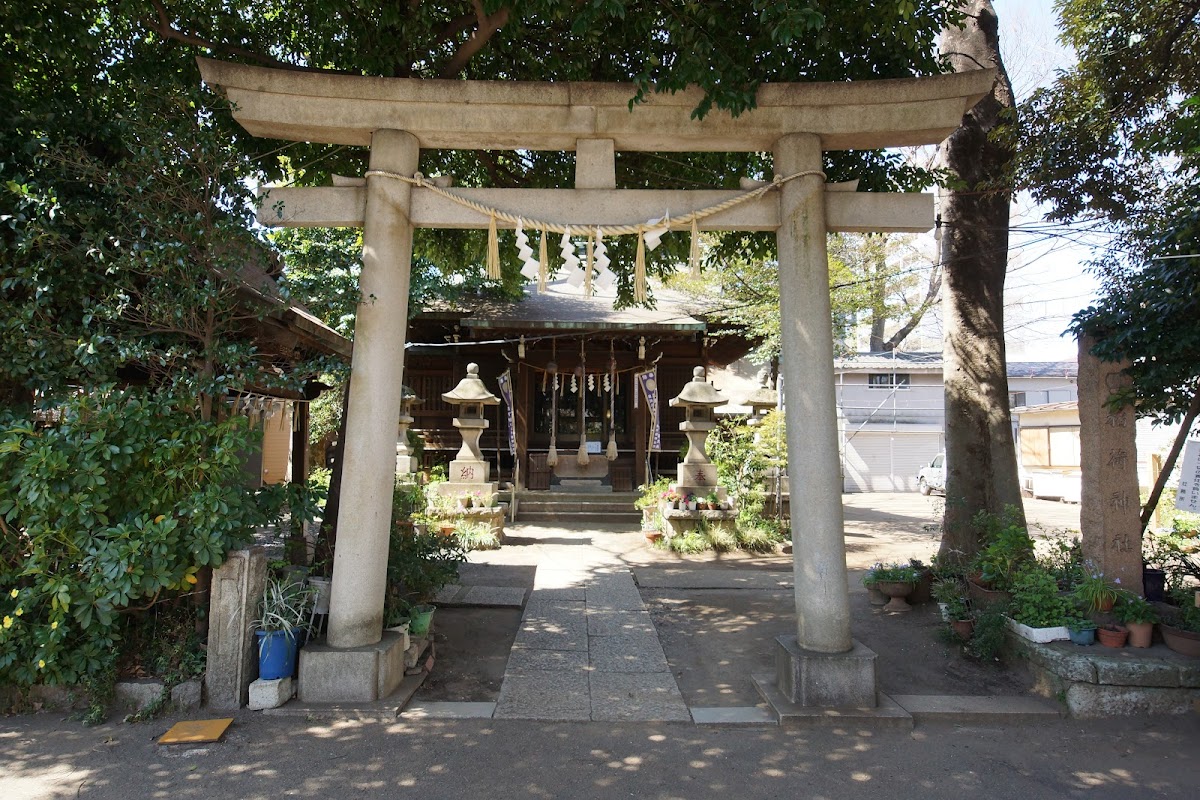
The main hall of Ohara Inari Shrine is a wooden building based on the Inari style. While not large in scale, it is carefully maintained, reflecting the faith of the local people. The worship hall, though simple, is kept clean and quietly welcomes visitors.
Setagaya Ward Protected Trees
The shrine grounds contain several trees designated as protected trees by Setagaya Ward, creating a lush green environment despite its urban location. These trees have grown over many years and can be considered living witnesses to the shrine’s history.
Despite its proximity to the Keio Line tracks, the shrine grounds are covered in these trees, providing ample shade even during the day, maintaining a tranquil and peaceful atmosphere. It’s a precious green space that allows you to forget the hustle and bustle of the city.
Stone Torii Gate and Komainu (Guardian Dogs)
A stone torii gate stands at the entrance to the shrine grounds. A pair of komainu (guardian dogs) sit in front of the main hall, watching over worshippers. These stone structures also bear the marks of history, and careful observation allows one to imagine the state of worship in the past.
Shrine Office
To the right of the shrine grounds is the shrine office, where Shinto priests are always present. You can request Goshuin (shrine stamps) and apply for various prayers here. The Shinto priests are very helpful and sometimes even share information about the shrine’s history and origins.
Annual Festival and Regular Events
Ohara Inari Shrine Annual Festival
The most important festival of Ohara Inari Shrine is the annual festival, held on the second Saturday and Sunday of September every year. This festival is a major event for the community, with many parishioners and local residents participating.
Features of the Annual Festival:
- Portable Shrine Procession: Two adult portable shrines, a children’s portable shrine, and a women’s portable shrine parade through the area.
- Drum Cart: Plays festival music, adding to the excitement of the procession.
- Stalls: Numerous stalls are set up on and around the shrine grounds.
- Participation Across Generations: A wide range of generations, from children to the elderly, support the festival.
During the portable shrine procession, you can parade through the town of Ohara and feel a strong sense of community unity. The spirited shouts of the bearers and the cheers of the spectators blend together, bringing the festival to its climax.
Setagaya Ward’s Only Tori-no-Ichi Market
The annual festival of Ohara Inari Shrine is also known as the only Tori-no-Ichi market in Setagaya Ward. While the Tori-no-Ichi market is traditionally held on the Day of the Rooster in November to pray for business prosperity, Ohara Inari Shrine incorporates elements of the Tori-no-Ichi market into its annual festival.
Auspicious items such as kumade (rakes) are given out, and the market is bustling with worshippers praying for business success.
Other Annual Events
- Hatsuumasai: An important festival of the Inari Shrine held on the first day of the Horse in February.
- Hatsumode: Many worshippers visit during the first three days of the New Year.
- Tsukimisai: Regular monthly festivals.
Goshuin Information
Goshuin Reception
Ohara Inari Shrine offers goshuin (shrine stamps). You can have them inscribed directly by a Shinto priest at the shrine office.
Reception Hours: Generally 9:00 AM to 5:00 PM (Since priests may not always be present, it is recommended to check in advance if you wish to be sure of receiving one).
Offering Fee: Typical offering fee for a goshuin (around 300-500 yen).
Features of the Goshuin
The goshuin at Ohara Inari Shrine is carefully inscribed by a Shinto priest. The shrine’s name, “Ohara Inari Shrine,” and the date of visit are inscribed, and the shrine’s seal is stamped. This Goshuin (temple/shrine stamp) is simple yet exudes a sense of formality.
If you do not have a Goshuincho (stamp book), you may be given a pre-printed Goshuin.
Access
Access by Train
The nearest station to Ohara Inari Shrine is Daitabashi Station on the Keio Line of the Keio Electric Railway.
From Daitabashi Station on the Keio Line:
- Exit the North Exit and walk for about 1 minute.
- Turn west before the railroad crossing in front of the station.
- The entrance is next to the cemetery along the railway tracks.
Daitabashi Station is only served by local trains, but it is easily accessible, about 10 minutes from Shinjuku and about 15 minutes from Shibuya via Meidaimae. It is very close to the station and easy to find.
Other Nearest Stations:
- Approximately 10-minute walk from Sasazuka Station on the Keio Line
- Approximately 12-minute walk from Meidaimae Station on the Keio Line
Access by Bus
The nearest bus stop is “Daitabashi.” Keio Bus, Odakyu Bus, etc. operate this stop, but considering the distance from the station, access by train is more convenient.
Access by Car and Parking
Ohara Inari Shrine does not have its own parking lot. If you are visiting by car, you will need to use a nearby coin-operated parking lot. However, since the shrine grounds are small and the surrounding area is a residential area, we recommend using public transportation.
During events such as the annual festival, the surrounding roads may be congested, so access by train is especially recommended.
Nearby Attractions and Spots
Daitabashi Shopping Street
Around Daitabashi Station, there is a traditional shopping street with many locally-focused shops. A stroll before or after visiting the shrine will allow you to experience the atmosphere of old Tokyo.
Around Sasazuka Station
The area around Sasazuka Station, within walking distance, boasts a wide variety of commercial facilities and restaurants. It’s convenient for meals and shopping after visiting the temple.
Meidaimae/Shimokitazawa Area
With a short trip, you can also visit the unique neighborhoods of Meidaimae and Shimokitazawa. Combining a stroll through these areas is highly recommended.
Manners and Etiquette for Visiting a Shrine
Basic Visiting Etiquette
- Bow before passing through the torii gate: Bow before entering the shrine grounds.
- Purify yourself at the water basin: If there is a water basin, purify your hands and mouth.
- Etiquette in front of the main hall:
- Quietly place your offering in the offering box.
- Two bows, two claps, one bow (bow deeply twice, clap twice, bow deeply once).
- When leaving: Turn around and bow after leaving the torii gate.
Points to Note When Visiting a Shrine
- The shrine grounds are a sacred place, so please visit quietly.
- Photography is permitted, but please refrain from taking pictures inside the main hall or without permission from the Shinto priests.
- Always take your trash with you.
- During events such as the annual festival, please be considerate of the surrounding residents.
The Charm of Ohara Inari Shrine
A Tranquil Space in the City
Despite its prime location in the heart of Tokyo, just a one-minute walk from Daitabashi Station on the Keio Line, stepping onto the shrine grounds transports you to a different world enveloped in silence. The shade created by the preserved trees and the well-maintained grounds soothe the soul.
A Faith Rooted in the Community
Ohara Inari Shrine has been the guardian shrine of the region since the Edo period and is still deeply cherished by the local people. The annual festival brings together residents of all generations, a testament to the dedication to preserving tradition.
A Proven History and Origin
Records from the Genroku era show that the shrine was formally established in 1782 (Tenmei 2) by Fushimi Inari Shrine. The existing “Proof of Peace and Origin” attests to its veneration.
Easy Access
Its location, just a one-minute walk from Daitabashi Station (approximately 10 minutes from Shinjuku), is a major draw, making it easily accessible for worshippers. It’s easy to stop by while running errands in the city center, making it a convenient place to incorporate shrine visits into your daily routine.
Visitor Voices and Reviews
Visitors to Ohara Inari Shrine have shared the following comments:
- “Despite being right near the station, the shrine grounds are quiet and peaceful.”
- “The shrine priests were very polite and the goshuin (shrine stamp) was beautifully written.”
- “The portable shrine procession at the annual festival was a wonderful event that conveyed a sense of community.”
- “It’s a small shrine, but it has an atmosphere that makes you feel the history.”
- “The greenery of the preserved trees is beautiful, making it like an oasis in the city.”
On the other hand, some visitors have commented that “the shrine grounds are close to the train tracks, so you can hear the trains,” and “there’s no parking, so it’s difficult to get there by car.”
Frequently Asked Questions (FAQ)
Q1. When can I receive a goshuin at Ohara Inari Shrine?
A1. Generally, you can receive the amulet during the shrine office hours, from around 9:00 AM to 5:00 PM. However, there may be times when the priest is absent. If you wish to be sure to receive the amulet, we recommend contacting the shrine in advance.
Q2. Is there parking available?
A2. Ohara Inari Shrine does not have its own parking lot. If you are visiting by car, please use a nearby coin-operated parking lot. However, since it is very close to Daitabashi Station (a 1-minute walk), we recommend using public transportation.
Q3. When is the annual festival held?
A3. The annual festival is held every year on the second Saturday and Sunday of September. It is a grand festival involving the entire community, with a portable shrine procession and stalls, so please do visit during this time.
Q4. What is the origin of the name “Hagusa Inari”?
A4. When the shrine was established in 1782 (Tenmei 2) by inviting the deity from Fushimi Inari, it was called “Hagura Inari” after the name of the Shinto priest, Hagura Settsu-no-kami. It is said that this name was corrupted into “Hagusa Inari.”
Q5. Is it crowded during the New Year’s visit?
A5. The first three days of the New Year are busy with local worshippers, but it’s not as crowded as large shrines. You can worship relatively peacefully.
Q6. Is it possible to visit with a pet?
A6. Generally, it is discouraged to bring pets to shrines. The grounds are small, so it’s best not to bring a pet.
Summary
Ohara Inari Shrine is a historical Inari shrine located in Ohara, Setagaya Ward, Tokyo, with a history dating back to before the Genroku era. This shrine has a long history, having been formally established in 1782 (Tenmei 2) by inviting a deity from Fushimi Inari Taisha in Kyoto, and its “Proof of Peace and Prosperity” still exists today.
Despite its prime location in the heart of Tokyo, just a one-minute walk from Daitabashi Station on the Keio Line, the tranquil grounds, surrounded by trees protected by Setagaya Ward, welcome visitors as an urban oasis. The enshrined deity, Ukanomitama-no-kami, is believed to bestow blessings of abundant harvests, business prosperity, and family safety, and is still deeply revered as the guardian deity of the region.
Every year in September, the annual festival features processions of adult and children’s portable shrines, fostering a sense of community unity across generations. It is also known as the only Tori-no-ichi market in Setagaya Ward, attracting many worshippers praying for business prosperity.
Goshuin (shrine stamps) are also available, and the shrine priests provide courteous service. With its easy accessibility, rich history, and warm, community-oriented atmosphere, Ohara Inari Shrine is a truly captivating place. Please do visit it.