A Complete Guide to Imamura Saiwai Inari Shrine: Hidden History and Visiting Information in Hatchobori
Nestled quietly in an alley in Hatchobori, Chuo-ku, Tokyo, Imamura Saiwai Inari Shrine is a precious shrine that preserves the atmosphere of the Edo period despite being amidst the city’s skyscrapers. This article will fully convey the charm of this shrine, from its history and enshrined deities to how to worship and access information.
Overview of Imamura Saiwai Inari Shrine
Imamura Saiwai Inari Shrine is an Inari shrine located at 3-24-11 Hatchobori, Chuo-ku, Tokyo. Despite its convenient location just a few minutes’ walk from Hatchobori Station on the JR Keiyo Line, Chuo-Sobu Line (local trains), and Tokyo Metro Hibiya Line, it is known as a small shrine hidden amongst the buildings.
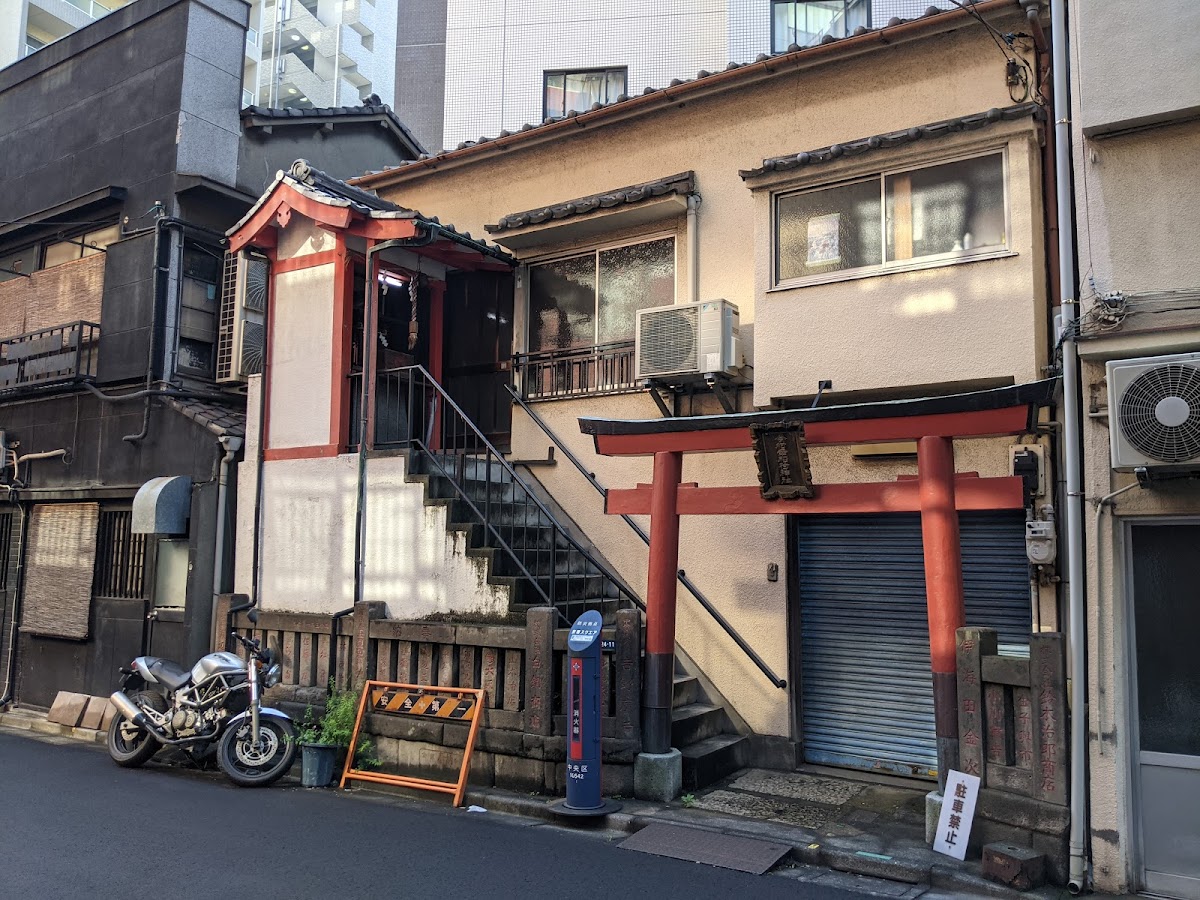
In a corner of the city surrounded by modern buildings, the vermilion torii gate and shrine building exude a unique presence, creating a serene atmosphere as if time has stood still. The torii gate stands close to the wall of the building, and the approach to the shrine turns to the left, becoming a staircase, leading to the shrine building—a distinctive structure.
Basic Information
- Official Name: Imamura Kōinari Shrine
- Address: 3-24-11 Hatchobori, Chuo-ku, Tokyo 104-0032
- Deity Enshrined: Ukemochi-no-kami
- Annual Festival Date: June 15th
- Nearest Station: JR/Tokyo Metro Hibiya Line “Hatchobori Station”
- Contact Information: 03-3581-2471
History and Origins of Imamura Kōinari Shrine
Founding History
Unfortunately, there are no clear records regarding the founding date of Imamura Kōinari Shrine. However, according to tradition, it is said to have begun when a person named Imamura Nanigashi enshrined Inari-no-kami in this area, which was formerly called “Saiwai-chō” (幸町).
As the expression “Imamura so-and-so” indicates, the specific personal name and exact date are unknown, but it is believed that the shrine originated from an Inari shrine privately established by Mr. Imamura, a prominent local figure, to pray for business prosperity and a bountiful harvest.
Relationship to the place name Saiwai-cho
The character “Sachi” (幸) in Imamura Saiwai Inari Shrine originates from the fact that this area was once called “Sachi-cho.” From the Edo period to the Meiji period, this area was known as Saiwai-cho, and the name of the shrine retains this place name.
Although the area is now called Hatchobori due to changes in the address system, the retention of the character “Sachi” in the shrine’s name makes it a valuable reminder of the area’s historical memory. The auspicious place name Saiwai-cho may have reflected the hope for prosperity of this area, which was home to many merchants and artisans.
History of Imamura Kōinari Shrine according to the Tokyo Metropolitan Shrine Directory
According to materials compiled by the Tokyo Metropolitan Shrine Association, Imamura Kōinari Shrine is registered as one of the Inari shrines in Chuo Ward, and enshrines Ukemochi-no-kami as its main deity. Ukemochi-no-kami is known as the god of food and is believed to bring blessings of business prosperity and abundant harvests.
The shrine’s management and rituals have historically been maintained by local parishioners and related parties, and even today, religious ceremonies are held on June 15th, the annual festival day.
Records in the Chuo Ward History
In the “Chuo Ward History,” which records the history of Chuo Ward, Imamura Kōinari Shrine is also listed as one of the small shrines in the Hatchobori area. From the Edo period through the Meiji, Taisho, and Showa eras to the present day, it has continued to attract the faith of local residents despite being exposed to the waves of urban development.
In Chuo Ward, where many small shrines disappeared due to wartime destruction and rapid post-war urbanization, the fact that Imamura Kōinari Shrine remains to this day is a testament to the faith and preservation efforts of the local people.
About the Deity: Ukemochi-no-kami
Ukemochi-no-kami, enshrined at Imamura Kōinari Shrine, is a goddess of food in Japanese mythology. “Uke” means food, and “mochi” means to hold, so it literally means “the god who holds food.”
Myth of Ukemochi-no-kami
According to the *Nihon Shoki* (Chronicles of Japan), Ukemochi-no-kami was killed by Tsukuyomi-no-Mikoto, acting on the orders of Amaterasu-Ōmikami. In the myth, Tsukuyomi-no-Mikoto, considering Ukemochi-no-kami’s mouth to be impure, became enraged and killed her, from which the five grains and silkworms were born. This myth is interpreted as a story symbolizing death, rebirth, and fertility.
Connection to Inari Worship
Ukemochi-no-kami is known as one of the deities enshrined at Inari shrines. While the original deity of Inari is Ukanomitama-no-kami, both deities are often identified as gods of food and hold an important position in Inari worship.
It is believed to bring blessings such as business prosperity, abundant harvests, and industrial development, making it a fitting object of worship for Hatchobori, an area that has been home to many merchants and artisans since the Edo period.
Grounds and Highlights of Imamura Kōinari Shrine
Unique Approach Structure
The most distinctive feature of Imamura Kōinari Shrine is its unique approach structure. A vermilion torii gate is built against the wall of a building, and immediately after passing through the gate, a staircase is built, turning left.
This structure is a clever design for maintaining the shrine within a limited urban space, and at the same time, it effectively creates a sense of “transition from everyday life to a sacred realm” for worshippers. Climbing the stairs allows you to physically and mentally escape the hustle and bustle of everyday life, experiencing a sense of being led into a sacred space.
Features of the Shrine
At the top of the stairs lies a compact yet meticulously maintained shrine. Although surrounded by buildings, the cleanliness is impeccable, conveying the care and dedication of the local community.
A small offering box is placed in front of the shrine, and worshippers can pray using the traditional two bows, two claps, and one bow ritual. It’s a precious space where one can quietly offer prayers, even in the heart of the city.
Value as an Urban Oasis
Imamura Kōinari Shrine, though often overlooked due to its small size, is a valuable place to find peace of mind in the business district of Hatchobori. Businesspeople visiting during their lunch breaks and tourists strolling around the area stop by, finding solace even in a short time, making it an urban oasis.
Access and Surrounding Information
Access by Train
Imamura Kōinari Shrine is easily accessible by public transportation.
Nearest Stations:
- Approximately 3 minutes on foot from Exit A3 of Hatchobori Station on the JR Keiyo Line and Chuo-Sobu Line (local trains)
- Approximately 3 minutes on foot from Exit A3 of Hatchobori Station on the Tokyo Metro Hibiya Line
Hatchobori Station is close to Tokyo Station and easily accessible from the city center. From the station, head towards the Kamejima River, and you will see the shrine when you enter the alley at Hatchobori 3-chome.
Detailed Walking Route
Exit Hatchobori Station from Exit A3 and head east along Shin-Ohashi Street. After passing the intersection at 3-chome, you will see a vermilion torii gate between buildings. Signs are not very noticeable, so you need to look carefully.
Searching for “Imamura Kōinari Shrine” on Google Maps or your smartphone’s map app will show the exact location, so we recommend using navigation if you are visiting for the first time.
Nearby Attractions
Besides Imamura Kōinari Shrine, there are many other historical sights around Hatchobori.
Kamejima River: A canal dating back to the Edo period, it was once a vital hub for logistics. The waterfront scenery remains today.
Teppozu Inari Shrine: A representative Inari shrine in Chuo Ward, located within walking distance, with a larger shrine building.
Hatchobori Townscape: Alleys retaining the atmosphere of former samurai residences and merchant houses are scattered throughout, allowing visitors to experience the charm of the Edo period.
When visiting Imamura Kōinari Shrine, exploring these surrounding spots will allow you to gain a deeper understanding of the history and culture of Hatchobori in Chuo Ward.
Etiquette and Manners for Worship
Basic Worship Method
Worship at Imamura Kōinari Shrine follows the same etiquette as at any other shrine.
- Bow before the Torii Gate: Before entering the sacred area, bow slightly before the torii gate.
- Climb the Stairs: Gently ascend the stairs that turn to the left.
- Offer Your Offering: Gently place your offering in the offering box in front of the shrine.
- Two Bows, Two Claps, One Bow: Bow deeply twice, clap twice, and finally bow once.
- Descend the Stairs: After praying, quietly descend the stairs.
- Bow Before Leaving the Torii Gate: Before leaving the sacred area, turn around and bow once.
Considerations Unique to a Small Shrine
Imamura Kōinari Shrine is a very small shrine, and its grounds have limited space. Therefore, please be mindful of the following points:
- Avoid Visiting in Large Groups: The shrine becomes crowded when many people visit at once, so if you are in a group, please pray in turn.
- Please worship quietly: The surrounding area is a business district, and there are also residences nearby. Please refrain from loud conversations.
- Photography etiquette: Photography is permitted, but please be considerate of other worshippers.
- Please take your trash with you: There are no trash cans on the shrine grounds, so please be sure to take your trash with you.
Annual Festival and Regular Events
The annual festival of Imamura Kōinari Shrine is held every year on June 15th. This is the most important festival for the shrine, a Shinto ritual to express gratitude to the enshrined deity for the past year and to pray for future protection.
Due to its small size, large-scale festival events are not held, but Shinto rituals are performed by those involved and the parishioners, preserving local traditions. On the day of the annual festival, the shrine is purified more than usual, and a sacred atmosphere permeates the air.
Regarding general annual events such as Hatsumode (first shrine visit of the year) and Setsubun (bean-throwing festival), the scale and whether or not they are held may vary from year to year, so it is recommended that those planning a visit check in advance.
Benefits of Imamura Kōinari Shrine
Imamura Kōinari Shrine, an Inari shrine dedicated to Ukemochi-no-kami, is believed to offer the following benefits:
Business Prosperity
Business prosperity, a representative benefit of Inari worship, can be prayed for at Imamura Kōinari Shrine. Located in the Hatchobori business district, it attracts many local shop owners and businesspeople.
Abundant Harvest
A bountiful harvest is a benefit associated with Ukemochi-no-kami, the deity of food. In modern times, not only agricultural workers but also those in the food and beverage industry visit the shrine.
Industrial Development
Related to business prosperity, many visitors pray for the development of their companies and the success of their businesses. Business owners and professionals seeking success in new ventures and improved performance visit the shrine.
Good Fortune and Prosperity
As a shrine whose name includes the character for “happiness” (幸), it is expected to bring general good fortune and prosperity. Many people visit during life-changing moments or when embarking on new challenges.
Positioning within Chuo Ward’s Inari Shrine Culture
Besides Imamura Kōinari Shrine, there are many other Inari shrines in Chuo Ward, Tokyo. In Chuo Ward, which flourished as a commercial center since the Edo period, Inari worship, particularly the prayer for business prosperity, was especially prevalent.
Major Inari Shrines in Chuo Ward
- Teppozu Inari Shrine: A large-scale Inari shrine representative of Chuo Ward.
- Kasama Inari Shrine Tokyo Branch: A historic Inari shrine located in Nihonbashi.
- Sugimori Shrine: Located in Nihonbashi, also known as the originator of lotteries.
- Fukutoku Shrine: “Mebuki Inari” located in Nihonbashi Muromachi.
Compared to these large-scale Inari shrines, Imamura Kōinari Shrine is very small, but it has its own unique value as a place of worship deeply rooted in the community. Its charm lies in the intimate and quiet worship experience that cannot be found at larger shrines.
Challenges of Urban Development and Shrine Preservation
The biggest challenge facing Imamura Kōinari Shrine is coexistence with rapid urban development. The Hatchobori area of Chuo Ward, due to its proximity to Tokyo Station, is undergoing redevelopment, with old buildings being replaced one after another by high-rise buildings.
The Issue of Preserving Small Shrines
In central Tokyo, small shrines like Imamura Kōinari Shrine are facing the tide of development. In urban areas where land values are high, there is constant pressure to repurpose shrine grounds for other uses.
However, these small shrines are invaluable in conveying the history and culture of the region, and once lost, they can never be recovered. The fact that Imamura Kōinari Shrine has survived to this day is a testament to the strong will of local residents and those involved to preserve it.
Significance in the Modern Age
In today’s increasingly urbanized world, small shrines like Imamura Kōinari Shrine hold the following significance:
- Maintaining Historical Continuity: Preserving the region’s memory from the Edo period to the present day.
- Spiritual Sanctuary: A place to find peace in a busy business district.
- Core of the Local Community: A common object of faith connecting local residents.
- Diversity of the Urban Landscape: Bringing variety and vibrancy to an otherwise uniform urban landscape.
Visitor Voices and Experiences
Visitors to Imamura Kōinari Shrine have shared a variety of impressions.
“I was surprised by the small shrine that suddenly appeared between buildings. I never thought there would be such a quiet place to pray in the middle of the city,” said one visitor. A local resident commented, “I visit every day on my way to work. It’s small, but a very important place.”
Tourists have praised the shrine, saying things like, “It has a hidden-away atmosphere, unlike the large shrines in Tokyo,” and “It’s a photogenic spot that you’ll want to share on social media.”
Points to Note When Visiting Imamura Kōinari Shrine
Visiting Hours
Imamura Kōinari Shrine is open for worship at all times, but there is no shrine office, so they do not offer Goshuin (shrine stamps) or prayers. Visitors should only come for worship.
Weather Considerations
There are stairs, so be careful of your footing in rainy weather. Also, there is little shade in the summer, so don’t forget to take precautions against heatstroke.
Surrounding Environment
Located in a business district, the surrounding area can be crowded during weekday afternoons. For a quiet visit, early morning or weekend visits are recommended.
Summary: The Charm of Imamura Kōinari Shrine
Imamura Kōinari Shrine is a valuable shrine that preserves the history and faith of the Edo period, despite being located in the heart of the city of Hatchobori, Chuo Ward, Tokyo. Its small size often leads to it being overlooked, but that’s precisely why it’s a hidden gem worth visiting.
The vermilion torii gate nestled amidst towering buildings, the serene shrine at the top of the stairs, and the devotion to Ukemochi-no-kami—all of these elements offer an experience of a “sacred space” that is gradually disappearing in modern Tokyo.
When you visit Hatchobori, be sure to stop by Imamura Kōinari Shrine and enjoy some quiet time away from the hustle and bustle of the city. Though a small shrine, a deity is certainly present there, and it will surely soothe the hearts of those who visit.
Imamura Kōinari Shrine is a must-see spot for anyone praying for business prosperity or good fortune, those interested in Tokyo’s history, shrine enthusiasts, and anyone seeking a peaceful escape from the city.