Complete Guide to Sogenji Temple (Kappa Temple) | History, Legends, Goshuin (Temple Seal), and Access Information
Sogenji Temple, located in Matsugaya, Taito-ku, Tokyo, is a Soto Zen Buddhist temple affectionately known as “Kappa Temple.” Situated near Kappabashi Kitchenware Street, it is known for the kappa legends passed down since the Edo period and the story of Kappaya Kihachi, who saved the area from floods. This article comprehensively introduces information you should know before visiting Sogenji Temple, including its history, highlights, goshuin information, and access methods.
What is Sogenji Temple (Kappa Temple)?
Sogenji Temple, officially named “Kyogakuzan Sogenji,” is a temple belonging to the Soto Zen sect. Founded in 1588 near the Wadakura Gate of Edo Castle, it boasts a history of over 400 years. Currently located in Matsugaya 3-chome, Taito-ku, along Kappabashi Hon-dori, it is a popular tourist spot in the Asakusa area, attracting many worshippers and tourists. The temple’s nickname, “Kappa-dera,” originates from a mysterious legend about kappa (water imps) that occurred during the Edo period. It is particularly revered by those in water-related businesses, such as the food and beverage industry.
History and Changes of Sogenji Temple
From Founding to Relocation
The history of Sogenji Temple begins in 1588 (Tensho 16), with its founding near the Wadakura Gate of Edo Castle. Just three years later, in 1591 (Tensho 19), it was forced to relocate to Yushima due to the expansion of Edo Castle by Tokugawa Ieyasu.
Later, the Great Fire of Meireki (Furisode Fire) of 1657 (Meireki 3), which devastated much of Edo, forced another relocation, finally settling in its current location in Matsugaya, Taito Ward. At that time, this area was low-lying with poor drainage, and residents suffered from flooding every time there was heavy rain.
Flood Problems in the Edo Period
The Matsugaya area, which was relocated after the Great Fire of Meireki, suffered from chronic flooding throughout the Edo period due to its low-lying topography. Although canals (artificial waterways) were constructed, heavy rains caused flooding that threatened the lives of the surrounding residents.
This flood problem continued until the Bunka era (1804-1818), and residents had to face the daily fear of flooding.
Origin of the Kappa Temple Legend
The Good Deeds of Kappaya Kihachi
The story behind Sogenji Temple being called “Kappa Temple” lies in the tale of Kappaya Kihachi, a raincoat merchant. Kihachi was a merchant active during the Bunka era (1804-1818). Seeing the suffering of the local residents due to flooding, he invested his personal fortune in the construction of the Shinborigawa Canal.
Kihachi himself was a merchant who sold raincoats, and because of his deep connection to water, it is said that he took the flood problem in this region as his own mission. The construction was extremely difficult, with many obstacles both financially and technically.
The Legend of the Kappa’s Assistance
Amidst the difficulties of the construction, a strange event occurred. It is said that kappa (water imps) living in the Sumida River were so impressed by Kihachi’s good deeds that they began helping with the construction night after night. Thanks to the kappa’s cooperation, the construction progressed surprisingly quickly and was completed in no time.
This rumor spread rapidly throughout Edo, and people praised Kihachi’s good deeds and the kappa’s assistance. Eventually, when Kihachi died, his body was buried at Sogenji Temple, his family temple, and since then, Sogenji Temple has been affectionately known as “Kappa Temple.”
The Truthfulness of the Legend
While it is uncertain whether the kappa actually helped with the construction, this legend reflects the values of people in the Edo period. Kihachi’s actions, using his personal fortune to serve the public good, embodied the ideals of merchant morality at the time. Furthermore, the existence of the kappa, a folk belief, can be interpreted as an expression of harmony with nature and gratitude.
Highlights of the Temple Grounds
Kappa Daimyojin
The most eye-catching feature of the temple grounds is “Kappa Daimyojin.” This shrine, dedicated to the kappa, houses a kappa statue, and cucumbers, considered a kappa’s favorite food, are offered on top of the offering box. It is known as a place where people in the entertainment and food service industries visit to pray for business prosperity.
Many worshippers can be seen offering cucumbers in front of Kappa Daimyojin, preserving this unique form of worship.
Kappa-related Stone Statues
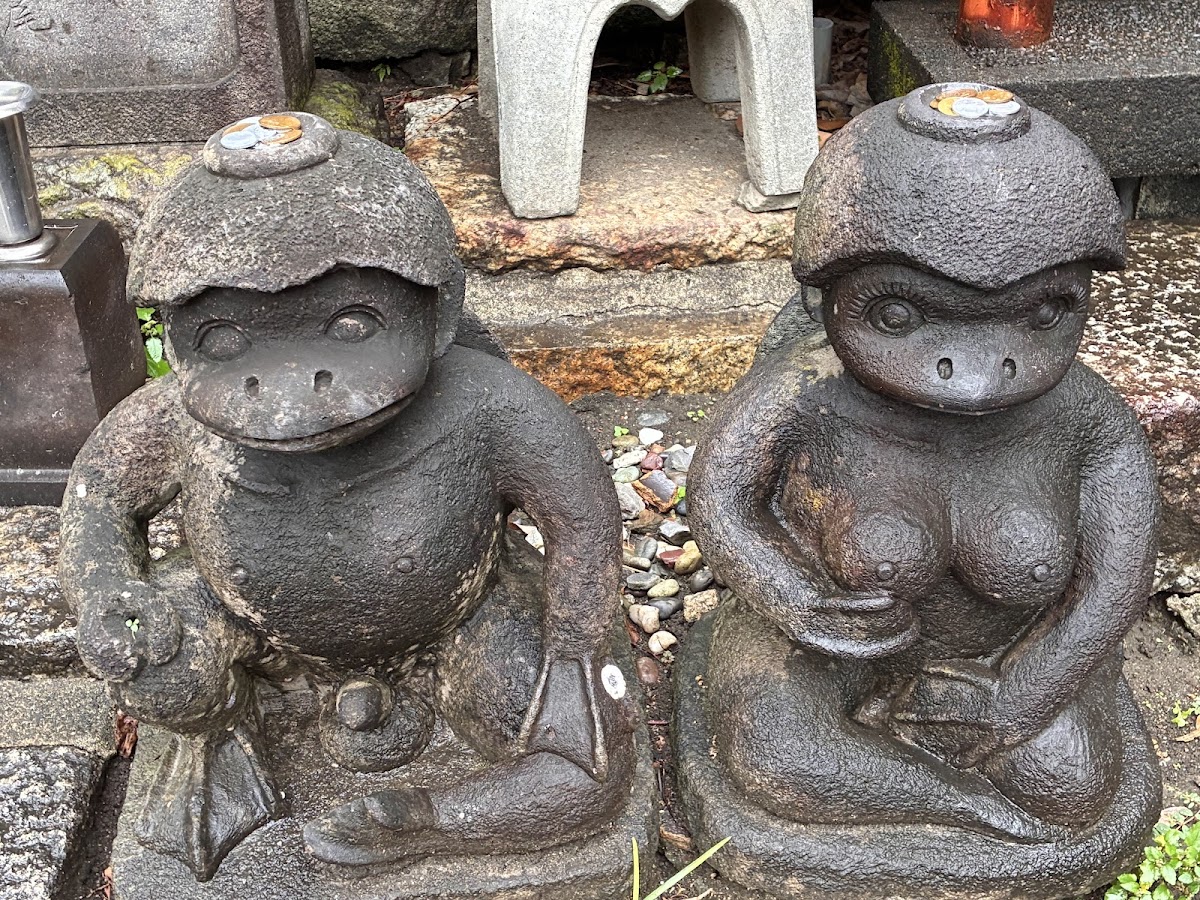
Various stone statues and Jizo statues related to kappa are placed throughout the temple grounds. Each stone statue has its own unique expression, ranging from humorous kappa (water imp) figures to solemn ones, offering a diverse range of expressions.
It’s also a popular photo spot, attracting attention from younger generations as a scenic location perfect for social media.
Grave of Kappaya Kihachi
Within the temple grounds lies the grave of Kappaya Kihachi, a key figure in the construction of the Shinborigawa Canal. Even today, local residents and those in the entertainment industry visit the grave to pay their respects and remember Kihachi’s good deeds. The tombstone exudes a sense of historical weight, making it a valuable historical site that conveys the merchant culture of the Edo period.
Atmosphere of the Main Hall and Temple Grounds
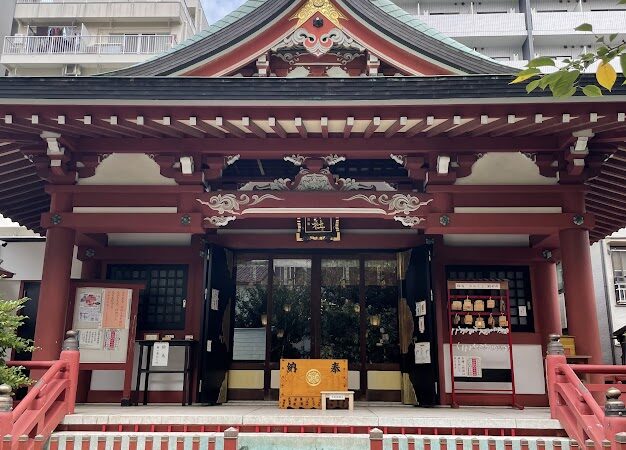
The main hall, with its tranquil atmosphere typical of a Soto Zen temple, offers a peaceful space amidst the hustle and bustle of the city. The temple grounds are meticulously maintained, with seasonal plantings delighting visitors.
Goshuin (Temple Stamp) Information
Goshuin stamps are available at Sogenji Temple. The temple’s Goshuin (temple stamp) sometimes features a design with a kappa (water imp) motif along with the characters for “Sogenji Temple,” making it popular among Goshuin collectors.
Goshuin Reception Hours
The reception hours for Goshuin are generally from 9:00 AM to around 5:00 PM. However, the temple may be closed for religious services, so it is recommended to call ahead to confirm if you wish to receive a Goshuin.
Contact: 03-3841-2035
Goshuin Offering Fee
The offering fee is generally around 300 to 500 yen. You can bring your own Goshuin book or receive a pre-printed Goshuin.
Relationship with the Water and Food Service Industry
Sogenji Temple is particularly revered by those in the water-related businesses. This stems from the efforts of Kappaya Kihachi in flood control and the worship of kappa as water deities.
Prayers for Business Prosperity
Restaurant owners, chefs, and those in the food and beverage industry visit to pray for business prosperity and protection from water-related disasters. Especially due to its proximity to Kappabashi Kitchenware Street, the temple maintains strong ties with the food and beverage industry, and many business owners visit before opening new establishments.
Cucumber Offerings
The custom of offering cucumbers, considered a favorite food of kappa (water imps), is a unique form of worship that has continued since the Edo period. Even today, fresh cucumbers are offered in front of Kappa Daimyojin, continuing this tradition.
Relationship with Kappabashi Kitchenware Street
Near Sogenji Temple lies Kappabashi Kitchenware Street, one of Japan’s largest wholesale districts for kitchenware and tableware. There is a theory that the name of this street actually originates from the kappa legend of Sogenji Temple.
Combining a Visit with a Stroll Through Kitchenware Street
When visiting Sogenji Temple, it is recommended to combine it with a stroll through Kappabashi Kitchenware Street. The kitchenware district, offering everything from professional cooking utensils to food samples and tableware, is a delightful tourist spot even just to browse.
A classic itinerary for those in the food service industry is to pray for business prosperity at Sogenji Temple and then purchase new cooking utensils and tableware in the kitchenware district.
Access Information
Access by Train
Sogenji Temple is accessible from several train lines.
Tokyo Metro Ginza Line
- Approximately 5 minutes’ walk from Tawaramachi Station
- Approximately 10 minutes’ walk from Asakusa Station
Tsukuba Express Line
- Approximately 7 minutes’ walk from Asakusa Station
Toei Asakusa Line
- Approximately 10 minutes’ walk from Asakusa Station
The nearest station is Tawaramachi Station on the Tokyo Metro Ginza Line. It’s about a 5-minute walk north from Exit 3. Since it’s located along Kappabashi Hon-dori Street, you shouldn’t get lost.
Walking Route
From Tawaramachi Station, head north along Kokusai-dori Street. Turn right at the intersection with Kappabashi Hon-dori Street, and you will immediately see the main gate of Sogenji Temple. From Asakusa Station, the easiest route is to head west along Kaminarimon-dori Street and then north along Kappabashi Hon-dori Street.
Access by Car and Parking
While access by car is possible, the surrounding roads are narrow, and there is no dedicated parking lot. You will need to use nearby coin-operated parking lots. We recommend using public transportation.
Basic Information
Name: Sogenji Temple
Other Name: Kappa Temple
Official Name: Kyogakusan Sogenji Temple
Sect: Soto Zen Buddhism
Location: 3-7-2 Matsugaya, Taito-ku, Tokyo
Phone Number: 03-3841-2035
Founded: 1588 (Tensho 16)
Visiting Hours: Grounds are freely accessible (Goshuin stamps available from 9:00 to 17:00)
Admission Fee: Free
Official Website: https://www.sogenji.jp/
Nearby Tourist Attractions
Senso-ji Temple
A representative tourist attraction in Tokyo, located about a 10-minute walk from Sogenji Temple. With numerous sights to see, including Kaminarimon Gate, Nakamise Street, and the main hall, it is bustling with tourists throughout the year.
Kappabashi Kitchenware Street
Located right next to Sogenji Temple, this is Japan’s largest wholesale district for kitchenware and tableware. Approximately 170 shops line the streets, offering a wide range of products from professional to household use.
Asakusa Engei Hall
A theater where you can enjoy popular performing arts such as rakugo (comic storytelling) and manzai (comedy duo). Experience traditional Edo culture.
Sumida Park
A park along the Sumida River, known as a famous cherry blossom viewing spot in spring. You can also enjoy views of the Tokyo Skytree.
Best Season to Visit
Sogenji Temple is open year-round, but each season offers its own unique charm.
Spring (March-May)
Visiting Sogenji Temple in conjunction with the nearby Sumida Park during cherry blossom season is highly recommended. The temple grounds, enveloped in fresh greenery, are enveloped in a refreshing atmosphere.
Summer (June-August)
Summer, the season of water, holds a special charm, in keeping with the legend of the kappa (water imp). It’s also the season when cucumbers are at their most delicious, making them ideal offerings. ### Autumn (September – November)
The pleasant weather makes it ideal for strolling. It’s a great season to combine a visit with a stroll through Kappabashi Kitchenware Street.
Winter (December – February)
Many worshippers visit during the New Year’s pilgrimage season. The quiet winter grounds also have their own charm.
Manners and Precautions During Worship
Worship Manners
As a Soto Zen temple, please follow the general manners of worship at Buddhist temples. Before the main hall, clasp your hands together, bow, and offer your prayers quietly.
Photography
Photography is generally permitted on the temple grounds, but consideration should be given to avoiding disturbing other worshippers. Please refrain from taking photos inside the main hall, or check beforehand.
Cucumber Offerings
If offering cucumbers to Kappa Daimyojin, please prepare fresh ones and either take them home after your visit or place them in the designated area.
Cultural Value of Sogenji Temple
Inheritance of Edo Period Popular Beliefs
Sogenji Temple is a valuable temple that preserves the popular beliefs of the Edo period. Its unique form of worship, which combines the folk belief of the kappa (water imp) with the story of the real-life figure Kappaya Kihachi, is important historical material from the perspective of Edo culture research.
Center of the Local Community
For over 400 years since its founding, Sogenji Temple has functioned as a spiritual pillar of the local community. Even today, it maintains strong ties with local residents and those involved in the shopping district, playing an important role in the transmission of local culture.
Historical Record of Flood Control Measures
The story of Kappaya Kihachi’s excavation of the Shinborikawa River is a historical record illustrating urban infrastructure development and private social contribution activities during the Edo period. The image of a merchant investing his private fortune in public works can be seen as a precursor to modern corporate social responsibility (CSR).
Experience and Event Information
Regular Memorial Services
Sogenji Temple holds regular memorial services. In particular, a memorial service is held on the anniversary of Kappaya Kihachi’s death, and many people involved in the water-related businesses attend.
Special Viewing
Temple treasures that are not usually open to the public are sometimes specially displayed. Details can be found on the official website or by phone inquiry.
Summary
Sogenji Temple (Kappa Temple) is a historical temple representative of Taito Ward, where the Edo period kappa legend and the good deeds of Kappaya Kihachi are intertwined. Founded in 1588, it boasts a history of over 400 years and is particularly revered by those in the water-related businesses.
With its many unique attractions, including the Kappa Daimyojin shrine, the kappa stone statues, and Kappaya Kihachi’s grave, it’s an ideal spot to visit in conjunction with Asakusa sightseeing or a stroll through Kappabashi Kitchenware Street. Its goshuin (temple stamp) is also popular, and an increasing number of people visit as part of a goshuin pilgrimage.
Its convenient location, just a 5-minute walk from Tawaramachi Station on the Tokyo Metro Ginza Line, is another attractive feature, making it a temple you should definitely visit when visiting the Asakusa area. Why not spend some special time at Sogenji Temple, where the history, culture, and goodwill of the Edo period still thrive?