Enkoji Temple (Kamakura City, Kanagawa Prefecture) Complete Guide: History and Highlights of an Ancient Shingon Buddhist Temple Associated with the Tamanawa Hojo Clan
Enkoji Temple, located in Ueki, Kamakura City, Kanagawa Prefecture, is a Shingon Buddhist temple of the Daikakuji sect, founded during the Sengoku period by Hojo Ujitoki, the lord of Tamanawa Castle. Nestled quietly at the foot of a mountain, slightly removed from the center of Kamakura, this ancient temple, unlike the bustling tourist-filled temples, is a valuable presence deeply rooted in the community, quietly conveying history. This article comprehensively covers everything you need to know before visiting Enkoji Temple, from its history, cultural assets, highlights, to access information.
Basic Information on Enkoji Temple
Enkoji Temple is a Shingon Buddhist temple of the Daikakuji sect, located at 549 Ueki, Kamakura City. Its principal image is Fudo Myoo (Acala). While the temple grounds are not large, a well-organized space unfolds around the main hall and Yakushi-do (Medicine Buddha Hall). The entrance fee is based on a voluntary donation system, leaving it up to the visitor’s discretion.
Location: 549 Ueki, Kamakura City, Kanagawa Prefecture 247-0073
Sect: Shingon-shu Daikakuji-ha
Principal Image: Fudo Myoo
Founder: Hojo Ujitoki (First head of the Tamanawa Hojo clan)
Founding Priest: Chohan
Entrance Fee: Voluntary donation
Parking: None
History of Enkoji Temple: A temple associated with the Tamanawa Hojo clan, originally located within Tamanawa Castle
Circumstances of Founding and the Sengoku Period Background
The exact founding date of Enkoji Temple is unknown, but since its founding priest, Chohan, passed away in Eiroku 2 (1559), it is presumed to have been founded in the late Sengoku period. The founder, Hojo Ujitoki, was the first head of the Tamanawa Hojo clan, a branch of the Later Hojo clan, and the lord of Tamanawa Castle, built in Tamanawa, Kamakura District, Sagami Province (present-day Ueki and Okamoto districts of Kamakura City).
Tamanawa Castle was one of the strategically important branch castles of the Later Hojo clan, based in Odawara, as a base for their control of the Kanto region. It is believed that the temple’s origins lie in Hojo Ujitoki’s founding of Enkoji Temple within the castle grounds as a place of prayer. During the Sengoku period, castles and temples had a close relationship, and warlords protected and deeply revered temples to pray for victory in battle and the peace and security of their territories. Enkoji Temple was born within this historical context.
Abandonment of Tamanawa Castle and Relocation to its Current Location
After the fall of the Toyotomi clan in the Siege of Osaka from 1614 to 1615, the Edo Shogunate strengthened its control over the daimyo throughout the country. As part of this effort, the Genna One Castle Edict was issued. In 1619 (Genna 5), this decree led to the abandonment of Tamanawa Castle.
Following this abandonment, Enkoji Temple relocated from within the castle grounds to its current location in Ueki, Kamakura City. This relocation marked the end of Enkoji Temple’s role as a place of prayer for Tamanawa Castle, and it began a new chapter in its history as a temple open to the local community. Even now, more than 400 years after the relocation, Enkoji Temple quietly continues to tell its history, retaining traces of its former appearance.
Relationship with the Hojo Clan as Seen in the Temple Crest
Enkoji Temple’s crest is the “Three Scales Crest,” associated with the Hojo clan. This crest is a representative family crest of the Later Hojo clan and serves as important evidence that Enkoji Temple was founded by Hojo Ujitoki and had a deep connection with the Tamanawa Hojo clan. Temple crests are important elements that indicate the history and origins of a temple, and are a point to pay attention to when visiting Enkoji Temple.
Highlights and Cultural Assets of Enkoji Temple
Main Hall and Principal Image: Fudo Myoo
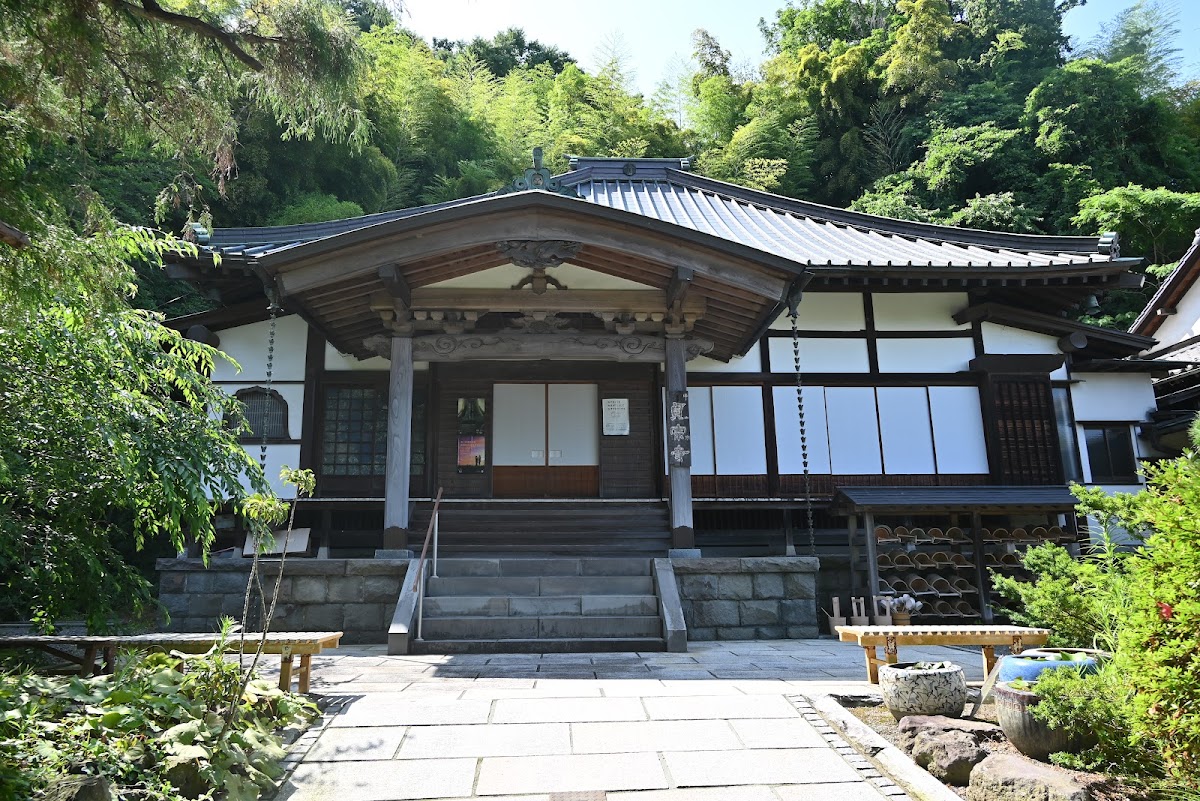
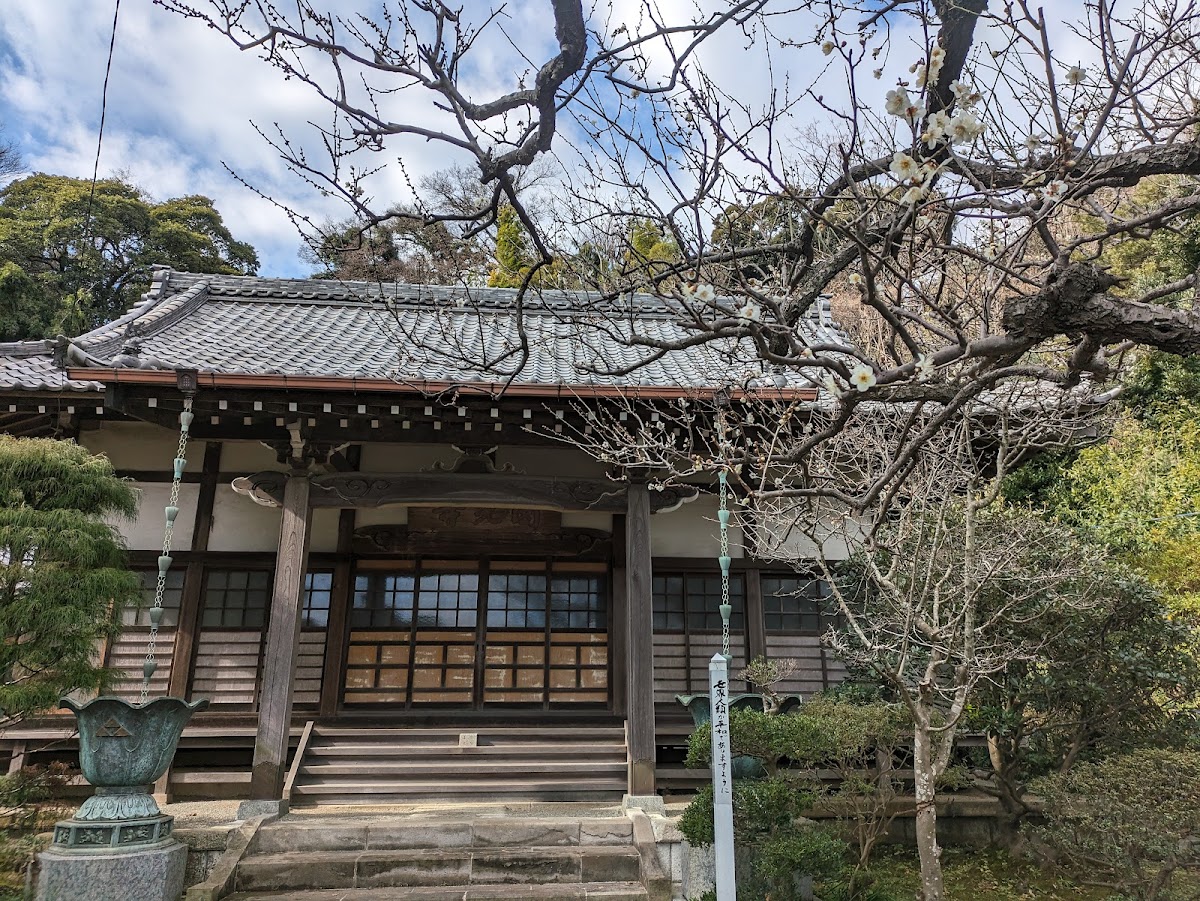
Enkoji Temple’s main hall is a simple yet dignified building. The principal image, Fudo Myoo, is a particularly important deity in Shingon Buddhism, believed to have the power to sever worldly desires and destroy evil. Fudo Myoo is usually depicted with a sword in his right hand, a lasso in his left, and a wrathful expression with flames behind him.
While it is common for Shingon Buddhist temples to enshrine Fudo Myoo as their principal image, the Fudo Myoo statue at Enkoji Temple has long been revered by the local people. It has a history of being a place where warlords prayed for victory during the Sengoku period, and since the Edo period, it has been a popular object of prayer for protection against misfortune and for family safety among common people.
Yakushi-do Hall: Unveiling the Secret Buddha Image Once Every 60 Years
In addition to the main hall, Enkoji Temple also has a Yakushi-do Hall on its grounds. This Yakushi-do (hall dedicated to the Medicine Buddha) is extremely rare, being opened to the public only once every 60 years, and houses a hidden image of Yakushi Nyorai (the Medicine Buddha). Yakushi Nyorai has been revered since ancient times as the Buddha who presides over healing illnesses and promoting health and longevity.
Furthermore, it is said that the Yakushi-do also houses statues of the Twelve Divine Generals, who protect Yakushi Nyorai. These Twelve Divine Generals, as attendants of Yakushi Nyorai, each guardian of specific directions and times, and play a role in assisting Yakushi Nyorai’s vows. The long cycle of opening the hall every 60 years is a valuable cultural practice that preserves the tradition of hidden Buddha worship.
To accurately determine the next opening date, it is recommended to inquire with the temple in advance. If you are fortunate enough to visit during an opening year, it will be a precious, once-in-a-lifetime opportunity.
Atmosphere and Natural Environment of the Temple Grounds
Enkoji Temple is surrounded by gently rolling hills and lush greenery. The Ueki district of Kamakura City is an area rich in temples, shrines, and related history, with numerous historical sites, including the ruins of Tamanawa Castle, scattered throughout the area.
Although the temple grounds are not large, its quiet presence at the foot of the mountain offers a tranquil space far removed from the hustle and bustle. Unlike famous temples developed as tourist destinations, Enkoji Temple’s charm lies in its simple, locally rooted atmosphere. It provides an environment where visitors can slowly worship while appreciating the changing seasons.
Historical Background of the Area Around Enkoji Temple
Tamanawa Castle and the Tamanawa Hojo Clan
The existence of Tamanawa Castle and the Tamanawa Hojo clan is indispensable when discussing Enkoji Temple. Tamanawa Castle is believed to have been built around 1513 by Hojo Ujitsuna, the second head of the Later Hojo clan. It was built as a branch castle of Odawara Castle, strategically located on the border between Sagami and Musashi Provinces.
The Tamanawa Hojo clan, as a branch of the Later Hojo clan, served as lords of Tamanawa Castle for generations. Beginning with the first lord, Hojo Ujitoki, and continuing through his son Hojo Tamemasa, and later Ujishige and Ujikatsu, the clan survived until the Odawara Hojo clan was destroyed by Toyotomi Hideyoshi. Tamanawa Castle, a strategic point in the Kanto region, also functioned as a defensive base against invasions by Uesugi Kenshin and Takeda Shingen.
Enkoji Temple served as a spiritual pillar for the lords of Tamanawa Castle amidst the tense atmosphere of the Sengoku period.
Historical Characteristics of the Ueki District, Kamakura City
The Ueki district of Kamakura City has long been a vital transportation hub connecting Kamakura and Sagami Province. This area, home to numerous historical sites including the ruins of Tamanawa Castle, retains strong traces of history from the medieval to early modern periods.
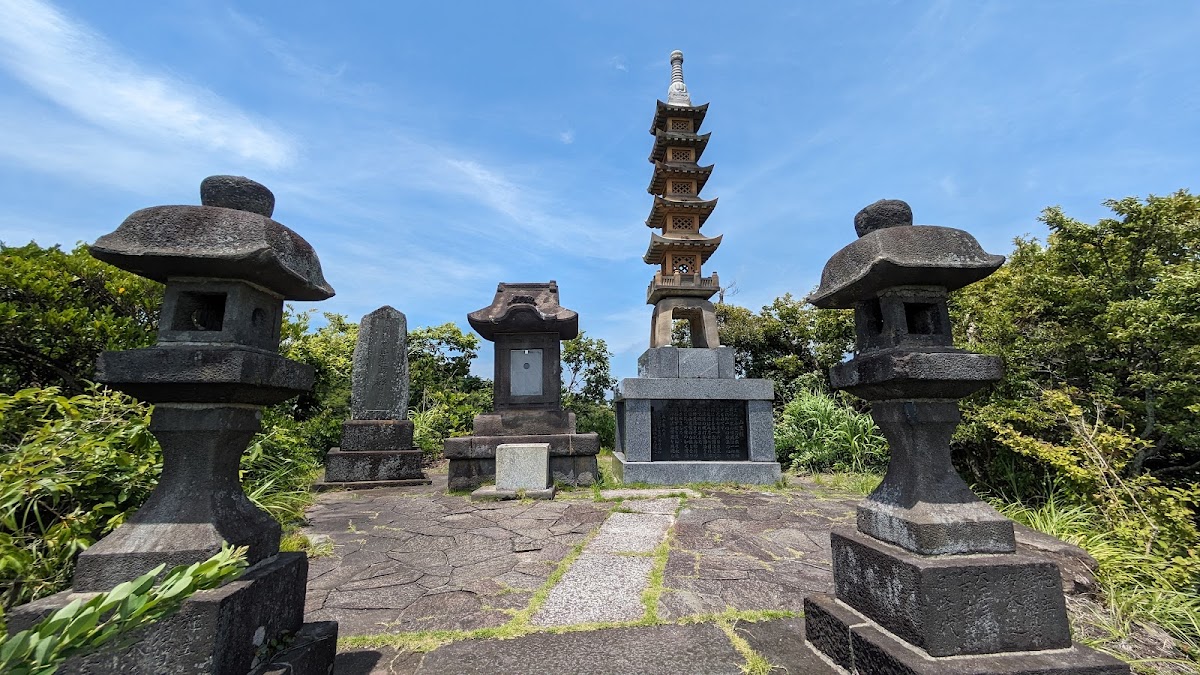
Numerous other historical temples and shrines are scattered around Enkoji Temple, making it an attractive route for historical walks. The site of Tamanawa Castle is now the grounds of Seisen Girls’ School, and some of the remains can be viewed. The path leading from the castle ruins to Enkoji Temple was once a path visited by the castle lord and samurai to offer prayers.
Access to Enkoji Temple
Access by Public Transportation
Enkoji Temple is a bit far from Kamakura Station and Ofuna Station, so using the bus is convenient.
Access from JR Ofuna Station:
- Take the Kanagawa Chuo Kotsu bus bound for “Kamakura Station” or “Kamakura Lakeside Loop” from the east exit of JR Ofuna Station.
- Get off at the “Ueki” bus stop and walk for about 5 minutes.
Access from JR Kamakura Station:
- Take the Kanagawa Chuo Kotsu bus bound for “Ofuna Station” from the east exit of JR Kamakura Station.
- Get off at the “Ueki” bus stop and walk for about 5 minutes.
Since the number of buses is limited, it is recommended to check the timetable in advance. Alternatively, you can take a taxi from Kamakura Station or Ofuna Station. The journey takes approximately 10-15 minutes.
Access by Car
Enkoji Temple does not have its own parking lot. If you are visiting by car, please use a nearby paid parking lot or consider using public transportation. Especially during peak tourist season and on weekends, roads in Kamakura are often congested, so it is necessary to plan your trip with ample time.
Access from Major Roads:
- Approximately 15 minutes from the Asahina Interchange on the Yokohama-Yokosuka Expressway
- Via National Route 1 and Prefectural Route 21 (Yokohama-Kamakura Line)
Access by Foot or Bicycle
If you are walking from Kamakura Station, the distance is approximately 3.5 km, and the journey takes about 45 minutes. It’s suitable for a stroll while enjoying the streets of Kamakura, but it’s a bit of a distance, so it’s best suited for those with plenty of time and stamina.
If you prefer to travel by bicycle, you can rent bicycles around Kamakura Station. The journey takes about 15-20 minutes, and it’s a recommended mode of transportation that also provides moderate exercise.
Notes and Manners for Visiting Enkoji Temple
Manners During Visit
Enkoji Temple is not a tourist temple, but a place of faith deeply rooted in the community. Please observe the following manners when visiting:
- Visit in silence: Please refrain from loud conversations and noisy behavior.
- Photography: Photography is permitted on the temple grounds, but please be considerate of the interior of the main hall and other visitors.
- Offerings: Donations are voluntary; please offer according to your feelings.
- Dress Code: There are no strict regulations, but please dress appropriately for visiting a temple.
Visiting Hours
While there may not be clearly defined visiting hours for Enkoji Temple, it is generally recommended to visit during the daytime (around 9:00 AM to 4:00 PM). It is recommended to confirm by phone in advance. Also, visits may be closed during religious services or other events, so it is best to contact the temple beforehand if you wish to be sure of your visit.
Combining with Surrounding Facilities
When visiting Enkoji Temple, you can enjoy a more fulfilling historical walk by also visiting surrounding historical sites and temples.
- Tamanawa Castle Ruins: Located on the grounds of Seisen Girls’ School, visits may be possible with prior reservation.
- Ryuhōji Temple: A temple associated with the Tamanawa Hojo clan, famous for its beautiful garden.
- Ofuna Kannon-ji Temple: A temple known for its white-robed Kannon statue, a symbol of Ofuna.
Annual Events and Beliefs of Enkoji Temple
Characteristics as a Shingon Buddhist Temple
Enkoji Temple belongs to the Daikakuji branch of the Shingon sect. The Shingon sect is a branch of esoteric Buddhism founded by Kobo Daishi Kukai, and teaches the doctrine of Sokushin Jōbutsu (becoming a Buddha in this very body). The principal image, Fudo Myoo, is an incarnation of Dainichi Nyorai and plays the role of crushing worldly desires; it is widely worshipped in Shingon Buddhist temples.
Shingon Buddhist temples often perform Goma fire rituals and various prayers, and Enkoji Temple also accepts prayers from local residents. Prayers are offered for a variety of wishes, including protection from misfortune, family safety, and business prosperity.
Connection with the Community
Enkoji Temple has walked alongside the people of the Ueki district of Kamakura City for over 400 years. Supported by local parishioners and believers, it contributes to the community through funerals, memorial services, and annual events. Unlike tourist temples, Enkoji Temple’s characteristic is its community-oriented operation, and its simple appearance provides peace to many visitors.
Differences from Other Enkoji Temples in Kamakura and Temples with Similar Names
There are temples named “Enkoji” throughout Japan. Even within Kanagawa Prefecture alone, there is an Enkoji Temple of the Jodo Shinshu Honganji sect in Kawasaki City, an Enkoji Temple of the Rinzai Kenchoji sect in Atsugi City, and several Enkoji Temples in Yokohama City. Furthermore, Enkoji Temple in Kyoto, famous for Shisendo Temple, is a separate temple.
Kamakura’s Enkoji Temple is distinguished from other Enkoji temples in the following ways:
- It belongs to the Shingon Daikakuji sect
- Its historical background includes being founded by the Tamanawa Hojo clan
- It was founded as a prayer place for Tamanawa Castle
- Its principal deity is Fudo Myoo
- It possesses a Yakushido (hall dedicated to the Medicine Buddha) that is only opened to the public once every 60 years
Understanding these characteristics will allow you to more deeply appreciate the uniqueness and value of Kamakura’s Enkoji Temple.
The Significance of Visiting Enkoji Temple: In History and Tranquility
While Kamakura has many famous temples, it is in small temples like Enkoji that the history of the region and the faith of its people are condensed. Unlike the bustling large temples, you can reflect on the history that has continued since the Sengoku period in a quiet and peaceful atmosphere.
Enkoji Temple, which began as a place of prayer for Tamanawa Castle, has been protected by the local community even after the castle’s abandonment, and has continued to pass down its religious traditions to this day. Its history is not merely that of a temple, but also the history of the Kamakura region itself.
Visiting Enkoji Temple will offer an experience that goes beyond simply visiting famous tourist spots, allowing you to touch upon the deeper aspects of Kamakura. The small main hall nestled at the foot of the mountain, the Hojo clan’s three-scale crest, and the Yakushi-do hall, which is only opened once every 60 years—all of these are testaments to the faith and history that have been passed down through the ages.
Summary: A Recommendation to Visit Enkoji Temple
Located in Ueki, Kamakura City, Kanagawa Prefecture, Enkoji Temple is a Shingon sect Daikakuji school temple founded during the Sengoku period by Hojo Ujitoki, the lord of Tamanawa Castle. It began as a place of prayer for Tamanawa Castle, and after the castle’s abandonment in 1619, it moved to its current location and has walked alongside the local community for over 400 years.
Enkoji Temple, with its principal deity being Fudo Myoo and its Yakushido Hall (a hall dedicated to the Medicine Buddha) that is only opened to the public once every 60 years, possesses a simple and tranquil charm that sets it apart from typical tourist temples. As indicated by the three-scale crest associated with the Hojo clan, this temple is a valuable resource for preserving the history of Kamakura’s Sengoku period (Warring States period).
While access is somewhat inconvenient, this very inconvenient location contributes to the temple’s enduring tranquility. For those who have visited Kamakura’s famous temples and wish to delve deeper into its history, or simply seek peace and tranquility, a visit to Enkoji Temple is highly recommended.
Visiting Enkoji Temple in conjunction with other nearby historical sites such as the Tamanawa Castle ruins and Ryuhōji Temple will allow for a deeper understanding of the history of the Tamanawa Hojo clan and Kamakura’s Sengoku period. Next time you visit Kamakura, be sure to stop by Enkoji Temple.