Complete Guide to Jofuku-ji Temple (Kamakura City) | History and Highlights of a Jodo Shinshu Temple Associated with the Hojo Clan
Jofuku-ji Temple, located in Kobukuroya, Kamakura City, Kanagawa Prefecture, is known as an ancient temple associated with the Hojo clan, the regents of the Kamakura Shogunate. Its mountain name is Kikko-san, and its temple name is Hotoku-in. As the only Jodo Shinshu Honganji-ha temple in Kamakura City open to the public, it is popular with history enthusiasts and worshippers.
This article comprehensively introduces information you should know before visiting Jofuku-ji Temple, from its historical background to its highlights and access methods.
Basic Information about Jofuku-ji Temple
Official Name: Kikkōzan Hōtokuin Jofuku-ji
Sect: Jōdo Shinshū Honganji-ha (Nishi Honganji-ha)
Principal Image: Amida Buddha
Founder: Hōjō Yasutsugu (Shamonin Yasutsugu Nyūdō, later converted and adopted the name “Jōbutsu”)
Founded: Kamakura period (early 13th century)
Address: 2-13-33 Kobukuroya, Kamakura City, Kanagawa Prefecture 247-0055
Telephone Number: Please contact the temple directly for inquiries.
Jofuku-ji Temple, as indicated by its mountain name “Kikkōzan” (Turtle Shell Mountain), is deeply connected to the topography and historical background of this region. Its temple name “Hōtokuin” embodies the Jōdo Shinshū doctrine of attaining Buddhist teachings.
History of Seifuku-ji Temple | Conversion from Tendai Buddhism to Jodo Shinshu Buddhism
Founding in the Kamakura Period and Relationship with the Hojo Clan
The founding of Seifuku-ji Temple dates back to the Kamakura period. The founder was Hojo Yasutsugu, the son of Hojo Yasutoki, the third regent of the Kamakura Shogunate. Hojo Yasutsugu was initially known as “Shamon-in Yasutsugu Nyudo,” but later converted to Jodo Shinshu Buddhism and adopted the name “Jōbutsu.” It is believed that this name, “Jōbutsu,” is the origin of the temple’s name, “Seifuku-ji.”
Hojo Yasutoki is known as a renowned regent who solidified the foundation of the Kamakura Shogunate and was also the creator of the Goseibai Shikimoku (Jōei Shikimoku). Because his son, Yasutsugu, founded the temple, Seifuku-ji developed into a temple with deep ties to the Hojo clan.
Conversion to Shinran Shonin in 1232
The most important turning point in the history of Jofuku-ji Temple occurred in 1232. In that year, the temple’s founder, Hojo Yasutsugu, converted to the teachings of Shinran Shonin, changing Jofuku-ji Temple from a Tendai sect temple to a Jodo Shinshu temple.
Shinran Shonin (1173-1263) was the founder of Jodo Shinshu Buddhism and is known for teachings such as “absolute reliance on Amida Buddha” and “salvation for the wicked.” While the Kamakura period saw the emergence of numerous new Buddhist sects, the conversion of the regent family to Shinran Shonin in Kamakura, the center of the samurai society, was a particularly noteworthy event.
At the time of the conversion, the principal image was changed to Amida Buddha, and the temple’s operation shifted to align with the doctrines of Jodo Shinshu Buddhism. This conversion made Jofuku-ji Temple a center for the propagation of Jodo Shinshu Buddhism in Kamakura.
Kamakura’s Only Jodo Shinshu Temple Open to the Public
Currently, there are three Jodo Shinshu temples in Kamakura City, including Seifuku-ji Temple. However, since the other two temples are not open to the public, Seifuku-ji Temple holds a significant position as “the only Jodo Shinshu temple in Kamakura City that is open to the public.”
Kamakura is known for its many Zen Buddhist temples, particularly the Rinzai sect. Amidst this, Seifuku-ji Temple stands out as a unique temple of the Jodo Shinshu Honganji sect.
Highlights and Cultural Assets within the Temple Grounds
Thatched-Roof Gate
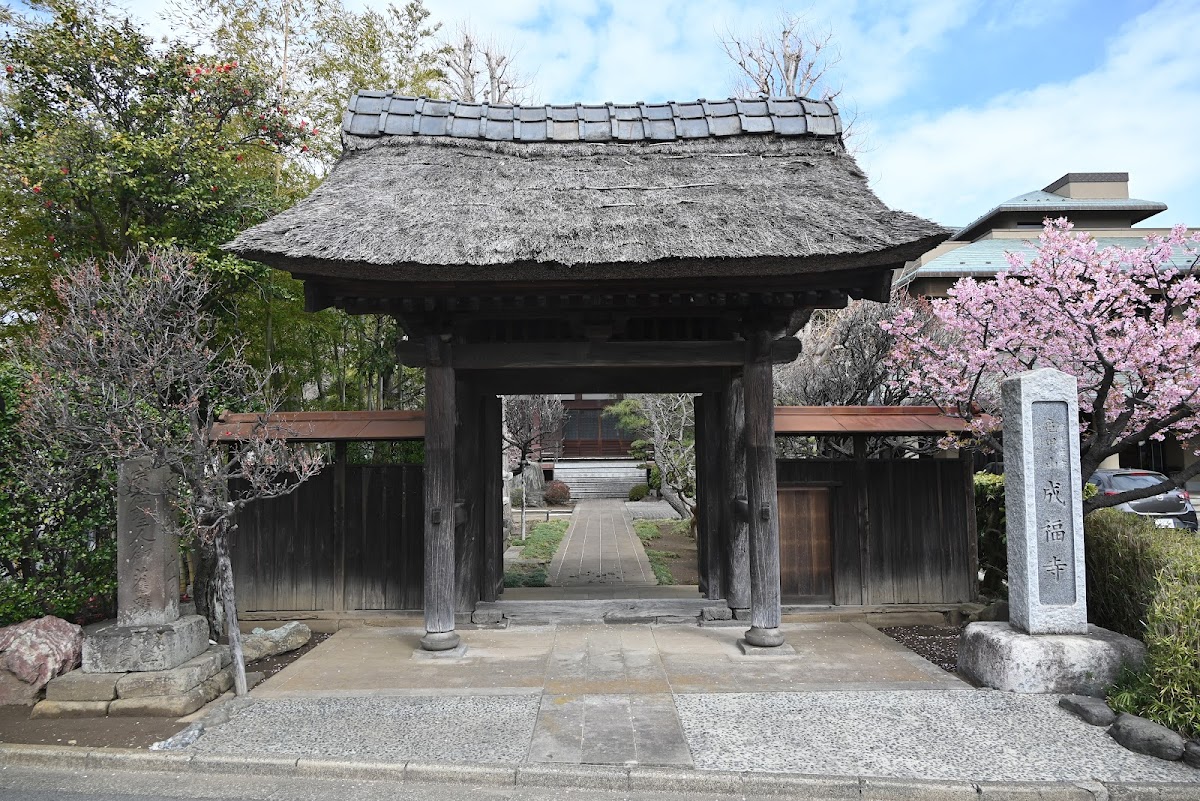
The first thing that catches the eye upon visiting Seifuku-ji Temple is its picturesque thatched-roof gate. This four-legged gate, along with the surrounding fence, creates a picturesque scene, transporting visitors to the atmosphere of the Kamakura period.
Thatched roofs are a traditional architectural style that requires regular re-thatching, and maintaining them requires considerable effort and expense. The fact that Seifuku-ji Temple continues to uphold this tradition is highly commendable from the perspective of cultural property preservation.
The scenery in front of the temple gate is a popular photo spot, offering different expressions throughout the seasons. Especially during the seasons of fresh greenery and autumn leaves, one can enjoy the beautiful scenery where the thatched roof harmonizes with nature.
Juniper Tree Designated as a City Natural Monument
Within the temple grounds stands a juniper tree (Juniperus chinensis) estimated to be several hundred years old, designated as a natural monument of Kamakura City. The juniper is an evergreen conifer belonging to the cypress family, known for its slow growth and longevity.
This juniper tree can be considered a living witness that has watched over the long history of Seifuku-ji Temple. Its trunk is thick, and its tree shape is magnificent, adding dignity to the temple grounds. Because it is designated as a natural monument, it is properly protected and managed, and will surely be passed down to future generations for many years to come.
Juniper trees, also known as “Ibuki,” are commonly planted in the grounds of Shinto shrines and Buddhist temples. Their fragrance is believed to have insect-repelling properties, and they have also been revered as sacred trees.
Main Hall and Amida Buddha Statue
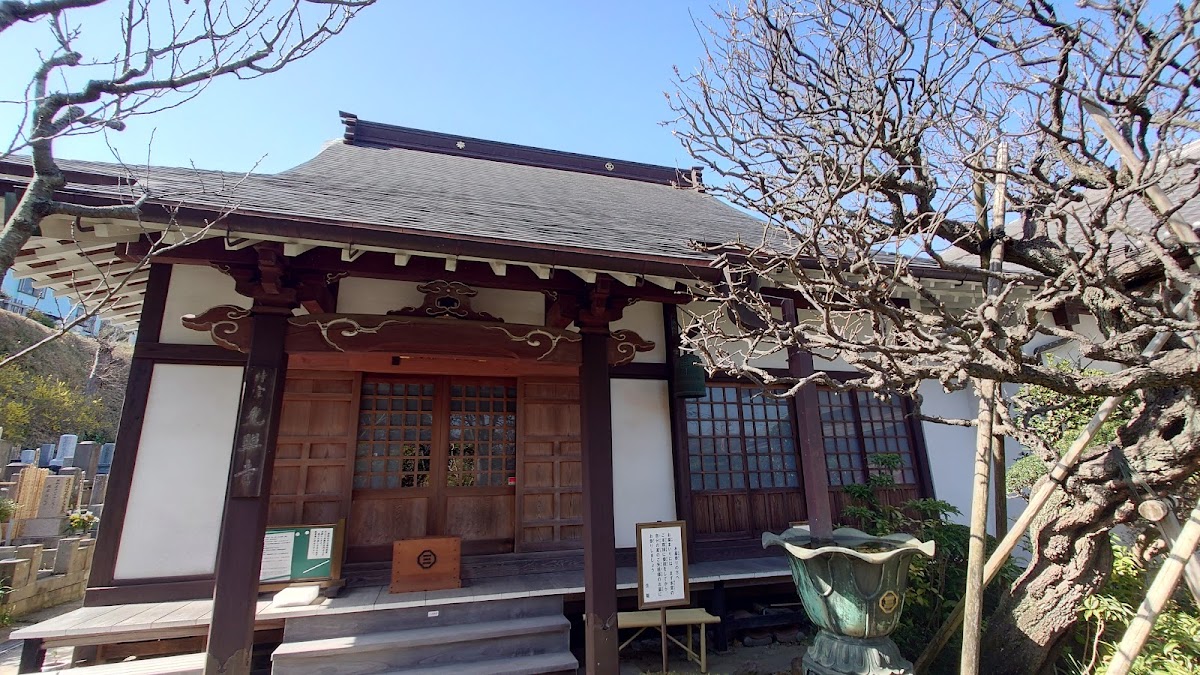
The main hall of Seifuku-ji Temple houses the principal image, a statue of Amida Buddha. In Jodo Shinshu Buddhism, Amida Buddha is the principal deity, and the practice of chanting the Nembutsu (invocation of Amida Buddha) based on belief in his salvation power is fundamental.
The main hall is built in the style of the Jodo Shinshu Honganji sect, and a golden, gleaming Amida Buddha statue is enshrined in the inner sanctuary. Visitors can clasp their hands together in front of the main hall and chant “Namu Amida Butsu” (Homage to Amida Buddha).
Unlike other sects, Jodo Shinshu Buddhism has its own unique customs, such as laying incense sticks horizontally instead of vertically, and not clapping hands. It is helpful to understand these Jodo Shinshu customs when visiting Seifuku-ji Temple.
Two-Panel Folding Screen with Ink Painting of Reeds and Geese
Jofuku-ji Temple houses a valuable cultural artifact: a two-panel folding screen with ink painting of reeds and geese. This screen is an ink painting depicting reeds and geese, and is in the form of a two-panel screen.
Ink painting is an art form that developed in conjunction with Zen Buddhist culture, and it is interesting that such a work is preserved at Jofuku-ji Temple, a Jodo Shinshu Buddhist temple. This can be seen as evidence that various cultures interacted in the Kamakura area.
The theme of reeds and geese is a subject that was introduced from China and has been depicted by many painters as a symbol of autumn. The image of geese flying over a reed field is a familiar motif that symbolizes departure and nostalgia.
Lotus Pots and Seasonal Flowers
In the parking lot next to the temple gate, blue plastic buckets are lined up along the wall. These are used as lotus pots, and in the summer season, large leaves and white lotus flowers bloom profusely.
The lotus is an extremely important plant in Buddhism. The lotus, which blooms beautifully from muddy water, symbolizes the Buddhist teaching of moving from a world tainted by worldly desires to enlightenment. In particular, Jodo Shinshu Buddhism describes the scene of lotus flowers blooming profusely in the Pure Land, and the lotus is cherished as a flower symbolizing the Pure Land.
The lotus at Seifuku-ji Temple is grown in modern containers—plastic buckets—a practical and modern innovation. Visiting during the blooming season from July to August allows you to enjoy the pure white lotus flowers.
Grave of Ryu Chishu | Temple where a great actor rests
Seifuku-ji Temple houses the grave of Ryu Chishu (1904-1993), a great actor who left his mark on the history of Japanese cinema. Chishu Ryu was a regular actor in Yasujiro Ozu’s films, appearing in numerous masterpieces such as “Tokyo Story,” “Late Spring,” and “Early Summer.”
Ryu spent his later years in Ofuna and had a deep connection with Seifuku-ji Temple, which is why he is buried there. Ofuna was a film town, home to the Shochiku Ofuna Studio, and many filmmakers lived there.
Many film fans and fans of Chishu Ryu visit his grave, making Seifuku-ji Temple a place that conveys a part of film culture. While the grave is within the temple grounds, it is important to visit quietly and respectfully.
Access | Directions by Train and Bus
Access from JR Ofuna Station
Walking: Approximately 15 minutes on foot from JR Ofuna Station (approx. 1.2 km)
Exit the west exit of Ofuna Station and head towards Kamakura. Cross National Route 1 (Tokaido), pass through the residential area, and proceed towards Kobukuroya to reach Seifuku-ji Temple.
By Bus:
- Take the Enoden Bus “N7” line from JR Ofuna Station
- Get off at the “Kinro Kaikan” bus stop and walk for approximately 4 minutes (about 300 meters).
Taking the bus is convenient, especially on hot or rainy days, as you can get off closer to the station.
Access from JR Kamakura Station
By Bus:
- Take the Enoden Bus “N2, A21, or K4” lines from JR Kamakura Station
- Get off at the “Kobukuroya (Seifukuji Entrance)” bus stop and walk for approximately 5 minutes (about 400 meters).
It’s a bit of a walk from Kamakura Station, so taking the bus is recommended. From the Kobukuroya bus stop, simply follow the signs and you’ll arrive without getting lost.
Access from JR Kita-Kamakura Station
By Foot: Approximately 15 minutes on foot from JR Kita-Kamakura Station.
By Bus:
- Take the bus bound for Ofuna from JR Kita-Kamakura Station.
- Get off at the Kobukuroya (Seifukuji Entrance) bus stop and walk for approximately 3 minutes.
While it’s within walking distance from Kita-Kamakura Station, it’s a bit of a distance, so taking the bus is more convenient. If you’re visiting in conjunction with other temples in Kita-Kamakura, you can also consider walking.
Access by Car and Parking
Seifukuji Temple has a parking lot for visitors. There are parking spaces next to the main gate, but since the number of spaces is limited, we recommend using public transportation during busy times.
When using car navigation, entering the address “2-13-33 Kobukuroya, Kamakura City, Kanagawa Prefecture” will allow you to arrive smoothly.
Manners and Precautions for Visiting a Temple
Jodo Shinshu Buddhist Temple Etiquette
Seifuku-ji Temple belongs to the Jodo Shinshu Honganji sect, so there are different customs compared to other sects.
How to Offer Incense: In Jodo Shinshu, incense sticks are not stood upright, but broken and laid horizontally. This is based on the idea of “offering fragrance.”
How to Perform Prayer: Bring both hands together in front of your chest and chant “Namu Amida Butsu.” Do not clap your hands (clapping is a custom at Shinto shrines).
How to Use Prayer Beads: In Jodo Shinshu, prayer beads are not rubbed together. Place them on both hands and clasp your hands together.
Regarding Photography
Photography is generally permitted on the temple grounds, but consideration is needed if the interior of the main hall or other visitors are included in the photos. Especially when photographing the grave of Chishu Ryu, please show respect and behave with moderation.
Visiting Hours and Admission Fee
While Seifuku-ji Temple is generally open for daytime visits, there may be times when it is closed due to events or other circumstances. If you wish to participate in a special service or event, it is recommended to inquire with the temple in advance.
There is no admission fee, but you are welcome to offer a donation or contribution as a token of your appreciation.
Nearby Tourist Attractions
Ofuna Kannon
Located within walking distance (approximately 1.5 km) of Seifuku-ji Temple, Ofuna Kannon is known for its massive, approximately 25-meter-tall white-robed Kannon statue. It is a beloved landmark of Ofuna and can be visited in conjunction with Seifuku-ji Temple.
Temples of Kita-Kamakura
If you venture from Seifuku-ji Temple towards Kita-Kamakura, you will find many of Kamakura’s most famous temples, including Engaku-ji, Kencho-ji, Meigetsu-in, and Tokei-ji. A temple tour combining these temples with Seifuku-ji Temple is also enjoyable.
Historical Walks in Kobukuroya
Besides Seifukuji Temple, the Kobukuroya area retains many historical sites and ancient roads. A stroll through this area, which still retains traces of the Kamakura period, allows you to experience the atmosphere of that time.
Annual Events and Memorial Services
As a temple of the Jodo Shinshu Honganji sect, Seifukuji Temple holds various memorial services throughout the year.
Spring and Autumn Equinoxes: Memorial services for ancestors are held.
Flower Festival (Buddha’s Birthday): The Flower Festival is held on April 8th, the Buddha’s birthday.
Ho-on-ko (Memorial Service): This is the most important memorial service in Jodo Shinshu Buddhism, commemorating the death anniversary of Shinran Shonin (November 28th in the old lunar calendar).
By participating in these services, you can experience the teachings of Jodo Shinshu Buddhism and gain a deeper understanding of Seifukuji Temple.
The Diversity of Kamakura as Told by Seifuku-ji Temple
While Kamakura is strongly associated with Zen Buddhist temples, the existence of Seifuku-ji Temple speaks to the diversity of Kamakura’s religious culture. The fact that members of the Hojo clan, the regents, converted to Buddhism under Shinran Shonin, indicates that the Kamakura period was not simply an era of samurai rule, but also a time when new Buddhist thought spread.
Jodo Shinshu Buddhism preaches “absolute reliance on the power of others,” teaching that all people are saved by the power of Amida Buddha’s original vow. This teaching, in contrast to Zen Buddhism which requires rigorous training, was a philosophy more easily accepted by a wider range of people.
Seifuku-ji Temple is a valuable temple that conveys a part of this religious reform of the Kamakura period.
Summary | Points to Note When Visiting Seifuku-ji Temple
Seifuku-ji Temple is a temple with many points of interest, including its history related to the Hojo clan, the important religious event of conversion to Shinran Shonin, the natural monument juniper tree, and the grave of the renowned actor, Chishu Ryu.
As the only Jodo Shinshu Honganji-ha temple in Kamakura that is open to the public, it offers a different atmosphere and teachings from Zen temples. The thatched-roof gate, tranquil grounds, and seasonal flowers gently welcome visitors.
Conveniently located near Ofuna and Kita-Kamakura stations, yet rarely crowded with tourists, it’s a charming place for a peaceful visit. Why not add Seifuku-ji Temple to your Kamakura temple tour?
At Seifuku-ji Temple, you can feel the weight of history dating back to the Kamakura period while experiencing the warm teachings of Jodo Shinshu Buddhism that “all people will be saved.” Nestled in the quiet residential area of Kobukuroya, this temple is sure to bring peace of mind to those who visit.