Complete Guide to Zuisenji Temple (Kamakura City, Kanagawa Prefecture) | The Charm of the Flower Temple and Scenic Garden Built by Muso Kokushi
Located in the innermost part of Momijigaya, a quiet valley in Nikaido, Kamakura City, Kanagawa Prefecture, Zuisenji Temple is one of Kamakura’s leading Zen Buddhist temples. While a prestigious temple ranked as the foremost of the Ten Great Temples of the Kanto region, it is also beloved by many visitors as a “flower temple” adorned with flowers throughout the seasons. This article comprehensively introduces information you should know before visiting Zuisenji Temple, including its history, highlights, access methods, and seasonal scenery.
About Zuisenji Temple
Official Name and Basic Information
The official name of Zuisenji Temple is “Kinpeisan Zuisenji.” It is a Zen Buddhist temple belonging to the Engakuji branch of the Rinzai school, and its principal image is Shakyamuni Buddha. The entire temple grounds are designated a National Historic Site, and the garden created by Musō Kokushi is designated a National Place of Scenic Beauty, protecting it as a representative cultural asset of Kamakura.
The temple’s mountain name, “Kinpeizan,” originates from the beautiful autumn foliage of Momijigaya surrounding the temple like a brocade screen. It is also known as the 6th temple of the Kamakura Thirty-Three Kannon Pilgrimage and the 7th temple of the Kamakura Twenty-Four Jizo Pilgrimage, attracting many pilgrims.
History of Founding and Musō Kokushi
Zuizenji Temple was founded in 1327 (Karyaku 2). The founding priest was Musō Soseki, commonly known as Musō Kokushi. Musō Kokushi was a high-ranking priest of the Rinzai sect who was active from the Kamakura period to the Nanboku-chō period, and was deeply revered by powerful figures of the time, including Emperor Go-Daigo and Ashikaga Takauji.
The founder (the person who supported the establishment) was Nikaido Doun, a senior retainer of the Kamakura Shogunate. Doun was a follower of Muso Kokushi and chose the Momijigaya area as a suitable location for a Zen temple, thus establishing Zuizen-in.
Muso Kokushi was known not only as a Zen monk but also as a master garden designer, famous for his work on the gardens of Tenryu-ji and Saiho-ji (Moss Temple) in Kyoto. The garden of Zuizen-ji is an extremely valuable cultural heritage, being the only surviving Kamakura-period garden in Kamakura.
Status as the Family Temple of the Kamakura Shogun
A significant turning point in the history of Zuizen-ji was its restoration by Ashikaga Motouji. Motouji was the first Kamakura Shogun (chief administrator of the Kamakura Shogunate), a devout follower of Zuizen-ji, and was buried there. From this point onward, Zuizenji Temple became the family temple of successive Kamakura Shoguns and received patronage from the Ashikaga clan for four generations.
Due to its high status, Zuizenji Temple was ranked as the foremost (first place) of the Ten Great Zen Temples of the Kanto region, second only to the Five Great Zen Temples of Kamakura. The Ten Great Zen Temples of Kanto were a ranking of major Zen Buddhist temples in the Kanto region, and Zuizenji Temple held the highest position.
Role as a Center of Gozan Literature
Zuizenji Temple flourished not only as a Zen Buddhist temple but also as an important center of Gozan literature. Gozan literature refers to the literature written in classical Chinese by Zen monks during the Kamakura and Muromachi periods. Many literary monks gathered at Zuizenji Temple and created classical Chinese poetry and prose.
This tradition was passed down to later generations, and even in the modern era, cultural figures such as Yoshino Hideo, Oya Soichi, and Kume Masao visited Zuizenji Temple and engaged in creative activities in its tranquil environment. Even today, the temple grounds are dotted with haiku and waka poetry monuments of cultural figures, allowing visitors to feel the deep connection to literature.
Guide to the Temple Grounds and Highlights
From the Temple Gate to the Main Hall
To reach Zuizenji Temple, you climb the stone steps made of Kamakura stone and pass through the temple gate. The area around the temple gate is particularly known for its autumn foliage, and in autumn, the fiery red leaves welcome visitors. Passing through the temple gate, you enter a tranquil temple grounds, allowing you to forget the hustle and bustle of the city.
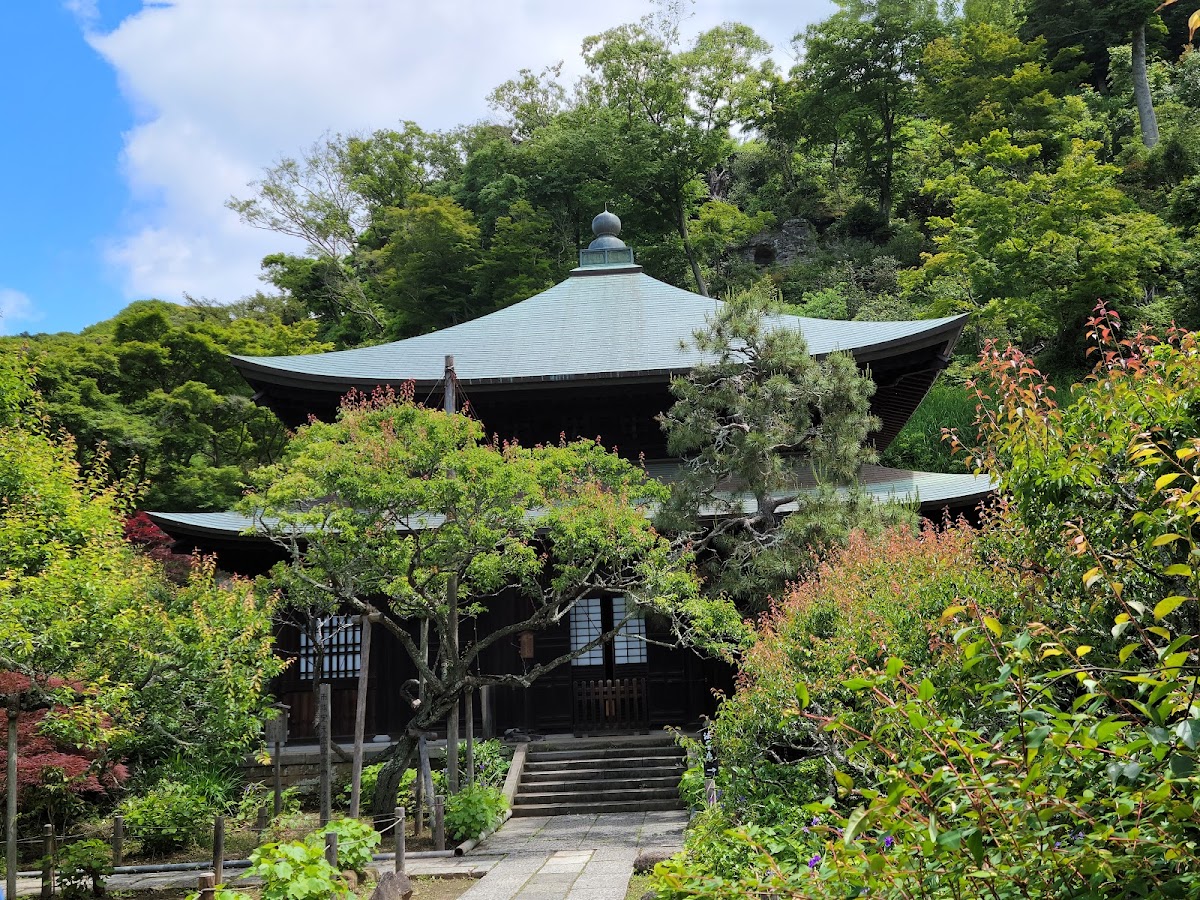
As you proceed along the path, you will see the main hall. The main hall houses the principal image, a statue of Shakyamuni Buddha, where you can quietly offer your prayers. The area around the main hall is also adorned with seasonal flowers, showing a different face depending on the time of year you visit.
Nationally Designated Scenic Spot “Zuizenji Garden”
The greatest highlight of Zuizenji Temple is the garden created by Muso Kokushi, which spreads out behind the main hall. This garden is designated as a national scenic spot as the only remaining Kamakura period garden in Kamakura. The garden’s most distinctive feature is its unique design, created by directly carving into the bedrock of Kamakura stone (tuffaceous sandstone produced around Kamakura). A large cave, “Tennyo-do” (Heavenly Maiden Cave), is carved into the bedrock, offering a panoramic view of the entire garden. It is believed that Tennyo-do was used as a place for Zen meditation.
Furthermore, a pond called “Chōsei-chi” (Spring Waterfall), modeled after a waterfall, is carved into the bedrock, creating a masterpiece of dry landscape gardening that expresses the spirituality of Zen. This garden, a condensation of the garden design techniques of Musō Kokushi, offers visitors profound tranquility and spiritual peace.
With the garden as a backdrop, the natural beauty of the Nikaido Valley unfolds, offering particularly spectacular views during the autumn foliage season. The harmony between the vibrant autumn leaves and the garden, truly befitting the name Momijigaya (Maple Valley), is a must-see.
Layout of the temple grounds utilizing the hilly terrain
Zuizenji Temple is skillfully laid out, making full use of the valley topography unique to Kamakura. The spatial composition, extending from the main hall to the garden and then to the mountains behind, embodies the ideal of a Zen Buddhist temple where nature and artificiality are seamlessly integrated.
Throughout the temple grounds, you’ll find haiku and waka monuments inscribed with the names of successive head priests and cultural figures; searching for them while strolling around is one of the pleasures of visiting. The grounds are not particularly large, but the depth of history and culture condensed within this small space will never bore visitors.
Zuizenji Temple: Where Seasonal Flowers Speak
The Charm of a “Flower Temple”
Zuizenji Temple is renowned as one of Kamakura’s premier “flower temples.” Various flowering trees and shrubs are planted throughout the grounds, ensuring that some kind of flower is in bloom throughout the year. This rich planting has been carefully preserved by successive head priests and parishioners.
Spring Scenery (February-May)
The flower calendar at Zuizenji Temple begins with early spring plum blossoms and daffodils. From late January to February, the ancient plum trees on the temple grounds bloom, and daffodils also reach their peak during this time. The fragrance of the plum blossoms and the pure white flowers of the daffodils signal the end of winter.
From late March to early April, the cherry blossoms bloom, beautifully marking the arrival of spring. Several varieties, including Somei Yoshino and mountain cherry trees, are planted, allowing visitors to enjoy the cherry blossoms for an extended period.
From April to May, azaleas and rhododendrons adorn the temple grounds. Combined with the beauty of the fresh greenery, this is the most vibrant season.
Early Summer to Summer Scenery (June-August)
During the rainy season in June, hydrangeas reach their peak bloom. Kamakura is known for its many hydrangea spots, but the hydrangeas at Zuisenji Temple bloom particularly beautifully in the humid environment of the valley.
From July to August, hibiscus and crape myrtle bloom, offering a refreshing contrast to the summer heat. Hibiscus, in particular, is one of Zuizenji Temple’s signature flowers and can be enjoyed for an extended period from early August to early September.
Autumn Scenery (September-November)
In September, bush clover (hagi) reaches its peak bloom, signaling the arrival of autumn. The bush clover within the temple grounds is picturesque and has long been cherished as one of the seven autumn flowers.
From October to November, Zuizenji Temple shines brightest with its autumn foliage. As its name, Momijigaya (Maple Valley), suggests, the surrounding mountains are ablaze with color, and the views from around the temple gate and gardens are breathtaking. The peak viewing period for autumn leaves is from late November to early December, attracting many tourists and photography enthusiasts.
Winter Scenery (December-January)
In winter, Zuizenji Temple reveals the true essence of a Zen temple, enveloped in tranquility. From December to January, camellias begin to bloom, and on snowy days, you can enjoy the picturesque sight of snow-covered camellias.
The winter-bare garden also possesses a unique beauty that evokes the spirit of Zen, allowing you to enjoy a quiet time with fewer tourists.
Visiting Information
Visiting Hours and Admission Fees
Visiting Hours: 9:00 AM – 5:00 PM (Last entry at 4:30 PM)
Admission Fees:
- Adults (High school students and older): 200 yen
- Elementary and junior high school students: 100 yen
The admission fees are very reasonable, allowing you to easily visit a nationally designated historical site and scenic spot.
Holidays and Regular Closing Days
Generally, the temple is open year-round, but visits may be closed due to severe weather or temple events. It is especially recommended to check in advance during severe weather such as typhoons. ### Estimated Time Required
Including a stroll through the temple grounds and viewing the gardens, the estimated time required is 30 minutes to 1 hour. If you plan to take your time taking photos or visiting the haiku monuments, it’s best to allow 1 hour or more.
Access Information
Address and Basic Information
Address: 710 Nikaido, Kamakura City, Kanagawa Prefecture 248-0002
Phone: 0467-22-1191
Access by Public Transportation
From JR Kamakura Station/Enoden Kamakura Station:
- By Bus:
- Take the Keihin Kyuko Bus bound for “Daitomiya” from bus stop #4 at the Kamakura Station East Exit bus terminal (approx. 10 minutes)
- Get off at the last stop, “Daitomiya” bus stop, then walk for approximately 15 minutes
- Buses run approximately 2-3 times per hour
- Walking:
- Approximately 30-40 minutes on foot from the Kamakura Station East Exit
- The route passes through Tsurugaoka Hachimangu Shrine and heads towards Nikaido
- You can also visit tourist spots such as Kamakura-gu Shrine (Daitomiya) along the way
Access by Car
Parking: Zuizenji Temple does not have its own parking lot. We recommend using nearby paid parking lots or parking near Kamakura Station and using public transportation.
The roads in Kamakura are narrow, and traffic congestion is particularly severe during peak tourist season, so using public transportation is highly recommended.
Combining with Nearby Tourist Attractions
Zuizenji Temple is located in the Nikaido area on the east side of Kamakura, and we recommend visiting it in combination with the following tourist attractions:
- Kamakura-gu Shrine (Daito-gu Shrine): Approximately a 10-minute walk from Zuizenji Temple. A shrine dedicated to Prince Moriyoshi.
- Egara Tenjin Shrine: An ancient shrine dedicated to the god of learning. Near Kamakura-gu Shrine.
- Sugimoto-dera Temple: Kamakura’s oldest temple. Beautiful moss-covered stone steps.
- Hokoku-ji Temple: A temple famous for its bamboo garden. Popular as part of a “Tour of Two Great Flower and Bamboo Spots” along with Zuizenji Temple
Travel Planning
Recommended Time to Visit
Zuizenji Temple is attractive throughout the four seasons, but the following times are especially recommended:
First Place: Late November to Early December (Autumn Leaves)
Enjoy a spectacular view befitting the name of Momijigaya (Maple Valley). However, it gets crowded, so early mornings on weekdays are recommended.
Second Place: February to March (Plum Blossoms and Daffodils)
Enjoy the fragrance of plum blossoms and the lovely appearance of daffodils in the quiet temple grounds of early spring. It is relatively uncrowded, allowing for a leisurely visit.
Third Place: June (Hydrangeas)
Although it is the rainy season, hydrangeas wet with rain are exceptionally beautiful.
What to Wear and Bring When Visiting
- Comfortable Walking Shoes: Essential as it’s a 15-minute walk from the bus stop and there are stone steps within the temple grounds.
- Hat/Parasol: There are areas with little shade in the summer.
- Rain Gear: Bring an umbrella during the rainy season or when the weather is unpredictable.
- Camera: For photographing seasonal flowers and gardens.
- Drinks: Staying hydrated is especially important in the summer (there are no vending machines on the temple grounds).
Photography Tips
Zuizenji Temple is a popular photography spot, but please note the following:
- Use of Tripods: When it’s crowded, be considerate of other visitors.
- Inside the Main Hall: Photography may be prohibited, so check before taking pictures.
- Recommended Angles: Autumn leaves around the temple gate, the view from the Tennyo-do cave in the garden, and the combination of the main hall and flowers.
Useful Information
Accessibility Information
Zuizenji Temple is located in a mountainous area, a 15-minute walk from the bus stop, and has stone steps within the temple grounds, making wheelchair access difficult. Those with mobility issues are advised to contact the temple in advance.
Toilets and Rest Facilities
While there are toilets on the temple grounds, there are no rest facilities or shops. It is recommended to eat and drink near Kamakura Station or Kamakura-gu Shrine.
Goshuin (Temple Stamps)
Goshuin stamps are available at Zuizenji Temple. Goshuin stamps for the Kamakura Thirty-Three Kannon Pilgrimage and the Kamakura Twenty-Four Jizo Pilgrimage are also available. Please bring your goshuincho (stamp book).
Events and Special Viewings
In addition to regular viewings, special events may be held depending on the season. Please check the official website for the latest information.
Nearby Restaurants
There are very few restaurants near Zuizenji Temple, so it is recommended to eat near Kamakura Station or Kamakura-gu Shrine. The area around Kamakura Station has a good selection of restaurants using Kamakura vegetables and long-established Japanese confectionery shops. ## Summary
Zuisenji Temple is a representative temple of Kamakura, possessing three attractions: a nationally designated scenic garden built by Musō Kokushi, its status as the foremost of the Ten Great Temples of the Kanto region, and its seasonal flowers. Located in a quiet valley in Nikaido, Kamakura City, it offers a peaceful escape from the hustle and bustle of the city.
While it’s a bit of a distance from Kamakura Station, this means it’s relatively less crowded, allowing for a leisurely stroll through the temple grounds. The autumn foliage is particularly spectacular, but each season offers its own unique beauty: early spring with plum blossoms and daffodils, early summer with hydrangeas, and summer with hibiscus.
As a Zen temple of the Engakuji branch of the Rinzai school, and a center of Gozan literature, Zuisenji Temple has a rich history and is an important spot for gaining a deep understanding of Kamakura’s culture and history. It’s a must-visit during your Kamakura sightseeing trip.
Zuisenji Temple Quietly admiring the flowers within the temple grounds, experiencing the spirit of Zen in the nationally designated scenic garden, and feeling the profound history of Kamakura—an experience at Zuisenji Temple will surely become a memorable one.