Yakuoji Temple (Kamakura City, Kanagawa Prefecture) Complete Guide: History and Highlights of a Nichiren Buddhist Temple with Ties to the Tokugawa Family
Located in Ōgigayatsu, Kamakura City, Kanagawa Prefecture, Yakuoji Temple is a historic Nichiren Buddhist temple boasting a history of over 700 years. Deeply connected to the Tokugawa and Gamō families, and with Yakushi Bodhisattva (the Bodhisattva of Medicine) as its principal deity, it attracts many visitors seeking healing for physical and mental illnesses. This article provides detailed information about Yakuoji Temple, including its history, highlights, access methods, and perpetual memorial services—all essential information before your visit.
Basic Information about Yakuoji Temple
Official Name: Daijōzan Yakuoji Temple
Sect: Nichiren Buddhism
Principal Image: Shakyamuni Buddha (Yakushi Bodhisattva)
Founder: Nichizō Shōnin
Established: Einin 1 (1293)
Address: 3-5-1 Ōgigayatsu, Kamakura City, Kanagawa Prefecture 248-0011
Temple Crest: Three-leaf Aoi (due to its connection with the Tokugawa family)
Yakuoji Temple is located about a 13-minute walk from Kamakura Station and is easily accessible from Komachi Street, making it a temple you can easily visit while sightseeing in Kamakura.
History of Yakuoji Temple: Conversion from Shingon Buddhism to Nichiren Buddhism
Circumstances of Establishment and Nichizō Shōnin
The history of Yakuoji Temple dates back to Einin 1 (1293). After completing a hundred days of rigorous ascetic practice at Yuigahama, Nichizo Shonin, a leading disciple of Nichiren Daishonin, arrived in this area seeking a place to recuperate. At the time, there was a Shingon Buddhist temple called “Baireizan Yakoji” in this location. However, Nichizo Shonin rebuked the resident monk and converted the temple to the Nichiren sect, establishing it as a temple dedicated to the Lotus Sutra. This marked the beginning of Yakushiji Temple.
Nichizo Shonin, also known as Higo Ajari, was a crucial figure who dedicated himself to the propagation of the Nichiren sect. This founding story is a valuable historical episode illustrating the intensity of religious debates during the Kamakura period and the expansion of the Nichiren sect’s influence.
Donations from Tokugawa Tadanaga and Matsukoin
The most important turning point in the history of Yakushiji Temple was its reconstruction during the Kan’ei era (1624-1645). Lord Tokugawa Tadanaga, the Grand Councilor of Suruga Province (third son of Tokugawa Hidetada and younger brother of Tokugawa Iemitsu), met a tragic end, ultimately being ordered to commit suicide due to a conflict with his older brother, Shogun Iemitsu.
His wife, Matsukoin-dono (granddaughter of Oda Nobunaga and daughter of Oda Nobuyoshi), donated a vast sum of money and a large plot of land to the Fuju-fuse sect monk Nichitatsu Shonin for the repose of her husband’s soul. This led to the construction of magnificent temple buildings and a five-story pagoda within the 3,000-tsubo (approximately 10,000 square meters) grounds. Around this time, the temple’s name was changed from “Baireizan Yakoji” to “Daijozan Yakuoji.”
Due to the existence of this memorial tower for Tokugawa Tadanaga, Yakuoji Temple was permitted to use the three-leaf hollyhock crest as its temple emblem, as it was associated with the Tokugawa and Gamo families (Matsukoin-dono was also the granddaughter of Gamo Ujisato).
The Great Fire of Kyoho and the Tenpo Reforms
In 1720 (Kyoho 5), Yakushiji Temple was struck by a great fire, and all of its buildings, including the five-story pagoda (a memorial tower for Tokugawa Tadanaga), were destroyed. Although the magnificent temple complex of yesteryear was lost in this fire, the temple continued its activities.
Furthermore, in 1842 (Tenpo 13), during the Tenpo Reforms, when Kannoji Temple, a large Nichiren Buddhist temple also located in Kamakura, was abolished, its founder’s statue (a statue of Nichiren Shonin) was moved to Yakushiji Temple. This wooden seated statue of Nichiren Daishonin remains an important Buddhist statue at Yakushiji Temple today.
The Meiji Restoration and Restoration
Due to the anti-Buddhist movement following the Meiji Restoration, Yakushiji Temple was almost completely abandoned for a time. However, through the efforts of its parishioners and followers, it was revived and continues to uphold the Dharma as a Nichiren Buddhist temple in Kamakura to this day.
Highlights of Yakushiji Temple: A Thorough Explanation of the Temple Grounds’ Charms
Memorial Tower for Lord Tokugawa Tadanaga, Suruga Dainagon
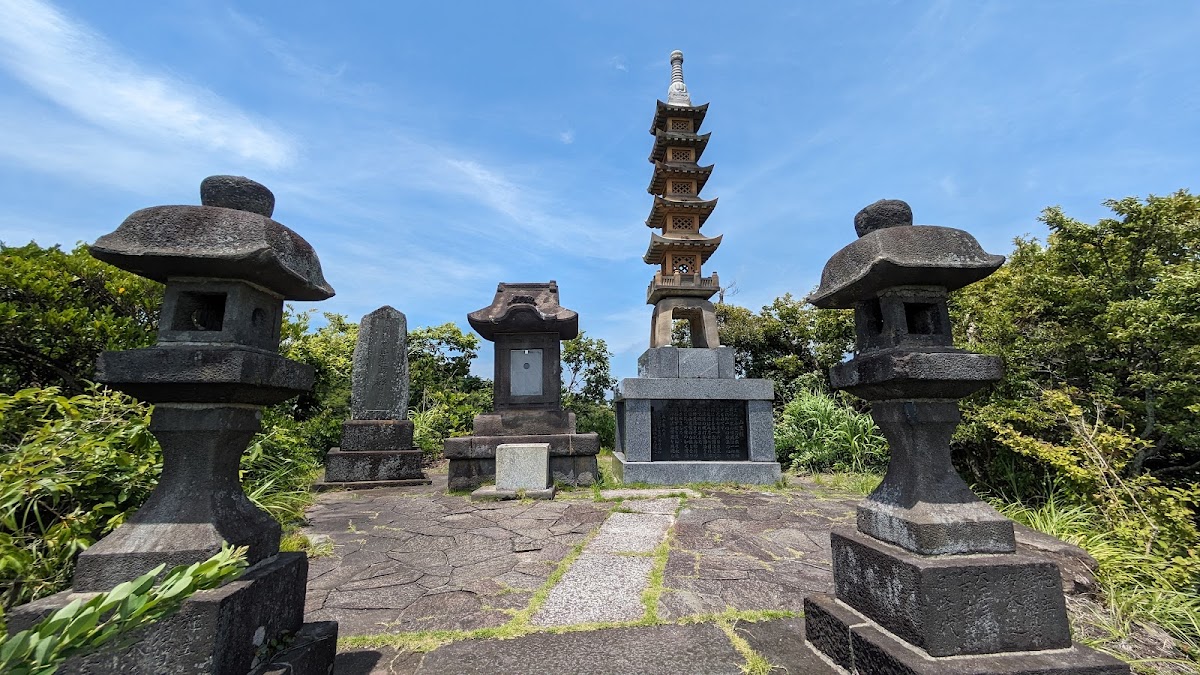
Located immediately to the right upon entering the temple grounds is the “Memorial Tower for Lord Tokugawa Tadanaga, Suruga Dainagon,” the temple’s greatest highlight. While the five-story pagoda was destroyed in the Great Kyoho Fire, the memorial tower itself was rebuilt and remains a valuable historical site that conveys the history of the Tokugawa family.
Lord Tokugawa Tadanaga, despite being the shogun’s younger brother, was a tragic figure ordered to commit suicide at the young age of 28 due to conflict with his older brother, Iemitsu. This memorial tower is a historical monument that tells the story of the deep love and grief of Matsukoin, who lost her husband.
Yakushiji Bodhisattva, the Antidote of Poison
While the principal image of Yakushiji Temple is Shakyamuni Buddha, the temple also enshrines Yakushiji Bodhisattva, known as the “Antidote of Poison.” Yakushi Bodhisattva is a Buddha believed to eliminate the “poisons” of physical and mental illness and worldly desires, and many worshippers visit the temple to pray for health and recovery from illness.
The presence of Yakushi Bodhisattva is the origin of the temple’s name, and even today, it functions as a “refuge temple,” offering consultations to people with various problems.
Valuable Buddhist Statues
Yakushi-ji Temple houses numerous valuable Buddhist statues:
- Wooden Statue of Nichiren Daishonin: A statue of the founder relocated from Kanno-ji Temple
- Vajra Shakyamuni Buddha Statue: The principal image enshrined in the main hall
- Wooden Sanbo Honzon: An important object of worship in the Nichiren sect
- Wooden Ebisu Statue: A Buddhist statue related to the Seven Lucky Gods belief
These statues are also valuable as precious historical materials of Buddhist art from the Kamakura period to the Edo period.
Tranquil Temple Grounds and Seasonal Flowers
Yakushiji Temple’s grounds are small, but they offer a peaceful and tranquil space. Especially during hydrangea season, the grounds are filled with beautiful flowers, delighting visitors. While Kamakura is known for its hydrangeas, Yakushiji Temple is a hidden gem, beloved by locals.
Temple Gate and Main Hall
The temple gate of Yakushiji Temple, visible when walking from Kamegayazaka Pass, is simple yet exudes a sense of history. The main hall retains the architectural style of the Edo period, and the aforementioned group of Buddhist statues are enshrined inside.
Yakushiji Temple’s Goshuin (Temple Stamp) Information
You can receive a Goshuin at Yakushiji Temple. As a Nichiren Buddhist temple, the Goshuin bears the inscription “Namu Myoho Renge Kyo.” Those collecting Goshuin should inquire at the temple office during their visit.
The temple’s official seal (Goshuin) sometimes features the temple’s mountain name, “Daijozan,” and its crest, the three-leaf hollyhock, reflecting its connection to the Tokugawa family.
Access and Transportation Information
Access by Train
From JR Yokosuka Line/Enoshima Electric Railway “Kamakura Station”
- Approximately 13 minutes on foot
- Take the route along Komachi Street towards Ogigayatsu
From JR Yokosuka Line “Kita-Kamakura Station”
- Approximately 15 minutes on foot
- After passing through Kamegayazaka Pass, walk for about 3 minutes to reach the entrance of Yakushiji Temple
Access by Car
The roads in central Kamakura are narrow and congested during peak tourist season, so using public transportation is recommended. Parking is limited, so please check in advance.
Nearby Tourist Attractions
The following are some of Kamakura’s most representative tourist attractions located near Yakushiji Temple:
- Tsurugaoka Hachimangu Shrine (approx. 10-minute walk)
- Jufukuji Temple (approx. 5-minute walk)
- Eishoji Temple (approx. 3-minute walk)
- Kaizoji Temple (approx. 7-minute walk)
- Kamegayatsuzaka Pass (approx. 3-minute walk)
You can enjoy visiting Kamakura’s temples and shrines by combining these spots.
About Perpetual Memorial Services and “Noukotsubo”
Yakushiji Temple offers perpetual memorial graves that meet modern needs. It has introduced a perpetual memorial service system called “Noukotsubo,” which is chosen by those who have no successors to their graves or who wish to have perpetual memorial services in the historically rich area of Kamakura.
Features of Yakushiji Temple’s Perpetual Memorial Service
- Easy Access: Within walking distance of Kamakura Station, easily accessible while strolling along Komachi Street.
- Historical Temple: A historic Nichiren Buddhist temple with over 700 years of history.
- Connection to the Tokugawa Family: Perpetual memorial service at a prestigious temple.
- All Sects Welcome: Accepting people of all faiths, not just Nichiren Buddhism.
For detailed information and costs regarding perpetual memorial services, please contact the temple directly.
Activities as a Refuge Temple
Yakushiji Temple also functions as a “refuge temple,” offering consultations to people facing various problems. Its approach of helping to remove mental toxins and worldly desires by harnessing the power of Yakushiji Bodhisattva plays an important role in modern society.
It provides consultations on various issues, including life’s troubles, family problems, and mental illness, and refers individuals to specialized institutions as needed.
Annual Events at Yakushiji Temple
As a Nichiren Buddhist temple, Yakushiji Temple holds the following annual events:
- Oeshiki: Memorial service for Nichiren Shonin (October)
- Obon Memorial Service: Memorial service for ancestors (August)
- Setsubun-e: Prayer for warding off evil (February)
- Spring and Autumn Equinox: Equinox memorial service
Some of these events are open to the general public as well as temple parishioners. Those interested should inquire in advance.
The Role of Yakushiji Temple in Kamakura
While Kamakura has many temples, Yakushiji Temple holds an important position as a Nichiren Buddhist temple. Although smaller in scale compared to Zen temples like the Kamakura Five Mountains, it is characterized by its historical value as a temple associated with the Tokugawa family and its modern role as a refuge temple.
The Ōgigayatsu area is located midway between Kamakura Station and Kita-Kamakura Station, maintaining a relatively quiet atmosphere. While close to the bustling Komachi Street, it offers a peaceful environment for worship.
Manners and Precautions for Visiting
When visiting Yakushiji Temple, please observe the following manners:
- Bow at the main gate: Bow before entering the temple grounds.
- Be quiet: Remain quiet within the temple grounds.
- Photography: Permission may be required to photograph inside the main hall; please check beforehand.
- Offering: Offer with gratitude.
- Goshuin (temple stamp): Bring your goshuincho (stamp book) and respectfully request one.
Summary: The Charm of Yakushiji Temple
Yakushiji Temple, located in Ōgigayatsu, Kamakura City, Kanagawa Prefecture, is an ancient Nichiren Buddhist temple with a history of over 700 years. Founded by Nichizo Shonin, rebuilt by Tokugawa Tadanaga and Matsukoin, survived the Great Kyoho Fire, and underwent reconstruction after the Meiji Restoration, this temple has a turbulent history and continues to uphold its religious traditions today.
As a temple associated with the Tokugawa and Gamo families, it bears the three-leaf hollyhock crest and houses the Yakushi Bodhisattva, making it a revered temple for healing physical and mental illnesses. Furthermore, it operates in a way that meets the needs of modern society, offering services such as a refuge temple and perpetual memorial services.
Yakushi-ji Temple, conveniently located within walking distance of Kamakura Station and close to Komachi Street, offers a tranquil and peaceful atmosphere. When visiting Kamakura, be sure to stop by. The memorial tower for Tokugawa Tadanaga, the precious collection of Buddhist statues, and seasonal flowers will quietly welcome visitors.
Frequently Asked Questions (FAQ)
What are the visiting hours for Yakushi-ji Temple?
The general visiting hours are during the daytime (around 9:00 AM to 4:00 PM), but please contact the temple directly for specific times. Hours may change due to memorial services or events.
Is there an entrance fee to Yakushiji Temple?
Entry to the temple grounds is generally free. However, a donation may be requested during special viewings or events.
Can I get a Goshuin (temple stamp) at any time?
Goshuin are available during the temple office’s opening hours, but may not be available during memorial services or when staff are absent. If you wish to be sure to receive a Goshuin, it is recommended to call in advance.
Is Yakushiji Temple accessible by wheelchair?
The temple grounds are small, but there are some steps. If you wish to visit in a wheelchair, it is recommended to consult with the temple in advance.
I would like to know more about perpetual memorial services at Yakushiji Temple.
For details regarding perpetual memorial services (costs, contract details, methods of service, etc.), please contact the temple directly or check their official website. We also accept visits and consultations.
Are there any places to eat near Yakushiji Temple?
There are many restaurants around Kamakura Station and Komachi Street. Within a 10-minute walk, you can find restaurants and cafes of various genres, allowing you to enjoy Kamakura’s cuisine.
Is Yakushiji Temple famous for hydrangeas?
While not a large-scale hydrangea temple, beautiful hydrangeas bloom within the temple grounds, making it a hidden gem for quiet appreciation. It’s not on the scale of Meigetsuin or Hase-dera, but you can enjoy the flowers in a peaceful atmosphere.