Raikoji Temple (Kamakura City, Kanagawa Prefecture) Complete Guide | A Thorough Explanation of Two Ancient Temples in Nishimikado and Zaimokuza
Did you know that there are two temples named “Raikoji” in Kamakura City? One is Mankozan Raikoji Temple of the Jishu sect located in Nishimikado, and the other is Nozozan Raikoji Temple of the Jodo sect located in Zaimokuza. Each is an ancient temple with a different history and charm, and is also known as one of the 33 Kannon pilgrimage sites of Kamakura. This article provides a thorough explanation of both temples, including detailed information, historical background, highlights, and access methods.
Raikoji Temple (Nishimikado) – An Ancient Temple of the Jishu Sect
Basic Information on Nishimikado Raikoji Temple
Raikoji Temple, located in Nishimikado, is officially called “Mankozan Raikoji” and belongs to the Jishu sect. It stands in a quiet residential area behind Tsurugaoka Hachimangu Shrine, in the area where Minamoto no Yoritomo’s tomb is located.
Location: 1-11-1 Nishimikado, Kamakura City, Kanagawa Prefecture
Sect: Jishu Sect
Mountain Name: Mankozan
Principal Image: Amida Buddha
Pilgrimage Site: 5th Temple of the Kamakura Thirty-Three Kannon Pilgrimage
Founder: Ikko Shonin (some sources say Ippen Shonin)
Established: 1293 (Einin 1)
History and Origin of Nishimikado Raikoji Temple
1293 (Einin 1), the year Raikoji Temple was founded, is a significant year in Kamakura’s history. In that year, a major earthquake known as the Einin Kamakura Earthquake struck Kamakura, claiming the lives of many residents in the Nishimikado area. It is said that Ikko Shonin, a senior disciple of Ippen Shonin, the founder of the Jishu Sect, established Raikoji Temple to commemorate those who died in this earthquake.
There are various theories regarding the founding of the temple, including one that claims Ippen Shonin himself founded it. In any case, it is interesting that the spirit of saving the people through “dancing nenbutsu,” a characteristic of the Jishu sect, is deeply connected to the earthquake recovery efforts.
About the Jishu Sect
The Jishu sect is a branch of Pure Land Buddhism founded by Ippen Shonin during the Kamakura period. Its basic teaching is that anyone can attain rebirth in paradise by chanting “Namu Amida Butsu,” and it is particularly known for its “dancing nenbutsu,” where the nenbutsu is chanted while dancing.
Ippen Shonin traveled throughout Japan, distributing nenbutsu amulets to people regardless of social status or wealth. This spirit of saving the people resonates with the background of the founding of Raikoji Temple, which aimed to alleviate the suffering of those affected by the earthquake. The head temple of the Jishu sect is Seijokoji Temple (Yugyoji Temple) in Fujisawa City, Kanagawa Prefecture.
Buddhist Statues and Highlights of Nishimikado Raikoji Temple
The principal image of Raikoji Temple is Amida Buddha. Amida Buddha is the principal deity of the Western Pure Land, and is a Buddha who vowed to welcome all those who chant the Nembutsu (invocation of Amida Buddha) into the Pure Land. He is also the central Buddha of the Jishu sect.
The following Buddhist statues are enshrined as guest Buddhas in the main hall:
- Nyoirin Kannon: Enshrined as the principal image of the 5th temple of the Kamakura Thirty-Three Kannon Pilgrimage
- Jizo Bodhisattva: A Bodhisattva who travels through the six realms of existence—hell, hungry ghosts, animals, asuras, humans, and heaven—to save sentient beings
- Bhadtabala: One of Shakyamuni Buddha’s sixteen Arhats
The main hall, with its red copper roof, appears as you ascend the approach to the temple. It exudes a dignified beauty amidst its quiet presence. It is a space where you can escape the hustle and bustle of everyday life and find peace of mind by offering prayers to the Buddha. ### Kamakura Thirty-Three Kannon Pilgrimage, Temple No. 5
Raigoji Temple in Nishimikado is designated as the 5th temple of the Kamakura Thirty-Three Kannon Pilgrimage. The principal image is Nyoirin Kannon.
The Kamakura Thirty-Three Kannon Pilgrimage is a pilgrimage route that has continued since the Edo period, visiting temples dedicated to Kannon within Kamakura City. Many temples, including Sugimoto-dera Temple (Temple No. 1), are concentrated around Nishimikado, making it an ideal area for pilgrimage on foot.
Nyoirin Kannon is one of the Six Kannon, and is particularly deified as a Kannon who saves beings in the human and heavenly realms. Holding a wish-granting jewel and a Dharma wheel, it is believed to have the power to fulfill wishes and crush worldly desires.
Access to Nishimikado and Raikoji Temple
Access by Train:
- Approximately 20 minutes on foot from the East Exit of Kamakura Station (JR Yokosuka Line/Enoshima Electric Railway)
- Pass through Tsurugaoka Hachimangu Shrine and head towards the tomb of Minamoto no Yoritomo, passing through a quiet residential area.
Access by Bus:
- Take the Keikyu Bus bound for “Otomiya” from the East Exit of Kamakura Station, get off at the “Kiremichi” bus stop, and walk for approximately 5 minutes.
Access by Car:
- Approximately 15 minutes from the Asahina Interchange on the Yokohama-Yokosuka Expressway
- There is no dedicated parking lot, so please use a nearby coin parking lot.
Nishimikado is located deep within a residential area, so you will need to climb a long flight of stairs. We recommend wearing comfortable shoes.
Raikoji Temple (Zaimokuza) – A Famous Jodo Sect Temple
Basic Information on Zaimokuza’s Raikoji Temple
Raikoji Temple, located in Zaimokuza, is officially called “Nozozan Raikoji” and belongs to the Jodo sect. It is situated in a quiet environment near Zaimokuza Beach.
Location: 2-9-19 Zaimokuza, Kamakura City, Kanagawa Prefecture
Sect: Jodo Sect
Mountain Name: Nozozan
Pilgrimage Site: 14th Temple of the Kamakura Thirty-Three Kannon Pilgrimage
Founder: On’a Shonin
Established: Kamakura Period
History and Origin of Zaimokuza’s Raikoji Temple
Originally, there was a temple called “Nozoji” on the site where Raikoji Temple in Zaimokuza now stands. This Nozoji Temple is said to have been built by Minamoto no Yoritomo in 1194 (Kenkyu 5) to pray for the repose of the soul of Miura Daisuke Yoshiaki.
Miura Daisuke Yoshiaki was a powerful warrior of Sagami Province and an important figure who cooperated with Minamoto no Yoritomo when he raised an army. After Yoritomo’s defeat at the Battle of Ishibashiyama in 1180, Yoshiaki fought against a large Taira army at Kinugasa Castle and died in battle at the advanced age of 89. Yoritomo deeply appreciated Yoshiaki’s loyalty and built Nozoji Temple to commemorate him.
Later, the Jodo sect monk On’a Shonin became the founding priest, and the temple’s name was changed to “Raigoji.” Since then, it has continued to be a temple associated with the Miura clan and an important temple in the Zaimokuza area.
Access to Zaimokuza Raikoji Temple
Access by Train:
- Approximately 15 minutes on foot from the East Exit of Kamakura Station (JR Yokosuka Line/Enoshima Electric Railway)
- Head south along Wakamiya-oji Street towards Zaimokuza
Access by Bus:
- Take the Keikyu Bus “Kyuhonji Loop” or “Omachi Yotsukado” bound bus from the East Exit of Kamakura Station
Raikoji Temple in Zaimokuza is relatively easy to access, and it’s recommended to visit it in conjunction with a stroll along Zaimokuza Beach.
Differences and Characteristics of the Two Raikoji Temples
It’s unusual to have two temples with the same name within Kamakura City. Here’s a summary of the main differences between the two temples.
Differences in Sects
- Nishimikado/Raigoji: Jishu (a sect founded by Ippen Shonin)
- Zaimokuza/Raigoji: Jodo-shu (a sect founded by Honen Shonin)
Both are Pure Land Buddhist sects that emphasize chanting the Buddha’s name, but the Jishu sect has unique characteristics such as itinerant chanting and dancing chanting.
Background of Founding
- Nishimikado Raikoji Temple: Founded to commemorate the victims of the Einin Kamakura Earthquake
- Zaimokuza Raikoji Temple: Formerly Nozoji Temple, built by Minamoto no Yoritomo to commemorate Miura Daisuke Yoshiaki
Location within the Kamakura Thirty-Three Kannon Pilgrimage
- Nishimikado Raikoji Temple: Temple No. 5 (Nyoirin Kannon)
- Zaimokuza Raikoji Temple: Temple No. 14
Both temples are part of the Kamakura Thirty-Three Kannon Pilgrimage and are important temples for pilgrims.
Location and Atmosphere
- Nishimikado/Raikoji Temple: Located in a residential area behind Tsurugaoka Hachimangu Shrine, on a hill reached by a long flight of stairs, offering a tranquil atmosphere.
- Zaimokuza/Raikoji Temple: Close to Zaimokuza Beach, on a relatively flat and easily accessible location.
Attractions Around Raikoji Temple
Nishimikado Area
When visiting Raikoji Temple in Nishimikado, we recommend also visiting the surrounding historical sites.
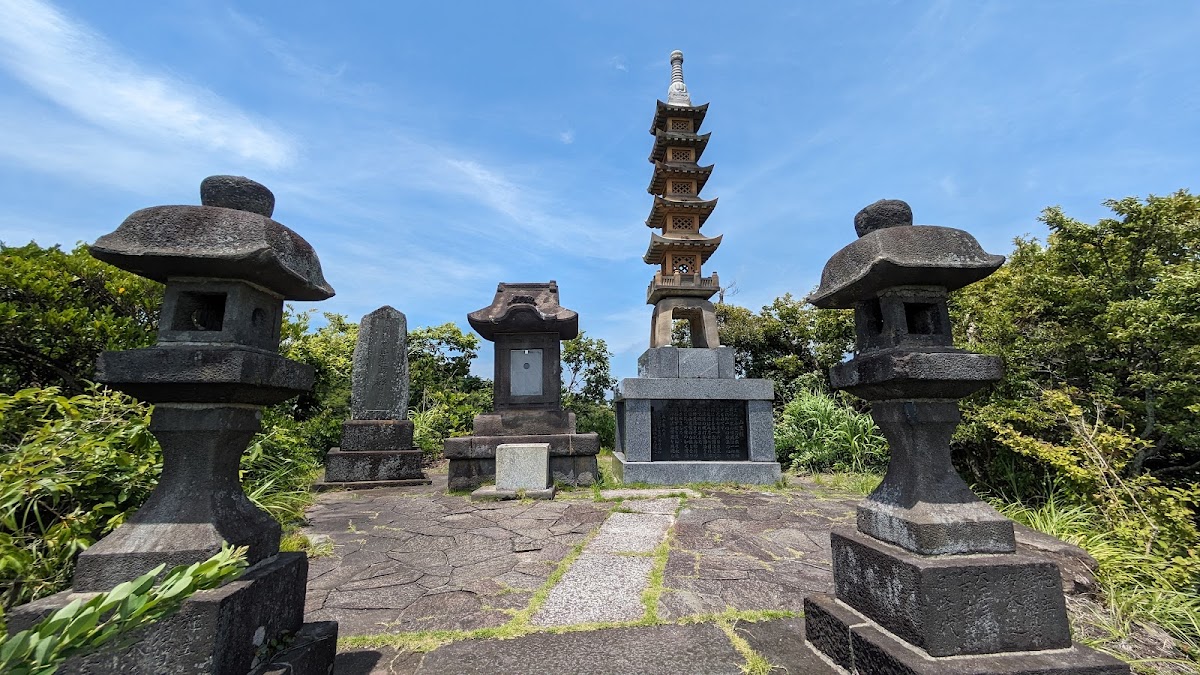
Minamoto no Yoritomo’s Tomb: Approximately 5 minutes on foot. This is believed to be the tomb of Minamoto no Yoritomo, the first shogun of the Kamakura Shogunate. A five-tiered pagoda stands at the top of a flight of stone steps.
Tsurugaoka Hachimangu Shrine: Approximately 15 minutes on foot. A representative shrine of Kamakura, revered as the guardian deity of the Minamoto clan.
Sugimoto-dera Temple: Approximately 10 minutes on foot. The oldest temple in Kamakura and the first temple on the Kamakura Thirty-Three Kannon Pilgrimage.
Egara Tenjin Shrine: Approximately 8 minutes on foot. A shrine dedicated to Sugawara no Michizane, the god of learning, and considered one of Japan’s three major Tenjin shrines.
Zaimokuza Area
There are many sights to see around Raikoji Temple in Zaimokuza.
Komyoji Temple: Approximately 10 minutes on foot. A major temple of the Jodo sect, characterized by its magnificent main gate and spacious grounds.
Zaimokuza Beach: Approximately 5 minutes on foot. A beautiful beach perfect for swimming in the summer and strolling during other seasons.
Kuhonji Temple: Approximately 5 minutes on foot. A temple said to have been built by Nitta Yoshisada.
Points to Note When Visiting Raikoji Temple
Manners for Visiting
When visiting Raikoji Temple, please observe the following basic manners.
- Please be quiet: As the temple is located in a residential area, please refrain from speaking loudly.
- Photography: Please obtain permission before taking photos inside the main hall. Remember to be considerate of other visitors.
- Attire: Avoid revealing clothing and wear appropriate attire for worship.
- Offerings: Please offer your offering quietly and sincerely.
About Goshuin (Temple Seals)
Both temples offer Goshuin. Bringing a special Goshuin book for the Kamakura Thirty-Three Kannon Pilgrimage will make a memorable pilgrimage. Goshuin are not merely stamps; they are proof of your connection with Buddha, so please be sure to receive them after offering your prayers.
Best Time to Visit
Raikoji Temple is open for visits throughout the year, but the following times are particularly recommended:
Spring (March-May): Beautiful cherry blossoms and fresh greenery, mild weather, perfect for a stroll.
Autumn (October-November): Beautiful autumn foliage, relatively fewer tourists, allowing for a peaceful visit.
Weekdays: Fewer visitors compared to weekends and holidays, allowing for a more relaxed visit.
Recommendations for Pilgrimage
The Kamakura Thirty-Three Kannon Pilgrimage is an excellent opportunity to deeply understand Kamakura’s history and culture. Since Raikoji Temple has two pilgrimage sites, Nishimikado and Zaimokuza, it is recommended to visit both during your pilgrimage.
Pilgrimage Tips
- Plan: Visiting all 33 sites at once is difficult. Plan your pilgrimage by area.
- Comfortable clothing: Kamakura has many slopes and stairs, so comfortable shoes are essential.
- Allow plenty of time: Allow time to visit each temple and receive your goshuin (temple stamp).
- Prepare a pilgrimage notebook: Having a dedicated goshuin notebook (nokyocho) will keep a record of your pilgrimage.
Recommended Pilgrimage Courses
Nishimikado Area Intensive Course (Half-day):
No. 1 Sugimoto-dera Temple → No. 2 Hokai-ji Temple → No. 5 Raiko-ji Temple (Nishimikado) → Tsurugaoka Hachimangu Shrine
Zaimokuza Area Course (Half-day):
No. 14 Raiko-ji Temple (Zaimokuza) → No. 15 Komyo-ji Temple → Zaimokuza Beach Stroll
Announcements and Events from Raiko-ji Temple
Raiko-ji Temple holds various events throughout the year. We recommend checking the official website or calling before your visit.
Main Annual Events
- New Year’s Day: First shrine visit of the year, Shusho-e (New Year’s Day ceremony)
- Spring and Autumn Equinox: Higan-e (Equinox memorial service)
- Obon: Urabon-e (Buddhist festival)
During special memorial services and events, Buddhist statues and temple treasures that are not normally on public display may be exhibited.
Summary
Raikoji Temple in Kamakura City is an interesting entity with two distinct faces: a Jishu sect temple in Nishimikado and a Jodo sect temple in Zaimokuza. The Raikoji Temple in Nishimikado has a historical background of commemorating the victims of the Einin Kamakura Earthquake and watches over the city of Kamakura from a hilltop in a quiet residential area. On the other hand, the Raikoji Temple in Zaimokuza is an ancient temple that tells the story of the warriors Minamoto no Yoritomo and Miura Daisuke Yoshiaki.
Both Raikoji Temples welcome many pilgrims as pilgrimage sites of the Kamakura Thirty-Three Kannon Pilgrimage. Escape the hustle and bustle of everyday life and offer your prayers to Buddha at a historic temple, and you will surely gain new insights and inner peace.
When you visit Kamakura, be sure to visit both Raikoji temples and experience their respective histories and charms. Walking along the quiet approach and offering your prayers in the main hall will undoubtedly create unforgettable memories.