Complete Guide to Kōshōji Temple (Zushi City, Kanagawa Prefecture) | The Charm of an Ancient Temple Associated with Akugenta Yoshihira and a Prefecturally Designated Cultural Property
Kōshōji Temple, nestled in Numama, Zushi City, Kanagawa Prefecture, is an ancient temple of the Koyasan Shingon sect, said to have been founded to commemorate Minamoto no Yoshihira, a warrior from the late Heian period. Its principal image is a beautiful standing statue of Amida Buddha from the late Kamakura period, which is now designated as an important cultural property of Kanagawa Prefecture. This guide provides a detailed introduction to Kōshōji Temple, which enshrines Jurōjin (one of the seven lucky gods of Shonan) and attracts local devotion, including its history, cultural properties, points of interest, and access information.
History and Origins of Kōshōji Temple
Circumstances of its Founding and its Relationship to Minamoto no Yoshihira
The exact founding date of Kōshōji Temple is unknown, but tradition holds that it was built to commemorate Minamoto no Yoshihira (Akugenta Yoshihira), the eldest son of Minamoto no Yoshitomo, who was defeated in the Heiji Rebellion (1159).
Minamoto no Yoshihira was a brave warrior known by the nickname “Akugenta.” He participated in the Heiji Rebellion alongside his father, Minamoto no Yoshitomo, but was defeated. Afterward, he was captured in Kyoto by Taira no Kiyomori’s forces and executed at the young age of 17. It is believed that Kōshōji Temple was built in this location to comfort Yoshihira’s resentment and to commemorate his spirit.
The area around Zushi City was within the sphere of influence of the Minamoto and Miura clans, and many historical sites related to the Minamoto clan remain in the region. Kōshōji Temple, within this historical context, has played an important role as a memorial temple for the Minamoto family.
History as the Head Temple of Goryo Shrine
Until the Edo period, Koshōji Temple functioned as the head temple (a temple that managed a shrine) of the nearby Goryo Shrine. Until the implementation of the Shinto-Buddhist Separation Order in the early Meiji era, it had jurisdiction over Goryo Shrine, the guardian shrine of Numama Village, and was a central figure in local faith in a form of Shinto-Buddhist syncretism.
The head temple system was a common form of relationship between shrines and temples from the medieval to early modern periods, and Koshōji Temple was responsible for the rituals and management of Goryo Shrine. Although this relationship was dissolved with the separation of Shinto and Buddhism after the Meiji Restoration, the importance of Koshōji Temple in the region remains unchanged.
Characteristics as a Shingon Buddhist Temple
Koshōji Temple belongs to the Koyasan Shingon sect. The Shingon sect is a sect of esoteric Buddhism founded by Kobo Daishi Kukai, with Koyasan Kongōbu-ji Temple as its head temple. It is unclear when Kōshōji Temple became a Shingon Buddhist temple, but it is believed to have joined the sect during the medieval period as Shingon temples spread throughout the Kanto region.
Interestingly, there is a tradition that the former principal image was Shakyamuni Buddha. While the current principal image is Amida Buddha, it is clear that there was a time when Shakyamuni Buddha was the principal image. This suggests that the temple’s sect and object of worship have changed throughout its history.
Cultural Assets and Highlights of Kōshōji Temple
Principal Image: Wooden Standing Statue of Amida Buddha (Kanagawa Prefecture Designated Important Cultural Property)
Kōshōji Temple’s greatest treasure is its principal image, a wooden standing statue of Amida Buddha. This statue was created around the 14th century (late Kamakura period to Nanboku-chō period) and is currently designated as an Important Cultural Property of Kanagawa Prefecture.
Characteristics of the Buddhist Statue:
- Production Technique: The statue is made using the Yosegi-zukuri technique, combining multiple pieces of wood.
- Crystal Eyes: The eyes are adorned with crystal eyes (gyokugan), creating a lifelike expression.
- Style: Exhibiting the style of the late Kamakura period, it is characterized by its elegant yet powerful form.
- Condition: Despite its long history, it remains in excellent condition, demonstrating the high level of skill of the Buddhist sculptor of that time.
Amida Buddha is the principal deity of the Western Pure Land, believed to guide those who chant the Nembutsu to the Pure Land. The standing statue’s posture, with the Raigo-in (welcoming mudra), is thought to represent Amida Buddha coming to welcome sentient beings.
Shonan Seven Lucky Gods: Jurojin
Koshōji Temple enshrines Jurojin, one of the Shonan Seven Lucky Gods. Jurojin is a deity originating from Chinese Taoism, worshipped as a god who brings longevity and good fortune.
Characteristics of Jurojin:
- He is depicted as an old man with a long white beard.
- He is depicted carrying a staff and a scroll, sometimes accompanied by a deer.
- He is believed to bring blessings of family harmony, good fortune, and longevity.
The Shonan Seven Lucky Gods Pilgrimage is a popular event, attracting many visitors, especially during the New Year. It is believed that visiting the seven temples and shrines, including Koshōji Temple, will bestow seven blessings.
Atmosphere and Architecture of the Temple Grounds
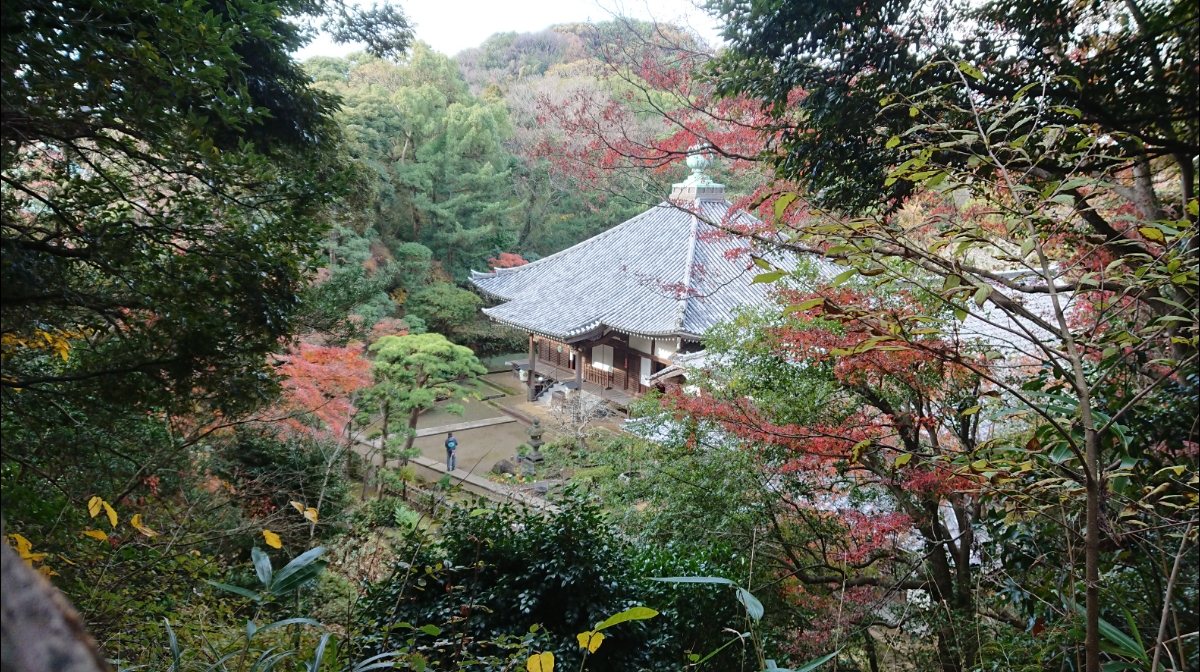
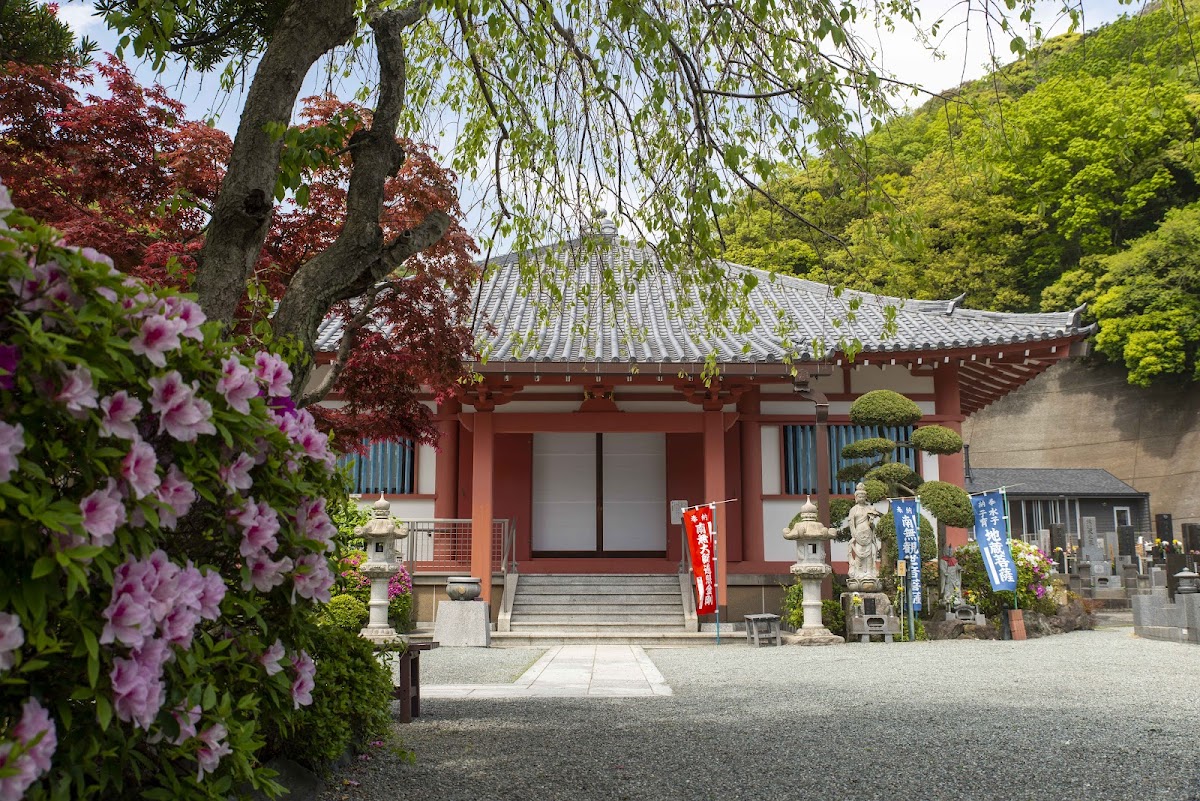
Although Koshōji Temple is located in a residential area, entering the grounds envelops you in a tranquil atmosphere. Despite its small size, the well-maintained garden and main hall convey a sense of the temple being cherished by the local community.
The main hall is a traditional Japanese-style building, exuding a solemn atmosphere characteristic of Shingon Buddhist temples. Seasonal flowers are planted on the grounds, soothing the hearts of visitors.
Visiting Kōshōji Temple and Obtaining a Goshuin (Temple Seal)
Points to Remember When Visiting Kōshōji Temple
To make your visit to Kōshōji Temple more fulfilling, keep the following points in mind:
- Visiting the Main Hall: First, offer your prayers to the principal image, Amida Buddha, in the main hall.
- Visiting Jurōjin: Visit Jurōjin, one of the seven gods of fortune in Shonan, and pray for longevity and good fortune.
- Strolling the Temple Grounds: Although the temple grounds are small, a leisurely stroll will allow you to feel the weight of history.
- Reflecting on Minamoto no Yoshihira: It is also good to reflect on the history by remembering Minamoto no Yoshihira, the founder of the temple.
About Goshuin (Temple Seals)
You can receive a Goshuin at Kōshōji Temple. Goshuin are popular as proof of your visit and as a way to forge a connection with the temple. When obtaining a Goshuin, please note the following points.
- Request a Goshuin (temple/shrine stamp) after completing your prayers.
- Bring your Goshuincho (stamp book) (check in advance if you don’t have one).
- Use polite language and demeanor.
- Prepare the Goshuin fee (usually around 300 yen).
When visiting the Shonan Seven Lucky Gods, you can collect Goshuin stamps from each temple and shrine on a special shikishi (decorative paper) or Goshuincho.
Historical Background of the Area Around Koshōji Temple
Relationship Between Zushi City and the Minamoto and Miura Clans
The Miura Peninsula, including Zushi City, was under the strong influence of the Minamoto and Miura clans from the late Heian period to the Kamakura period. The Miura clan was a powerful retainer group of the Minamoto clan and a family that cooperated with Minamoto no Yoritomo’s uprising.
Many historical sites related to the Minamoto and Miura clans remain in this region, and Koshōji Temple occupies an important position as one of them. The temple’s founding, commemorating Minamoto no Yoshihira, speaks to the deep connection this region had with the Minamoto clan.
History of Numama District
The Numama district, where Koshōji Temple is located, is a historic area with a long history of human habitation. During the Edo period, it formed Numama Village, a settlement centered on agriculture. The fact that Gorei Shrine served as the guardian shrine and Koshōji Temple functioned as its affiliated temple indicates its central role in the local community.
Although now developed as a residential area, historical buildings such as Koshōji Temple and Gorei Shrine remain, preserving the region’s history.
Access
Access to Koshōji Temple is very convenient, within walking distance of the nearest station.
Access by Train
If using the JR Yokosuka Line:
- Get off at Higashi-Zushi Station, approximately 5-6 minutes on foot (approx. 430-500m)
- Higashi-Zushi Station is a station where express trains also stop, providing good access from both Yokohama and Kamakura.
If using the Keikyu Line:
- Get off at Jinmuji Station on the Keikyu Zushi Line, approximately 10 minutes on foot
- Also within walking distance (approx. 15 minutes) from Keikyu Taura Station on the Keikyu Main Line.
Access by Bus
The nearest bus stop is “Hinomishita” (Zushi 19 route, etc.). From the bus stop, it’s a few minutes’ walk to Koshōji Temple.
Access by Car
Using the Yokohama-Yokosuka Expressway:
- Approximately 10 minutes from “Zushi IC”
Parking:
- There may be parking spaces at the temple, but it is recommended to check in advance.
- There are coin-operated parking lots nearby, but the number is limited.
Address and Contact Information
Address: 2-20-17 Numama, Zushi City, Kanagawa Prefecture 249-0004
Phone Number: 046-871-3254
Inquiry Hours: For inquiries regarding worship or Goshuin (temple stamps), it is appropriate to call between 9:00 AM and 5:00 PM. However, the temple may be closed for religious services, so it is recommended to call in advance to confirm if you wish to visit.
Nearby Tourist Attractions
When visiting Koshōji Temple, you can enjoy a more fulfilling Zushi sightseeing experience by also visiting nearby tourist attractions.
Gorei Shrine
Gorei Shrine, the former head temple of Koshōji Temple, is within walking distance. This shrine, which has long been revered as the guardian shrine of Numama Village, offers a deeper understanding of the region’s history when visited in conjunction with Koshōji Temple.
Hiroyama Park
Located on a hill in Zushi City, Hiroyama Park boasts a spectacular view of Sagami Bay and Mount Fuji. It’s approximately a 10-minute drive from Koshōji Temple and is also accessible by bus.
Zushi Beach & Zushi Marina
Zushi Beach, one of Shonan’s representative beaches, is approximately 2km from Koshōji Temple. Enjoy swimming in the summer and strolling along the beach in other seasons. Zushi Marina offers yacht harbor scenery and dining options at its restaurants.
Jinmuji Temple
Jinmuji Temple, an ancient temple near Jinmuji Station on the Keikyu Line, is a Tendai sect temple and is also known for its beautiful autumn foliage. Visiting both Koshōji Temple and Jinmuji Temple is highly recommended.
About Perpetual Memorial Services and Cemeteries at Koshōji Temple
Koshōji Temple has its own temple cemetery and accepts consultations regarding perpetual memorial services and general burial plots.
Cemetery Features
- Sect: While it is a temple of the Koyasan Shingon sect, confirmation with the temple is necessary regarding acceptance of people of other sects.
- Location: Conveniently located within walking distance of Higashi-Zushi Station, making it easy to visit graves.
- Environment: Located in a quiet residential area, providing a peaceful environment for visiting graves.
About Perpetual Memorial Services
In recent years, interest in perpetual memorial services has been increasing. Consultations regarding perpetual memorial services are also available at Koshōji Temple.
- Individual Grave: A form where cremated remains are individually interred for a certain period.
- Communal Grave: A form where cremated remains are buried together with the remains of others, which can reduce costs.
For details regarding cemeteries and perpetual memorial services, please contact Koshōji Temple directly.
Precautions and Etiquette for Visiting the Temple
When visiting Kōshōji Temple, please observe the following etiquette.
Basic Etiquette for Visiting a Temple
- Attire: Please wear clean, understated clothing.
- Photography: Photography is permitted within the temple grounds, but permission may be required for photography inside the main hall or of Buddha statues.
- Quietness: Please remain quiet within the temple grounds and refrain from loud conversations.
- Smoking and Eating: Please refrain from smoking or eating within the temple grounds.
Etiquette for Receiving a Goshuin (Temple Stamp)
- Always complete your prayers before requesting a Goshuin.
- Open your Goshuin book and clearly indicate the page you would like stamped on.
- Request using polite language.
- Wait quietly while the stamp is being written.
- Express your gratitude and hand over the Goshuin fee.
Annual Events at Koshōji Temple
Koshōji Temple, as a Shingon Buddhist temple, holds various annual events.
Main Annual Events
- Hatsumode (January 1st-3rd): Many visitors come for New Year’s prayers and the Shonan Seven Lucky Gods pilgrimage.
- Setsubun Festival (February): Events such as bean-throwing may be held.
- Spring and Autumn Equinox Festivals: Memorial services for the equinox are held.
- Obon Festival (August): Memorial services for the Obon festival are held.
For specific dates and details, please contact the temple directly.
Summary: The Charm of Koshōji Temple
Located in Numama, Zushi City, Kanagawa Prefecture, Koshōji Temple is a historic Shingon Buddhist temple of the Koyasan sect, said to have been founded to commemorate Minamoto no Yoshihira. It enshrines a beautiful wooden standing statue of Amida Buddha from the late Kamakura period (a prefecturally designated important cultural property) as its principal image, and is a place of worship dedicated to Jurōjin, one of the Shonan Seven Lucky Gods. It remains popular with many people today. Located just a 5-6 minute walk from Higashi-Zushi Station, Koshōji Temple maintains a tranquil atmosphere and is a valuable cultural heritage site that conveys the history of Zushi, a place associated with the Minamoto clan. Whether you’re visiting the Shonan Seven Lucky Gods, collecting temple stamps, or exploring the history of Zushi, be sure to visit Koshōji Temple.
This temple, built to appease the regrets of the young warrior Minamoto no Yoshihira, has remained a spiritual haven for the local people for over 800 years. You can feel the weight of history and the depth of people’s faith within the grounds of Koshōji Temple.