Enshoji Temple Complete Guide | A Detailed Explanation of the Important Cultural Properties and History Associated with the Sengoku Warlord Tsutsui Clan
Enshoji Temple is a Shingon Ritsu sect temple located in Kamimachi, Ikoma City, Nara Prefecture. Known for its connection to the Tsutsui clan, who ruled Yamato Province during the Sengoku period, it possesses numerous valuable cultural properties, including the main hall and five-tiered pagoda, both designated as Important Cultural Properties. This article provides a detailed explanation of Enshoji Temple’s history, buildings, cultural properties, and access methods.
Overview of Enshoji Temple
Enshoji Temple is a Shingon Ritsu sect temple without a designated mountain name, and its principal image is a seated statue of Shakyamuni Buddha. It holds an important position as the family temple of the Tsutsui clan, who wielded considerable power in Yamato Province during the Sengoku period, particularly Tsutsui Junsho. While currently located in Kamimachi, Ikoma City, it was formerly located in Hayashikoji-cho, Nara City.
A notable feature of this temple is its collection of valuable cultural artifacts from the medieval to the Sengoku period, including the main hall which preserves the architectural style of the late Muromachi period, Buddhist statues from the Kamakura period, and a five-tiered pagoda which serves as a memorial tower for Tsutsui Junsho.
History of Enshoji Temple
Founding and Early History
Enshoji Temple is believed to have been founded during the Kanpyo era (889-898). Initially, it was established in Tsutsui-sho, Yamato Province. The Tsutsui clan were powerful local lords in Yamato Province from ancient times, and it is thought that they built the temple in the area that served as their base.
Tsutsui Junsho and the Temple’s Relocation
The most important turning point in the history of Enshoji Temple was its connection with Tsutsui Junsho. Tsutsui Junsho was a Sengoku period warlord known as the father of Tsutsui Junkei, and he played a key role in expanding the Tsutsui clan’s power in Yamato Province.
During the Tenbun era (1532-1555), Lord Junsho established an outer residence (villa) for the Tsutsui clan in Hayashikoji-cho, Nara City. In 1551, when Lord Junsho suddenly died of illness, his son, Tsutsui Junkei Hoin, converted this outer residence into a temple, making it a family temple to pray for his father’s soul. It is believed that at this time, the temple registration of Ensho-ji, which was located in Tsutsui-sho, was moved to this location.
Tsutsui Junkei and Ensho-ji
Tsutsui Junkei was a Sengoku period warlord known for his relationship with Akechi Mitsuhide and the anecdote of “deciding at Horagatoge Pass.” Junkei deeply protected Ensho-ji Temple to pray for his father’s soul. Junkei himself was a devout follower of the Shingon Ritsu sect, and Ensho-ji Temple played a role as a spiritual pillar for the Tsutsui clan.
Changes Since the Edo Period
During the Edo period, Enshoji Temple continued its activities as a temple in Hayashikoji-cho, Nara City. Although the Tsutsui clan was transferred to Ueno Province in Iga Province in 1585, Enshoji Temple remained in Yamato Province, continuing to protect the memory of Lord Junsho.
Relocation to the Modern Era
In 1985, Enshoji Temple relocated from Hayashikoji-cho, Nara City to Kamimachi, Ikoma City. During this relocation, the main hall and the five-tiered pagoda, both designated as Important Cultural Properties, were also moved. The current location is close to the area where the Tsutsui clan once held power, making it a historically significant place.
Buildings
Enshoji Temple Main Hall (Important Cultural Property)
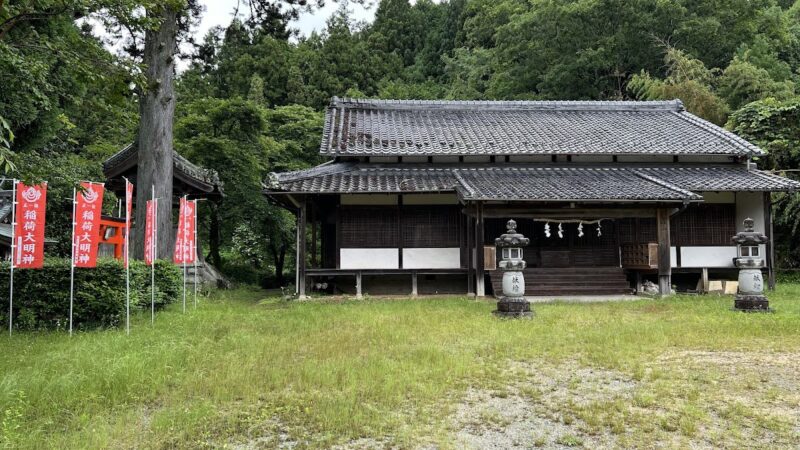
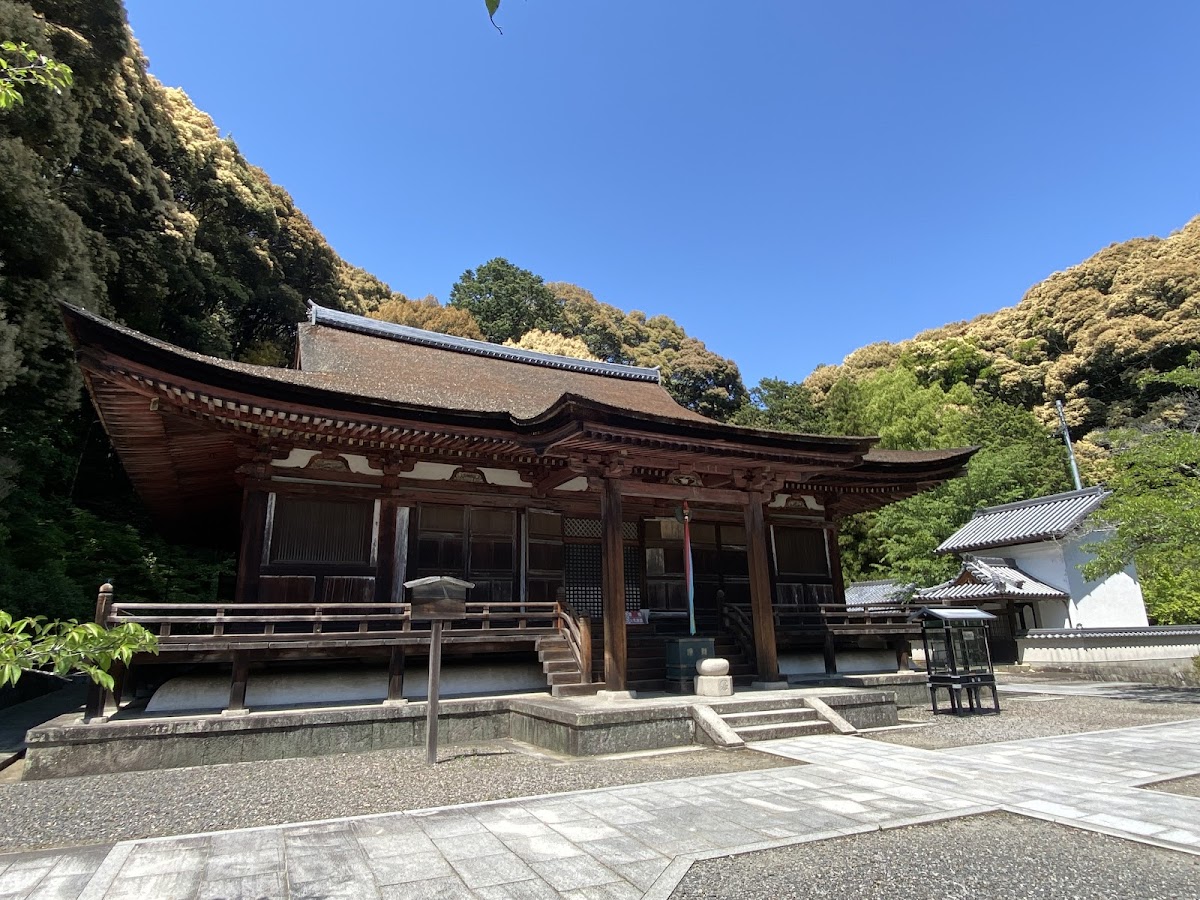
The Enshoji Temple Main Hall is a valuable building designated as a National Important Cultural Property.
Architectural Style and Structure
- Three bays in length and three bays in width
- Single story, hipped roof
- One-bay portico
- Tile roofing
- Attached: One ridge beam inscription
Construction Date
- Constructed in 1552 (Tenbun 21). This was shortly after the death of Tsutsui Junsho, and it is believed to have been built by Junkei Hoin to commemorate his father.
Architectural Characteristics
- The main hall clearly exhibits the characteristics of simple Japanese-style architecture from the late Muromachi period. The structure, with lattice doors on three sides and a surrounding veranda, is typical of Buddhist temple architecture of that time. The simple construction with restrained ornamentation can be said to reflect the simple and practical style of the Shingon Ritsu sect.
- The building was restored using as many original materials as possible during its relocation in 1985 (Showa 60), making it a valuable historical site that conveys the architectural techniques of the late Muromachi period.
Cultural Properties
Seated Shakyamuni Buddha Statue (Principal Image)
The seated Shakyamuni Buddha statue, the principal image of Enshoji Temple, is a Buddhist statue believed to have been created during the Kamakura period.
Period and Style of Creation
Dated to be a work from the Kamakura period, it possesses the realistic expression and powerful form characteristic of Buddhist sculpture of that time. The enshrinement of Shakyamuni Buddha as the principal image of the Shingon Ritsu sect is based on the sect’s doctrines.
Condition of Preservation
Despite its long history, it remains in excellent condition and is valued as an outstanding example of Kamakura period Buddhist sculpture.
Stone Five-Ring Pagoda (Important Cultural Property)
Enshoji Temple houses a stone five-ring pagoda designated as an Important Cultural Property. This pagoda was erected as a memorial tower for Lord Tsutsui Junsho.
Structure of the Five-Ring Pagoda
A five-ring pagoda is a Buddhist stupa composed of five parts from bottom to top: the earth ring (square), water ring (circular), fire ring (triangular), wind ring (crescent-shaped), and void ring (jewel-shaped). These symbolize the five elements (earth, water, fire, wind, and void) in the Buddhist worldview.
Historical Value
Erected as a memorial tower for Lord Tsutsui Junsho, this five-ring pagoda is highly valued as a tomb tower of a Sengoku period warlord and as a masterpiece of stone art from that era. It is a valuable relic that shows the style of five-ring pagodas from the Kamakura to Muromachi periods.
History of Relocation
Like the main hall, it was moved to Kamimachi, Ikoma City, during the temple’s relocation in 1985. It is still carefully preserved today, along with the main hall, as an important cultural property of Enshoji Temple.
Other Cultural Properties
In addition to the designated cultural properties mentioned above, Enshoji Temple possesses other historically valuable artifacts. The temple houses valuable historical materials related to the Tsutsui clan and medieval Buddhist artifacts, conveying the history of Yamato Province during the Sengoku period.
Shingon Ritsu Sect and Enshoji Temple
Enshoji Temple belongs to the Shingon Ritsu sect, a sect founded by Eison during the Kamakura period. It combines the doctrines of Shingon Buddhism with an emphasis on the precepts of the Ritsu sect.
Characteristics of the Shingon Ritsu Sect
- Based on the doctrines of Shingon Esoteric Buddhism
- Emphasizes strict adherence to precepts
- Actively engaged in missionary work among the common people
- Emphasizes social work and charitable activities
In Yamato Province, many temples belonged to the Shingon Ritsu sect, with Saidaiji Temple as its head temple. Enshoji Temple is also part of this tradition, and while it is the family temple of the Tsutsui clan, a samurai family, it has maintained the traditions of the Shingon Ritsu sect.
The Tsutsui Clan and Yamato Province
Understanding the history of the Tsutsui clan is crucial to understanding Enshoji Temple.
Origins of the Tsutsui Clan
The Tsutsui clan were local lords based in Tsutsui, Soekami District, Yamato Province (present-day Tsutsui-cho, Yamato-Koriyama City). They expanded their influence as monks of Kofukuji Temple and became a powerful daimyo in Yamato Province during the Sengoku period.
Achievements of Tsutsui Junsho
Tsutsui Junsho (1523-1551) was a warrior who dedicated himself to expanding the Tsutsui clan’s power. He inherited the family headship at a young age and aimed to unify Yamato Province, but died of illness in 1551 at the young age of 29.
The Era of Tsutsui Junkei
Tsutsui Junkei (1549-1584), Junsho’s son, carried on his father’s will and proceeded with the unification of Yamato Province. The Tsutsui clan established their position in Yamato Province through their association with powerful figures such as Oda Nobunaga, Akechi Mitsuhide, and Toyotomi Hideyoshi.
Eighty-Eight Sacred Sites of Northern Yamato
Enshoji Temple is one of the 88 sacred sites of Northern Yamato. This pilgrimage route visits 88 temples scattered throughout the northern region of Nara Prefecture.
Significance of the Pilgrimage
Modeled after the Shikoku Eighty-Eight Sacred Sites, this pilgrimage route is cherished by local people as a place of faith and a pilgrimage route exploring history and culture. Enshoji Temple, as a temple associated with the Tsutsui clan, holds historical importance within the pilgrimage.
Regarding Goshuin (Temple Seals)
Enshoji Temple also offers Goshuin, but it is recommended to confirm visitor information and Goshuin issuance by phone in advance.
Visiting Information
Regarding Visits
Visiting Enshoji Temple is possible, but prior contact is recommended. You can view the main hall and the five-tiered pagoda, both designated as Important Cultural Properties.
Points to Note During Your Visit
- We recommend checking visiting hours by phone in advance.
- Please follow the temple’s instructions regarding photography to protect cultural properties.
- Please maintain a quiet environment and be considerate of other visitors.
Goshuin (Temple Seal) Issuance
Goshuin are also available, but prior confirmation is necessary. You can receive a Goshuin for the Yamato Northern Eighty-Eight Sacred Sites Pilgrimage.
Access
Location
1340 Kamimachi, Ikoma City, Nara Prefecture 630-0257
Access by Public Transportation
By Kintetsu Train
- Get off at Ikoma Station on the Kintetsu Ikoma Line
- Approximately 15-20 minutes on foot from the station
By Bus
If using a bus from Ikoma Station, you can use the Ikoma City Community Bus, etc. It’s a few minutes’ walk from the nearest bus stop. Please check the Ikoma City public transportation information for details.
Access by Car
Route from Major Roads
- From National Route 168 towards Ikoma city center
- Located in a residential area of Kamimachi, Ikoma City
Parking
We recommend checking the temple’s parking space in advance.
Nearby Attractions
Ikoma City also has other historical temples, shrines, and tourist spots.
- Mount Ikoma: Includes Ikoma Sanjo Amusement Park and Hozanji Temple.
- Hozanji Temple: A temple affectionately known as “Ikoma’s Shoten-san.”
- Ikoma City Digital Museum: Provides information on cultural properties within the city.
When visiting Enshoji Temple, exploring these surrounding spots in conjunction will allow you to gain a deeper understanding of Ikoma City’s history and culture.
Cultural Value of Enshoji Temple
Significance in Architectural History
The main hall of Enshoji Temple is a valuable historical structure representing a Buddhist temple from the late Muromachi period. With a clear construction date of 1552 (Tenbun 21), it serves as important historical material for understanding the architectural techniques and styles of the time.
Despite its simple Japanese-style architecture, it is structurally robust and has survived for over 400 years. The fact that its historical value has been preserved without loss, even after the difficult task of relocation, is noteworthy from the perspective of cultural property protection.
Significance in the History of Sculpture
The principal image, a seated statue of Shakyamuni Buddha, is valued as an example of the characteristics of Buddhist sculpture from the Kamakura period. The Kamakura period was a time when realism developed in Buddhist sculpture, and this seated statue of Shakyamuni Buddha is considered to be a work that follows that tradition.
Significance in Stone Art
The stone five-ring pagoda is designated as an Important Cultural Property as a masterpiece of medieval stone art. While five-ring pagodas serving as memorial towers for samurai remain in various places, this one has high historical value because the deceased, Tsutsui Junsho, has been clearly identified.
Value as a Historical Document
Enshoji Temple provides valuable materials for understanding the power of the Tsutsui clan in Yamato Province during the Sengoku period and the relationship between samurai and Buddhism at that time. As the family temple of two generations of samurai, Tsutsui Junsho and Junkei, it is an important presence that conveys the history of Yamato Province during the Sengoku period.
Enshoji Temple and Local Culture
Cultural Properties of Ikoma City
Ikoma City is located in the northwestern part of Nara Prefecture and has long been a vital transportation hub connecting Yamato Province and Kawachi Province. Many historical temples, shrines, and ruins remain within the city, and Enshoji Temple is one of the most important cultural properties.
The Ikoma City Digital Museum provides information on cultural properties in the city, including Enshoji Temple, allowing visitors to learn about the region’s history and culture.
Cultural Property Preservation Activities
Enshoji Temple’s important cultural properties are appropriately preserved and managed under the cultural property protection administration of the national government, Nara Prefecture, and Ikoma City. Regular surveys and repairs are conducted, and efforts continue to ensure their preservation for future generations.
Manners and Etiquette for Visitors
Please note the following points when visiting Enshoji Temple.
Basic Manners
- Understand that temples are places of worship and worship quietly.
- Do not touch the main hall or cultural properties without permission.
- Obtain permission before taking photographs.
- Take your trash with you.
Etiquette for Worship
- Bow at the temple gate before entering the grounds.
- Clasp your hands together and bow in front of the main hall.
- Request a Goshuin (temple stamp) politely.
Guidelines for Viewing Cultural Properties
- Recognize that Important Cultural Properties are valuable cultural heritage.
- Respect the designated viewing areas.
- Cooperate with the preservation of cultural properties.
Summary
Enshoji Temple, as a temple associated with the Tsutsui clan, a prominent warlord of Yamato Province during the Sengoku period, preserves valuable history and cultural properties. The main hall and five-ring pagoda, both Important Cultural Properties, and the seated statue of Shakyamuni Buddha, the principal image, are important cultural heritage that tell the story of Yamato Province from the medieval period to the Sengoku period.
Despite its relocation from Hayashikoji-cho in Nara City to Kami-cho in Ikoma City, Enshoji Temple retains its historical value and continues to be cherished by many worshippers and history enthusiasts. It also plays an important role as a place of worship in the region, serving as one of the 88 sacred sites of northern Yamato.
When visiting Ikoma City, we highly recommend visiting Enshoji Temple to experience the history of the Tsutsui clan and its cultural artifacts from the late Muromachi period. By contacting the temple in advance and observing proper visiting etiquette, you can appreciate the charm of Enshoji Temple even more deeply.