Complete Guide to Adashino Nenbutsu-ji Temple (Kyoto Prefecture) | History, Highlights, and Access Information
Located in Adashino-cho, Saga Toriimoto, Ukyo-ku, Kyoto City, Adashino Nenbutsu-ji Temple is a Jodo sect temple built on a site that has been used for funerals since the Heian period. Approximately 8,000 stone Buddha statues and stupas are enshrined within the temple grounds, quietly speaking to visitors about life, death, and the impermanence of life. This article provides a detailed explanation of Adashino Nenbutsu-ji Temple, from its historical background to its highlights, annual events, and access methods.
About Adashino Nenbutsu-ji Temple
Adashino Nenbutsu-ji Temple, officially known as Kaseizan Tozen-in Nenbutsu-ji Temple, is a Jodo sect temple with Amida Buddha as its principal deity. Located in the quiet foothills of Okusaga, deep in Arashiyama, it has long been known by the place name “Adashino.”
“Adashi” means “fleeting” or “impermanent,” and the place name itself symbolizes death and impermanence. Adashino, along with Toribeno in Higashiyama and Rendaino in Rakuhoku, is one of Kyoto’s three major burial grounds, and has functioned as a burial place for common people since the Heian period.
Basic Temple Information
- Mountain Name: Kaseizan
- Temple Name: Tozen-in
- Temple Name: Nenbutsu-ji
- Sect: Jodo-shu (Pure Land Buddhism)
- Principal Image: Amida Buddha
- Location: 17 Adashino-cho, Saga Toriimoto, Ukyo-ku, Kyoto City, Kyoto Prefecture
- Founded: 811 (Kōnin 2)
- Founder: Kūkai (tradition)
History of Adashino Nenbutsu-ji Temple
Adashino as a Site of Open-Air Burial
The history of Adashino dates back to before the founding of the temple. During the Heian period, this area served as a burial ground (a place of impermanence) west of the capital. Aerial burial is a method of funeral where bodies are left outdoors to decompose naturally. At the time, the bodies of commoners who could not afford burial and those without relatives were brought to this area.
It is said that the sight of countless bodies left exposed in Adashino, at the foot of Mount Ogura, was extremely gruesome. Along with Toribeno to the east and Rendaino to the north, Adashino was one of Kyoto’s three major aerial burial grounds, continuously receiving the bodies of the dead from the capital.
Founding of Gochizan Nyora-ji Temple by Kukai
It is said that in 811 (Kōnin 2), Kūkai, the founder of the Shingon sect, witnessed the horrific state of aerial burial in Adashino and founded Gochizan Nyora-ji Temple in this area. Kukai taught the villagers the method of earth burial and established a temple to mourn the deceased.
This temple, which began with Kukai’s compassion, has been supported by the local people as a place to commemorate the many souls of those who became nameless souls. It is believed to have initially functioned as a Shingon Buddhist temple.
Conversion to Nenbutsu-ji Temple by Honen
In the Kamakura period, Honen Shonin, the founder of the Jodo sect, visited this area and rebuilt the temple as a Nenbutsu training hall. Following Honen’s teachings, the temple was converted to the Jodo sect and received the name “Nenbutsu-ji Temple.”
Honen’s teaching of exclusive Nenbutsu practiced the idea that all people, regardless of social status or wealth, are saved by the original vow of Amida Buddha. This teaching became deeply rooted in the region as the most appropriate way to commemorate those buried in Adashino as nameless souls.
Changes from the Early Modern Period Onward
Throughout the Edo period, Adashino Nenbutsu-ji Temple continued to attract the faith of the local people. Over time, numerous stone Buddha statues and stone pagodas were dedicated to the temple grounds, and these were enshrined as memorial towers for the nameless souls. Even after the Meiji era, the temple continued to function as a center of local faith, and this continues to this day. With a history of approximately 1,200 years, this temple is a valuable presence that conveys Kyoto’s funeral culture to the present day.
Highlights of the Temple Grounds
The grounds of Adashino Nenbutsu-ji Temple contain numerous points of interest imbued with history and faith. By strolling through the tranquil grounds, one can deeply contemplate life and death, and the impermanence of things.
Saiin-no-Kawara (Sai-no-Kawara)
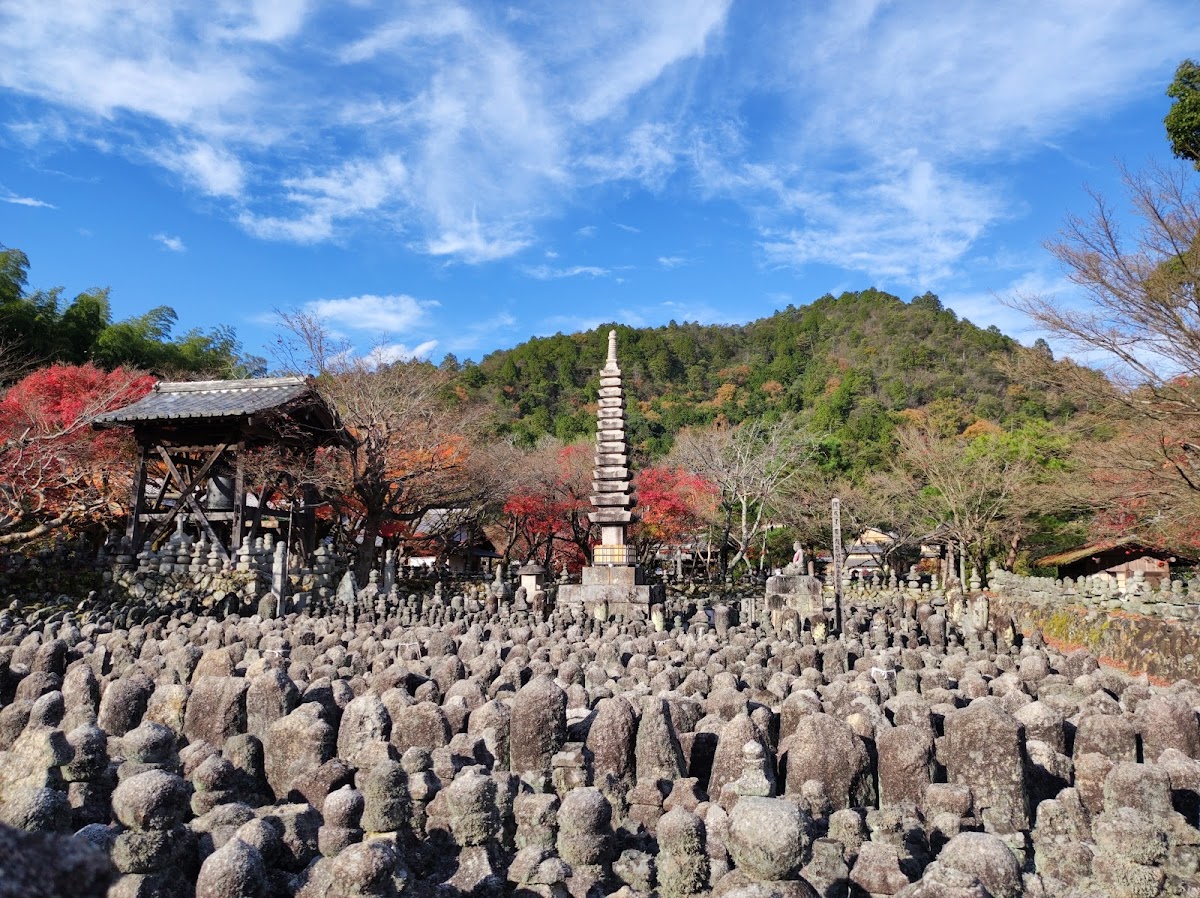
The most impressive sight on the temple grounds is “Saiin-no-Kawara,” where approximately 8,000 stone Buddha statues and stupas stand. This area is also known as “Sai-no-Kawara” and is a symbolic space of Adashino Nenbutsu-ji Temple.
One theory suggests that the name Saiin-no-Kawara originates from the fact that this area was once associated with a region called “Saiin,” located near the current Hankyu Saiin Station. It is also said that the name comes from its association with “Sai no Kawara,” a Buddhist legend about the riverbed of the underworld where children who died young pile up stones.
The countless stone Buddhas and stupas were originally memorial towers for nameless souls scattered throughout the Adashino area, which were gathered and enshrined by local people during the Meiji era. These stone Buddhas were created between the Heian and Edo periods, and it is believed that the souls of nameless people reside in each one.
The sight of the neatly arranged stone Buddhas and stupas deeply moves visitors, quietly conveying the preciousness of life and the principle of impermanence. The atmosphere is particularly mystical at dusk and during the Thousand Lantern Memorial Service (described later).
Main Hall and Amida Buddha
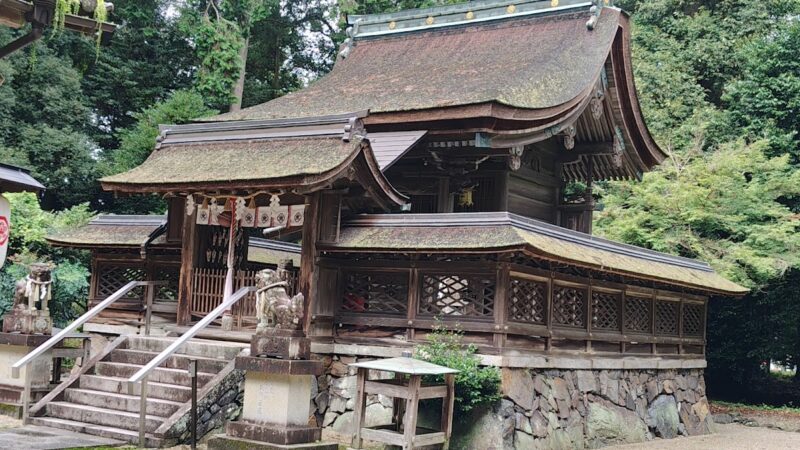
The main hall houses the principal image, Amida Buddha. As the principal image of the Jodo sect, it is worshipped as a compassionate Buddha who guides all sentient beings to the Pure Land. In the main hall, daily religious services are held, and prayers for the souls of those without relatives continue.
The architectural style of the main hall is characteristic of Jodo sect temples, allowing visitors to worship in a tranquil atmosphere. By joining hands in prayer before Amida Buddha, one can reflect on one’s own life and death, together with the many souls resting in Adashino.
Bamboo Grove and Natural Landscape
A beautiful bamboo grove spreads across a corner of the temple grounds, creating a distinctly Kyoto-esque atmosphere. Walking along the bamboo grove path, the rustling of bamboo leaves in the wind soothes the mind and creates a meditative atmosphere.
The natural landscape, taking advantage of its location at the foot of the mountains in Okusaga, is another major attraction of Adashino Nenbutsu-ji Temple. The changing seasons adorn the temple grounds, and many visitors come, especially during the fresh greenery of spring and the vibrant autumn foliage.
Stupa
A stupa also stands on the temple grounds, housing sacred Buddhist relics. The stupa, symbolizing the teachings and compassion of Buddha, enhances the spiritual atmosphere of the temple grounds.
Six Jizo and Stone Sculptures
Various stone sculptures, including the Six Jizo, are placed throughout the temple grounds. These represent Jizo Bodhisattva, who saves sentient beings trapped in the six realms of rebirth: hell, hungry ghosts, animals, asuras, humans, and heaven, demonstrating Adashino Nenbutsu-ji’s character as a funeral temple.
Annual Events
Adashino Nenbutsu-ji holds various religious events throughout the year, but the most famous is the “Thousand Lantern Ceremony.”
Thousand Lantern Ceremony (Sentō Kuyō)
Held annually on August 23rd and 24th, the Thousand Lantern Ceremony is Adashino Nenbutsu-ji’s most important annual event. This event involves lighting approximately 8,000 candles in front of the 8,000 stone Buddha statues and stupas enshrined in the riverbed of Saiin, to commemorate the spirits of those who died without relatives.
As dusk falls, the entire temple grounds are enveloped in the light of countless candles, creating a fantastical scene. The flickering flames illuminating the stone Buddhas create a truly mystical and enchanting world. Many worshippers from all over Japan visit every year to witness this sight.
The Thousand Lantern Memorial Service is not merely a tourist event; it is a solemn religious ceremony to comfort the souls of those who died without relatives resting in Adashino, and to reflect on the preciousness and impermanence of life. Participants deeply contemplate life and death in the candlelight.
Other Annual Events
In addition to the Thousand Lantern Memorial Service, other annual events of the Jodo sect, such as the spring and autumn equinox services and the Obon festival, are also held. During these events, parishioners and general visitors chant Buddhist prayers together, and memorial services are held for ancestors and those without relatives.
Visiting Information
Visiting Hours and Admission Fees
Visiting hours for Adashino Nenbutsu-ji Temple vary depending on the season, so it is recommended to check before visiting.
- Visiting Hours: Normally from 9:00 AM to 4:30 PM (last entry at 4:15 PM)
- Hours may be shortened during the winter months from December to February
- Admission Fee: Generally around 500 yen for adults and 400 yen for junior and senior high school students (may vary depending on the season)
- Holidays: Closed during the New Year holidays and other temple events
Notes on Visiting
Adashino Nenbutsu-ji Temple is a sacred site for commemorating those without relatives, so the following points should be noted when visiting.
- Photography: Photography is generally permitted on the temple grounds, but may be prohibited inside the main hall and in certain areas. Please follow the signs.
- Dress Code: As this is a religious site, please avoid revealing clothing and dress appropriately.
- Quietness: The temple grounds are a place of remembrance and worship. Please refrain from loud conversations and disruptive behavior.
- Touching Stone Buddhas: Please do not touch the stone Buddhas or stone pagodas in the riverbed of Saiin.
Access
Adashino Nenbutsu-ji Temple is located in the Okusaga area, deep within Saga-Arashiyama. We will introduce access methods using public transportation and by car.
Access by Public Transportation
From Kyoto Station
Using Kyoto City Bus
- Take Kyoto City Bus Route 72 (bound for Arashiyama/Kiyotaki) from bus stop C6 at the JR Kyoto Station bus terminal.
- Get off at the “Toriimoto” bus stop and walk for approximately 5 minutes.
- Travel time: Approximately 50 minutes to 1 hour (depending on traffic conditions)
From Sanjo Keihan Station
Using Kyoto City Bus
- Take Kyoto City Bus Route 62 from in front of Sanjo Keihan.
- Get off at the “Toriimoto” bus stop and walk for approximately 5 minutes.
From Arashiyama
Walking or Bus
- Approximately 30-40 minutes on foot from JR Saga-Arashiyama Station, Hankyu Arashiyama Station, or Randen Arashiyama Station.
- Take Kyoto City Bus Route 62 or 72 from Arashiyama and get off at “Toriimoto” bus stop, then walk for approximately 5 minutes.
- Also accessible on foot from Torokko Arashiyama Station (approximately 20 minutes)
Access by Car
- Approximately 40 minutes from the Kyoto Minami Interchange on the Meishin Expressway
- Approximately 40 minutes from the Kyoto Higashi Interchange on the Meishin Expressway
Parking: While there is a parking lot for the temple, spaces are limited. Especially during the autumn foliage season and the Thousand Lantern Festival, congestion is expected, so we recommend using public transportation.
Nearby Tourist Attractions
Near Adashino Nenbutsu-ji Temple, there are numerous tourist attractions in the Okusaga/Arashiyama area.
- Atago Nenbutsu-ji Temple: A temple known for its 1200 Rakan statues, located within walking distance of Adashino Nenbutsu-ji Temple.
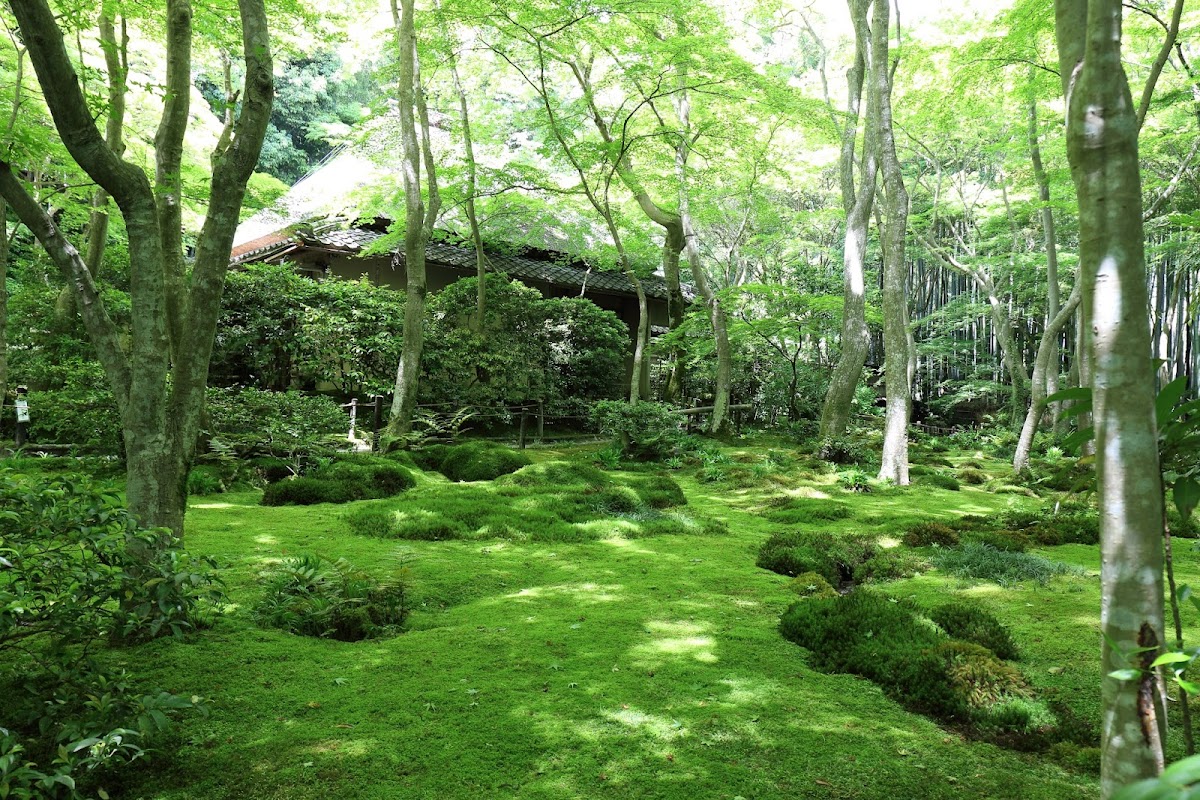
- Gio-ji Temple: A nunnery associated with the Tale of the Heike, famous for its beautiful moss garden.
- Nison-in Temple: A Tendai sect temple known for its beautiful autumn foliage.
- Arashiyama/Togetsukyo Bridge: A representative scenic spot of Kyoto.
- Bamboo Grove Path: A representative tourist spot in Sagano.
When visiting Adashino Nenbutsu-ji Temple, exploring these surrounding spots in conjunction will allow you to experience the history and nature of Okusagano more deeply.
Cultural Significance of Adashino Nenbutsu-ji Temple
Inheritance of Funeral Culture
Adashino Nenbutsu-ji Temple is a valuable cultural heritage site that conveys the history of Japanese funeral culture. From the temple’s history, one can glean insights into the changing ways in which Japanese people confront death, including the transition from open-air burial to earth burial, the memorial service for the unclaimed dead, and the common people’s views on life and death.
While funeral practices have drastically changed in modern times, the stone Buddhas and stupas lining Adashino Nenbutsu-ji Temple quietly tell the story of the lives and deaths of the people who once lived in this place.
Expression of Impermanence
The concept of “transience” and “impermanence” embodied in the word “Adashi” is an important aesthetic sensibility that flows at the root of Japanese culture. Adashino Nenbutsu-ji Temple itself expresses impermanence, and the entire landscape of its grounds expresses the transience and preciousness of life.
The countless stone Buddhas lining the riverbed of Saiin are each a testament to the lives of nameless people, and at the same time, visually represent the fundamental Buddhist concept of “impermanence of all things.”
Adashino in Art and Literature
Adashino Nenbutsu-ji Temple and its surroundings have long been the subject of literature and art. The name Adashino appears in literary works from the Heian period, depicted as a symbol of impermanence.
Even in modern times, many writers and artists have visited this area, depicting the landscape of Adashino in their poetry and travelogues. Furthermore, the fantastical scenery of Saiin-no-Kawara has been a popular subject for photographers and painters.
Summary
Adashino Nenbutsu-ji Temple is a Jodo sect temple with a history of approximately 1,200 years, and a sacred site built on a burial ground that has been used since the Heian period. Founded by Kukai and converted into a Nenbutsu training hall by Honen, it continues to perform memorial services for the unclaimed dead.
The scenery of Saiin-no-Kawara, with its approximately 8,000 stone Buddhas and stupas lining the temple grounds, quietly speaks to visitors about the preciousness of life and the impermanence of life. In particular, the Sen-to Kuyo (Thousand Lantern Memorial Service) held every August, a fantastical event where countless candles illuminate the stone Buddhas, deeply moves the hearts of many.
Located in the tranquil Okusaga area of Saga Toriimoto, Ukyo Ward, Kyoto City, Adashino Nenbutsu-ji Temple offers a deeper understanding of Kyoto’s history and culture when visited in conjunction with other tourist spots in Arashiyama and Sagano.
A visit to Adashino Nenbutsu-ji Temple is more than just sightseeing; it’s a precious opportunity to contemplate life and death and experience the impermanence of life. Spending time in the serene grounds, facing the stone Buddhas and contemplating one’s own life, will undoubtedly be an invaluable experience for those of us living in the modern age.