Complete Guide to Seiryoji Temple (Ukyo Ward, Kyoto Prefecture) | A Thorough Explanation of the History, National Treasures, and Highlights of Saga Shakado
Located in Sagano, Ukyo Ward, Kyoto City, Seiryoji Temple, affectionately known as “Saga Shakado,” is an ancient Jodo sect temple. With a National Treasure, a standing statue of Shakyamuni Buddha, as its principal image, and built on the site of Minamoto no Toru’s mountain villa, this temple boasts a history of over a thousand years and numerous cultural treasures, making it one of Kyoto’s most representative and renowned temples.
This article comprehensively introduces everything you need to know before visiting Seiryoji Temple, including its detailed history, highlights, annual events, and access information.
Basic Information about Seiryoji Temple
Official Name: Godaisan Seiryoji Temple
Common Name: Saga Shakado
Sect: Jodo-shu (Pure Land Buddhism)
Mountain Name: Godaisan
Principal Image: Standing Statue of Shakyamuni Buddha (National Treasure)
Founder: Chōnen
First Abbot: Jōsan
Location: 46 Fujinoki-cho, Saga Shakado, Ukyo-ku, Kyoto City, Kyoto 616-8447
Seiryoji Temple is located in the heart of the Sagano area and is within walking distance of Arashiyama, making it an important base for Kyoto sightseeing and attracting many visitors.
The History of Seiryoji Temple
From Minamoto no Toru’s Seikakan to Seikaji Temple
The history of Seiryoji Temple begins with “Seikakan,” a mountain villa owned by Minamoto no Toru, a prince of Emperor Saga in the early Heian period. Minamoto no Toru is said to be the model for Hikaru Genji in “The Tale of Genji,” and he had a magnificent mountain villa in this area.
In 895 (Kanpyō 7), after Minamoto no Toru’s death, his son converted the villa into a temple to pray for his father’s soul, enshrining an Amida Triad and naming it “Seikaji.” This is the predecessor of Seiryoji Temple.
Chōnen Shōnin and the Founding of Seiryoji Temple
The de facto founder of Seiryoji Temple is Chōnen Shōnin, a monk who traveled to Song Dynasty China. Chōnen studied in China from 983 to 986, making a pilgrimage to Mount Wutai. During this time, he created a replica of a statue of Shakyamuni Buddha, believed to have been introduced to China from India, and brought it back to Japan.
After returning to Japan, Chōnen envisioned Mount Atago as a replica of Mount Wutai in China and planned to build the “Daiseiryōji” temple there. However, he passed away in 987 before completing his plan. His disciple, Seisan, inherited his will and completed Seiryōji in 1016, using the Shakyamuni Hall of Seikaji Temple as the main hall.
Because of this history, Seiryōji adopted the mountain name “Mount Wutai” and became an important temple that introduced the faith of Mount Wutai, a sacred site in China, to Japan.
Changes in Sect
Seiryōji was originally a temple of the Kegon sect. Later, it functioned as a training ground for multiple Buddhist sects, including the Jodo, Tendai, and Shingon sects, but currently belongs to the Jodo sect. This shift in sectarian affiliation demonstrates the important role Seiryoji Temple has played as a center of various Buddhist faiths throughout history.
In the Middle Ages, it flourished as a training ground for Yuzu Nembutsu, attracting many monks and believers. During the Edo period, it received patronage from the Tokugawa shogunate, and many of the buildings seen today were constructed.
The Charm of the National Treasure: Wooden Standing Statue of Shakyamuni Buddha
The Living Shakyamuni from Three Countries
Seiryoji Temple’s greatest treasure is its principal image, the wooden standing statue of Shakyamuni Buddha (National Treasure). This statue is revered as the “Shakyamuni statue from three countries” or “the living Shakyamuni (Shojin no Shaka).”
The statue is 160 centimeters tall and has a legend that it was transmitted from India, China, and Japan. Although it was actually a replica commissioned by Chōnen in Song Dynasty China, it is called this because the original statue is believed to have originated in India.
Unique Style and Contents Inside
This standing statue of Shakyamuni Buddha possesses a style unusual for Japanese Buddhist statues. It is characterized by a distinctive “Honpa-shiki” style, where the folds of the robe are intricately carved, strongly reflecting the influence of the Indian Gandhara style.
Even more surprisingly, silk representations of the five internal organs and six viscera were discovered inside the statue. These contents, confirmed during the dismantling and repair in 1953, are valuable evidence indicating the intention to create a “living Buddha” during the statue’s creation. In addition to the silk organs, the contents also include scriptures, a mirror, and a crystal ball, all of which have been designated as Important Cultural Properties.
Viewing and Special Openings
The principal image, a standing statue of Shakyamuni Buddha, is usually enshrined in the main hall and can be viewed up close by paying an admission fee. A special opening is held on the 8th of each month, allowing for even closer viewing. Furthermore, the Treasure Hall is open in April, May, October, and November, displaying temple treasures, including items enshrined within the statue.
Highlights of the Temple Grounds
Niomon Gate
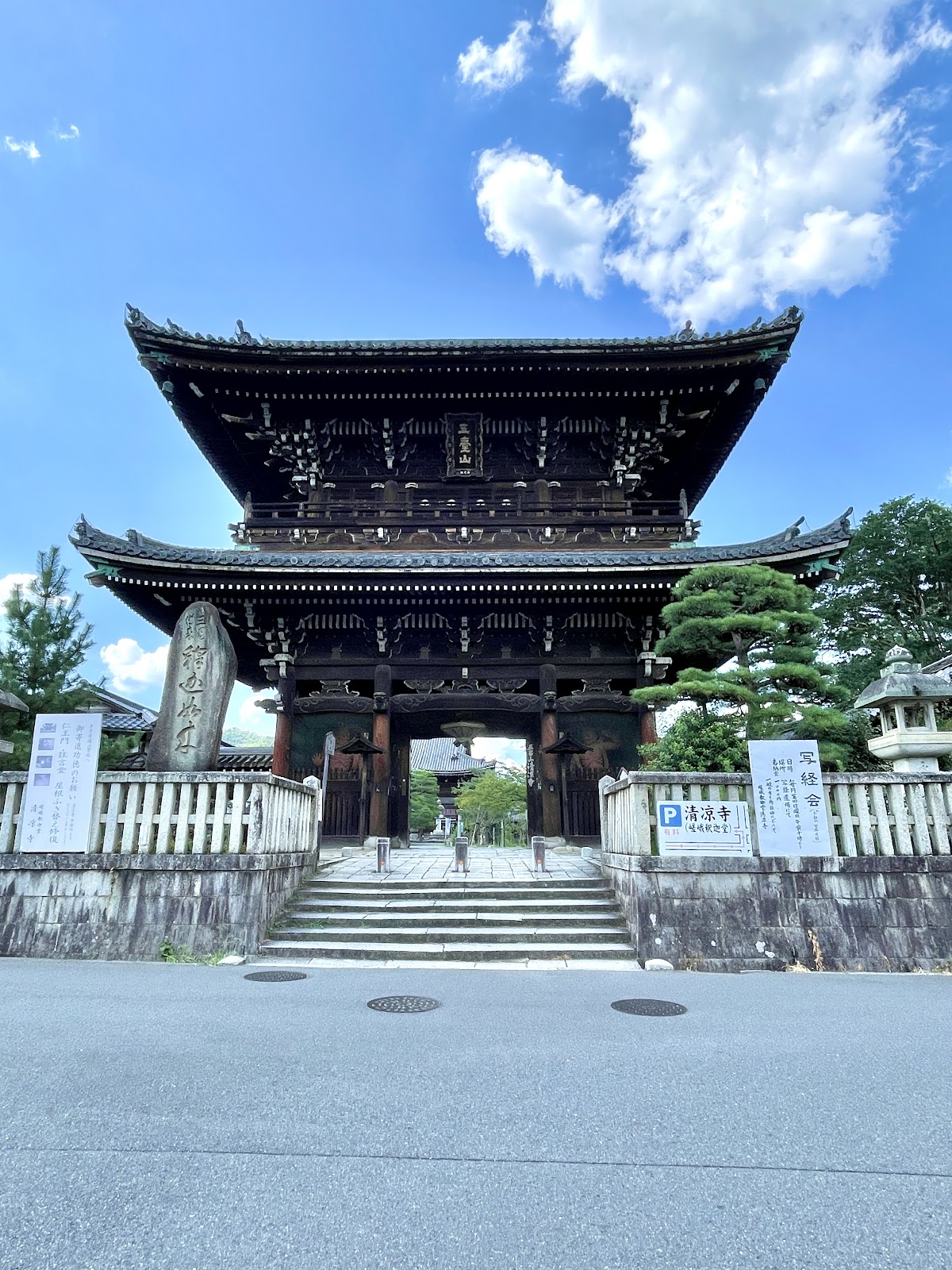
The Niomon Gate, the main entrance to Seiryoji Temple, is a magnificent two-story gate rebuilt during the Edo period. Its imposing structure, covered with traditional roof tiles, is flanked by Kongo Rikishi statues (Nio statues), welcoming visitors. Passing through this gate reveals the vast temple grounds.
Main Hall (Shakado)
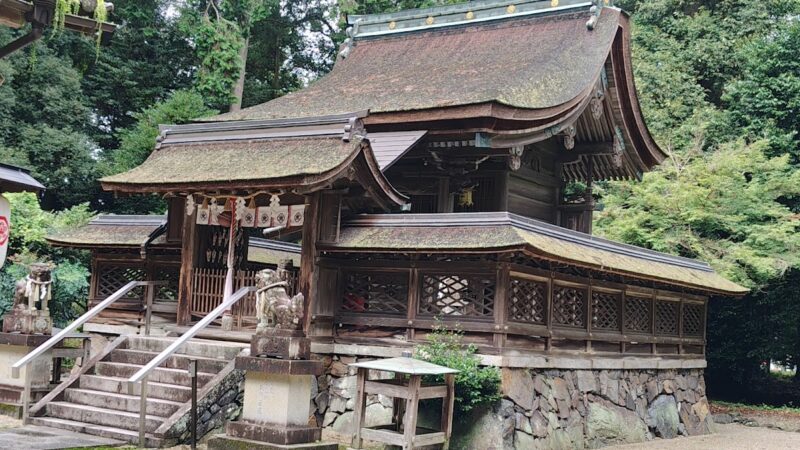
The main hall is a magnificent building rebuilt in 1701 (Genroku 14), featuring a hipped roof and tiled roof. Inside, the principal image, a standing statue of Shakyamuni Buddha, is enshrined, flanked by statues of Manjushri Bodhisattva and Samantabhadra Bodhisattva. The hall is filled with a solemn atmosphere, and many worshippers can be seen quietly offering their prayers.
Amida Hall
Located west of the main hall, the Amida Hall is a building that tells the story of Seikaji Temple, the predecessor of Seiryoji Temple. The hall houses a statue of the Amida Triad, and the spirit of its founding—to mourn the passing of Minamoto no Toru—is still carried on today.
Pagoda
The pagoda, located in the northeastern part of the temple grounds, was rebuilt during the Taisho era. This beautiful vermilion-painted pagoda adds color to the temple grounds. The pagoda houses a statue of Dainichi Nyorai (Vairocana Buddha).
Tomb of Minamoto no Toru
At the back of the temple grounds is a Hōkyōintō pagoda believed to be the tomb of Minamoto no Toru, who built a mountain villa on this site. As a historical site that evokes the splendor of the Heian period aristocracy, it attracts many history enthusiasts. Stone art objects are scattered throughout the surrounding area, making for a peaceful stroll.
Yakushi-ji Temple
Yakushi-ji Temple is located in a corner of the temple grounds, enshrining Yakushi Nyorai (Medicine Buddha). Many visitors come here to pray for good health.
Garden
Seiryō-ji Temple also boasts a beautiful garden, where visitors can enjoy the scenery of each season. Especially during the cherry blossom season in spring and the autumn foliage season, the entire temple grounds are enveloped in beautiful colors.
Treasure Trove of Cultural Properties
Seiryō-ji Temple houses numerous cultural properties, including National Treasures and Important Cultural Properties.
National Treasure
- Wooden Standing Statue of Shakyamuni Buddha and its Enshrined Objects: The aforementioned principal image, one of the finest masterpieces of Buddhist art from the Heian period.
Important Cultural Property (Building)
- Main Hall: A representative example of Buddhist temple architecture from the Edo period.
Important Cultural Property (Sculpture, Painting, Crafts)
- Wooden Amida Triad Statue: A work from the Heian period.
- Wooden Standing Statues of the Ten Great Disciples: An excellent group of sculptures from the Kamakura period.
- Wooden Standing Statues of the Four Heavenly Kings: A work from the Heian to Kamakura periods.
- Colored Silk Painting of the Sixteen Arhats: A painting from the Song Dynasty of China.
- Amida Triad Statue (Colored Silk Painting): A Buddhist painting from the Kamakura period.
Some of these cultural properties are on display during the opening period of the Reihokan (Treasure Hall).
Annual Events
Seiryoji Temple holds various events throughout the year, attracting many visitors.
Omatsuri Ceremony (March 15th)
The Saga Omatsuri Ceremony, one of Kyoto’s three major fire festivals, is the most important event at Seiryoji Temple. This memorial service commemorates the Nirvana of Buddha, and thirteen large torches, each up to seven meters tall, are burned in front of the main hall. There is a tradition of predicting the year’s harvest based on the intensity of the flames, attracting many spectators.
Saga Dainembutsu Kyogen (April & October)
Designated as an Important Intangible Folk Cultural Property, the Saga Dainembutsu Kyogen is performed in spring (early April) and autumn (early October). This traditional performing art, dating back to the Kamakura period, conveys Buddhist teachings through a silent drama.
Unveiling of the Shakyamuni Buddha Statue (8th of every month)
On the 8th of every month, the principal image, the standing statue of Shakyamuni Buddha, is unveiled, allowing visitors to view it from closer than usual.
Cleansing Ceremony (April 19th)
This ceremony involves purifying the principal image, the standing statue of Shakyamuni Buddha, where monks carefully wipe the statue with a white cloth.
Yugiri Festival (2nd Sunday of November)
This memorial service commemorates Yugiri Tayu, a famous courtesan of the Edo period. Yugiri Tayu’s grave is located on the temple grounds, and many people from the entertainment industry visit to pay their respects.
New Year’s Eve Bell Ringing (December 31st)
On New Year’s Eve, the temple bell is rung, and general visitors can also ring it (numbered tickets are distributed).
Visiting Information
Visiting Hours
- Temple Grounds: Free entry
- Main Hall: 9:00 AM – 4:00 PM (Last entry at 3:30 PM)
- Treasure Hall: 9:00 AM – 4:00 PM in April, May, October, and November
Admission Fees
- Main Hall: Adults 400 yen, Junior/Senior High School Students 300 yen, Elementary School Students 200 yen
- Treasure Hall (Open only during designated periods): Adults 400 yen, Junior/Senior High School Students 300 yen, Elementary School Students 200 yen
- Combined Ticket for Main Hall & Treasure Hall: Adults 700 yen
Group discounts (30 or more people) are available.
Special Viewings
During the special viewing periods in spring and autumn, cultural properties that are normally closed to the public may be displayed. Please check official information for details.
Access Methods
Access by Train and Bus
From JR Kyoto Station
- Get off at “Saga Shakado-mae” bus stop (Kyoto City Bus No. 28)
- Travel time: Approximately 40 minutes
From JR Saga-Arashiyama Station
- Approximately 15 minutes on foot
From Randen (Keifuku Electric Railway) Arashiyama Station
- Approximately 15 minutes on foot
From Hankyu Arashiyama Station
- Approximately 20 minutes on foot
Access by Car
- Approximately 40 minutes from Meishin Expressway “Kyoto Minami IC”
- Parking available on the temple grounds (paid, limited number of spaces)
During peak tourist seasons (especially cherry blossom and autumn foliage seasons), surrounding roads become congested, so we recommend using public transportation.
Nearby Tourist Attractions
There are many tourist attractions around Seiryoji Temple.
Daikakuji Temple
Approximately 15 minutes on foot from Seiryoji Temple. This temple was originally the detached palace of Emperor Saga and is known for the beautiful scenery of Osawa Pond.
Nison-in Temple
Approximately a 10-minute walk from Seiryo-ji Temple. Famous for its autumn foliage, this temple boasts a beautiful approach known as “Momiji no Baba” (Maple Horse Riding Ground).
Arashiyama
Approximately a 15-minute walk from Seiryo-ji Temple. A representative scenic spot of Kyoto, featuring Togetsukyo Bridge and the bamboo grove.
Tenryu-ji Temple
A renowned Rinzai Zen temple registered as a World Heritage Site. Known for its beautiful garden.
Jojakko-ji Temple
A Nichiren Buddhist temple located on the slopes of Mt. Ogura. Popular for its autumn foliage.
How to Spend Your Time at Seiryoji Temple
Model Itinerary for Visiting
- Enter through the Niomon Gate (5 minutes)
- Visit the Main Hall: View the National Treasure, the Standing Statue of Shakyamuni Buddha (30 minutes)
- Stroll through the Temple Grounds: Visit the Amida Hall, the Tahoto Pagoda, the Tomb of Minamoto no Toru, etc. (30 minutes)
- Visit the Reihokan Museum (Open only during designated periods, 30 minutes)
- Take a Break at the Temple’s Teahouse (30 minutes)
Total Time Required: Approximately 2 hours
Photography Tips
- Niomon Gate: A majestic view from the front
- Main Hall: A panoramic view from within the temple grounds
- Tahoto Pagoda: Combined with cherry blossoms or autumn leaves
- Garden: Scenery of the four seasons
*Photography is prohibited inside the Main Hall.
Dining on the Temple Grounds
Within the temple grounds is “Chikusen,” a restaurant serving Yudofu (boiled tofu), a traditional Kyoto dish. Yudofu made with Saga tofu and vegetarian cuisine are perfect for a meal after visiting the temple.
The Four Seasons of Seiryoji Temple
Spring (March-May)
The cherry blossoms on the temple grounds are in full bloom, especially the Somei Yoshino and weeping cherry trees. The Omatsuri-shiki (torch festival) on March 15th and the Saga Dai Nenbutsu Kyogen (a type of Buddhist chant) in April are highlights.
Summer (June-August)
The fresh greenery is beautiful, allowing for a peaceful visit. Early morning visits are recommended to avoid the heat.
Autumn (September-November)
Known as a famous spot for autumn foliage, the temple grounds are dyed in red and yellow. The Saga Dai Nenbutsu Kyogen in October and the Yugiri Festival in November take place here. The Reihokan (Treasure Hall) is also open to the public, making it an ideal time to appreciate cultural artifacts.
Winter (December to February)
With fewer tourists, you can visit the temple in a tranquil atmosphere. The snow-covered temple grounds are also picturesque. The New Year’s Eve bell ringing is bustling with many visitors.
Historical Connections Between Seiryoji Temple and Sagano
Sagano, where Seiryoji Temple is located, flourished as a villa area for aristocrats from the Heian period. Emperor Saga established a detached palace there, and his son, Prince Minamoto no Toru, built a mountain villa in the area, making it a center of aristocratic culture.
Within this historical context, Seiryoji Temple has played an important role as a center of Buddhist faith. In particular, as a center of Shakyamuni worship, it attracted many monks and believers, contributing to the development of Buddhist culture.
In the Middle Ages, it served as a training ground for Yuzu Nembutsu, and in the Edo period, as a Jodo sect temple, demonstrating forms of faith appropriate to each era. Even today, it remains a representative temple of Sagano, welcoming many worshippers and tourists.
Summary
Seiryoji Temple (Sagano Shakado) is a representative ancient temple of Kyoto, with a national treasure, a standing statue of Shakyamuni Buddha, as its principal image. Built on the site of Minamoto no Toru’s mountain villa, this temple, with a history of over a thousand years, preserves many cultural assets and traditional events.
The temple grounds, surrounded by the beautiful nature of Sagano, are a place where you can enjoy the scenery of each season. When sightseeing in Kyoto, be sure to visit Seiryoji Temple and experience its history, culture, and tranquil atmosphere.
The principal image, a standing statue of Shakyamuni Buddha worshipped as the “living Shakyamuni,” the spring torch-making ceremony, and the spring and autumn Sagano Daibutsu Kyogen performances are just some of the unique charms of Seiryoji Temple that await you.