Complete Guide to Shinkei-ji Temple (Kyoto Prefecture) | History and Highlights of a Shinshu Otani-ha Temple Associated with Keishoin
Nestled in a quiet residential area of Kamigyo-ku, Kyoto City, Shinkei-ji Temple is a historic Shinshu Otani-ha temple dating back to the Edo period. It serves as the family temple of Keishoin’s father, known as the mother of Tokugawa Tsunayoshi, the fifth Tokugawa shogun. With the mountain name Kanno-zan, this temple is located west of the Kyoto Imperial Palace and continues to welcome many worshippers as a center of local faith.
This article comprehensively introduces information you should know before visiting Shinkei-ji Temple, including its detailed history, deep connection to Keishoin, access methods, and highlights.
Basic Information on Shinkei-ji Temple
Shinkei-ji Temple is a Shinshu Otani-ha temple located at 297 Motofuku Daimyojin-cho, Kamigyo-ku, Kyoto City, Kyoto Prefecture. Its official mountain name is Kanno-zan, and it continues to uphold the teachings of Jodo Shinshu Buddhism.
Location and Contact Information
- Address: 297 Motofuku Daimyojin-cho, Shimotachiuri Kita-iri, Yoshiya-cho-dori, Kamigyo-ku, Kyoto City, Kyoto Prefecture 602-8113
- Sect: Shinshu Otani-ha (Higashi Honganji-ha)
- Mountain Name: Kanno-zan
- Nearest Station: Marutamachi Station, Kyoto Municipal Subway Karasuma Line
Shinkei-ji Temple is located in a residential area of Kamigyo-ku, west of the Kyoto Imperial Palace, between Karasuma-dori and Horikawa-dori. The surrounding area retains its historical streetscape, with many temples and shrines scattered throughout.
History and Origins of Shinkei-ji Temple
Circumstances of Founding
An essential part of the history of Shinkei-ji Temple is its deep relationship with Keishoin. Keishoin (1627-1705) is known as the concubine of Tokugawa Iemitsu, who entered the Ooku (women’s quarters) of Edo Castle and gave birth to the future fifth shogun, Tokugawa Tsunayoshi.
Keishoin was originally born the daughter of a greengrocer in Kyoto, and her given name was Otama. Her father was Nizaemon, and Shinkei-ji Temple has played an important role as his family temple.
Relationship with the Shinshu Otani School
The Shinshu Otani School is a branch of Jodo Shinshu Buddhism, founded by Shinran Shonin, and its head temple is Higashi Hongan-ji. Shinkei-ji Temple also belongs to this sect and continues to uphold a faith centered on the nembutsu, “Namu Amida Butsu.”
The teachings of Jodo Shinshu Buddhism center on the idea of salvation by the power of Amida Buddha, which holds that all people are equally saved by the power of Amida Buddha’s original vow. Shinkei-ji Temple also holds memorial services and events based on this teaching.
Changes Since the Edo Period
During the Edo period, when Keishoin wielded great power as the shogun’s mother, it is believed that Shinkei-ji Temple also received her patronage. Keishoin was deeply devoted to Buddhism and is known for her involvement in the construction and restoration of many temples. She likely held a special affection for Shinkei-ji Temple, her father’s family temple.
After the anti-Buddhist movement following the Meiji Restoration, Shinkei-ji Temple has continued to uphold its Buddhist traditions to this day, supported by the faith of the local people.
The Deep Relationship Between Keishoin and Shinkei-ji Temple
The Life of Keishoin
Keishoin was born in Kyoto in 1627 (Kanei 4), the daughter of a greengrocer. She went to Edo in her youth and was discovered by Kasuga no Tsubone, entering the Ooku (women’s quarters) of Edo Castle. Initially, she served Iemitsu’s concubine, Oman no Kata (later Junshoin), but later caught Iemitsu’s eye and became his concubine herself.
When Iemitsu’s fourth son, Tsunayoshi, succeeded to the shogunate in 1663, Keishoin, as the shogun’s mother, wielded immense power in the Ooku (women’s quarters of the Edo Castle). She was deeply devoted to Buddhism and dedicated herself to the construction and restoration of numerous temples, particularly Gokoku-ji and Zojo-ji.
Thoughts on Her Father, Nizaemon
Even after achieving success, Keishoin never forgot her father, Nizaemon, who ran a greengrocer’s shop in Kyoto. It is said that she designated Shinkei-ji Temple as her father’s family temple and never neglected to perform memorial services for him.
This spirit of filial piety became widely known as an episode demonstrating Keishoin’s character, especially in the Edo period when Confucian values were highly valued.
Historical Sites Remaining at Shinkei-ji Temple
It is believed that Shinkei-ji Temple contains the tomb and memorial tower related to Keishoin’s father, Nizaemon. These are valuable historical sites that convey the history of the Edo period and are important cultural assets of the temple.
Architecture and Grounds of Shinkei-ji Temple
Features of the Main Hall
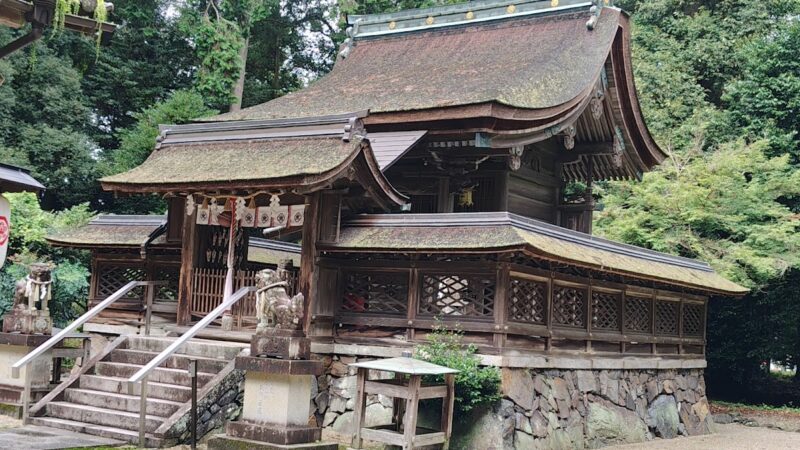
The main hall of Shinkei-ji Temple is a building that exhibits the characteristics of Shinshu Otani-ha temple architecture. The main hall of Jodo Shinshu Buddhism, also called the “Mido,” is the central space where the principal image, Amida Buddha, is enshrined and where religious services and ceremonies are held.
In the inner sanctuary, a golden, gleaming statue of Amida Buddha is enshrined, with a sutra desk and incense burner placed in front of it. A characteristic of Shinshu main halls is their open design, allowing believers to equally experience Buddhist teachings.
Atmosphere of the Temple Grounds
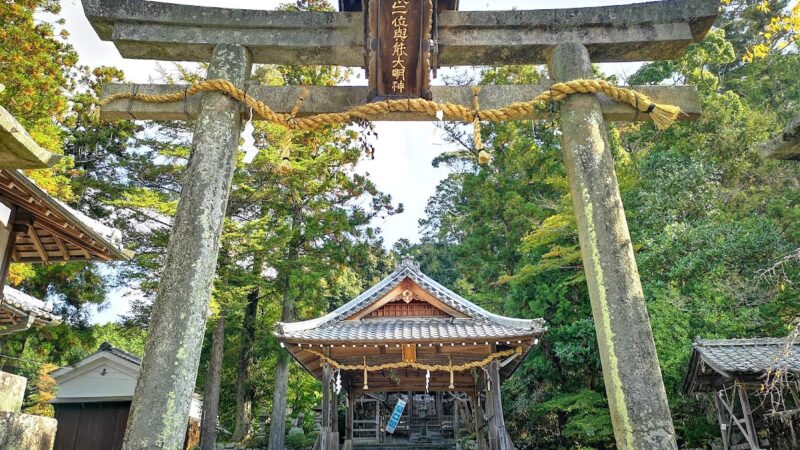
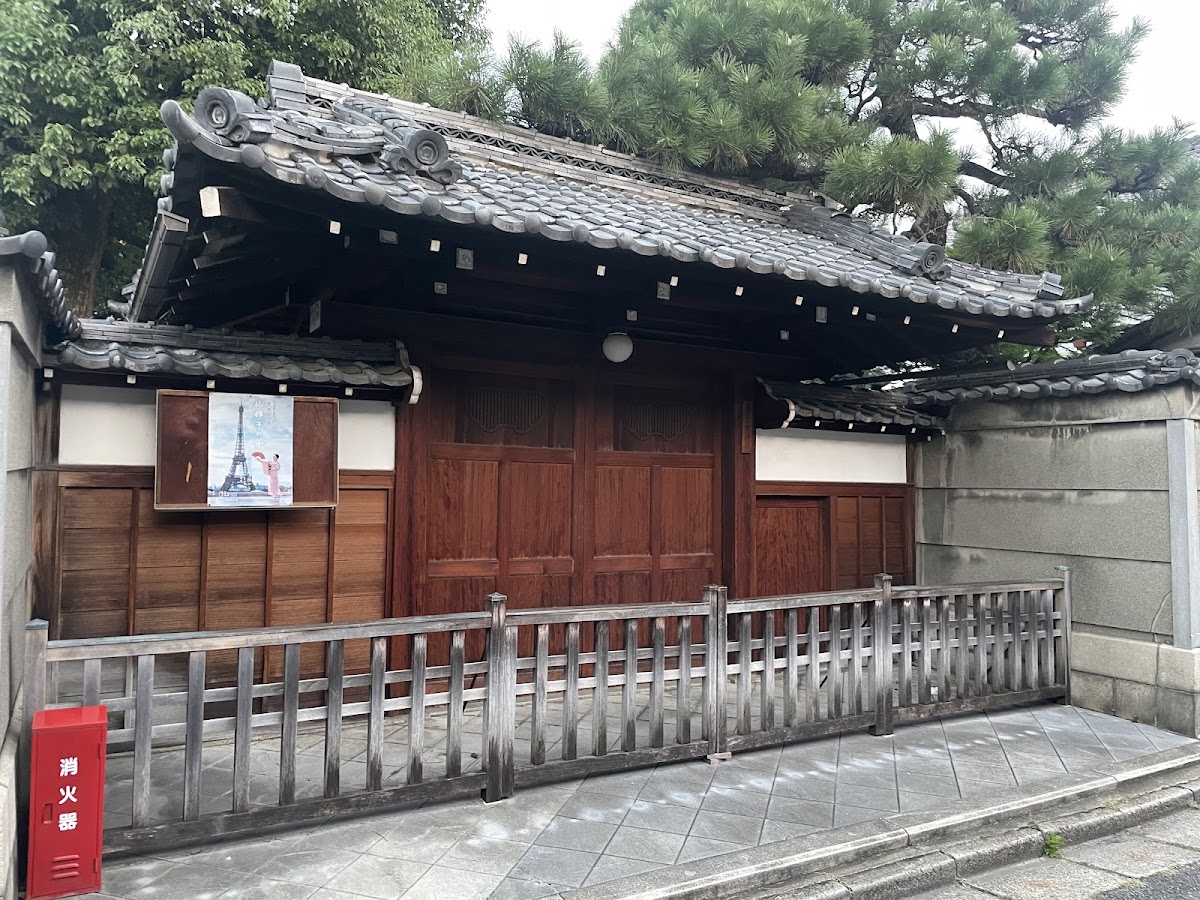
Despite being located in a residential area of Kyoto, the grounds of Shinkei-ji Temple are enveloped in a tranquil atmosphere. Upon passing through the temple gate, visitors are greeted by a well-maintained garden.
The seasonal changes in the temple grounds’ landscaping soothe the hearts of visitors. You can enjoy the beauty of each season: cherry blossoms in spring, lush greenery in summer, autumn leaves in fall, and snowscapes in winter.
Cemetery and Columbarium
Shinkei-ji Temple also has a cemetery for its parishioners. As a temple located in an urban area, it is equipped with perpetual memorial graves and a columbarium, providing memorial services that meet modern needs.
Events and Memorial Services Held at Shinkei-ji Temple
Annual Events
As a temple of the Shinshu Otani sect, Shinkei-ji Temple holds various memorial services and events throughout the year.
Main Annual Events:
- Shushōe: New Year’s memorial service held from January 1st to 3rd
- Spring Equinox Service: Memorial service centered around the spring equinox
- Birth Day Celebration: Memorial service celebrating the birth of Shinran Shonin on May 21st
- Obon Festival: Memorial service held in August
- Autumn Equinox Service: Memorial service centered around the autumn equinox
- Hōonkō: Memorial service commemorating the death anniversary of Shinran Shonin in November (the most important memorial service in Shin Buddhism)
Regular Memorial Services
Regular memorial services are held every month on the anniversary of Shinran Shonin’s death, with parishioners gathering to chant the Nembutsu. These services also function as a place to deepen the bonds of the local community.
Special Memorial Services
We accept requests for individual memorial services and annual memorial services at any time, providing a place to remember the deceased and pray for their peaceful repose.
Access to Shinkei-ji Temple
Access by Train
Using the Kyoto Municipal Subway:
- Get off at Marutamachi Station on the Karasuma Line, approximately 10 minutes on foot
- Exit the station and head west, then north along Yoshiya-cho Street.
Marutamachi Station is the closest station to the Kyoto Imperial Palace, making it a convenient base for sightseeing. The walk from the station to Shinkei-ji Temple allows you to enjoy the charming Kyoto streetscape.
Access by Bus
Using Kyoto City Buses:
- Get off at the Karasuma Shimotachiuri bus stop, approximately 5 minutes on foot
- Get off at the Prefectural Office bus stop, approximately 8 minutes on foot
Kyoto City has an extensive bus network, allowing access to Shinkei-ji Temple from various directions.
Access by Car
If visiting by private car, take Karasuma Street or Horikawa Street and turn onto Yoshiya-cho Street. However, roads in central Kyoto are narrow and parking is limited, so using public transportation is recommended.
It is recommended to check in advance whether the temple has parking.
Attractions near Shinkei-ji Temple
Kyoto Imperial Palace
Located about a 15-minute walk east from Shinkei-ji Temple, the Kyoto Imperial Palace was the residence of the Emperor until the Meiji Restoration. The vast grounds retain beautiful gardens and historical buildings, and can be visited without prior reservation.
Go-o Shrine
Go-o Shrine, known as the “Wild Boar Shrine,” is within walking distance of Shinkei-ji Temple. It is believed to bring good health to the legs and lower back, and attracts many visitors.
Seimei Shrine
Seimei Shrine, dedicated to the Onmyoji (exorcist) Abe no Seimei, is also nearby and is a popular power spot. It is famous for its pentagram amulets and the Seimei Well spring.
Temples and Shrines in Kamigyo Ward
Kamigyo Ward, where Shinkei-ji Temple is located, is home to many historical temples such as Shokoku-ji, Honpo-ji, and Myoken-ji. Visiting these temples as part of a temple and shrine tour is highly recommended.
Etiquette for Visiting Shinkei-ji Temple
Manners for Visiting Temples
Here are some basic manners for visiting temples of the Shinshu Otani sect.
Bow at the Temple Gate: Bow before passing through the temple gate. This is a sign of respect for entering the realm of Buddha.
Procedure for Washing Hands: If there is a washbasin, wash your left hand first, then your right hand, and rinse your mouth.
Worship at the Main Hall: Join your hands in prayer in front of the main hall and quietly chant the Nembutsu, “Namu Amida Butsu.” In Shin Buddhism, clapping is not customary; instead, one quietly joins hands in prayer.
Regarding Attire
There are no specific dress code requirements, but please dress appropriately, keeping in mind that a temple is a sacred place. It is best to avoid overly revealing or flashy clothing.
Regarding Photography
Photography policies within the temple grounds vary depending on the temple. Photography inside the main hall and of Buddha statues is often prohibited, so please check beforehand or follow any signs indicating that photography is prohibited.
Shinkei-ji Temple’s Danka System and Faith Activities
Regarding the Danka System
Shinkei-ji Temple serves as a local danka temple, supporting the religious lives of its parishioners. The danka system originates from the temple registration system of the Edo period and is still maintained by many temples today.
Becoming a danka allows you to hold ancestral memorial services and Buddhist ceremonies at the temple, and you gain the right to use a cemetery plot. You also contribute to the maintenance and operation of the temple.
Faithful Activities
It is believed that Shinkei-ji Temple holds regular Dharma talks and Buddhist lectures. Through these activities, parishioners can learn the teachings of Jodo Shinshu Buddhism and deepen their faith.
The Teachings of the Shinshu Otani School and Shinkei-ji Temple
The Teachings of Shinran Shonin
The foundation of the Shinshu Otani School lies in the teachings of Shinran Shonin (1173-1263), a monk of the Kamakura period. Shinran Shonin expounded the idea of “other-power vow,” which states that all people are equally saved by the power of Amida Buddha’s original vow.
Chanting “Namu Amida Butsu”
In Shinshu Buddhism, chanting “Namu Amida Butsu” is considered the most important practice. This is a phrase that expresses devotion to Amida Buddha, and it is believed that one can experience the Buddha’s compassion through chanting.
The Significance of Shinshu Buddhism in Modern Times
The teachings of Shinshu Buddhism are accepted by many people in modern society. In particular, the idea that all people will be saved equally carries an important message in today’s world where discrimination and inequality are problematic.
Points to Note When Visiting Shinkei-ji Temple
Visiting Hours
It is recommended to check the visiting hours of Shinkei-ji Temple in advance. Generally, temples are open during the daytime, but visits may be restricted during religious services or events.
Admission Fee
Regular visits are free, but there may be a fee for special viewings or participation in events.
Inquiries
For detailed information or special requests, it is recommended to contact the temple directly. When calling, the morning hours are appropriate.
Cultural Properties and Historical Value of Shinkei-ji Temple
Historical Buildings
The buildings of Shinkei-ji Temple, such as the main hall and the temple gate, preserve the architectural style of temples that has continued since the Edo period. These buildings are important elements that constitute Kyoto’s historical landscape.
Cultural Assets Held
The temple may possess valuable historical materials, such as documents related to Keishoin and records left by successive chief priests. These are important resources for studying the history connecting Kyoto and Edo during the Edo period.
Shinkei-ji Temple and the Local Community
Connections with the Community
Shinkei-ji Temple is not merely a religious facility; it also plays a central role in the local community. Buddhist services and events serve as places for local people to gather and interact.
The Role of Temples in Modern Times
In today’s society, where the birthrate is declining and the population is aging, temples play an important role as a spiritual haven for the elderly. They also provide support at various stages of life, such as consultations on end-of-life planning and inheritance.
Summary
Shinkei-ji Temple (Kyoto Prefecture) is a historic Shinshu Otani sect temple that has existed since the Edo period, serving as the family temple of the father of Keishoin, the birth mother of Tokugawa Tsunayoshi, the fifth Tokugawa shogun. With the mountain name Kannozan, this temple, nestled in a quiet residential area of Kamigyo Ward in Kyoto City, remains a center of local faith and is cherished by many.
Located west of the Kyoto Imperial Palace, Shinkei-ji Temple is easily accessible during Kyoto sightseeing. Its connection to the historical figure Keishoin, the temple grounds imbued with the teachings of Jodo Shinshu Buddhism, and its warm, community-rooted atmosphere are major attractions.
Its convenient access, just a 10-minute walk from Marutamachi Station on the Kyoto Municipal Subway, is another appealing feature. When visiting Kyoto, be sure to visit Shinkei-ji Temple and experience its history and tranquil atmosphere.
Through a visit to Shinkei-ji Temple, you can reflect on the history of the Edo period and find peace of mind by encountering the teachings of Jodo Shinshu Buddhism. Shinkei-ji Temple, where you can feel the profound history and culture of Kyoto, is a temple well worth visiting.