Complete Guide to Saihoji Temple (Kamigyo Ward, Kyoto Prefecture) | History, Highlights, and Access Information
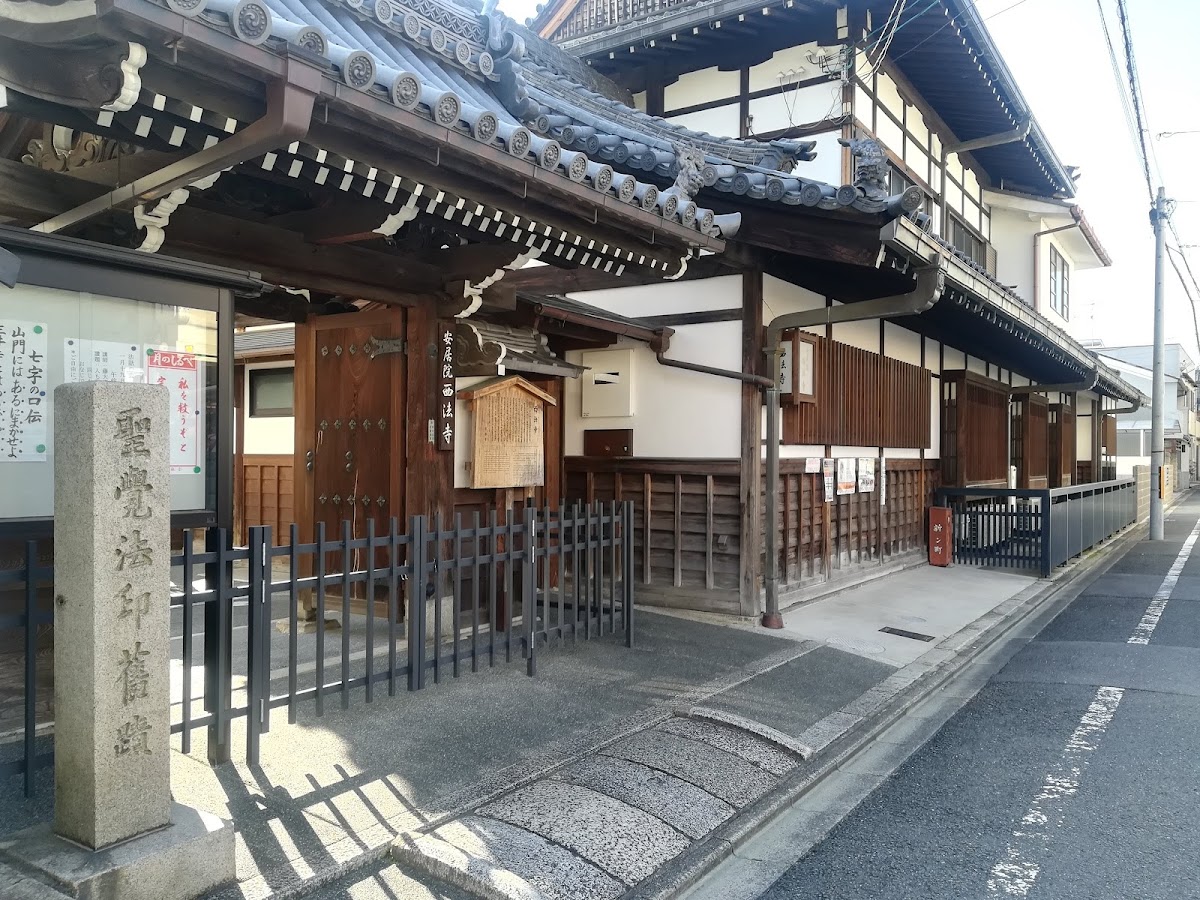
Nearby in a quiet residential area of Kamigyo Ward, Kyoto City, Saihoji Temple is a historic temple belonging to the Jodo Shinshu Honganji sect. This temple, also known as Agui, has a history of being rebuilt during the Bunroku era after being lost in the Onin War, and is a valuable presence that conveys Kyoto’s religious culture to the present day.
This article comprehensively introduces information useful for visiting Saihoji Temple, from its history and highlights to access methods.
History of Saihoji Temple
Origins of Agui and the Onin War
Agui, the predecessor of Saihoji Temple, was a temple that existed in Kyoto’s history from ancient times. However, it was destroyed along with many other temples and shrines during the Onin War (1467-1477), a large-scale civil war that devastated Kyoto.
The Ōnin War devastated Kyoto’s cityscape, resulting in the loss of numerous cultural properties and religious sites. Angoin Temple was one of the temples that perished, and its reconstruction remained unsuccessful for a long time.
Reconstruction in 1593 and Conversion to a Jōdo Shinshū Temple
In 1593 (Bunroku 2), Myōen, a monk from Ise Province, attempted to restore Angoin Temple. Myōen built the temple buildings and, upon reconstructing the temple, renamed it “Saihōji,” marking a new beginning as a Jōdo Shinshū temple.
This reconstruction coincided with the urban reorganization of Kyoto during the time of Toyotomi Hideyoshi, and is thought to have taken place within the larger trend of Hideyoshi’s formation of temple districts and the consolidation of temples. Since Myōen’s reconstruction, Saihōji Temple has served as a center of local faith as a Jōdo Shinshū Honganji-ha temple.
From the Edo Period to the Present
Throughout the Edo period, Saihoji Temple continued to function as a temple deeply rooted in the local community of Kamigyo Ward. It transmitted the teachings of the Jodo Shinshu Honganji sect and functioned as a spiritual center for the local people.
Even after the anti-Buddhist movement following the Meiji Restoration and the ravages of World War II, Saihoji Temple continued to exist. Even today, while fulfilling its role as a traditional temple, it occupies an important position as part of the local community.
Saihoji Temple’s Sect and Principal Image
About the Jodo Shinshu Honganji Sect
The Jodo Shinshu Honganji sect, to which Saihoji Temple belongs, is one of the largest Buddhist sects in Japan, with Shinran Shonin as its founder and its head temple located at Nishi Honganji (Honganji) in Kyoto.
The teachings of Jodo Shinshu Buddhism are centered on “reliance on the power of others,” based on the belief that all people will be saved by the power of Amida Buddha’s vow. The teaching that everyone can equally attain rebirth in the Pure Land by chanting the Nembutsu (invocation of Amida Buddha) has been widely accepted by the people since the Kamakura period.
Principal Image: Amida Buddha
The principal image of Saihoji Temple is Amida Buddha. Amida Buddha, as the Buddha possessing immeasurable life and immeasurable light, is the most important object of worship in Jodo Shinshu Buddhism.
Amida Buddha made 48 vows to save all sentient beings, and it is believed that he became a Buddha when these vows were fulfilled. The fundamental teaching of Jodo Shinshu Buddhism is that, through the power of this vow, those who chant the Nembutsu will surely attain rebirth in the Pure Land.
Mountain Name “Chikubayama” and Temple Name “Angoin”
The official name of Saihoji Temple is “Chikubayama Angoin Saihoji.” The temple’s mountain name, “Chikubayama,” is a name given as a spiritual symbol of the temple, and its sub-temple name, “Angoin,” inherits the name of its predecessor temple.
“Ango” is a Buddhist term meaning that monks dedicate themselves to training for a certain period. This name suggests that the former Angoin had the character of a training dojo.
Highlights of Saihoji Temple
Main Hall and Temple Grounds
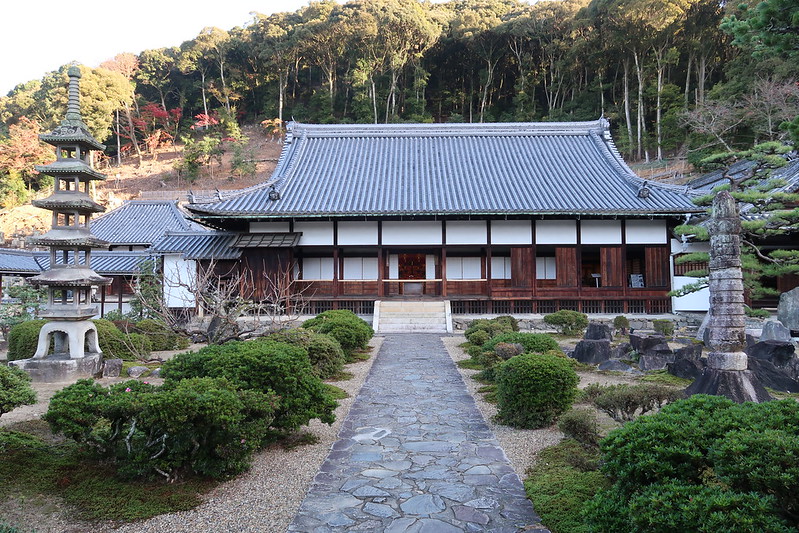
The main hall of Saihoji Temple is a typical example of a Jodo Shinshu Buddhist temple. The principal image, Amida Buddha, is enshrined in the inner sanctuary, allowing visitors to worship in a solemn atmosphere.
Although located in a residential area, the temple grounds maintain a tranquil space, providing an environment where one can forget the hustle and bustle of the city and worship in peace. While it is a medium-sized temple, the meticulously maintained grounds offer peace to visitors.
Relationship with Surrounding Temples and Shrines
The area around Omiya-dori Teranouchi in Kamigyo Ward, where Saihoji Temple is located, is historically a region with many temples. As the name “Teranouchi” (meaning “within the temple grounds”) suggests, this area was once home to numerous temples, and many temples and shrines remain today.
A stroll around the area surrounding Saihoji Temple allows you to see temples of various sects, experiencing the diversity of Kyoto’s religious culture. Visiting Saihoji Temple as part of a temple tour will lead to a deeper understanding of Kyoto.
Quiet Worship Environment
Saihoji Temple is not a tourist temple, so it is not crowded with tourists. Therefore, it is an ideal environment for those who wish to worship in a calm and peaceful atmosphere.
As a temple rooted in the community, it maintains an atmosphere of everyday worship, making it a valuable place to experience Kyoto’s “living religious culture.”
Basic Information
Temple Name and Sect
- Official Name: Chikuyozan Aguin Saihoji
- Sect: Jodo Shinshu Honganji-ha
- Principal Image: Amida Buddha
- Mountain Name: Chikuyozan
- Temple Name: Aguin
- Chief Priest: Noda Sumiyoshi
Location and Contact Information
- Address: 599 Shinn-cho, 3-chome, Higashi-iri, Omiya-dori Teranouchi-agaru, Kamigyo-ku, Kyoto City, Kyoto Prefecture 602-0083
- Phone Number: It is recommended to confirm the phone number with the temple beforehand.
Visiting Information
Saihoji Temple is primarily a temple for temple parishioners and differs from typical tourist temples. Therefore, please note the following points regarding visiting.
- Admission Fee: Free (However, prior confirmation is recommended regarding entry to the temple grounds)
- Visiting Hours: During normal temple hours (prior confirmation is recommended for details)
- Special Openings: No special openings are usually held
- Photography: Permission may be required for photography on the temple grounds
Annual Events
As a Jodo Shinshu temple, the following annual events are held:
- Spring Equinox Service: A memorial service centered around the spring equinox
- Birth Day (Flower Festival): A memorial service celebrating the birth of Shinran Shonin
- Obon Memorial Service: A memorial service for ancestors
- Autumn Equinox Service: A memorial service centered around the autumn equinox
- Ho-on-ko: The most important memorial service held on the anniversary of Shinran Shonin’s death
For events open to the public, it is recommended to confirm with the temple in advance.
Access Methods
Access by Train
The most convenient way to reach Saihoji Temple is by using the Kyoto Municipal Subway.
From Imadegawa Station on the Kyoto Municipal Subway Karasuma Line
- Approximately 15 minutes on foot (approx. 1.2 km)
- Exit the station and head west, then head north along Omiya Street.
From Kuramaguchi Station on the Kyoto Municipal Subway Karasuma Line
- Approximately 12 minutes on foot (approx. 972 m)
- Exit the station and head west, then head south along Omiya Street.
From Marutamachi Station on the Kyoto Municipal Subway Karasuma Line
- Approximately 20 minutes on foot
- As it is a bit far from the nearest station, using the bus in conjunction with the train is recommended.
Access by Bus
If using Kyoto City Buses, the following bus stops are convenient.
From the “Tenjin Park Mae” bus stop:
- Approximately 5 minutes on foot
- This is the most convenient bus stop.
- Multiple bus routes stop here.
Other nearby bus stops:
- “Omiya Teranouchi” bus stop: Approximately 3 minutes on foot
- “Horikawa Teranouchi” bus stop: Approximately 8 minutes on foot
Kyoto City Bus routes are complex, so we recommend checking the best route in advance on the Kyoto City Transportation Bureau website or Google Maps.
Access by Car
If you are visiting by private car, please note the following:
- Parking: Please check in advance whether there is a dedicated parking lot.
- Surrounding Roads: As it is located in a residential area, there are some narrow roads.
- Car Navigation Settings: Search using the address “599 Shin-machi, Higashi-iri, 3-chome, Omiya-dori Teranouchi-agaru, Kamigyo-ku, Kyoto City”.
Roads in Kyoto City are often congested, especially during tourist seasons, so we recommend using public transportation.
Taking a Taxi
If you take a taxi from Kyoto Station, the journey takes approximately 20 minutes and the fare is approximately 2,000 yen (this may vary depending on traffic conditions).
Nearby Tourist Attractions
There are many historical sites within walking distance of Saihoji Temple.
Kitano Tenmangu Shrine
Located about 1 km west of Saihoji Temple, a 15-minute walk, this shrine is dedicated to Sugawara no Michizane, the god of learning. It is also known as a famous spot for plum blossoms, and an antique market called Tenjin-ichi is held on the 25th of every month.
Seimei Shrine
This shrine is dedicated to Abe no Seimei, an Onmyoji (diviner), and is located about 1.5 km southeast of Saihoji Temple. In recent years, it has become popular as a power spot.
Kyoto Gyoen National Garden and Kyoto Imperial Palace
Located about 1.5 km east of Saihoji Temple, this vast park and the historical buildings of the Kyoto Imperial Palace offer a chance to enjoy both nature and history.
Daitoku-ji Temple
Approximately 1.5 km north of Saiho-ji Temple. The head temple of the Rinzai sect’s Daitoku-ji branch, and a major center of Zen Buddhism with numerous sub-temples.
Kamishichiken
Approximately 1 km west of Saiho-ji Temple. Kyoto’s oldest geisha district, a charming area with well-preserved traditional streetscapes.
Manners and Precautions for Visiting
Basic Manners for Visiting
Saiho-ji Temple is a temple for temple parishioners, therefore different considerations are required compared to tourist temples.
- Please be quiet: As the temple is located in a residential area, please refrain from speaking loudly.
- Photography: Please obtain permission before taking photographs on the temple grounds.
- Unauthorized entry: Please do not enter restricted areas, such as the interior of the main hall.
- Attire: Please avoid overly casual clothing and dress appropriately.
Jodo Shinshu Buddhist Worship Etiquette
Worship practices in Jodo Shinshu Buddhism differ slightly from those of other Buddhist sects.
- Gassho: Bring both hands together in front of your chest.
- Nembutsu: Chant “Namu Amida Butsu” silently or softly.
- Do not clap your hands: Unlike Shinto shrines, clapping is not done at Buddhist temples.
- Offering: There is no set amount, but offer something with gratitude.
Notes for Visitors
- Visiting during Buddhist services: Avoid visiting during times when services are being held.
- Prior contact: If you have a special reason for visiting, it is recommended to call ahead to confirm.
- Bringing pets: Please refrain from bringing pets onto the temple grounds.
- Garbage: Please take all your garbage with you.
Significance of Visiting Saihoji Temple
Understanding Kyoto’s Religious Culture
By visiting a community-oriented temple like Saihoji Temple, you can experience Kyoto’s “living religious culture” in a way that tourist temples cannot. While not flashy, you can feel the presence of faith breathing within everyday life.
Experiencing the Layers of History
The history of its destruction during the Ōnin War and subsequent reconstruction during the Bunroku era symbolizes the story of destruction and rebirth experienced by the city of Kyoto. Through the history of a single temple, one can gain insight into the entire history of Kyoto.
Spending Quiet Time
In a quiet environment away from the hustle and bustle, you can have time to reflect on yourself. Because it is a temple that has not been commercialized for tourism, you can feel the true spirituality of the temple.
Summary
Saihōji Temple (Kamigyō-ku, Kyoto Prefecture) is a Jōdo Shinshū Honganji-ha temple rebuilt in 1593 by the monk Myōen. It is also known as Angoin and has a history of restoring an ancient temple lost during the Ōnin War.
While it is not a tourist temple and lacks flashy attractions, it is a valuable place of faith rooted in the community, conveying Kyoto’s religious culture to the present day. For those seeking a peaceful and calming environment for worship, and for those wishing to gain a deeper understanding of Kyoto’s history and culture, this temple is well worth a visit.
Access is via a short walk from either Imadegawa Station or Kuramaguchi Station on the Kyoto Municipal Subway Karasuma Line, or approximately a 5-minute walk from the Tenjin Park bus stop. Many famous tourist spots, such as Kitano Tenmangu Shrine and Daitoku-ji Temple, are located nearby, making it easy to incorporate into a temple-hopping route.
When visiting, please remember that this is a temple for local parishioners and strive to visit with quiet and respectful conduct. We hope your time at Saihoji Temple will be a valuable opportunity to deepen your understanding of Kyoto’s history and culture.