Hokoji Temple (Kamigyo Ward, Kyoto Prefecture) Complete Guide | Detailed Explanation of History, Access, and Highlights
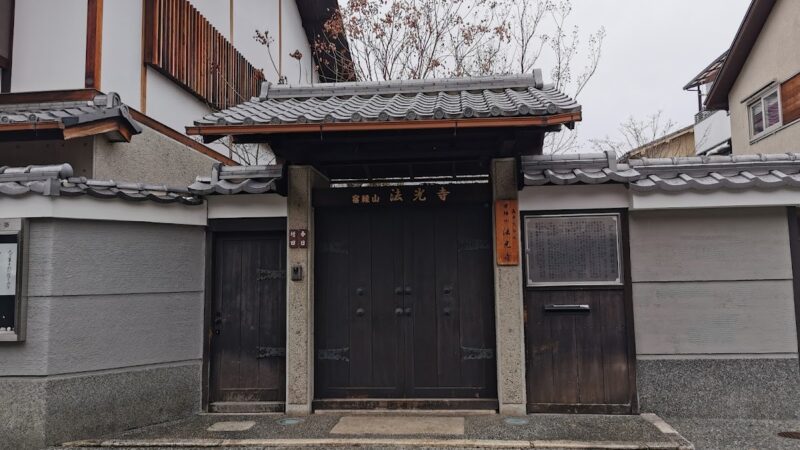
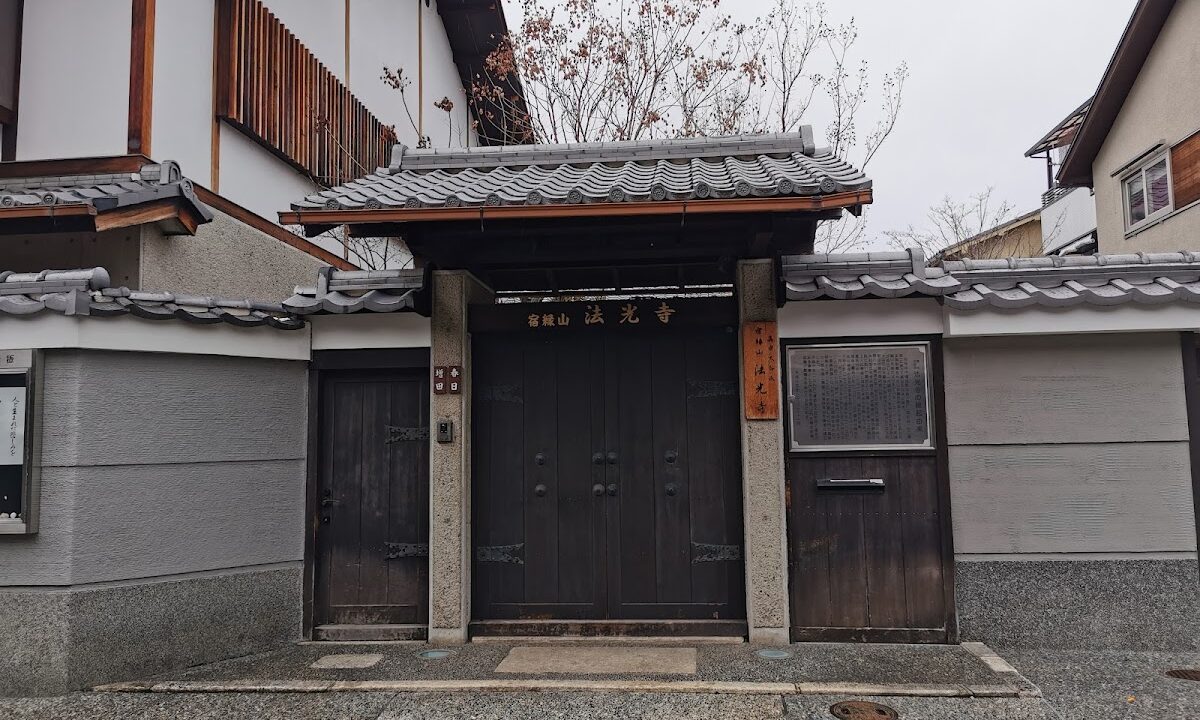
Hokoji Temple, located at Nakachojamachi-dori Nishinotoin Nishi-iri in Kamigyo Ward, Kyoto City, is a historic temple belonging to the Jodo Shinshu Honganji sect. Despite being in the heart of Kyoto, this temple maintains a tranquil atmosphere. This guide provides detailed information on its history, characteristics, and visiting details.
Basic Information about Hokoji Temple
Location and Access
Hokoji Temple is located at 172 Nakahashizume-cho, Nakachojamachi-dori Nishinotoin Nishi-iri, Kamigyo Ward, Kyoto City. It is situated in the heart of Kyoto, west of the Imperial Palace, in an area where historical streetscapes remain.
Address
172 Nakahashizume-cho, Nishinotoin-nishi-iru, Nakachojamachi-dori, Kamigyo-ku, Kyoto City, Kyoto Prefecture 602-8051
Access from Nearest Station
- Approximately 12 minutes on foot from Marutamachi Station on the Kyoto Municipal Subway Karasuma Line
- Approximately 15 minutes on foot from Imadegawa Station on the Kyoto Municipal Subway Karasuma Line
- Approximately 5 minutes on foot from the Horikawa Nakatachiuri bus stop (Kyoto City Bus)
- Approximately 7 minutes on foot from the Horikawa Marutamachi bus stop (Kyoto City Bus)
It is convenient to use the city bus or subway from Kyoto Station. If you are coming by car, please use the nearby coin parking.
Sect and Principal Image
Sect: Jodo Shinshu Honganji-ha (Nishi Honganji-ha)
Head Temple: Nishi Honganji (Ryukokuzan Honganji)
The Jodo Shinshu Honganji-ha is a branch of Jodo Shinshu Buddhism, founded by Shinran Shonin, and is one of the largest Buddhist sects in Japan, with approximately 10,000 temples nationwide. Hokoji Temple also carries on this tradition and serves as a center of faith for the local community.
History and Origins of Hokoji Temple
Tradition of the Jodo Shinshu Honganji-ha
As a temple belonging to the Jodo Shinshu Honganji-ha, Hokoji Temple has passed down the teachings of Shinran Shonin to this day. Jodo Shinshu Buddhism teaches that by chanting “Namu Amida Butsu,” one can attain rebirth in the Pure Land through the power of Amida Buddha’s vow.
Shinran Shonin (1173-1263), a disciple of Honen Shonin, studied the teachings of the Jodo sect and further deepened them to found the Jodo Shinshu sect. His teachings are known as “absolute reliance on Amida Buddha,” emphasizing faith in Amida Buddha’s original vow rather than self-effort.
The Role of Jodo Shinshu Temples in Kyoto
Kyoto is the birthplace of Jodo Shinshu Buddhism and is home to two major head temples: Higashi Honganji and Nishi Honganji. Nishi Honganji, the head temple of the Honganji sect to which Hokoji Temple belongs, is officially called “Ryukokuzan Honganji” and is one of the constituent assets of the World Heritage Site “Historic Monuments of Ancient Kyoto.”
Many Jodo Shinshu temples are scattered throughout Kamigyo Ward, and Hokoji Temple is one of them, having a deep connection with the local community. It has a history of functioning as a spiritual pillar for local residents within the danka system that has continued since the Edo period.
Hokoji Temple Grounds and Architecture
Main Hall and Grounds
Hokoji Temple’s grounds, typical of a temple located in the heart of Kyoto, are compact yet neatly arranged. The main hall, exhibiting characteristics of Jodo Shinshu temple architecture, enshrines Amida Buddha as its principal image.
The main hall of Jodo Shinshu temples is generally called “Mido,” and typically features a statue of Amida Buddha in the center, flanked by wooden or painted images of Shinran Shonin, or portraits of Rennyo Shonin.
Worship Etiquette
Worship etiquette in Jodo Shinshu temples differs slightly from that of other sects.
Basic Procedure for Worship
- Bow at the temple gate before entering the grounds.
- Join your hands in prayer in front of the main hall and recite the Nembutsu, “Namu Amida Butsu.”
- In Jodo Shinshu Buddhism, clapping your hands is not practiced.
- Bow deeply to conclude your visit.
In Jodo Shinshu Buddhism, clapping your hands in front of the Buddha is not performed. This is a Shinto custom and is not included in the doctrines of Buddhism, especially Jodo Shinshu. Quietly joining your hands in prayer and reciting the Nembutsu is the basic practice.
Temple Culture in Kamigyo Ward and Hokoji Temple
Historical Background of Kamigyo Ward
Kamigyo Ward in Kyoto City is located north of the central part of Kyoto, centered around the Kyoto Imperial Palace. Since the Heian period, it has been lined with the residences of nobles and courtiers, flourishing as the political and cultural center of Kyoto.
Even today, many historical streetscapes remain, and numerous temples and shrines are scattered throughout the area. In particular, there are many temples of the Jodo Shinshu, Nichiren, and Rinzai sects, each with its own unique history and culture.
Major Temples in the Surrounding Area
The following are some notable temples located around Hokoji Temple:
Honpoji Temple
One of the head temples of the Nichiren sect, founded in 1436 by Nichishin Shonin. Known as the family temple of the Hon’ami family, it houses important cultural properties such as Hasegawa Tohaku’s “Great Nirvana of Shakyamuni.” It is within walking distance of Hokoji Temple.
Hokkeji Temple
A Nichiren sect temple located in Imadegawa-dori, Senbon-higashi-iri, Kamigyo-ku. Known as a temple associated with Nichizo Shonin, a grand-disciple of Nichiren.
Bukkoji Temple
A head temple of the Jodo Shinshu Bukkoji sect, located in Shimogyo-ku, founded by Shinbutsu Shonin, a direct disciple of Shinran Shonin.
Along with these temples, Hokoji Temple plays a vital role in shaping Kyoto’s rich Buddhist culture.
Annual Events at Hokoji Temple
Major Buddhist Services of the Jodo Shinshu School
Jodo Shinshu Honganji-ha temples hold various Buddhist services throughout the year. It is believed that the following services are also held at Hokoji Temple:
Shushō-e (New Year’s Service)
This service welcomes the new year and prays for peace throughout the year. It is often held from January 1st to 7th.
Spring Equinox Service
This service commemorates ancestors, with the spring equinox as the central day. It is held during the spring equinox period in March.
Gotan-e (Birthday Service)
This service celebrates the birth of Shinran Shonin and is held around May 21st. It is also called “Hanamatsuri” (Flower Festival).
Obon Festival (Urabon-e)
A Buddhist service to welcome and honor the spirits of ancestors, held from August 13th to 16th.
Autumn Equinox Service (Autumn Higan-e)
A Buddhist service held around the autumnal equinox, during the Higan period in September.
Memorial Service (Ho-on-ko)
The most important Buddhist service in Jodo Shinshu Buddhism, commemorating the death anniversary of Shinran Shonin and expressing gratitude for his virtues. Often held from late November to early December.
Community Connections
Hokoji Temple, as a local parish temple, maintains deep ties with local residents through funerals, memorial services, and ancestral worship. Jodo Shinshu temples, in particular, have a well-established parishioner system, and many families maintain a relationship with the temple for generations.
Practical Information for Visiting Hokoji Temple
Points to Note When Visiting
Hokoji Temple has a strong character as a temple for temple parishioners and differs from typical tourist temples. Please note the following points when visiting:
- The doors to the main hall may be closed. In that case, please offer your prayers from outside by joining your hands in prayer.
- Please refrain from loud conversations and noise within the temple grounds.
- Please limit photography to the exterior only; refrain from photographing the interior of the main hall or the Buddha statues.
- Entry into the main hall for non-parishioners may be restricted except during religious services or special occasions.
Visiting Hours and Admission Fee
Since Hokoji Temple is not a typical tourist temple, there are no specific visiting hours or admission fees. We recommend visiting during reasonable daytime hours.
If you wish to participate in temple events or religious services, we recommend contacting the temple in advance to confirm.
How to Explore the Surrounding Tourist Spots
Exploring the Area Around the Kyoto Imperial Palace
When visiting Hokoji Temple, exploring the surrounding historical sites will enhance your Kyoto experience.
Kyoto Imperial Palace
Located about a 15-minute walk east of Hokoji Temple, the Kyoto Imperial Palace was the residence of the Emperor until the Meiji Restoration. It is now open to the public, allowing visitors to freely explore its vast grounds.
Former Kyoto Prefectural Government Building
Built in 1904 (Meiji 37), this Renaissance-style building is still used as an active government office. It is designated as an Important Cultural Property.
Shokokuji Temple
The head temple of the Shokokuji branch of the Rinzai school of Zen Buddhism, and also known as the head temple of Kinkakuji (Golden Pavilion) and Ginkakuji (Silver Pavilion). It is located about a 20-minute walk north of Hokoji Temple.
Recommended Walking Route
Half-Day Course
- Start from Marutamachi Subway Station
- Stroll through the Kyoto Imperial Palace (60 minutes)
- Visit Hokoji Temple (15 minutes)
- Visit Honpoji Temple (30 minutes)
- Lunch in the Nishijin area
- Go to Kitano Tenmangu Shrine (by bus)
This route allows you to efficiently visit the historical heart of Kyoto.
The Teachings of Jodo Shinshu Buddhism and Hokoji Temple
The Teachings of Shinran Shonin
Jodo Shinshu Buddhism, to which Hokoji Temple belongs, is a sect founded by Shinran Shonin. The core of its teachings lies in “reliance on the power of others.”
The True Meaning of Reliance on Others
While “reliance on others” is often used in a negative sense today, its original Buddhist meaning is entirely different.
- “Other-power” refers to the power of Amida Buddha’s original vow.
- “Original vow” refers to the vow made by Amida Buddha to “save all sentient beings.”
- In other words, “other-power vow” means being saved not by one’s own power (self-power), but by the power of Amida Buddha’s compassion.
Meaning of Nembutsu
In Jodo Shinshu Buddhism, the Nembutsu “Namu Amida Butsu” is chanted.
- “Namu” originates from the Sanskrit word “namas,” meaning “to take refuge in” or “to entrust oneself to.”
- “Amida Buddha” is a Buddha who possesses immeasurable life (eternal life) and immeasurable light (infinite light).
- The entire phrase “Namu Amida Butsu” means “I entrust myself to Amida Buddha.”
In Jodo Shinshu Buddhism, Nembutsu is not considered a practice for salvation, but rather an expression of gratitude for already being saved.
Hokoji Temple and Kyoto’s Temple Culture
The Role of Temples in Kyoto
It is said that there are approximately 3,000 temples in Kyoto. Community-based temples like Hokoji Temple play a different important role than tourist temples.
Center of the Local Community
Since the temple registration system of the Edo period, temples have functioned as places for managing the household registration and education of local residents. Even today, they play a role in supporting local communities through funerals and memorial services.
Transmission of Culture
Through Buddhist ceremonies and memorial services, they also play a role in passing on traditional Japanese culture and seasonal events to future generations.
How to Enjoy Visiting Kyoto’s Temples
When visiting Kyoto’s temples, you can discover a deeper charm of Kyoto by visiting not only famous temples like Kinkakuji and Kiyomizudera, but also small, local temples like Hokoji Temple.
The Charm of a Quiet Temple
- Few tourists, allowing for peaceful worship
- A closer connection to local history and culture
- An opportunity to experience everyday religious life in Kyoto
Detailed Access Information to Hokoji Temple
Access by Public Transportation
From Kyoto Station
- Take the Karasuma Subway Line to Marutamachi Station, then a 12-minute walk.
- Take City Bus Route 9 bound for Nishigamo Shako-mae, get off at Horikawa Marutamachi, then a 7-minute walk.
- Take City Bus Route 50 bound for Ritsumeikan University, get off at Horikawa Nakatachiuri, then a 5-minute walk.
From Hankyu Railway
Transfer to the Karasuma Subway Line at Hankyu Karasuma Station, get off at Marutamachi Station, then a 12-minute walk.
From Keihan Railway
Get off at Keihan Jingu Marutamachi Station, then a 15-minute walk.
Access by Car
Hokoji Temple does not have its own parking lot; please use nearby coin-operated parking lots. Nearest Interchange
- Approximately 30 minutes from the Meishin Expressway “Kyoto Minami IC”
- Approximately 25 minutes from the Meishin Expressway “Kyoto Higashi IC”
Roads in Kyoto are narrow, and traffic congestion is expected, especially during tourist seasons, so we recommend using public transportation.
Summary: The Charm of Hokoji Temple
Hokoji Temple is a Jodo Shinshu Honganji-ha temple located in Kamigyo-ku, Kyoto City. While not a famous tourist temple, it has preserved Kyoto’s religious culture as a place of faith deeply rooted in the community.
As a Jodo Shinshu temple that inherits the teachings of Shinran Shonin, it preaches salvation through the nembutsu (“Namu Amida Butsu”) and has functioned as a spiritual pillar for local residents. Visiting it along with surrounding tourist spots such as the Kyoto Imperial Palace and Honpoji Temple will allow you to gain a deeper understanding of Kyoto’s multifaceted history and culture.
Hokoji Temple, where you can glimpse the daily religious life of Kyoto in its quiet atmosphere, is a place that offers a different kind of Kyoto charm than that of tourist temples. If you ever visit Kamigyo Ward, be sure to stop by.