Complete Guide to Hodoji Temple (Kamigyo Ward, Kyoto Prefecture) | Detailed Explanation of the Important Cultural Property Main Gate, Main Hall, and History
Nestled in a quiet residential area of Kamigyo Ward, Kyoto City, Hodoji Temple is a Jodo sect Chion-in branch temple with a main gate and main hall designated as Important Cultural Properties. Located slightly west of the bustling Senbon Nakatachiuri shopping street, this temple, with a history of over 1000 years, is known as a hidden gem for Kyoto sightseeing.
This article comprehensively explains everything you need to know before visiting, from the detailed history of Hodoji Temple from its founding to the present day, to the characteristics of its Important Cultural Property buildings, information on temple stamps, and access methods.
History of Hodoji Temple | Transition from Shingon Sect to Jodo Sect
Founding and Early History (Heian Period)
The history of Hodoji Temple dates back to Jogan 1 (859). It is said that Hōdo-ji Temple was founded by Gyōkyō, a monk of Daian-ji Temple in Nara, as a Shingon Buddhist temple. Gyōkyō is known as a high-ranking monk who was also involved in the founding of Iwashimizu Hachiman-gū Shrine, and played an important role in the Buddhist world during the early Heian period.
In its early days, Hōdo-ji Temple was a Shingon Esoteric Buddhist temple located in the northern part of Heian-kyō (Kyoto), and is believed to have attracted the faith of both nobles and commoners. However, detailed records from that period are scarce, and much remains unknown about how the temple was maintained throughout the medieval period.
Devastation and Reconstruction during the Ōnin War
The Ōnin War, which engulfed the entire Kyoto area from 1467 to 1477, caused significant damage to Hōdo-ji Temple. The temple buildings were devastated by the conflict, and it is believed that at one point it was almost a ruined temple.
Approximately 80 years after the war, in Eiroku 2 (1559), Hōdo-ji Temple was rebuilt by the monk Senyo Shōa. A significant change occurred during this rebuilding. The temple changed its sect from Shingon Buddhism to Jōdo Buddhism, and established its grounds southeast of the main gate of Shōkoku-ji Temple (near present-day Shōkoku-ji Temple in Kamigyo Ward, Kyoto City).
Senyo Shōa developed Hōdo-ji Temple as a Jōdo Buddhism chanting hall, and from then on, this temple developed as a Jōdo Buddhism temple. The Eiroku era was a period of turmoil during the Sengoku period, but in Kyoto, it was the eve of Oda Nobunaga’s march to the capital, and order was gradually being restored.
Relocation to the Current Location (Early Edo Period)
Approximately 100 years after its rebuilding, in Kanbun 3 (1663), Hōdo-ji Temple relocated to its current location in Yonban-chō, Kamigyo Ward. This relocation is believed to have been part of the Edo Shogunate’s urban planning for Kyoto, a period when many temples were reorganized and moved.
The current location—a quiet residential area one street west of Senbon Nakadachiuri, where Senbon-dori and Kitano Shopping Street intersect—was established at this time. Even after the relocation, it continued to function as a Jodo sect Buddhist practice hall, serving as a center of faith for the local people.
Important Cultural Property Buildings | Features of the Main Gate and Main Hall
Main Gate (Important Cultural Property)
The main gate of Hodo-ji Temple is a valuable building designated as a National Important Cultural Property. This gate is a precious relic that conveys the architectural style of the early Edo period and occupies an important position in considering the history of temple architecture in Kyoto.
The main gate is characterized by its simple yet dignified construction. It has a gabled roof, and the structure of the pillars and beams is clearly expressed. The design, influenced by Zen Buddhist style with restrained ornamentation, embodies an aesthetic sense common to Kyoto temple architecture, despite being a Jodo sect temple. Passing through the gate, one enters a tranquil temple grounds, feeling as if stepping into a different world, far removed from the hustle and bustle of the city. This main gate serves not merely as an entrance, but also as a boundary separating the secular world from the sacred realm.
Main Hall (Important Cultural Property)
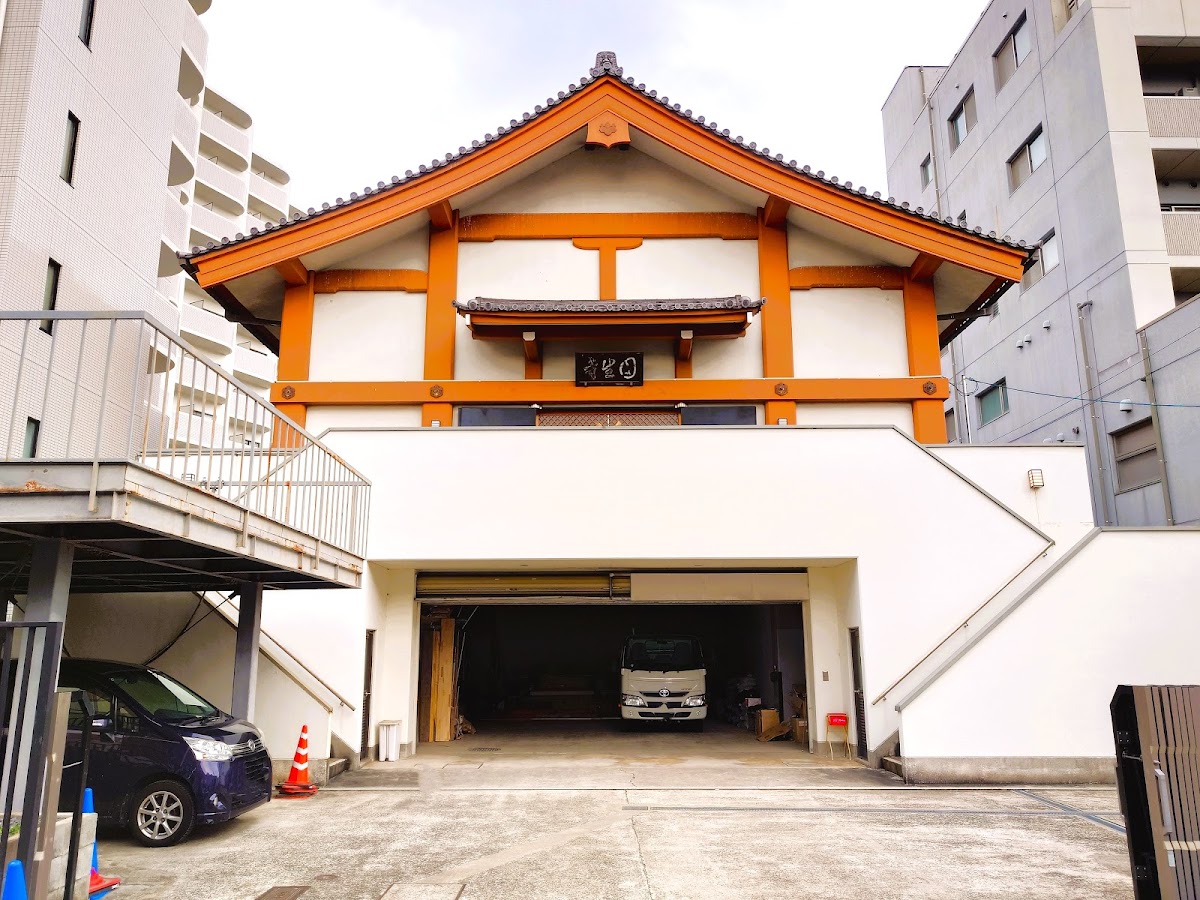
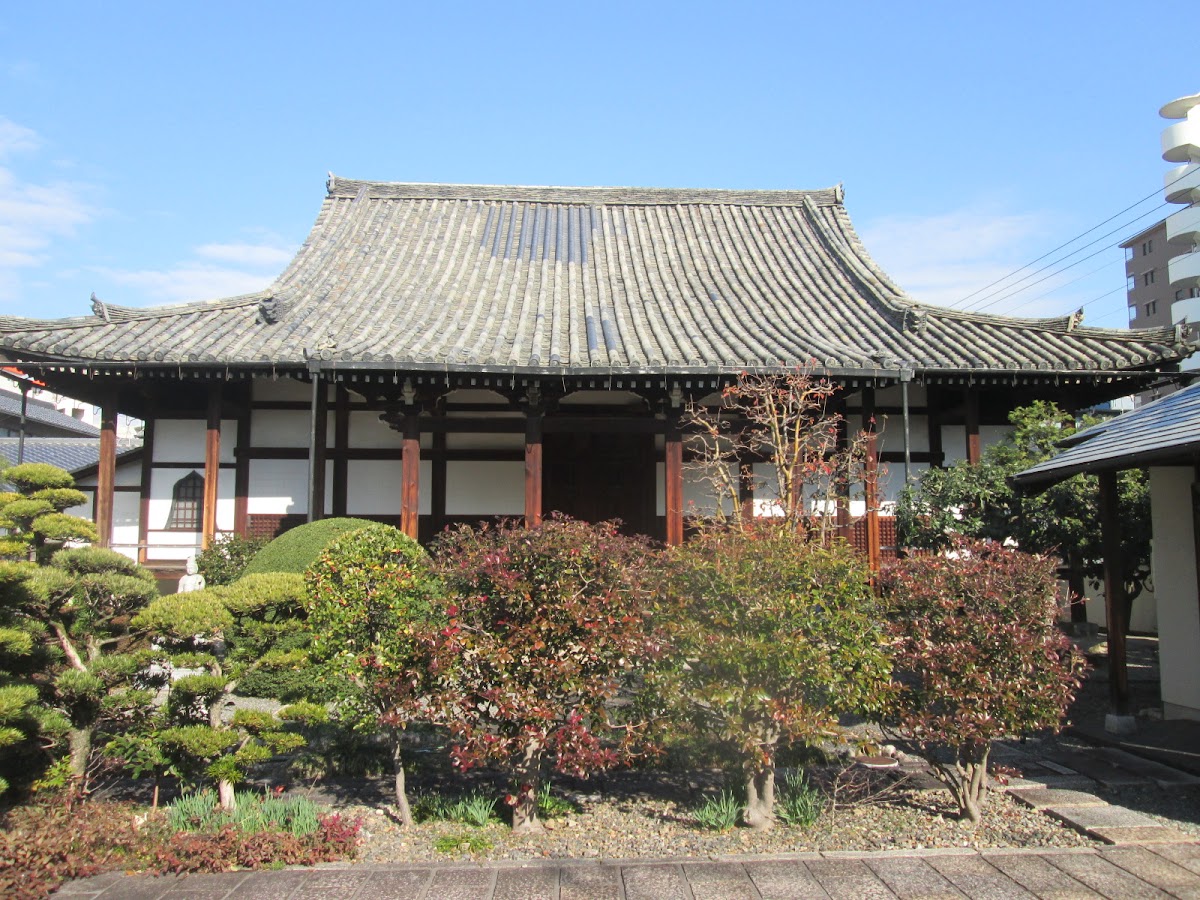
The Main Hall of Hōdo-ji Temple is also designated as an Important Cultural Property, a building characterized by its imposing tiled roof. Located in a residential area, this tiled roof is eye-catching even from afar, signaling the temple’s presence.
The Main Hall is estimated to have been built in the mid-Edo period and has a typical floor plan for a Jodo sect temple. Inside, the inner sanctuary where the principal image is enshrined and the outer sanctuary where worshippers gather are clearly separated, a design emphasizing its function as a place for chanting the Buddha’s name.
The building’s structure is based on traditional wooden frame construction, a robust structure with thick pillars and beams. The heavy weight of the traditional tiled roof means that the supporting structural members are also thick, giving the entire building a sense of stability and grandeur.
As featured in the Kyoto Shimbun’s architectural section, the traditional tiled roof of Hōdoji Temple stands out amidst the quiet streetscape, a stark contrast to the bustling Senbon-dori shopping street. This landscape is an important element that constitutes Kyoto’s historical townscape.
Preservation and Repair of Buildings
The main gate and main hall, designated as Important Cultural Properties, undergo regular repairs and maintenance. Since wooden buildings inevitably deteriorate over time, it is crucial to carry out appropriate repairs while preserving their value as cultural properties.
In recent years, repairs using traditional construction methods and materials have been implemented, striving to preserve the original appearance as much as possible. These repairs require subsidies from the Agency for Cultural Affairs, support from Kyoto City, and the cooperation of local residents, and are attracting attention as a practical example of cultural property protection.
Highlights and Grounds Guide of Hōdo-ji Temple
Atmosphere and Layout of the Grounds
Hōdo-ji Temple’s grounds are not vast, but despite being in the heart of the city, they offer a tranquil space. Upon entering through the main gate, the main hall is directly ahead, surrounded by buildings such as the priests’ quarters and bell tower.
The grounds are adorned with well-maintained trees and stone lanterns, displaying different expressions throughout the seasons. Especially during the fresh greenery of spring and the vibrant autumn foliage, the trees within the grounds display beautiful colors, delighting visitors.
Principal Image and Temple Treasures
The principal image of Hōdo-ji Temple is Amida Buddha. As a Jōdo sect temple, it continues to uphold the teachings of attaining rebirth in paradise through chanting the Buddha’s name. Inside the main hall, in addition to the principal image, the memorial tablets of successive chief priests and temple treasures are enshrined, but these are usually not open to the public.
During special ceremonies and events, the interior of the main hall is sometimes opened to the public, offering an opportunity to view valuable temple treasures. Those planning a visit are advised to contact the temple in advance.
Goshuin Information
At Hōdo-ji Temple, you can receive a Goshuin (temple stamp). Goshuin are popular among many visitors as proof of worship and a way to forge a connection with the temple.
To receive a Goshuin, bring your Goshuincho (stamp book) and request it at the temple office after visiting the main hall. Since the office may be closed, it is recommended to call ahead to confirm if you wish to receive a Goshuin.
The Goshuin features the temple’s name, “Hōdo-ji,” and the name of the principal deity, “Amida Nyorai,” written in ink, followed by a red stamp. The simple yet powerful calligraphy conveys the solemnity characteristic of a Jōdo-shū temple.
The Sect and Teachings of Hōdo-ji Temple | Jōdo-shū Chion-in Branch
About Jōdo-shū
Hōdo-ji Temple belongs to the Jōdo-shū sect, founded by Hōnen Shōnin (Genkū) at the end of the Heian period. Its teaching that everyone can equally attain rebirth in the Pure Land by chanting “Namu Amida Butsu” (Homage to Amida Buddha) was widely accepted not only by the nobility but also by commoners.
The core of Jōdo-shū teachings lies in “exclusive recitation of the Buddha’s name.” This teaching, which emphasizes salvation through the power of Amida Buddha’s vow through simply chanting the Buddha’s name rather than through difficult ascetic practices or scholarship, has fostered a deep faith despite its simplicity.
Relationship with the Chion-in Branch
Hōdo-ji Temple belongs to the Chion-in branch of the Jōdo-shū sect. Chion-in is the head temple of the Jōdo-shū sect, located in Higashiyama Ward, Kyoto City, and is known as a place associated with Hōnen Shōnin.
Temples belonging to the Chion-in sect revere Chion-in as their head temple and inherit its teachings and traditions. Hōdo-ji Temple, while maintaining its relationship with Chion-in, has also forged its own unique history as a local temple in Kamigyo Ward.
Role as a Nembutsu Training Center
Since its restoration, Hōdo-ji Temple has been positioned as a Nembutsu training center. A Nembutsu training center is a place where training and religious services centered on Nembutsu (recitation of Amida Buddha’s name) are conducted, and where not only monks but also lay believers gather to chant the Nembutsu.
Even today, Hōdo-ji Temple holds regular religious services, providing opportunities for local people to gather and chant the Nembutsu. This tradition continues to function as a spiritual anchor for the local community, even in the increasingly urbanized city of Kyoto.
Access Information | How to Get to Hōdo-ji Temple
Location and Basic Information
Address: 160, Yonban-chō, Nishi-iri, Rokken-chō, Ninna-ji-kaidō, Kamigyo-ku, Kyoto City, Kyoto Prefecture
Hōdo-ji Temple is located in a quiet residential area one street west of Senbon-dōri. It’s easiest to find if you use the Senbon Nakatachiuri intersection as a landmark.
Access by Train
The nearest stations to Hōdoji Temple are as follows:
- Keifuku Electric Railway Kitano Line “Kitano Hakubaicho” Station: Approximately 15 minutes on foot
- JR Sagano Line “Enmachi” Station: Approximately 20 minutes on foot
- Kyoto Municipal Subway Tōzai Line “Nijō” Station: Approximately 25 minutes on foot
While Kitano Hakubaicho Station is the closest station, it’s a bit of a walk from any of the stations, so taking the bus is more convenient.
Access by Bus
If using Kyoto City Buses:
- “Senbon Nakatachiuri” bus stop: Approximately 5 minutes on foot
- Numerous bus routes, including routes 10, 50, 51, 55, 201, and 203, stop here.
From the bus stop, head west down one street, then continue south, and you will see the tiled roof of Hōdoji Temple.
Access by Car and Parking
If visiting by private car, it takes approximately 15 minutes from the center of Kyoto city. However, Hōdoji Temple does not have its own parking lot, so you will need to use a nearby coin-operated parking lot.
There are several coin-operated parking lots around Senbon Street, but they can be full, especially on weekends and during tourist seasons, so we recommend using public transportation.
Nearby Tourist Attractions | Highlights of Kamigyo Ward
Kitano Tenmangu Shrine
Located about a 15-minute walk from Hōdoji Temple, Kitano Tenmangu Shrine is the head shrine of all Tenmangu shrines nationwide, dedicated to Sugawara no Michizane, the god of learning. It is also known as a famous spot for plum blossoms and autumn leaves, and is bustling with many worshippers on the 25th of each month for its monthly festival, “Tenjin-san.”
Senbon Shakado (Daihoonji Temple)
Located about a 10-minute walk south of Hōdoji Temple, Senbon Shakado is known as Kyoto’s oldest wooden building, having survived the ravages of the Ōnin War. The main hall, a national treasure, dates from the Kamakura period, allowing for a comparison of architectural styles from different eras compared to Hōdoji Temple.
Nishijin Textile Center
This facility allows visitors to learn about the history and techniques of Nishijin weaving, a representative traditional industry of Kyoto. Located about a 20-minute walk from Hōdoji Temple, visitors can enjoy demonstrations of Nishijin weaving and kimono experiences.
Historical Walking Tour of Kamigyo Ward
Kamigyo Ward, where Hōdoji Temple is located, is situated in the northern part of Heian-kyo (ancient Kyoto) and is dotted with many historical buildings and sites. Hōdoji Temple has been selected as one of the 100 Historic Sites of Kamigyo Ward, making it well worth visiting as part of a historical walking tour of the area.
The area around Senbon-dori Street was once a major road in Kyoto and is a historical route dating back to the Heian period. Many temples and shrines are scattered along this street, allowing for a pleasant stroll while experiencing history.
Annual Events and Points to Note When Visiting Hōdo-ji Temple
Main Annual Events
As a Jōdo-shū temple, Hōdo-ji Temple holds the following annual events:
- New Year’s Service (January): A service to pray for peace in the new year
- Spring Equinox Service (March): A service for honoring ancestors
- Obon Service (August): A service to honor the spirits of ancestors during the Obon festival
- Autumn Equinox Service (September): A service for the autumn equinox
- Memorial Service (Spring): A memorial service for the founder of the sect, Hōnen Shōnin
The dates of these events may change from year to year, so it is recommended that those wishing to participate check with the temple in advance.
Manners and Precautions for Visiting the Temple
When visiting Hōdoji Temple, please observe the following points:
- Maintain Quietness: As the temple is located in a residential area, please refrain from loud conversations and noise.
- Photography: Photography is permitted on the temple grounds, but consideration for the interior of the main hall and other visitors is necessary.
- Dress Code: While there are no strict regulations, appropriate and modest attire for a temple is desirable.
- Visiting Hours: There are no clearly defined visiting hours, but early morning and late evening visits should be avoided.
- Goshuin (Temple Stamp): As the head priest may be absent, it is recommended to contact the temple in advance if you wish to obtain a Goshuin.
Best Season
Hōdoji Temple can be visited year-round, but the following times are particularly recommended:
- Spring (April-May): The fresh greenery is beautiful, making it an ideal time for Kyoto sightseeing.
- Autumn (November): The autumn leaves color the temple grounds, allowing you to enjoy the autumn foliage in a tranquil atmosphere.
- Winter (January-February): Fewer tourists, allowing for a peaceful and tranquil visit.
Compared to Kyoto’s famous tourist spots, it’s less crowded, making it a calm and peaceful place to visit in any season – one of Hōdoji Temple’s charms.
Featured | Deep Dive into the Charms of Hōdoji Temple
The Value of Important Cultural Property Buildings
The reason Hōdoji Temple’s main gate and main hall are designated as Important Cultural Properties isn’t simply because they’re old. They are valuable relics that convey the architectural techniques and aesthetic sensibilities of the Edo period, serving as typical examples of Edo-period temple architecture.
In particular, the tiled roof requires advanced structural techniques due to its weight. Hōdoji Temple’s main hall clearly demonstrates the wooden frame structure supporting that weight, embodying both the rationality and beauty of Japanese architecture.
A Tranquil Space in the City
Just one street away from Senbon-dori, a major Kyoto thoroughfare, a completely different, tranquil space unfolds—this may be Hōdoji Temple’s greatest charm. In rapidly urbanizing Kyoto, the preservation of such a tranquil space is precious.
Although located within a residential area, stepping onto the temple grounds gives one the feeling that time itself has shifted. This “sanctuary in the city” holds significant meaning for modern people as a place to find peace of mind.
A Temple Rooted in the Community
Hōdoji Temple is not a tourist temple, but a temple deeply rooted in the community. Throughout its long history, it has functioned as a center of faith for the people of Kamigyo Ward and as a spiritual pillar for the local community.
For the local people, Hōdoji Temple is a place for ancestral worship, a place to visit at important life events, and a place to find peace of mind in their daily lives. This role as a community temple represents an important aspect of Kyoto’s temple culture, distinct from the glamorous tourist temples.
A Location that Tells the Story of Kyoto’s History
The history of Hōdoji Temple reflects the history of Kyoto itself. Founded in the Heian period, devastated by the Ōnin War, rebuilt during the Sengoku period, and relocated during the Edo period—all of these coincide with the historical transformations experienced by the city of Kyoto.
Its current location is also a result of Edo-period urban planning. The fact that the temple is situated in a quiet, secluded area near Senbon-dori, a major road since the Heian period, demonstrates the wisdom of Kyoto’s urban planning.
Hōdoji Temple and Cultural Properties of Kamigyo Ward
One Hundred Historic Sites of Kamigyo Ward
Hōdoji Temple has been selected as one of the One Hundred Historic Sites of Kamigyo Ward. This is a selection made by Kamigyo Ward of important historical buildings and sites within the ward, recognized as important assets that convey the history and culture of the region.
While Kamigyo Ward has many historical buildings, only a limited number of temples, like Hōdoji Temple, have both their main gate and main hall designated as Important Cultural Properties, highlighting its high cultural value.
Cultural Property Protection in Kyoto City
Kyoto City is working to protect and utilize its cultural properties based on the “Kyoto City Cultural Property Protection Ordinance.” Important cultural properties like Hōdoji Temple are protected by both the national protection system and Kyoto City’s support system.
While regular repairs and maintenance incur significant costs, passing on these cultural properties to future generations is essential for maintaining the identity of Kyoto. Hōdoji Temple, too, benefits from these cultural property protection efforts, conveying its long history to the present day.
Summary | The Significance of Visiting Hōdoji Temple
Hōdoji Temple is a Jōdo sect temple nestled in a quiet residential area of Kamigyo Ward, Kyoto City. With a history of over 1000 years since its founding in 859, its main gate and main hall, designated as important cultural properties, are highly valued as precious remnants of Edo period temple architecture.
From a change of sect from Shingon Buddhism to Jodo Buddhism, to devastation and reconstruction during the Onin War, and relocation during the Edo period—the history of Hōdoji Temple embodies the historical transformations experienced by the city of Kyoto.
While not as well-known as some famous tourist spots, Hōdoji Temple’s charm lies in its quiet atmosphere, allowing for a peaceful visit. It’s a precious place where you can feel the weight of history while viewing its important cultural property buildings up close.
When visiting Kyoto, be sure to visit not only the bustling tourist spots, but also local temples like Hōdoji Temple. There, you’ll see the true face of Kyoto that you won’t find in tourist guidebooks.
When strolling around Senbon-dori, be sure to stop by Hōdoji Temple and experience its important cultural property buildings and tranquil grounds. You’ll be able to spend a peaceful time in a quiet space away from the hustle and bustle of the city.