Complete Guide to Shippozan Jinnein Temple (Kagawa Prefecture) | History, Highlights, and Visiting Information for the 68th Temple
Located on the slopes of Mt. Kotohiki within Kotohiki Park in Kanonji City, Kagawa Prefecture, Shippozan Jinnein is a Shingon sect Daikakuji school temple known as the 68th temple of the Shikoku 88 Temple Pilgrimage. This sacred site, unique among the Shikoku pilgrimage sites for having Kannonji Temple (the 69th temple) within its grounds, is introduced in detail, from its history and visiting methods to nearby tourist attractions.
Basic Information on Shippozan Jinnein Temple
Jinnein Temple is located at 1-2-7 Hachimancho, Kanonji City, Kagawa Prefecture, approximately a 17-minute walk from Kanonji Station on the JR Yosan Line. Its mountain name is Shippozan, its principal image is Amida Buddha, and it is an ancient temple belonging to the Shingon sect Daikakuji school.
Facility Overview
- Official Name: Shippozan Jinnein
- Pronunciation: Shippozan Jinnein
- Sect: Shingon-shu Daikakuji-ha
- Principal Image: Amida Buddha
- Pilgrimage Site Number: Shikoku 88 Temple Pilgrimage, Temple No. 68
- Address: 1-2-7 Hachiman-cho, Kanonji City, Kagawa Prefecture 768-0061
- Phone Number: 0875-25-3871
- Parking: Free (approximately 20 spaces available)
History and Origin of Jinnein
Founding and Connection to Kotohiki Hachimangu Shrine
The history of Jinnein dates back to the 3rd year of the Taiho era (703 AD). It is said that the origin of Kotohiki Hachimangu Shrine dates back to when Nichisho Shonin, who was training in this area, received a divine message from Usa Hachimangu Shrine, discovered a sacred ship and a koto (Japanese zither) at sea, and brought them ashore on Kotohiki Mountain, where he established Kotohiki Hachimangu Shrine.
Initially, Jin’ein Temple served as the head temple of Kotohiki Hachimangu Shrine, and together with the shrine, it attracted worshippers in a syncretic form of Shinto and Buddhism. In this era, it was not uncommon for shrines and temples to coexist on the same grounds, and Jin’ein played an important role as the religious center of Kotohiki Hachimangu Shrine.
Meiji Era Separation of Shinto and Buddhism and Reorganization
With the Meiji era and the issuance of the Shinto-Buddhist Separation of Shinto and Buddhism decree, Jin’ein Temple underwent significant changes. The principal image of Kotohiki Hachimangu Shrine, a statue of the Holy Kannon Bodhisattva, was moved to the West Golden Hall of Kannonji Temple, the 69th temple on the pilgrimage route.
Following this relocation, Jin’ein Temple (the 68th temple) and Kannonji Temple (the 69th temple), which had previously been located in separate places, came to coexist on the same grounds. This marked the beginning of the current, nationally rare form of “two pilgrimage sites existing within one temple grounds.”
Connection to Kobo Daishi Kukai
It is said that Kobo Daishi Kukai, the founder of the Shikoku Pilgrimage, also visited this area. Kukai is believed to have worshipped at Kotohiki Hachimangu Shrine and trained at Jin’ein Temple. Since then, this temple has welcomed many pilgrims as one of the 88 temples of the Shikoku Pilgrimage.
Highlights of the Temple Grounds
Modern Main Hall
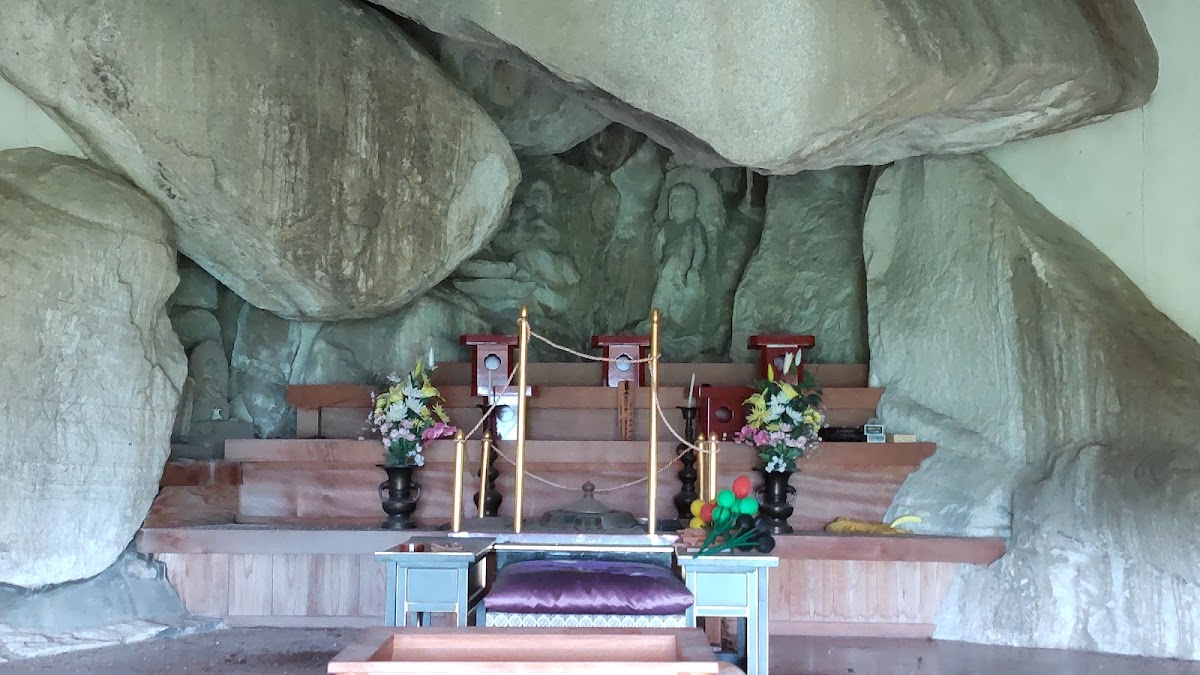
The most distinctive feature of Jin’ein Temple is its modern main hall, constructed in 2002. This concrete building boasts a groundbreaking design that sets it apart from traditional temple architecture, making it a particularly impressive presence among the Shikoku Pilgrimage sites.
The main hall features a structure combining unpainted wood and concrete, and is unique in that it is built without laying concrete. The interior boasts a spacious layout, designed to allow natural light to flood in, beautifully blending the aesthetics of modern architecture with the solemnity of a Buddhist space.
Niomon Gate
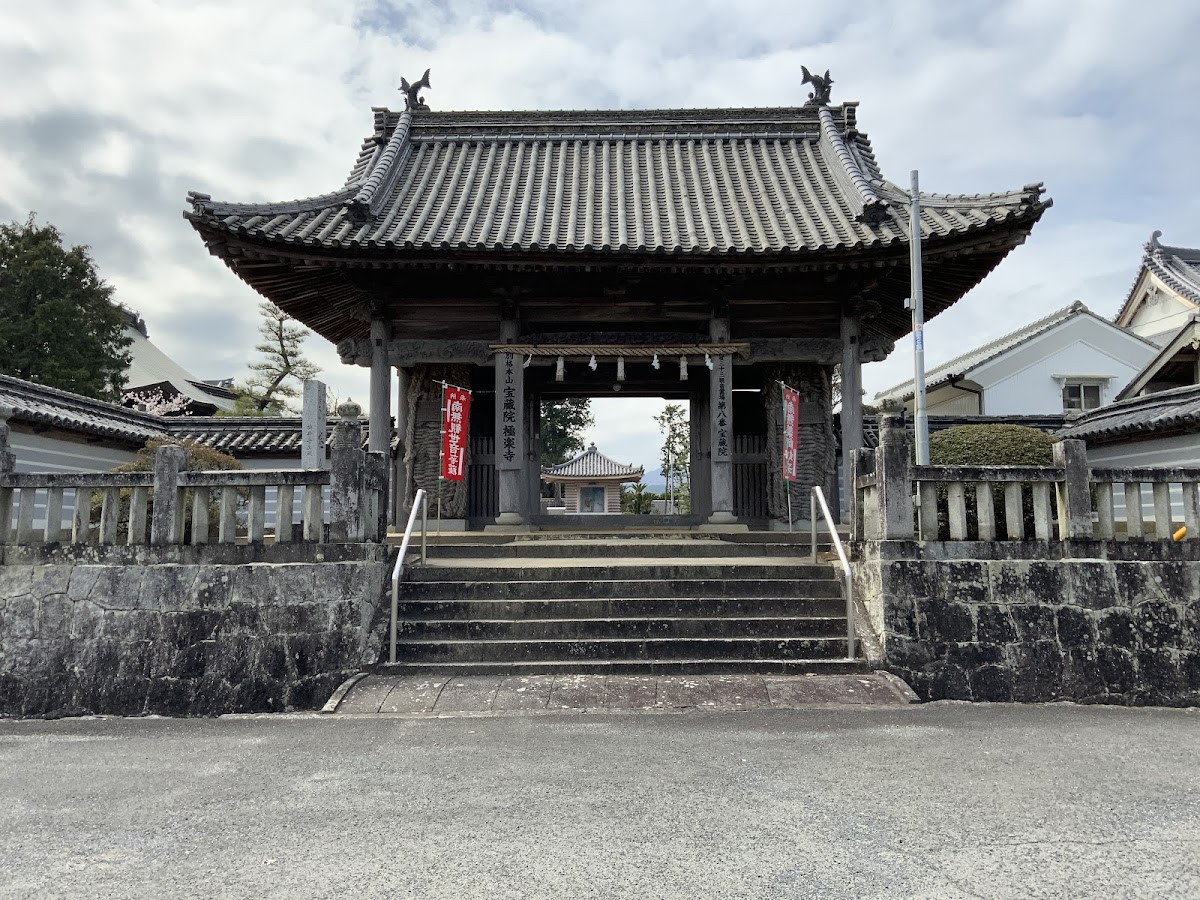
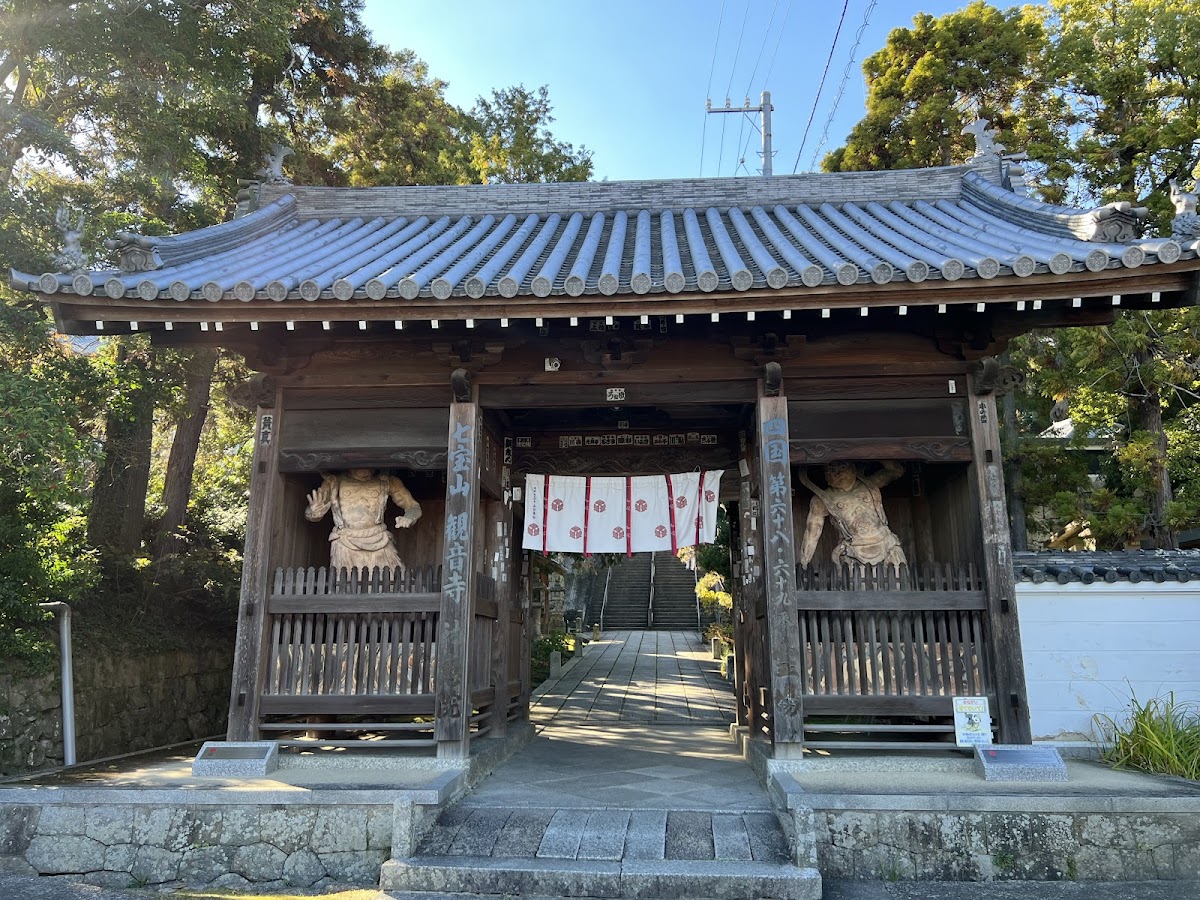
At the entrance to the pilgrimage route leading up the mountainside of Kotohikiyama stands a magnificent Niomon Gate. Passing through this gate leads to Kannonji Temple (No. 69) and then to Jin’ein Temple (No. 68), indicating the correct order of worship.
Important Cultural Property
Jin’ein Temple preserves valuable cultural properties, including its main hall. The modern architecture of the main hall, in particular, has attracted attention as a building that harmonizes tradition and innovation, and holds significant architectural historical importance.
Relationship with Kannonji Temple (located within the same grounds)
The Only “One Mountain, Two Temples” in the Shikoku Pilgrimage
Jin’ein and Kannonji Temple are the only two temples within the same grounds in the Shikoku 88 Temple Pilgrimage. This unique configuration arose from the historical circumstances following the Meiji-era separation of Shinto and Buddhism. Normally, traveling between temples on the Shikoku Pilgrimage takes time, but here, you can reach the next temple in just a few minutes on foot, making for an efficient pilgrimage. The travel time to the next temple is said to be approximately 10 minutes.
Order of Visiting
The formal order of visiting is to first visit Temple No. 68, Jin’ein, and then proceed to Temple No. 69, Kannonji. You can receive a stamp in your pilgrimage book at both temples.
Access and Surrounding Information
Access by Public Transportation
If using JR:
- Get off at JR Yosan Line “Kannonji Station,” approximately 17 minutes on foot.
- Taxis are also available from Kannonji Station (approximately 5 minutes).
The route from the station through Kotohiki Park to the middle of Mount Kotohiki offers beautiful scenery and allows you to experience the atmosphere of the Shikoku Pilgrimage.
Access by Car
If using the expressway:
- Approximately 15 minutes from the Takamatsu Expressway “Oonohara IC”
- Approximately 20 minutes from the “Sanuki Toyonaka IC”
The temple grounds have a free parking lot (capacity of approximately 20 cars), making it convenient to visit by car. However, it can get crowded during pilgrimage season and on weekends, so early arrival is recommended.
Tourist Attractions within Kotohiki Park
Kamiein Temple is located within Kotohiki Park, and many tourist attractions are scattered around the area.
Kotohiki Hachimangu Shrine:
This shrine is the origin of Kamiein Temple and is located close to the temple grounds. It is an important spot where you can feel the history of the syncretism of Shinto and Buddhism.
Zenigata Sand Painting:
A famous attraction of Kotohiki Park, this giant sand painting is modeled after the Kan’ei Tsūhō coin. It can be viewed from the observation deck, and there is a legend that seeing this sand painting will bring good fortune.
Kotohikiyama Observatory:
This is a spectacular viewpoint offering panoramic views of Kanonji city and the Seto Inland Sea. The view at sunset is especially breathtaking.
Points and Etiquette for Worship
Basic Worship Etiquette
- Bow at the Temple Gate (Niomon Gate): Bow before entering the temple grounds.
- Purify at the Water Basin: Purify your hands and mouth before proceeding to worship.
- Worship at the Main Hall: Perform the following steps: offering a votive slip, making an offering, bowing, and chanting sutras.
- Worship at the Daishi Hall: Worship using the same etiquette as the Main Hall.
- Receive a Goshuin (temple stamp) at the Sutra Office: After worshipping, receive a Goshuin in your pilgrimage notebook.
About Goshuin and Sutra Copying
At Jinkeiin Temple, you can receive a Goshuin as the 68th temple on the pilgrimage route. The hours for receiving the temple stamp are usually 7:00 AM to 5:00 PM, but these may vary depending on the season, so it is recommended to check in advance.
You can also receive a separate temple stamp at Kannonji Temple within the same grounds, allowing you to collect stamps from both temples.
Accommodation and Hot Springs in Kannonji City
Hotels and Temple Lodgings in the Area
Kannonji City and the surrounding area have a wide variety of accommodations for pilgrims and tourists.
Business Hotels in the City:
There are several business hotels around Kannonji Station, offering reasonable prices. They are conveniently located and ideal for travel the next day.
Hot Spring Inns:
There are also accommodations with hot spring facilities in and around Kannonji City, where you can relax and recover from the fatigue of your pilgrimage.
Guest Houses and Inns:
There are also guest houses and inns scattered throughout the area where you can experience pilgrimage culture and enjoy interacting with locals.
Combining with sightseeing in Kagawa Prefecture
We recommend visiting other tourist spots in Kagawa Prefecture in conjunction with your visit to Jinnein Temple and Kannonji Temple.
Sanuki Udon Tour:
Kagawa Prefecture is known as “Udon Prefecture,” and there are many famous udon restaurants in Kannonji City.
Kotohira-gu Shrine:
“Konpira-san,” located about 40 minutes away by car, is a representative tourist destination of Kagawa.
Ritsurin Garden:
Located in Takamatsu City, this is a national special scenic spot where you can enjoy the beauty of a Japanese garden.
Positioning in the Shikoku 88 Temple Pilgrimage
Role as the 68th Temple
Jinnein Temple is the 68th temple of the Shikoku 88 Temple Pilgrimage, making it an important pilgrimage site in Kagawa Prefecture. It is located approximately 7km from the previous temple, Daikoji Temple (the 67th temple), and has a unique layout that allows travel to the next temple, Kannonji Temple (the 69th temple), within the same temple grounds. ### A Message to Pilgrims
The principal image of Jin’ein Temple, Amida Buddha, is the lord of the Western Pure Land, the Buddha who saves all sentient beings. The modern main hall demonstrates the temple’s stance of adapting to the new era while preserving tradition, conveying the message of “harmony between constancy and change” to pilgrims.
Annual Events and Special Days
Main Annual Events
Jin’ein Temple holds various Buddhist events throughout the year.
First Three Days of the New Year:
The temple is bustling with New Year’s visitors, and special Goshuin (temple stamps) are sometimes given out.
Spring and Autumn Equinoxes:
Ancestral memorial services are held.
Kobo Daishi’s Memorial Day:
The 21st of each month is Kobo Daishi’s memorial day, and special sutra chanting is performed.
Pilgrimage Season Crowds
The Shikoku 88 Temple Pilgrimage is conducted throughout the year, but it is particularly crowded in spring (March-May) and autumn (September-November). It is especially crowded during Golden Week and the autumn foliage season, so we recommend planning your visit with ample time.
Evaluation as Modern Architecture
Architectural Features and Significance
Completed in 2002, the main hall of Jin’ein Temple is one of the most modern buildings among the Shikoku pilgrimage sites. Its structure, combining concrete and unpainted wood, expresses a Buddhist space through an approach different from traditional wooden architecture.
This building is not merely a gimmick, but rather the result of pursuing the essence of Buddhist architecture—”solemnity” and “tranquility”—using modern technology and materials. The spacious interior and the way natural light is incorporated provide visitors with a place for deep meditation.
Coexistence of Tradition and Innovation
The modern main hall of Jin’ein Temple and the traditional architecture of the adjacent Kannonji Temple coexist within the same grounds, allowing visitors to directly experience the contrast between tradition and innovation. This can be seen as symbolizing the history of Buddhism, which has preserved its essence while evolving with the times.
Visitor Voices and Experiences
Evaluation of Impressive Architecture
Many visitors are surprised and moved by the modern main hall of Jin’ein Temple. Comments include, “I never expected to encounter such architecture on the Shikoku Pilgrimage,” and “I felt the potential for a new Buddhist space, different from traditional temples.”
Convenience of Visiting Two Temples within One Grounds
Experienced pilgrims have also given practical feedback, such as, “It’s great to be able to efficiently visit temples 68 and 69,” and “The reduced travel time allowed me to enjoy other sightseeing.”
Local Sightseeing and Gourmet Information
Kanonji City’s Gourmet Food
Sanuki Udon:
Kanonji City is dotted with Sanuki udon restaurants beloved by locals. Enjoying the authentic taste after visiting the temple is highly recommended.
Seafood Cuisine:
Kanonji City, facing the Seto Inland Sea, offers dishes made with fresh seafood.
Strolling Around Kotohiki Park
Kotohiki Park is rich in nature, allowing visitors to enjoy the scenery of each season while strolling. It is particularly beautiful during cherry blossom season and autumn foliage season, attracting many tourists who combine a visit to Jin’ein Temple and Kanonji Temple with a stroll through the park.
Summary: The Charm of Visiting Jin’ein Temple
Shichihōzan Jin’ein Temple, with a history of over 1300 years, is a special temple that embodies the harmony of tradition and innovation by constructing a modern main hall in the Heisei era. As the 68th temple of the Shikoku 88 Temple Pilgrimage, it continues to welcome many pilgrims and is also a popular tourist spot within Kotohiki Park.
The fact that two temples exist within the same grounds is a rare occurrence nationwide, a product of the historical turning point of the Meiji-era separation of Shinto and Buddhism, and makes it a valuable place for understanding the history of Japanese religion.
When visiting Kanonji City, be sure to visit both Jin’ein and Kanonji temples, and experience the history and culture of this area along with the view of the Seto Inland Sea from the middle of Mount Kotohiki. The message conveyed by the modern architecture of the main hall—”Don’t fear change, but preserve the essence”—will surely offer important insights for us living in the modern age.
A trip combining sightseeing in Kagawa Prefecture with a Shikoku pilgrimage will surely be a memorable and special experience.