Complete Guide to Kōshōin Tennōji Temple (Temple No. 79) | The Charm of a Sacred Site Associated with Emperor Sutoku and its Miwa Torii Gate
About Kōshōin Tennōji Temple
Kōshōin Tennōji Temple is a Shingon sect Omuro school temple located in Yasobaba, Nishishō-chō, Sakaide City, Kagawa Prefecture. Its mountain name is Kinkazan, and its temple name is Kōshōin. As the 79th temple of the Shikoku 88 Temple Pilgrimage, it is an important sacred site visited by many pilgrims and tourists.
Its principal image is the Eleven-Faced Kannon Bodhisattva, and it is known as a valuable temple that preserves a rare form of Shinto-Buddhist syncretism, adjacent to Shiramine-gū Shrine which enshrines Emperor Sutoku.
Basic Information
Official Name: Kinkazan Koshōin Tennōji Temple
Sect: Shingon-shu Omuro-ha
Principal Image: Eleven-faced Kannon Bodhisattva
Waka Poem: “Even the Emperor wanders, seeking the ten joys of this fleeting world.”
Location: 1713-2 Nishishō-chō, Sakaide City, Kagawa Prefecture
Pilgrimage Site Number: Shikoku 88 Temple Pilgrimage, Temple No. 79
History of Koshōin Tennōji Temple
Founding and Gyōki Bodhisattva
The history of Koshōin Tennōji Temple dates back to the Tenpyō era (729-749). It is said that when Gyōki Bodhisattva, who was traveling throughout the country, visited this area, he built “Kinzan Manijuin,” with Yakushi Nyorai as the principal image, on the mountainside of Mt. Kinzan, which marked the beginning of the temple.
Gyōki Bodhisattva was a high-ranking Buddhist monk of the Nara period, known for his missionary work among the common people and social projects, and was deeply involved in the founding of the Shikoku Pilgrimage. It is said that he established a temple in this location because he sensed the spiritual energy of the gold mine and the faith of the local people.
Restoration by Kōbō Daishi
During the Kōnin era (810-824), Kūkai (Kōbō Daishi) visited this temple during his pilgrimage through Shikoku and restored it as “Kinkazan Myōjōju-ji Maniju-in.” It is said that Kōbō Daishi prayed for the temple’s long-lasting prosperity because of its miraculous powers.
During this period, the temple was officially designated as one of the Shikoku Pilgrimage sites, becoming a sacred place visited by many ascetic monks and pilgrims.
Emperor Sutoku and the Renaming to Tennō-ji Temple
The most important turning point in the history of Kōshō-in Tennō-ji Temple occurred after the Hōgen Rebellion (1156).
Emperor Sutoku, defeated in the Hogen Rebellion, was exiled to Sanuki Province (present-day Kagawa Prefecture). In 1164, he died there at the age of 46. Records indicate that his body was preserved by immersing it in the cold waters of the Yasoba spring to prevent decomposition.
To pray for Emperor Sutoku’s soul, the Sutoku Tenno Shrine (later Shiramine-gu) was built, and the temple that became its temple came to be known as “Tenno-ji” (Emperor Temple). From then on, the temple became a sacred site associated with the emperor, attracting special devotion.
Emperor Sutoku is also known for legends of his vengeful spirit. He is said to have died a tragic death in exile, and subsequent disasters and political upheavals in Kyoto were feared to be his curse. Therefore, Tenno-ji received special treatment from the imperial court as an important center for appeasing Emperor Sutoku’s spirit.
The Meiji Restoration and the Anti-Buddhist Movement
With the arrival of the Meiji era, the decree separating Shinto and Buddhism led to a nationwide wave of anti-Buddhist movement. Tennoji Temple, which combined Shinto and Buddhism, could not escape this turmoil and was temporarily abandoned.
Shiramine-gu Shrine became an independent shrine, and the temple portion faced the threat of demolition. During this period, many Buddhist statues and temple treasures were scattered, and the buildings fell into disrepair.
Restoration by Koshōin Temple
In 1887 (Meiji 20), Koshōin Temple, a branch temple, inherited Tennoji Temple and restored it as “Koshōin Tennōji” (later “Koshōin Tennōji”). This ensured the preservation of its religious legacy as the 79th temple of the Shikoku Pilgrimage.
The current Tennōji Temple is a descendant of Koshōin Temple and is affectionately known as either “Koshōin Tennōji” or “Tennōji Koshōin.”
Highlights of the Temple Grounds
Miwa Torii Gate
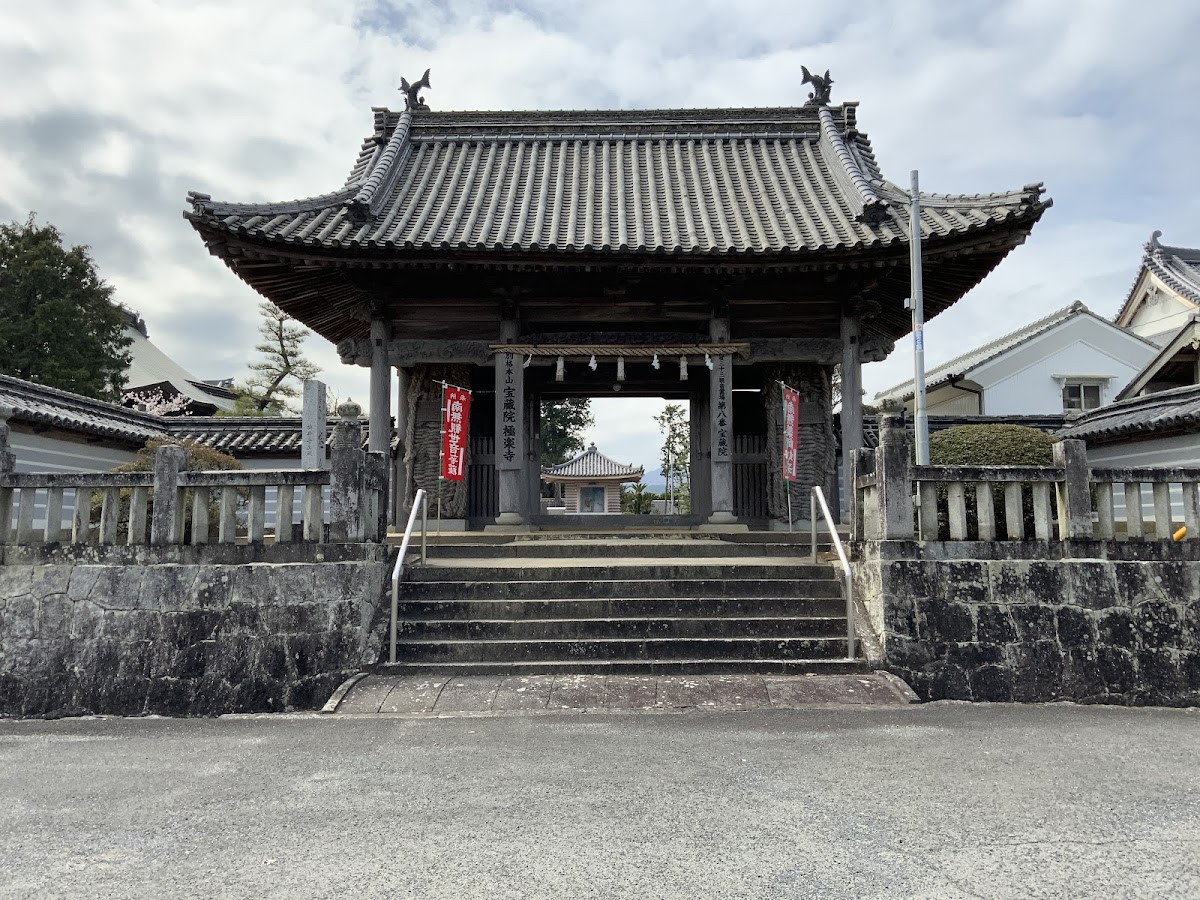
The most distinctive feature of Kōshōin Tennōji Temple is the vermilion Miwa Torii gate that stands in place of a main gate. This is a very rare type of torii gate nationwide, with a unique design that resembles three torii gates combined.
The Miwa Torii is said to have originated at Ōmiwa Shrine in Nara Prefecture and is believed to represent the concept of the Trinity and the syncretism of Shinto and Buddhism. Its form, with a large central torii gate flanked by smaller torii gates, symbolizes the entrance to a sacred space.
The Miwa Torii gate at Kōshōin Tennōji Temple is a valuable cultural asset that conveys the history of Shinto-Buddhist syncretism and is a popular spot for many visitors to take photographs. It symbolizes the unique nature of this temple, being a temple with a torii gate.
Main Hall
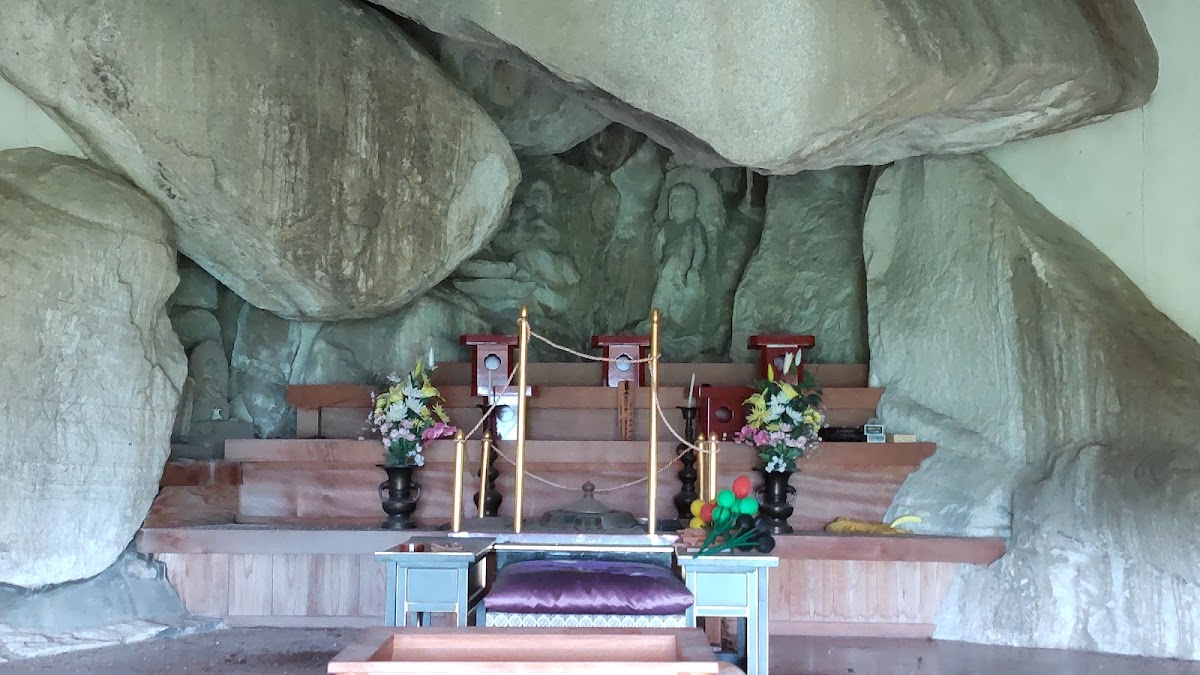
The main hall houses the principal image, the Eleven-Faced Kannon Bodhisattva. The Eleven-Faced Kannon is worshipped as a compassionate Buddha who watches over all directions, and is especially believed to grant blessings for healing illnesses and warding off evil.
The current main hall was rebuilt after the Meiji era, but it is an architectural structure that exudes a sense of history within its tranquil atmosphere. Pilgrims can chant sutras in the main hall and receive a stamp in their pilgrimage notebook.
Daishi Hall
The Daishi Hall, dedicated to Kobo Daishi, is also an important building on the temple grounds. In the Shikoku Pilgrimage, it is considered standard practice to pray at both the main hall and the Daishi Hall, and many pilgrims offer their prayers at both halls.
Boundary with Shiramine Shrine
The temple grounds are adjacent to Shiramine Shrine, dedicated to Emperor Sutoku, and the boundary between the two is somewhat ambiguous. This is a remnant of the era of syncretism of Shinto and Buddhism, and it is a landscape of high historical value.
Shiramine Shrine is known for being the mausoleum of Emperor Sutoku, and many people visit it together with Tennoji Temple. Visiting both sites allows you to experience the tragic life of Emperor Sutoku and the feelings of those who sought to comfort his spirit.
Yasoba Spring
Near the temple grounds is the “Yasoba Spring,” where legend says Emperor Sutoku’s remains were preserved. This spring, with its cold, pure water, is cherished as a historical site that conveys the tragedy of the emperor.
Emperor Sutoku and the Hogen Rebellion
What was the Hogen Rebellion?
The Hogen Rebellion was an armed conflict that occurred in Kyoto in 1156 (Hogen 1), stemming from a dispute over imperial succession and internal strife within the regent family. Centered on the conflict between Emperor Sutoku and Emperor Go-Shirakawa, it was a complex struggle involving warrior forces such as the Fujiwara, Minamoto, and Taira clans.
Ultimately, Emperor Go-Shirakawa’s side emerged victorious, and the defeated Emperor Sutoku was exiled to Sanuki Province. This was the first instance of an emperor or retired emperor being sentenced to exile, an unusually severe punishment for the time.
Life in Sanuki
Emperor Sutoku, exiled to Sanuki, spent approximately eight years there. While he longed to return to Kyoto, his wish was never granted, and he is said to have died in despair.
During his stay in Sanuki, the retired emperor became deeply devoted to Buddhism and copied the Five Great Mahayana Sutras. Legend says he sent these copies to Kyoto, hoping for memorial services, but the court refused. This rejection is said to have deepened Emperor Sutoku’s resentment.
Legend of the Vengeful Spirit
After Emperor Sutoku’s death, Kyoto experienced a series of fires, epidemics, and political upheavals. These were feared to be caused by Emperor Sutoku’s vengeful spirit, and he came to be counted among the “Three Great Vengeful Spirits of Japan,” along with Sugawara no Michizane and Taira no Masakado.
The Imperial Court established Shiramine Shrine in Kyoto to appease the spirit of the retired emperor, and also built the Emperor Sutoku Shrine (Shiramine-gu) in Sanuki Province. Tennoji Temple, as the temple associated with this shrine, played a crucial role in appeasing the spirit of the retired emperor.
As the 79th temple of the Shikoku Pilgrimage
About the Shikoku 88 Temple Pilgrimage
The Shikoku 88 Temple Pilgrimage is a representative pilgrimage route in Japan, visiting 88 temples associated with Kobo Daishi. Affectionately known as “Ohenro,” the entire route covers approximately 1,400 km.
Tennoji Temple, as the 79th temple, occupies an important position towards the end of the pilgrimage. It is approximately 7 km from the 78th temple, Goshoji Temple, and approximately 6 km from the 80th temple, Kokubunji Temple.
Sutra Copying and Goshuin (Temple Seal)
After chanting sutras in the main hall and the Daishi Hall, visitors can receive a Goshuin at the sutra copying office. The Goshuin at Tennoji Temple features the mountain name “Kinkazan” and the temple name “Tennoji” written in ink, followed by a red seal.
Sutra copying hours are usually from 7:00 AM to 5:00 PM. The standard fee is 300 yen, but this may vary depending on the type of sutra copying book.
Etiquette for Visiting
When visiting the Shikoku Pilgrimage, please observe the following basic etiquette:
- Attire: Formal attire such as white robes and straw hats is preferable, but general clothing is acceptable. However, please avoid revealing clothing.
- Order of Worship: Bow at the main gate (Miwa Torii) → Purify yourself at the water basin → Chant sutras in the main hall → Chant sutras in the Daishi Hall → Obtain a Goshuin (temple stamp) at the sutra copying office.
- Chanting Sutras: Chant the Heart Sutra, the mantra of the principal deity, and Buddhist hymns. Chanting silently in your mind is also acceptable.
- Photography: Photography is generally permitted on the temple grounds, but consideration for the interior of the main hall and other visitors is necessary.
Access Methods
Access by Train
Walking from JR Yasoba Station:
- Get off at JR Yosan Line “Yasoba Station,” approximately 5 minutes on foot.
- It’s very close to the station, and walking is the most convenient way to access it.
- The station name “Yasoba” originates from the name of the spring where the remains of Emperor Sutoku were preserved.
From JR Sakaide Station:
- Approximately 10 minutes by car from JR Sakaide Station.
- Taking a taxi is convenient (fare is approximately 1,500 yen).
- There are few local buses, so it is necessary to check the timetable in advance.
Access by Car
From the Expressway:
- Approximately 10 minutes from Sakaide IC.
- Approximately 15 minutes from Sakaide Kita IC.
Car Navigation Settings:
- Address: 1713-2 Nishisho-cho, Sakaide City, Kagawa Prefecture
- Phone Number: 0877-46-3508
Parking
There is a free parking lot for visitors on the temple grounds. There is space for approximately 20 regular cars, and large buses can also be parked. It can get crowded during the pilgrimage season and on weekends, so it is recommended to visit with plenty of time to spare.
Travel to and from previous/next temples
From Temple No. 78, Goshōji:
- Approximately 15 minutes by car (approx. 7km)
- Approximately 2 hours on foot
To Temple No. 80, Kokubunji:
- Approximately 10 minutes by car (approx. 6km)
- Approximately 1 hour 30 minutes on foot
Nearby Tourist Attractions
Shiramine-gū (Shiramine Shrine)
This shrine, adjacent to Tennō-ji Temple, enshrines Emperor Sutoku. It has a mausoleum and is revered as a sacred place where the spirit of the Emperor rests. Visiting it together with Tennō-ji Temple allows for a deeper understanding of history.
Emperor Sutoku’s Mausoleum
Behind Shiramine-gū is the mausoleum of Emperor Sutoku. This is an official imperial mausoleum managed by the Imperial Household Agency, where you can pray for the repose of the Emperor Emeritus in a tranquil atmosphere.
Sightseeing in Sakaide City
Seto Ohashi Bridge:
- Approximately 15 minutes by car from Tennoji Temple
- A magnificent bridge connecting Honshu and Shikoku; the view from the observation deck is breathtaking.
Shamijima Island:
- A small island floating in the Seto Inland Sea, also known as the setting for art projects.
- A historical island mentioned in the Manyoshu (an ancient collection of Japanese poetry).
Ayagawa:
- An area with many famous Sanuki udon restaurants, perfect for a meal after visiting the temple.
Best Time to Visit and Recommended Season
Spring (March-May)
The temple grounds and surrounding area are vibrant during cherry blossom season. It is also the peak season for pilgrims, and is bustling with many visitors. The weather is mild, making it a suitable time to visit.
Summer (June-August)
Rain gear is essential during the rainy season, but the greenery is beautiful, and you can enjoy a peaceful visit. Heat protection is important in summer, so early morning or evening visits are recommended.
Autumn (September-November)
The autumn foliage season is one of the most beautiful times, as the temple grounds are ablaze with color. The weather is stable, making it an ideal season for walking the pilgrimage.
Winter (December-February)
There are fewer visitors, making it a peaceful time for worship. While cold weather protection is necessary, visiting in the crisp, clear air is exceptional.
Accommodation Information
Hotels in Sakaide City
Sakaide City offers a variety of accommodations, from business hotels to hot spring inns. The area around JR Sakaide Station is convenient and has many restaurants.
Pilgrim Accommodations
Around the Shikoku Pilgrimage sites, there are temple lodgings and guesthouses that specialize in accommodating pilgrims. You can enjoy interacting with other pilgrims and deeply experience the culture of the Shikoku pilgrimage.
Zenkon-yado (Free Accommodation for Pilgrims)
In Shikoku, the culture of “Zenkon-yado,” where pilgrims can stay for free or at a low cost, still exists. However, advance reservations are often required, so confirmation is necessary.
Precautions When Visiting
Visiting Hours
- You can generally visit the temple grounds freely.
- Reception hours for the temple office: 7:00 AM to 5:00 PM (may vary depending on the season)
- Please note that you cannot receive a temple stamp in the early morning or after evening.
Clothing and Items to Bring
- Comfortable and respectful clothing is essential.
- In summer, bring a hat, parasol, and water.
- Rain gear is a must (weather in Shikoku is unpredictable).
- It is recommended to bring a temple stamp book, prayer beads, and sutra book.
Photography
- Photography of the Miwa Torii gate and the temple grounds is generally permitted.
- Photography inside the main hall and of Buddha statues may be prohibited.
- Please be considerate of the privacy of other visitors.
Manners and Etiquette
- Visit quietly and be mindful not to disturb other visitors.
- Always take your trash with you.
- Refrain from eating, drinking, and smoking on the temple grounds.
- If you are bringing a pet, please check in advance.
Cultural Value of Tennoji Temple
A Historical Witness to the Syncretism of Shinto and Buddhism
Tennoji Temple, a temple of Takashoin, is a valuable temple that still strongly retains the form of syncretism of Shinto and Buddhism, even after the separation of Shinto and Buddhism during the Meiji Restoration. The coexistence of Shinto elements such as the Miwa Torii gate and the functions of a Buddhist temple makes it an important resource for understanding the religious history of Japan.
A Center for Research on Emperor Sutoku
Tennoji Temple is an indispensable site for research on the political history of the late Heian period, particularly the Hogen Rebellion and Emperor Sutoku. As a historical site that tells the story of the emperor’s exile, death, and the process of becoming a vengeful spirit, it holds high historical value.
A Part of the Shikoku Pilgrimage Culture
As one of the 88 sacred sites of Shikoku, it has supported Japan’s pilgrimage culture. The pilgrimage culture was designated a Japan Heritage site in 2015 as “Shikoku Pilgrimage,” attracting international attention.
Summary
Koshōin Tennōji Temple (Temple No. 79) is a representative sacred site in Sakaide City, Kagawa Prefecture, deeply connected to the tragic history of Emperor Sutoku. It is a temple with multifaceted charm, possessing a rare three-tiered torii gate, a history of syncretism between Shinto and Buddhism, and its role as a Shikoku pilgrimage site.
Its convenient location, just a 5-minute walk from JR Yasoba Station, is also a major draw, making it a recommended spot not only for pilgrims but also for tourists interested in history and culture. Visiting both Koshōin Tennōji and the adjacent Shiramine-gū Shrine will allow you to connect with the life of Emperor Sutoku and the feelings of those who sought to comfort his spirit.
When you visit Shikoku, be sure to visit Koshōin Tennōji Temple and quietly offer your prayers in this sacred space steeped in over a thousand years of history.