The Complete Picture of Hachiman Shrine (Minami-Furudate, Honnai, Fukushima City, Fukushima Prefecture)
Hachiman Shrine, located in Minami-Furudate, Honnai, Fukushima City, Fukushima Prefecture, is a historical shrine that attracts the faith of local residents. This article provides a detailed introduction to the shrine’s enshrined deities, history, features of its grounds, access methods, and its connection to surrounding Hachiman worship.
Basic Information on Hachiman Shrine
Location and Contact Information
Hachiman Shrine is located in Minami-Furudate, Honnai, Fukushima City, Fukushima Prefecture. The exact address may be listed as “38” or “39” Minami-Furudate, Honnai, Fukushima City, Fukushima Prefecture, depending on the boundaries of the shrine grounds.
- Postal Code: 〒960-0103
- Address: 38 Minamifurudate, Honnai, Fukushima City, Fukushima Prefecture
- Telephone Number: 024-553-0062
The Honnai area is located in the northeastern part of Fukushima City, surrounded by the rich natural environment of the Abukuma River basin. Historically, a settlement centered on agriculture was formed here, and the shrine has functioned as the center of the local community.
Deity and Divine Status
The deity enshrined at Hachiman Shrine is Homudawake-no-Mikoto. Homudawake-no-Mikoto is the divine spirit of Emperor Ojin, the 15th emperor, and is revered nationwide as Hachiman-shin.
While Hachiman-shin has characteristics as a god of war and military prowess, he has also been worshipped as a god of agriculture and industrial development. In particular, in the Tohoku region, Hachiman worship spread with the eastward expedition of the Minamoto clan, and it has a history of becoming established as a guardian deity of the region.
The divine virtues of Homudawake-no-Mikoto include the following:
- Long-lasting military fortune: Revered by the samurai class as the guardian deity of martial arts
- Protection from misfortune and bringing good fortune: Wards off disasters and brings good luck
- Family prosperity: Prosperity and peace for the family
- Abundant harvest: Prayers for a bountiful harvest of crops
- Business success: Success and development of businesses
History and origins of Hachiman Shrine
Background of its founding
The exact founding date of Honnai Hachiman Shrine is unclear due to the loss of historical records, but like many Hachiman shrines in Fukushima Prefecture, it is believed to have been established by influential local figures during the medieval to early modern period.
There is a group of Hachiman shrines in Fukushima Prefecture known as “Gori Hachiman.” This is based on a legend that during the Enkyu era (1069-1074) of the Heian period, Minamoto no Yoriyoshi, in his conquest of Oshu (the Former Nine Years’ War), enshrined the divine spirit of Iwashimizu Hachimangu Shrine and erected Hachiman shrines every five ri (approximately 20 km) from Nakoso.
While it is uncertain whether Honnai Hachiman Shrine is one of these five-ri Hachiman shrines, several Hachiman shrines are scattered around Fukushima City, and this can be understood within the historical context of the Minamoto clan’s eastern campaign and the spread of Hachiman worship.
Status as a Village Shrine
In the Meiji era’s shrine system, Honnai Hachiman Shrine was ranked as a village shrine. A village shrine is one of the ranks of shrines in the modern shrine ranking system, referring to a shrine that serves as the guardian shrine of a village and is revered by local residents.
Following the Meiji Restoration’s separation of Shinto and Buddhism, many shrines that had previously practiced syncretism of Shinto and Buddhism were reorganized, and a modern shrine system was established. The designation as a village shrine signifies the official recognition of the shrine’s importance and historical value within the region.
Connection to the Community
The Honnai district has developed as an agricultural area blessed by the Abukuma River. Hachiman Shrine has played a role in strengthening community bonds through annual festivals such as the spring harvest festival and the autumn grand festival.
In particular, the autumn grand festival is an important event where Shinto rituals are performed to express gratitude for a bountiful harvest and to pray for a good harvest the following year, bringing together local residents. It is also a familiar place for local people to participate in life-changing rituals such as New Year’s visits and Shichi-Go-San (a traditional rite of passage for children).
Highlights of the Shrine Grounds
Features of the Shrine Buildings
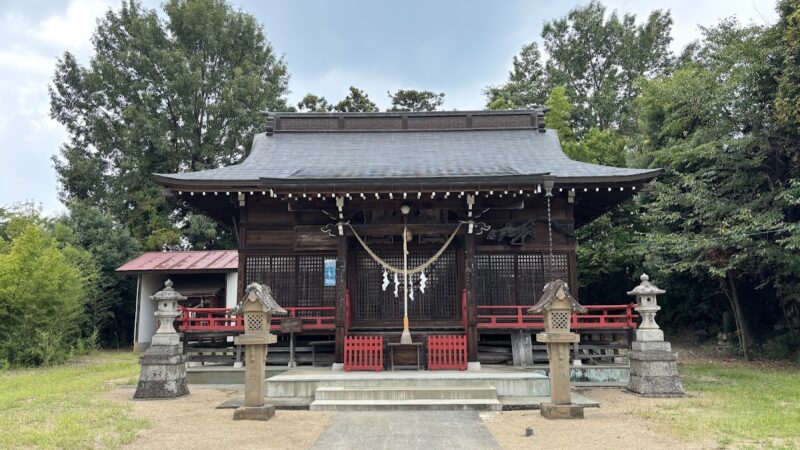
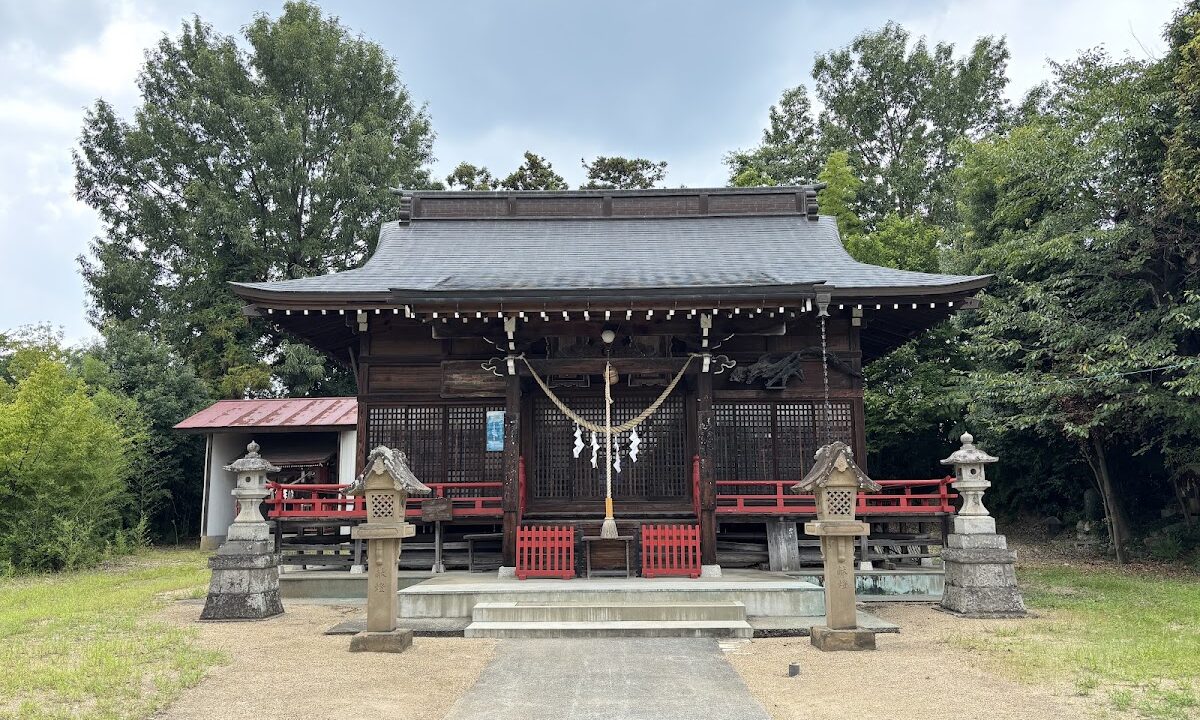
The Honnai Hachiman Shrine buildings exhibit a style of shrine architecture typical of the Tohoku region. Composed of a worship hall and a main sanctuary, it exudes a simple yet solemn atmosphere.
The orientation and arrangement of the shrine buildings were determined considering the topography and feng shui principles, reflecting the local religious practices. The wooden shrine building is regularly maintained and carefully preserved by local residents.
Atmosphere of the Shrine Grounds
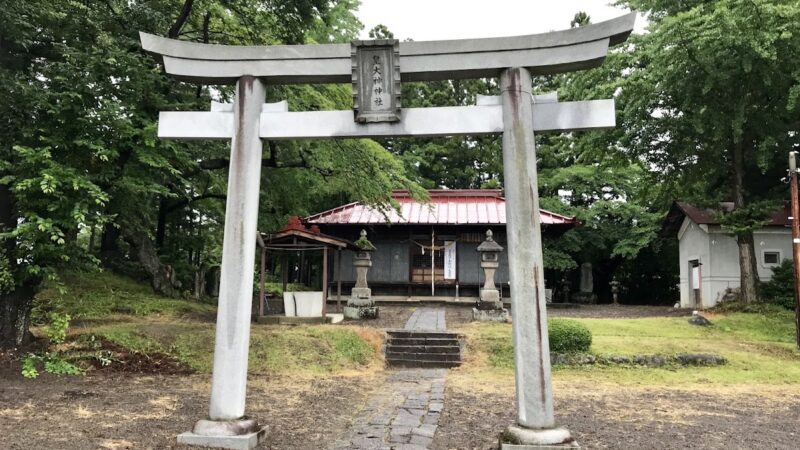
The shrine grounds are located within the Honnai district settlement, surrounded by a tranquil rural landscape. Ancient trees line the grounds, allowing visitors to experience the changing seasons.
Cherry blossoms bloom in spring, the shade of the trees provides coolness in summer, the autumn leaves color the grounds, and in winter, the shrine stands majestically amidst the snow. Located away from the hustle and bustle of urban areas, it maintains a peaceful environment for worship.
Stone Monuments and Stone Sculptures
Stone monuments and stone lanterns, among other stone sculptures, can be seen within the shrine grounds, donated by successive generations of donors. Many of these bear the date of donation and the name of the donor, making them valuable historical documents that tell the story of the region’s history and the continuity of its faith.
In particular, stone sculptures from the Meiji era onward bear the names of influential local figures and parishioner organizations of the time, providing clues to understanding the structure of the local community centered around the shrine. ## Access Methods
Access by Public Transportation
When visiting Hachiman Shrine by public transportation, the nearest stations are Minami-Fukushima Station or Kamimatsukawa Station on the JR Tohoku Main Line.
- From Minami-Fukushima Station: Approximately 4km northeast from the station, about 50 minutes on foot.
- From Kamimatsukawa Station: Approximately 4.5km west from the station, about 55 minutes on foot.
Since both stations are a considerable distance away, taking a taxi from the station is convenient. The journey takes approximately 10-15 minutes.
While it is also possible to take a local bus from Fukushima Station, direct buses to the Honnai area are limited, so it is recommended to check the Fukushima Kotsu bus routes in advance.
Access by Car
Access by car is the most convenient.
From Fukushima Station:
- Head north on National Route 4
- Turn onto Prefectural Road 3 (Fukushima-Iizaka Line)
- Proceed towards Honnai
- Estimated time: Approximately 20 minutes
From Tohoku Expressway:
- Exit at Fukushima-Nishi IC or Fukushima-Iizaka IC
- Take the prefectural road to the Honnai area
- Estimated time: Approximately 15-20 minutes from the IC
There is parking space for visitors on the temple grounds or nearby, but it may be crowded during events such as the annual festival.
Landmarks in the surrounding area
The Honnai area is located in the northeastern part of Fukushima City, on the east bank of the Abukuma River. The surrounding area is characterized by rural scenery, and public facilities such as Honnai Elementary School and Honnai Community Center serve as landmarks.
When using a car navigation system, searching for “38 Minami-Furudate, Honnai, Fukushima City, Fukushima Prefecture” or the phone number “024-553-0062” will display the accurate location.
Etiquette and Manners for Visiting a Shrine
Basic Etiquette for Visiting a Shrine
When visiting a Hachiman Shrine, please observe the following basic etiquette:
- Bow before passing through the torii gate: This is a sign of respect before entering the sacred area.
- Avoid walking in the center of the path: The center is considered the path of the gods.
- Purify yourself at the water basin: Purify your left hand, then your right hand, then your mouth.
- Worship in front of the main hall: The basic procedure is two bows, two claps, and one bow.
- Bow deeply twice.
- Clap your hands twice.
- Pray with all your heart.
- Bow deeply once.
- Bow when leaving: Turn around and bow before leaving the torii gate.
Attire for Visiting a Shrine
While no special attire is required for everyday visits, clean clothing that reflects the sacred nature of the place is desirable. When visiting the shrine for the first time of the year or receiving prayers, slightly formal attire is appropriate.
Photography Etiquette
Photography is generally permitted on the shrine grounds, but please note the following:
- Refrain from taking photos inside the main hall.
- Be considerate of other worshippers.
- Check in advance if photography is permitted during festivals.
- Be careful about handling location information when posting on social media.
Annual Events and Festivals
Main Annual Events
Hachiman Shrine holds various festivals throughout the year.
New Year’s Day Festival (January 1st)
A festival to celebrate the New Year and pray for peace throughout the year. Many visitors come for their first shrine visit of the year.
Prayer Festival (Spring)
An important festival to pray for a bountiful harvest of grains in the year. It is especially important in the Honnai district, which is an agricultural area.
Grand Festival (Autumn)
The most important festival at Hachiman Shrine. Prayers are offered for gratitude for the harvest and for the prosperity of the region. Sometimes, a portable shrine procession or Kagura (sacred dance) performance takes place.
Niiname-sai (November 23rd)
A festival to offer new grain to the gods and give thanks for the harvest.
Oharai (June and December)
A Shinto ritual to purify oneself of sins and impurities accumulated over the past six months.
Personal Prayers
Hachiman Shrine also accepts various prayers for individuals and families:
- First Shrine Visit (Omiyamairi)
- Shichi-Go-San (7-5-3) Ceremony
- Exorcism Prayer
- Family Safety Prayer
- Business Prosperity Prayer
- Traffic Safety Prayer
- Passing Exam Prayer
If you wish to request a prayer, it is recommended that you contact the shrine by phone in advance to discuss the date, time, and content of the prayer.
Hachiman Faith in Fukushima Prefecture
The Legend of Gori Hachiman
In Fukushima Prefecture, there is a legend of a group of Hachiman shrines called “Gori Hachiman.” This is a legend that during the Former Nine Years’ War (1051-1062), Minamoto no Yoriyoshi carried the divine spirit of Iwashimizu Hachimangu Shrine on his eastward expedition, establishing Hachiman shrines every five ri (approximately 20 km) from Nakoso (Iwaki City).
In reality, this tradition is thought to have been formed in later times, but it reflects the historical fact of the connection between the Minamoto clan and Hachiman worship, and the spread of Hachiman worship to the Tohoku region.
Hachiman Shrines around Fukushima City
Several Hachiman shrines exist in Fukushima City and the surrounding areas:
- Minami-Yanome Hachiman Shrine (Minami-Yanome, Fukushima City)
- Suzugaoka Hachiman Shrine (Soma City)
- Furudono Hachiman Shrine (Furudono Town, Ishikawa District)
These shrines each have their own unique history and characteristics, but they are all built on the common foundation of Hachiman worship. Visiting each shrine allows you to experience the spread and diversity of Hachiman worship in the region.
Characteristics of Hachiman Worship
Hachiman worship in the Tohoku region has the following characteristics:
- War God Worship: Characterized as the tutelary deity of the Minamoto clan
- Agricultural God Worship: A belief linked to local agriculture
- Regional Guardian Deity: Functioning as a guardian deity of village communities
- Influence of Shinto-Buddhist Syncretism: A history of fusion with Buddhism as Hachiman Daibosatsu
Honuchi Hachiman Shrine can also be understood within this context of Hachiman worship in Tohoku.
History and Culture of the Honuchi Area
Origins of the Region
The Honuchi area is located on fertile land on the east bank of the Abukuma River, and has long been a settlement centered on agriculture. The origin of the place name “Honuchi” is not clear, but “Hon” may mean center or root, and “uchi” may mean inside or area.
During the Edo period, it was under the control of the Fukushima Domain (later the Shinobu County Magistrate), and agricultural production centered on rice cultivation was carried out. During the Meiji era, when the town and village system was implemented, Honnai became an independent administrative unit as Honnai Village. It was later incorporated into Fukushima City during the Showa era’s municipal mergers.
Regional Characteristics
The current Honnai district combines the characteristics of a suburban residential area of Fukushima City with those of a traditional agricultural region. Blessed with abundant water resources from the Abukuma River and fertile soil, it thrives on rice cultivation as well as fruit tree farming.
The local community remains strong, and traditional events and community activities centered around the Hachiman Shrine continue. Even amidst increasing urbanization, the awareness of cherishing the region’s history and culture is passed down.
Visitor Voices and Experiences
Quiet Worship Environment
Many visitors to Honnai Hachiman Shrine comment on the “quiet and peaceful atmosphere” they experience during worship. Unlike large urban shrines, it possesses the charm of a simple, community-rooted shrine.
Warmth of the Local People
During events such as the annual festival, visitors can experience the warm hospitality of the local people. One of the characteristics of this shrine is the strong sense of community bond centered around it.
Beauty in the Seasons
The nature within the shrine grounds displays different expressions in each season, offering a different charm depending on when you visit. The grounds are particularly beautifully colored during the cherry blossom season in spring and the autumn foliage season.
Nearby Tourist Attractions
Famous Places in Fukushima City
Fukushima City tourist attractions you can visit before or after visiting Hachiman Shrine:
Hanamiyama Park
A representative flower spot in Fukushima City. In spring, various flowers such as peaches, plums, and cherry blossoms bloom all at once.
Fukushima Prefectural Museum of Art
Exhibits mainly works by artists associated with Fukushima Prefecture. Also features a variety of special exhibitions.
Azuma General Sports Park
A large-scale general sports park. You can enjoy seasonal flowers.
Iizaka Onsen
One of the three famous hot springs of Oshu. A historic hot spring town where day trips for bathing are also possible.
Abukuma River Area
The Honnai district is close to the Abukuma River, and cycling and walking paths are well-maintained along the river. You can enjoy a relaxing time in a rich natural environment.
Summary
The Hachiman Shrine, located in Minami-Furudate, Honnai, Fukushima City, Fukushima Prefecture, is a historical shrine dedicated to Homudawake-no-Mikoto and is revered by the local people. As a village shrine, it holds high status and plays a central role in the local community through its annual festivals.
The shrine grounds, situated in a quiet rural area, offer a peaceful environment for worship, away from the hustle and bustle of the city. When visiting Fukushima City, we recommend visiting Honnai Hachiman Shrine to experience the region’s history and culture.
While access by public transport is somewhat inconvenient, it is relatively easy to reach by car, about 20 minutes from Fukushima Station. While it is bustling with worshippers during events such as New Year’s visits and the annual festival, it is usually a hidden gem where you can worship in peace.
Honnai Hachiman Shrine, which plays a vital role in the Hachiman faith within Fukushima Prefecture, is a valuable cultural heritage site that conveys the region’s history to the present day, and will undoubtedly continue to be carefully preserved by the local people.