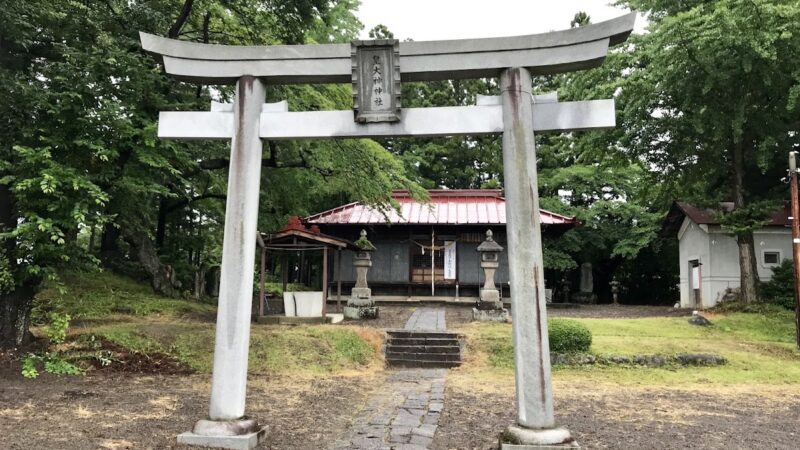
Sugawa Nangū Suwa Shrine (Fukushima City, Fukushima Prefecture) Complete Guide | History, Goshuin (Shrine Seal), and Access Information
Located in Fushibai, Fukushima City, Fukushima Prefecture, Sugawa Nangū Suwa Shrine is an ancient shrine with roots in the legend of Yamato Takeru’s eastern expedition. As a subsidiary shrine of the 51 villages of Shinobu District, it has long been a center of local faith and is still carefully preserved by its parishioners. This article provides a detailed overview of Sugawa Nangū Suwa Shrine, including its history, enshrined deities, goshuin information, access methods, and nearby shrines.
Basic Information on Sugawa Nangū Suwa Shrine
Sugawa Nangū Suwa Shrine is located in the Fushibai district, in the southern part of Fukushima City, Fukushima Prefecture.
Location and Contact Information
- Address: 34 Shimizuuchi, Fushibai, Fukushima City, Fukushima Prefecture
- Postal Code: 〒960-8154
- Corporate Number: 6380005000786 (Designated October 5, 2015)
- Shrine Rank: Local Shrine
Access Information
Access by Train
- Approximately 20 minutes on foot from Minami-Fukushima Station on the JR Tohoku Main Line
- Approximately 15 minutes by taxi from Fukushima Station
Access by Car
- Approximately 15 minutes from Fukushima-Nishi IC on the Tohoku Expressway
- Approximately 20 minutes from Fukushima-Iizaka IC on the Tohoku Expressway
- Parking: Parking available for visitors on the shrine grounds
Access by Bus
- Approximately 5 minutes on foot from the “Fushibai” bus stop (Fukushima Kotsu Bus)
Visiting Hours
The shrine grounds are open for worship all day. However, since this is a shrine with no resident priests, please contact the Kuroiwa Kasuga Shrine office if you wish to receive a Goshuin (shrine stamp) or prayers.
History and Origins of Sugawa Nangū Suwa Shrine
Legend of Yamato Takeru and Founding
The founding of Sugawa Nangū Suwa Shrine dates back to ancient times. According to shrine tradition, when Yamato Takeru no Mikoto was on his eastern expedition, he encountered a great storm in this area. At that time, he prayed to Takeminakata no Kami, the god of Suwa, and the wind calmed down. It is said that this was the beginning of the shrine, where Takeminakata no Kami was enshrined on the mountaintop.
This legend is a valuable historical document that tells of the role of faith in the ancient administration of Tohoku. Traces of Yamato Takeru no Mikoto remain throughout Tohoku, and Sugawa Nangū Suwa Shrine is one of them, preserving the region’s history to this day.
As a Subsidiary Shrine of the Fifty-One Villages of Shinobu District
Sugawa Nangū Suwa Shrine played an important role as a subsidiary shrine of the fifty-one villages of Shinobu District. Shinobu District was an administrative area that spread from ancient times to the Middle Ages, centered around the Fukushima Basin, and the fifty-one villages refer to the village organizations within it.
A subsidiary shrine is a shrine of high status attached to the main shrine, indicating that Sugawa Nangū Suwa Shrine held a central position in the region’s religious beliefs.
Status as a Village Shrine
Under the Meiji era’s shrine ranking system, Sugawa Nangū Suwa Shrine was ranked as a village shrine. A village shrine is higher in rank than a village shrine and is revered as the guardian shrine of one village or several villages. This rank indicates that Sugawa Nangū Suwa Shrine was not merely the guardian shrine of a settlement, but a shrine that attracted the faith of a wider region.
Deity and Divine Virtues
Takeminakata-no-kami
The deity enshrined at Sugawa Nangū Suwa Shrine is Takeminakata-no-kami. Takeminakata-no-kami is known as the deity of Suwa Grand Shrine in Shinano Province (present-day Nagano Prefecture) and is worshipped at Suwa shrines throughout Japan.
Myth of Takeminakata-no-kami
According to the Kojiki, Takeminakata-no-kami is a son of Ōkuninushi-no-kami and is depicted as a brave god who competed in a test of strength with Takemikazuchi-no-kami during the transfer of the land. Ultimately, he settled in the Suwa region and became the guardian deity of Suwa.
Divine Virtues
- Long-lasting Military Fortune: Due to its nature as a god of war, it grants good fortune in competitions and improvement in martial arts.
- Abundant Harvest: Due to its aspect as a god of agriculture, it grants prayers for a bountiful harvest.
- Good Fortune and Prosperity: It bestows the strength to overcome difficulties.
- Safe Voyages: It is worshipped as a god that controls the wind.
- Protection from Evil: It has the power to ward off disaster.
Meaning of Nangū
The name “Nangū” holds special significance in Suwa faith. Suwa Grand Shrine is divided into the Upper Shrine and the Lower Shrine, and further divided into the Main Shrine and the Front Shrine within the Upper Shrine, and the Spring Shrine and the Autumn Shrine within the Lower Shrine. “Nangū” is a name found in Suwa-related shrines throughout the country, indicating the spread of Suwa faith.
Highlights of the Shrine Grounds
Torii Gate and Approach
A torii gate stands at the entrance to the grounds of Sugawa Nangū Suwa Shrine, and the approach leads to the main hall. In 2020, a flagpole was donated, demonstrating the continuous maintenance and care carried out by the parishioners.
The torii gate serves as a boundary separating the sacred realm from the secular world; worshippers bow here before entering the grounds.
Main Hall and Shrine Buildings
The main hall is built in the traditional style of shrine architecture and is carefully maintained as the center of local faith. After the Great East Japan Earthquake, a sign for the reconstruction and restoration aid was displayed, showing the power of the local community protecting the shrine.
Nature within the Shrine Grounds
As the place name Shimizuuchi suggests, the shrine is located in an environment with clear, flowing water. Trees flourish within the grounds, creating a tranquil atmosphere. Visitors can enjoy the changing expressions of nature throughout the seasons.
About Goshuin (Shrine Seals)
Where to Obtain Goshuin
Since Sugawa Nangū Suwa Shrine is a subsidiary shrine, there are no permanently stationed priests. Those wishing to receive a Goshuin can obtain one at the Kuroiwa Kasuga Shrine Office.
Kuroiwa Kasuga Shrine Information
- Location: Kuroiwa, Fukushima City, Fukushima Prefecture (We recommend checking details in advance)
- Reception Hours: Usually 9:00 AM to 5:00 PM (We recommend checking in advance as hours may change)
Characteristics of Goshuin
The Goshuin of Sugawa Nangū Suwa Shrine includes the shrine’s name and the name of the enshrined deity, Takeminakata-no-kami. Goshuin from subsidiary shrines offer a valuable opportunity to learn about the unique history and beliefs of that particular shrine.
Manners When Receiving a Goshuin
- Pray first: The Goshuin is proof of your visit. Please be sure to complete your prayers before receiving the stamp.
- Prepare a Goshuincho (stamp book): It is desirable to prepare a dedicated Goshuincho.
- Prepare the offering: Generally around 300-500 yen (prepare the exact amount to avoid needing change).
- Express gratitude: Make your request politely and remember to express your gratitude.
Annual Events and Festivals
At Sugawa Nangū Suwa Shrine, traditional festivals are preserved by the parishioners. Although there are few large-scale festivals due to it being a shrine managed by multiple entities, the following events are held as local religious ceremonies.
Annual Festival
The annual festival of Suwa Shrine is generally held in the autumn and is a festival of gratitude for a bountiful harvest. Local people gather and offer their gratitude to the gods.
First Shrine Visit of the Year
At the start of the new year, local people visit the shrine for their first shrine visit of the year, praying for safety and prosperity throughout the year. Although small in scale, this is a deeply rooted local faith.
Suwa Faith in Fukushima City
Spread of Suwa Faith
Suwa faith originated at Suwa Grand Shrine in Shinano Province (Nagano Prefecture) and spread throughout Japan from the Middle Ages onward. Due to its characteristics as a god of war, it was worshipped by the samurai class, and also revered by commoners as a god of agriculture and wind.
Several Suwa shrines are located within Fukushima Prefecture, and Sugawa Nangū Suwa Shrine is one of them, playing a vital role in the local faith.
Major Suwa Shrines in Fukushima Prefecture
- Onahama Suwa Shrine (Iwaki City): The guardian shrine of the Onahama district in Iwaki City
- Kamitakikan Shrine (Sukagawa City): Affectionately known as “Osuwa-sama”
- Suwa Shrine (Fukushima City Center): Located near Fukushima Station
These shrines, along with Sugawa Nangū Suwa Shrine, belong to the same lineage of Suwa faith, yet each has cultivated its own unique history and beliefs in its respective region.
Connection with the Community
Maintenance and Management by Parishioners
Sugawa Nangū Suwa Shrine is a shrine managed by multiple parishioners and does not have a resident priest. However, it is maintained and operated through the strong cooperation of the local parishioners. The sign commemorating the recovery and restoration efforts after the Great East Japan Earthquake, and the flagpole donated in 2020, demonstrate the strong community ties and deep faith in the shrine.
As the Guardian Shrine of the Region
As the guardian shrine of the Fushibai district, Sugawa Nangū Suwa Shrine serves as a spiritual anchor for the community. In rural areas facing population decline and depopulation, maintaining a community centered around a shrine is of great importance.
Nearby Shrines and Temples
When visiting Sugawa Nangū Suwa Shrine, we recommend also visiting the nearby shrines and temples.
Kuroiwa Kasuga Shrine
Kuroiwa Kasuga Shrine, a shrine managed by multiple parishioners of Sugawa Nangū Suwa Shrine, is located in the Kuroiwa district of Fukushima City. We also offer Goshuin (temple/shrine stamps), and many people visit this shrine in conjunction with Sugawa Nangū Suwa Shrine.
Major Shrines in Fukushima City
- Fukushima Inari Shrine: An ancient shrine located in the heart of Fukushima City.
- Haguro Shrine: Located on Mount Shinobu, a symbolic presence in Fukushima City.
- Gokoku Shrine: A shrine dedicated to the war dead of Fukushima Prefecture.
Points and Manners for Visiting Shrines
Basic Visiting Etiquette
- Bow at the Torii Gate: Bow before passing through the torii gate.
- Purify at the Water Basin: If there is a water basin, purify your hands and mouth.
- Walking the Path: The center of the path is considered the path of the gods, so walk along the sides.
- Etiquette at the Main Hall: Two bows, two claps, and one bow are the basic rituals.
- Bow Upon Exit: After leaving the torii gate, turn around and bow.
Regarding Photography
Photography is generally permitted on the shrine grounds, but please note the following:
- Please refrain from taking photos in sacred areas such as the interior of the main shrine.
- Please be considerate of other worshippers.
- Please use tripods sparingly.
- Please be considerate when posting on social media.
The Charm of Sugawa Nangū Suwa Shrine
A Tranquil Worship Environment
At Sugawa Nangū Suwa Shrine, which has not been commercialized for tourism, you can enjoy a quiet and peaceful worship experience. A space where you can escape the hustle and bustle of the city and quietly connect with the gods is a precious existence in modern times.
A Faith Rooted in the Community
The warmth of a community-oriented atmosphere, unlike that of large shrines, is the charm of Sugawa Nangū Suwa Shrine. The faith that the parishioners have carefully preserved conveys the traditional form of Japanese community to the present day.
Historical Romance
The shrine’s history, stemming from the legend of Yamato Takeru’s eastern expedition, is fascinating for those interested in ancient history. Amidst the interplay of legend and historical fact, you can experience stories that have been carefully passed down by the local people.
About the Fushibai District of Fukushima City
Origin of the Place Name
The place name “Fushibai” is thought to originate from the act of bowing down in reverence to gods and Buddhas. This place name indicates that this area has been deeply connected to faith since ancient times.
Regional Characteristics
Located in the southern part of Fukushima City, the Fushibai district is on the southern edge of the Fukushima Basin and retains a rich natural environment. Despite its proximity to the city center, it is a quiet residential area with extensive farmland.
Sugawa Nangū Suwa Shrine Nationwide
According to the Corporate Number Database, there is only one shrine in Japan with the name “Sugawa Nangū Suwa Shrine.” This uniqueness demonstrates the unique history and regional characteristics of Sugawa Nangū Suwa Shrine.
While there are thousands of shrines nationwide with the name “Suwa Shrine,” this shrine in Fukushima City, Fukushima Prefecture, is the only one with the specific name “Sugawa Nangū.”
Points to Note When Visiting
Understand that it is a jointly managed shrine
Sugawa Nangū Suwa Shrine is a jointly managed shrine, therefore, there are no permanently stationed priests. There is no shrine office, and goshuin (shrine stamps) and prayers are handled at Kuroiwa Kasuga Shrine. It is important to understand this point before visiting.
Seasonal Environmental Changes
- Spring: Beautiful fresh greenery, a suitable season for worship.
- Summer: The greenery is dense, so insect repellent is recommended.
- Autumn: Beautiful autumn leaves, and the time of the annual festival.
- Winter: There may be snow, so be careful of your footing.
Parking and Transportation
There is parking space for visitors on the shrine grounds, but it may be difficult for large vehicles to enter. Consider using public transportation.
Summary: The Value of Sugawa Nangū Suwa Shrine
Sugawa Nangū Suwa Shrine has a long history originating from the legend of Yamato Takeru, and has played a vital role in the local faith as a subsidiary shrine and village shrine of the 51 villages of Shinobu County. Although it is a small shrine without a resident priest, it is maintained through the dedicated efforts of its parishioners and serves as a spiritual pillar for the local community.
Belonging to the Suwa faith lineage that enshrines Takeminakata-no-kami, it is believed to bestow blessings such as military success, abundant harvests, and good fortune. It is a precious shrine where you can worship peacefully in a tranquil environment.
When you visit Fukushima City, be sure to visit Sugawa Nangū Suwa Shrine and experience its ancient history and the faith of the local people. Those wishing to receive a Goshuin (shrine stamp) should stop by the Kuroiwa Kasuga Shrine office.
Frequently Asked Questions about Sugawa Nangū Suwa Shrine in Fukushima City, Fukushima Prefecture
Q1: Where can I get a Goshuin for Sugawa Nangū Suwa Shrine?
A1: Sugawa Nangū Suwa Shrine is a shrine managed by multiple entities, so there is no resident priest. Goshuin can be obtained at the Kuroiwa Kasuga Shrine office. After visiting Kuroiwa Kasuga Shrine, please request a Goshuin (shrine stamp) from Sugawa Nangū Suwa Shrine.
Q2: How do I access Sugawa Nangū Suwa Shrine?
A2: It’s about a 20-minute walk from JR Minami-Fukushima Station, or about a 15-minute taxi ride from Fukushima Station. By car, it’s about 15 minutes from the Tohoku Expressway Fukushima-Nishi Interchange, and there is parking available for visitors on the shrine grounds. It’s about a 5-minute walk from the Fukushima Kotsu bus stop “Fushibai”.
Q3: What are the enshrined deities and divine virtues of Sugawa Nangū Suwa Shrine?
A3: The enshrined deity is Takeminakata-no-kami. This deity is believed to bestow blessings such as military success, abundant harvests, good fortune, safe voyages, and protection from evil. This deity is also known as the enshrined deity of Suwa Grand Shrine.
Q4: Please tell me about the history of Sugawa Nangū Suwa Shrine.
A4: According to shrine tradition, when Prince Yamato Takeru was on his eastern expedition, he encountered a great storm. He prayed to the god of Suwa, and the wind calmed down. He then enshrined Takeminakata-no-kami on the mountaintop, which is considered the origin of the shrine. It has served as a subsidiary shrine for the 51 villages of Shinobu County, and later as a village shrine during the Meiji era, playing a vital role in local faith.
Q5: How many Sugawa Nangū Suwa Shrines are there nationwide?
A5: According to the corporate number database, there is only one shrine with the name “Sugawa Nangū Suwa Shrine” nationwide. This shrine, located at 34 Shimizuuchi, Fushibai, Fukushima City, Fukushima Prefecture, is the only one of its kind.
Q6: Are there specific visiting hours for Sugawa Nangū Suwa Shrine?
A6: The shrine grounds are open for worship all day. However, as it is a shrine managed by multiple entities, there is no shrine office, and no Shinto priests are permanently stationed there. You can visit the shrine in peace, but if you wish to receive a Goshuin (shrine stamp) or prayers, you must visit during the reception hours of Kuroiwa Kasuga Shrine.
Q7: Can I receive prayers or amulets at Sugawa Nangū Suwa Shrine?
A7: As it is a shrine managed by another shrine, prayers and amulets are not offered on the shrine grounds. If you wish to receive these, please contact the Kuroiwa Kasuga Shrine office. You are free to visit the shrine itself.
Q8: What does “Nangū” in Sugawa Nangū Suwa Shrine mean?
A8: “Nangū” is one of the names used in Suwa faith. Suwa Grand Shrine is divided into the Upper Shrine and the Lower Shrine, and furthermore, there are several shrines. The name “Nangū” was used when Suwa faith spread to various regions and indicates the lineage of Suwa-type shrines.