Tenpōrinji Temple (Gose City, Nara Prefecture) | A Thorough Explanation of the Sacred Site of Shugendō Located on the Summit of Mt. Kongō
Tenpōrinji Temple, located on the summit of Mt. Kongō in Takama, Gose City, Nara Prefecture, is a sacred site said to have been founded by En no Gyōja, the founder of Shugendō. Situated in a mountainous area at an altitude of 1125 meters, this temple has attracted worshippers for over 1300 years as the head temple of the Shingon Daigo sect and the fundamental training ground of Katsuragi Shugendō.
This article comprehensively introduces all the information necessary for visiting Tenpōrinji Temple, including its history, highlights, goshuin (temple stamp) information, and access methods including hiking.
History and Origins of Tenpōrinji Temple
Founding Legend by En no Gyōja
The founding of Tenpōrinji Temple dates back to the 4th year of Emperor Tenji’s reign (665 AD). En no Ozunu (En no Gyoja Shinpen Daibosatsu), considered the founder of Shugendo, climbed Mount Kongo at the age of 16 and underwent rigorous ascetic training. It is said that as a result of this rigorous training, he received a vision of Hoki Bosatsu from a passage in the 32nd chapter of the Avatamsaka Sutra, and subsequently established Kongosan-ji Temple (Tenborin-ji Temple) to enshrine the ancestral deity Hitokotonushi-no-Okami as its guardian deity.
En no Gyoja trained in the mountainous regions of Yamato Province, including Mount Katsuragi and Mount Omine, and opened Mount Kongo as a sacred mountain where Shinto and Buddhism were syncretized. Tenborin-ji Temple is a sacred site that can be considered the origin of Shugendo.
Successive High Priests and the Development of the Temple
Since its founding, many high-ranking priests have trained at Tenborin-ji Temple. During the Nara period, it is said that Gyōki Bodhisattva, Jianzhen (who came to Japan from Tang China), and in the Heian period, Saichō (Dengyō Daishi), the founder of the Tendai sect, also trained at Mount Kongō.
Originally, Tenpōrin-ji Temple was located where the current Katsuragi Shrine stands, boasting a magnificent temple complex with five halls and seven buildings. From the Heian period to the Kamakura period, it flourished as a sacred site for Shugendō practitioners, and many Shugendō practitioners visited the mountain to dedicate themselves to their training.
Anti-Buddhist Movement and Reconstruction
Fueled by the anti-Buddhist movement of the Meiji Restoration and the subsequent decree separating Shinto and Buddhism, Tenpōrin-ji Temple was forced to abolish. Kongōzan-ji Temple, a symbol of the syncretism of Shinto and Buddhism, was denied its existence as a Buddhist facility due to policies emphasizing Shinto.
However, the faith of Shugendō did not die out, and Tenpōrin-ji Temple was later rebuilt at its current location. Currently, as the head temple of the Shingon Daigo sect and the fundamental training ground of Katsuragi Shugendo, it welcomes many Shugendo practitioners and worshippers.
Highlights of Tenborinji Temple
Main Hall and Hokki Daibosatsu
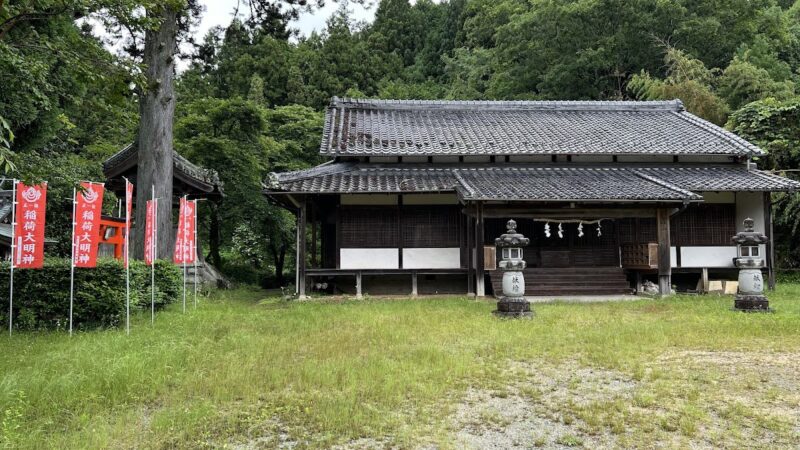
The main hall of Tenborinji Temple enshrines Hokki Daibosatsu, a Bodhisattva who was perceived by En no Gyoja. Hokki Daibosatsu is a Bodhisattva appearing in the Avatamsaka Sutra and is worshipped as the guardian deity of practitioners. The main hall is enveloped in a solemn atmosphere, allowing worshippers to offer prayers in silence.
The Sacred Power of Mount Kongo’s Summit
Tenborinji Temple is located on the summit of Mount Kongo (1125 meters above sea level), on the border of Osaka and Nara prefectures, and has been revered as a sacred mountain since ancient times. From the summit, on a clear day, you can enjoy a panoramic view of the Osaka Plain, experiencing both the rigor of Shugendo training and the grandeur of nature.
In winter, frost-covered trees can be seen, and the beauty of nature throughout the seasons captivates visitors. Visiting in the quiet of early morning is a particularly precious experience for purifying the mind and body.
Relationship with Katsuragi Shrine
Near Tenborinji Temple is Katsuragi Shrine (Katsuragi Jinja), where Hitokotonushi-no-Okami is enshrined. Katsuragi Shrine now stands on the site where Tenborinji Temple once stood, preserving the history of syncretism between Shinto and Buddhism before its separation. Visiting both shrines during your pilgrimage will allow you to understand the overall picture of the faith surrounding Mount Kongo.
Goshuin (Shrine Seal) Information
Tenborinji Temple offers Goshuin (shrine seals). Known as one of the sacred sites associated with En no Gyoja, many visitors receive a Goshuin as proof of their Shugendo pilgrimage.
The Goshuin features the calligraphy of “Mount Kongo” and “Tenborinji Temple,” along with the temple’s seal. Receiving a Goshuin at the special location of the mountaintop makes it a valuable memento of the climb.
For information regarding the issuance of Goshuin (temple stamps) and other details, it is recommended to check with the temple office (Tel: 0721-74-0873) before your visit. Please note that procedures may change, especially during winter or inclement weather.
Annual Events and Seasonal Customs
Renge Grand Festival (July 7th)
Tenborinji Temple holds the Renge Grand Festival every year on July 7th. Prayer amulets are also accepted at this festival, attracting many worshippers. It is an important religious service that carries on the traditions of Shugendo (mountain asceticism) and holds a particularly important position among the temple’s annual events.
Other Annual Events
Various events are held throughout the seasons, such as the spring mountain opening and the autumn foliage season. Furthermore, Shugendo practitioners regularly conduct mountain ascetic training, continuing to fulfill its role as a fundamental training ground for Shugendo.
Access
Access to Tenborinji Temple involves climbing Mount Kongo, so thorough preparation is necessary. Below are the main access methods.
Using Public Transportation
Ropeway Route
The most common access method is the route using the Kongozan Ropeway.
- Get off at Kawachinagano Station on the Nankai Koya Line.
- Take a Nankai Bus: Take the bus bound for “Kongozan Ropeway-mae” and ride to the last stop (approximately 30 minutes).
- Kongozan Ropeway: Take the ropeway to near the summit (approximately 6 minutes).
- Walking: Walk approximately 30 minutes from the ropeway’s mountaintop station to Tenborinji Temple.
Using the ropeway allows even those with less physical stamina to access near the summit. However, ropeway operation status varies depending on the season and weather, so it is necessary to check in advance.
Hiking Route
Those accustomed to hiking can also climb on foot from the base. The main hiking trails are as follows:
- Chihaya Main Trail: The most common hiking route (approximately 90 minutes)
- Chihaya Castle Ruins Route: A route that also offers historical sightseeing opportunities
- Katora Valley Route: A challenging route for advanced hikers
When hiking, please prepare appropriate equipment (hiking boots, rain gear, drinking water, etc.) and check the weather before departing.
Using a Car
If accessing by car, you can drive to the parking lot at the foot of the mountain.
Parking Information
- Address: Takama, Gose City, Nara Prefecture (at the foot of Mt. Kongo)
- Parking: Available (free)
- Notes: Cars cannot reach the summit. Hiking is required from the parking lot.
From the parking lot to Tenborinji Temple, you will need to walk along the hiking trail (approximately 90-120 minutes). Particular caution is required, especially in winter, as the road may be icy.
Important Notes Regarding Access
- Clothing and Equipment: As this is a mountainous area, please wear appropriate clothing and hiking boots for the season.
- Weather Check: The weather at the summit is unpredictable, so please check the weather forecast in advance.
- Time Allocation: Please plan your trip with ample time to descend before sunset.
- Winter Precautions: From December to March, there is a high possibility of snow and ice, and equipment such as crampons may be necessary.
- Toilets: There are toilets near Tenborinji Temple, but they are limited along the hiking trail, so it is recommended to use the facilities beforehand.
Basic Information
- Official Name: Shingon-shu Daigo-ha Daihonzan Kongozan Tenborinji Temple
- Address: 472 Takama, Gose City, Nara Prefecture 639-2336 (Kongozan Summit)
- Phone: 0721-74-0873
- Sect: Shingon-shu Daigo-ha
- Principal Image: Hokki Daibosatsu
- Founder: En no Gyoja (En no Ozunu)
- Established: 4th year of Emperor Tenji’s reign (665 AD)
- Pilgrimage Site: En no Gyoja Pilgrimage Site
- Parking: Available (Cars can access the parking lot at the foot of the mountain)
- Restrooms: Available
- Official Website: Kongozan Tenborinji Temple Official Homepage
Nearby Tourist Attractions
Takamahiko Shrine
An ancient shrine located in Takama, Gose City, associated with the legend of Takamagahara. Ideal for a visit before or after visiting Tenborinji Temple.
Katsuragi Hitokotonushi Shrine
A shrine known for its belief in granting single wishes. One of Gose City’s representative tourist spots.
Nature of Mount Kongo
The Mount Kongo area is a hiking spot where you can enjoy nature throughout the four seasons. The temple displays different expressions with each season: the fresh greenery of spring, the coolness of summer, the vibrant autumn leaves, and the frost-covered trees of winter.
Manners and Etiquette for Visiting
Tenborinji Temple is a fundamental training ground for Shugendo (mountain asceticism) and a sacred site where training is still conducted today. Please observe the following manners when visiting:
- Be Quiet: Please visit quietly so as not to disturb the training.
- Photography: Photography is prohibited in some areas, such as inside the main hall. Please follow the signs.
- Attire: Please dress appropriately for a mountain temple.
- Take Your Trash Home: For the sake of nature conservation, please be sure to take your trash home with you.
- Greetings: When passing Shugendo practitioners or other visitors, it is polite to give a slight bow.
Regarding Donations of Buddhist Altar Wood
Tenborinji Temple is seeking donations of Buddhist altar wood to maintain the temple and preserve the traditions of Shugendo. Donations are accepted at the temple office, and special prayers are offered to donors. Please contact the temple office for details.
Online Support for Worship
Tenpōrin-ji Temple has opened an online store for those who find it difficult to visit in person due to distance. We offer amulets and talismans, and mail order is available. Please check the official website for details.
Summary
Tenpōrin-ji Temple is a sacred site of Shugendō (mountain asceticism) located on the summit of Mt. Kongō in Gose City, Nara Prefecture. With a history of over 1,300 years since its founding by En no Gyōja, it remains a place of worship where many high-ranking monks and Shugendō practitioners have trained.
Located in a mountainous area at an altitude of 1,125 meters, a climb is necessary to reach the temple, but the spiritual benefits and sense of accomplishment at the summit are exceptional. It is relatively easy to access using the ropeway, so we highly recommend a visit for anyone interested in Shugendō or mountain worship.
Tenpōrin-ji Temple is a sacred site of Shugendō, located on the summit of Mt. Kongō in Gose City, Nara Prefecture. Tenborinji Temple is a place where the beauty of nature in each season and a history of faith spanning over a thousand years intertwine. Surrounded by the spiritual energy of Mount Kongo, the time spent quietly offering prayers will be a special experience that takes you away from everyday life.