Tsukuyomi Shrine (Kagoshima Prefecture, Kagoshima City) Complete Guide | A Power Spot on Sakurajima with 1300 Years of History
Tsukuyomi Shrine, located on Sakurajima in Kagoshima City, Kagoshima Prefecture, is a venerable shrine with a history of over 1300 years, said to have been founded during the Wado era (708-715). Despite its convenient location, just a 2-minute walk from the Sakurajima Port Ferry Terminal, it is the largest shrine on Sakurajima and enjoys deep devotion from locals and tourists alike.
This article comprehensively introduces information you should know before visiting Tsukuyomi Shrine, including its history, enshrined deities, goshuin (shrine seal), highlights, and access methods.
History and Origins of Tsukuyomi Shrine
From its Founding in the Wado Era to the Present
Tsukuyomi Shrine is said to have been founded during the Wado era (708-715), dating back to the ancient Asuka and Nara periods. For centuries, it has been revered as the principal shrine (the tutelary deity) of Sakurajima, serving as the guardian deity of the entire eastern and western Sakurajima region.
From its founding, it has enshrined Tsukuyomi-no-Mikoto as its main deity and has historically functioned as the center of faith for the people of Sakurajima. During the Edo period, it was also known as “Goshadai Myojin Shrine” and played an important role as a spiritual pillar of the region.
Lava Burial and Reconstruction Due to the Taisho Eruption
The most dramatic event in the history of Tsukuyomi Shrine was the Taisho eruption of 1914 (Taisho 3). This massive eruption completely buried the shrine buildings under lava flow.
The Taisho eruption was the largest eruption in Sakurajima’s history, a catastrophic disaster where lava flows reclaimed land from the sea, connecting Sakurajima and the Osumi Peninsula by land. Tsukuyomi Shrine was also buried beneath this lava, temporarily losing its function as a shrine.
However, due to the strong faith of the local residents, the shrine was relocated and rebuilt in 1940 (Showa 15) to its current location at 1722-8 Yokoyama-cho, Sakurajima, Kagoshima City. This relocation allowed the shrine to welcome worshippers at its current location, closer to Sakurajima Port.
Former Shrine Rank and Current Status
Tsukuyomi Shrine was formerly ranked as a prefectural shrine, making it an important shrine within Kagoshima Prefecture. Even today, it functions as a representative shrine of the region, attracting many worshippers from Sakurajima-cho and the surrounding areas of Kagoshima City.
Deities and Divine Virtues
Main Deity: Tsukuyomi-no-Mikoto
The main deity of Tsukuyomi Shrine is Tsukuyomi-no-Mikoto. In Japanese mythology, Tsukuyomi-no-Mikoto is one of the three noble children born during the purification ritual upon Izanagi-no-Mikoto’s return from the underworld, and is an important deity alongside Amaterasu-Omikami and Susanoo-no-Mikoto. Tsukuyomi-no-Mikoto is known as the god of the moon and night, and is believed to possess the following divine virtues:
- Abundant harvests and protection of agriculture: Due to the relationship between the phases of the moon and agriculture
- Safe voyages and protection of fishing: Due to the power of the moon that governs the ebb and flow of the tides
- Safe childbirth and fertility: Due to the relationship between the lunar cycle and the female menstrual cycle
- Protection from evil and good fortune: Due to the power of the moon that illuminates the night
Deities enshrined together
In addition to Tsukuyomi-no-Mikoto, the following deities are enshrined at Tsukuyomi Shrine:
- Ninigi-no-Mikoto: The main character in the descent of the heavenly grandchild, the ancestral deity of the Imperial family
- Hikohodemi-no-Mikoto: The god of the sea, known as Yamasachihiko
- Ugayafukiaezu-no-Mikoto: Father of Emperor Jimmu, the first emperor of Japan
- Toyotamahiko-no-Mikoto: Lord of the Sea God’s Palace, god of the sea
- Konohanasakuya-hime-no-Mikoto: Goddess of beauty, said to be the origin of the name Sakurajima
These deities, especially Konohanasakuya-hime-no-Mikoto, are worshipped as gods deeply connected to Sakurajima, as she is said to be the origin of the “sakura” (cherry blossom) in Sakurajima.
Highlights of the Shrine Grounds
Atmosphere of the Shrine and Grounds
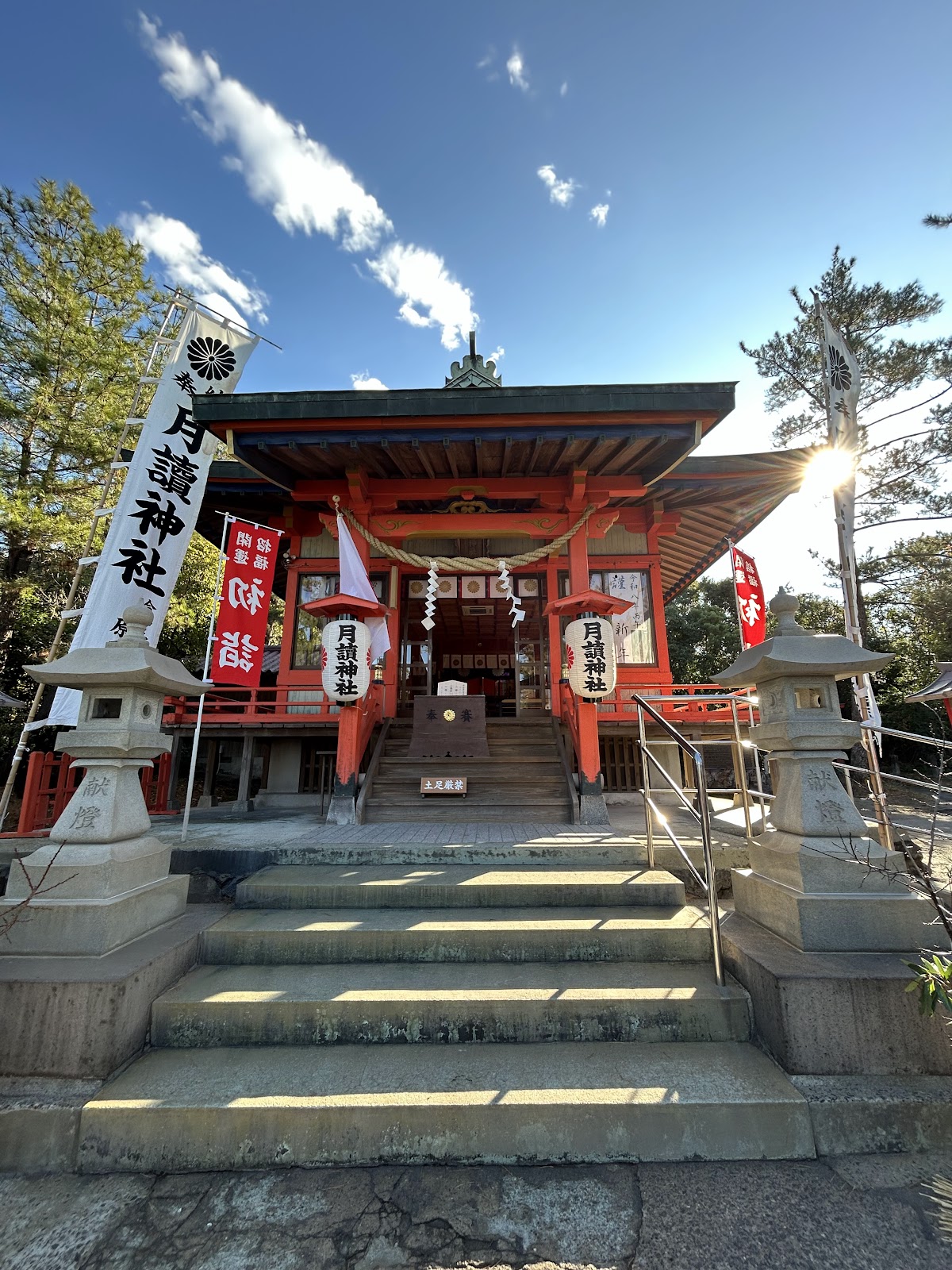
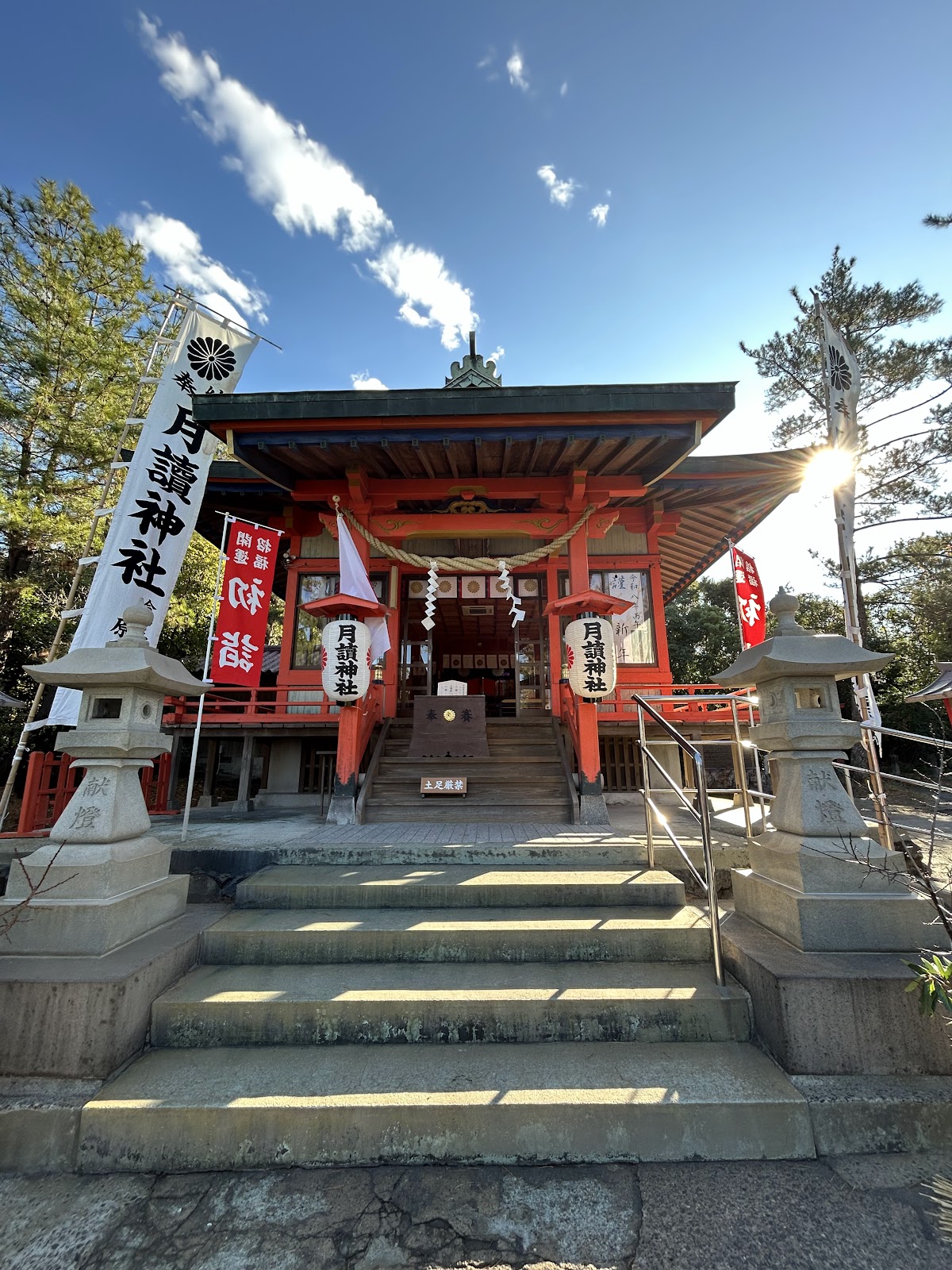
The shrine building of Tsukuyomi Shrine was constructed after its relocation in 1940, and stands in a quiet environment surrounded by nature. The grounds are enveloped in Sakurajima’s volcanic ash soil and lush greenery, creating a sacred atmosphere befitting a power spot.
The shrine building is a traditional wooden structure, exuding a sense of history that has overcome its past of being buried under lava. Visitors can find peace and tranquility in the peaceful surroundings.
Spectacular Views from the Observation Deck
One of the major attractions of Tsukuyomi Shrine is the small observation deck located at the top of a staircase next to the shrine grounds. From this observation deck, you can enjoy the following views:
- Majestic Sakurajima: A close-up view of the active volcano, Sakurajima.
- Kinko Bay (Kagoshima Bay): A beautiful ocean view.
- Kagoshima City: A view of the city on the opposite shore.
Although small, the observation deck is a popular photo spot for Sakurajima sightseeing, and it’s a place where you can experience the nature of Sakurajima in conjunction with visiting the shrine.
Unique Fortune Slips
Tsukuyomi Shrine is popular for its distinctive fortune slips, which are rarely seen at other shrines:
- Dove Fortune Slip: A fortune slip featuring a dove, a symbol of peace.
- Owl Fortune Slip: A fortune slip featuring an owl, a symbol of wisdom.
These fortune slips have a cute shape and are popular souvenirs, with many visitors taking them home as mementos of their visit.
Goshuin (Shrine Seal) Information
Goshuin are available at Tsukuyomi Shrine. The goshuin features the calligraphy of “Tsukuyomi Shrine” and the shrine’s seal, and is received by many visitors as proof of their visit.
Goshuin are available at the shrine office, and the offering fee is generally around 300 yen. However, they may not be available during shrine events or when the chief priest is absent, so it is recommended to check in advance if you definitely want to receive a goshuin.
Many visitors combine sightseeing around Sakurajima with collecting Goshuin (temple/shrine stamps), and a significant number also visit other shrines in Kagoshima City.
Attractiveness as a Power Spot
Why is Tsukuyomi Shrine a Power Spot?
There are several reasons why Tsukuyomi Shrine is attracting attention as a power spot:
- Over 1300 Years of History: A place where people have offered their prayers for a long time.
- Recovery from the Taisho Eruption: A strong life force that revived despite being buried in lava.
- Divine Virtue of Tsukuyomi-no-Mikoto: The mystical power of the moon god.
- Special Location on Sakurajima: The earth’s energy from an active volcano.
- Tranquility Surrounded by Nature: A healing space away from the hustle and bustle of the city.
Visitor Experiences
Many visitors to Tsukuyomi Shrine feel their hearts healed by the tranquility and sacred atmosphere of the shrine grounds. In particular, despite its location just across the sea by Sakurajima ferry, it is appreciated as a space where time flows quietly, distinct from the hustle and bustle of the city. The majestic view of Sakurajima from the observation deck, combined with the historical significance of the shrine buildings, provides visitors with a truly special experience.
Access and Basic Information
Address and Contact Information
- Address: 1722-8 Yokoyama-cho, Sakurajima, Kagoshima City, Kagoshima Prefecture 891-1419
- Phone: Inquiries to the Association of Shinto Shrines may be necessary.
Access from Sakurajima Port Ferry Terminal
The greatest advantage of Tsukuyomi Shrine is its excellent accessibility from Sakurajima Port:
- Board the Sakurajima Ferry from Kagoshima City (approximately 15 minutes)
- Arrive at Sakurajima Port Ferry Terminal
- Approximately 2 minutes on foot from the ferry terminal
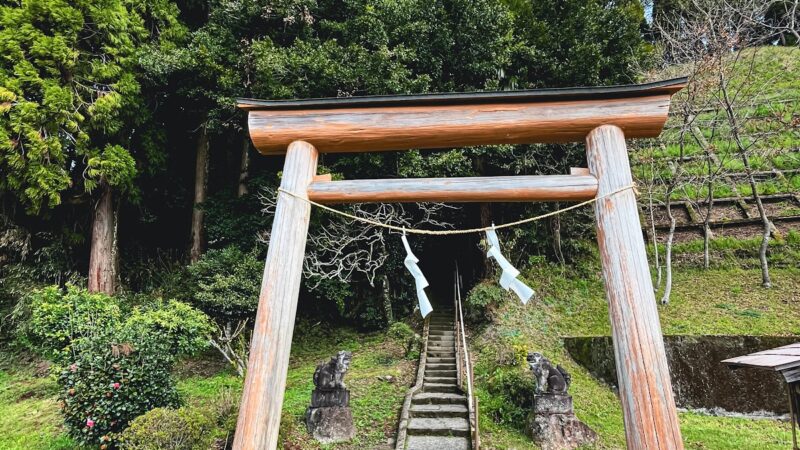
You can see the torii gate of Tsukuyomi Shrine immediately upon disembarking at Sakurajima Port, making it easy to find. The ferry operates 24 hours a day, with departures every 15 minutes during the day, making it extremely convenient.
Access by Car
There are parking lots around Sakurajima Port if you are visiting by car. However, the area around the ferry terminal can get crowded, so it is recommended to allow plenty of time for your visit.
Visiting Hours
Tsukuyomi Shrine is generally open for worship 24 hours a day, but the reception hours for the shrine office and the hours for receiving Goshuin (shrine stamps) are limited. Generally, it is from 9:00 AM to around 5:00 PM, but it is recommended to check before visiting.
Annual Festival
Tsukuyomi Shrine’s annual festival is held on October 30th. A special Shinto ritual is performed on this day, making it an important event where local people gather.
Nearby Tourist Attractions
When visiting Tsukuyomi Shrine, you can also enjoy sightseeing around Sakurajima:
Sakurajima Visitor Center
A facility where you can learn about Sakurajima’s nature, history, and volcanic activity. It is within walking distance of Tsukuyomi Shrine.
Sakurajima Lava Nagisa Park
A park with a footbath approximately 100 meters long. Relax while enjoying the view of Kinko Bay.
Yunohira Observatory
An observatory located on the slopes of Sakurajima, this is the highest point accessible to the public. Enjoy spectacular views of Kagoshima city and Kinko Bay.
Arimura Lava Observatory
An observatory where you can see the Taisho lava field up close. Experience the traces of Sakurajima’s volcanic activity.
Manners and Points for Visiting the Shrine
Basic Worship Etiquette
- Bow before passing through the torii gate
- Purify your hands and mouth at the water basin
- Walk along the path, avoiding the center
- Bow twice, clap twice, and bow once in front of the main hall
- Bow once again at the torii gate on your way out
Precautions for Photography
Photography is generally permitted on the shrine grounds, but remember that it is a sacred place and be considerate of other visitors. Photography inside the shrine buildings may be prohibited.
Regarding Attire
While casual attire is acceptable for visiting, it is advisable to avoid overly revealing or flashy clothing. Comfortable walking shoes are recommended if you plan to climb to the observation deck.
The Relationship Between Sakurajima and Tsukuyomi Shrine
The Origin of Sakurajima’s Name and Konohanasakuya-hime
Konohanasakuya-hime, enshrined at Tsukuyomi Shrine, is considered the origin of the name “Sakura” (cherry blossom) in Sakurajima. One theory suggests that the area came to be called “Sakurajima” because of a legend that the beautiful princess bloomed like a cherry blossom.
A Belief in Coexistence with Volcanoes
Sakurajima continues to be an active volcano, and its residents constantly coexist with it. Tsukuyomi Shrine, despite being buried under lava during the Taisho eruption, was rebuilt and continues to function as a spiritual center for the people of Sakurajima.
This history symbolizes the Japanese spirit of overcoming natural disasters and the role that shrines have played as the center of local communities.
The Significance of Visiting Tsukuyomi Shrine
Tsukuyomi Shrine is not merely a tourist spot; it is a historic shrine that has been the object of worship for the people of Sakurajima for over 1300 years. Its history of recovery from the great disaster of the Taisho eruption symbolizes the power to overcome difficulties.
Despite its convenient location just a two-minute walk from Sakurajima Port, the shrine grounds possess a quiet and sacred atmosphere, making it an ideal place to escape the hustle and bustle of modern life and find peace of mind. From the views from the observation deck, to the unique fortune-telling slips, and the worship of Tsukuyomi-no-Mikoto and other deities, each visitor will have a special experience.
When you visit Kagoshima, be sure to take the Sakurajima Ferry to Tsukuyomi Shrine and experience the sacred space woven from 1300 years of history and the nature of Sakurajima.
Summary
Tsukuyomi Shrine (Kagoshima City, Kagoshima Prefecture) is a historic shrine founded during the Wado era and has the following characteristics:
- The largest shrine on Sakurajima with a history of over 1300 years
- Rebuilt in 1940 despite being buried in lava during the Taisho eruption
- Dedicated to Tsukuyomi-no-Mikoto as the main deity, and also enshrines six other deities including Konohanasakuya-hime
- Conveniently located just a 2-minute walk from Sakurajima Port
- Enjoy spectacular views from the observation deck
- Unique offerings such as pigeon fortune slips and owl fortune slips
- Popular as a power spot
When visiting Sakurajima, be sure to stop by Tsukuyomi Shrine and experience this special space where history and nature harmonize.