Ichinomiya Shrine (Korimoto, Kagoshima City) Complete Guide | History, Goshuin (Shrine Seal), and Access Information for Kagoshima City’s Oldest Shrine
Ichinomiya Shrine, located in Korimoto 2-chome, Kagoshima City, is said to be the oldest shrine in Kagoshima City, founded during the reign of Emperor Tenji. As the foremost of the three major shrines of Kagoshima, it is beloved by the local community and maintains a tranquil atmosphere despite its urban location. This guide provides a detailed explanation of its history, goshuin (shrine seal), and highlights within the shrine grounds.
Overview and Basic Information of Ichinomiya Shrine
Ichinomiya Shrine is located in a residential area of Korimoto, Kagoshima City. In the modern shrine ranking system, it was classified as a village shrine. Currently, it is known as the foremost of the three major shrines of Kagoshima and is revered as the local guardian deity.
Basic Information
Shrine Name: Ichinomiya Shrine
Address: 4-27, Korimoto 2-chome, Kagoshima City, Kagoshima Prefecture
Phone Number: 099-254-1935
Former Shrine Rank: Village Shrine
Other Names: Miyoshi Shrine (former name), Ichijo-no-miya (around the Genroku era), Korimoto Shrine (Meiji era)
Parking: Free parking available (2 locations)
Deities Enshrined
Ichinomiya Shrine enshrines three deities.
- Ōhirume-muchi-no-mikoto: The supreme deity identified with Amaterasu-Ōmikami
- Sarutahiko-no-mikoto: The god of opening paths
- Emperor Tenji: The 38th Emperor
Ōhirume-muchi-no-mikoto is another name for Amaterasu-Ōmikami and is the supreme deity in Japanese mythology, a god who personifies the sun. Sarutahiko-no-mikoto is known as the god of guidance, and Emperor Tenji is worshipped as a historically important emperor who carried out the Taika Reforms.
History and Origin of Ichinomiya Shrine
Founding during the Reign of Emperor Tenji
The founding of Ichinomiya Shrine dates back to the late 7th century, during the reign of the 38th Emperor Tenji. Emperor Tenji reigned from 626 to 672 and is a historically important figure who carried out the Taika Reforms (645). According to shrine tradition, the Ichinomiya Shrine was founded when Princess Ichinomiya, the first princess of Emperor Tenji, invited a divided spirit from Hirakiki Shrine (located in present-day Kaimon 10-chome, Ibusuki City), the Ichinomiya (first-ranked shrine) of Satsuma Province, and initially enshrined it near Namidabashi Bridge (near present-day Minami-Korimoto-cho, Kagoshima City).
This founding legend makes Ichinomiya Shrine the oldest shrine in Kagoshima City. The legend of Emperor Tenji’s princess traveling all the way to Satsuma to establish the shrine is an interesting historical fact that suggests the relationship between the central government and southern Kyushu at the time.
Relocation from Namidabashi Bridge to Current Location
Initially, Ichinomiya Shrine was located near Namidabashi Bridge, but it was later relocated to its current location in Korimoto 2-chome. This site near Namidabashi Bridge still remains as an outlying precinct of Ichinomiya Shrine, preserving its historical value as the site of its founding. While there are no clear records regarding the timing or reasons for the relocation, it is believed that the move was made in response to regional development or natural disasters such as floods. ### Edo Period Records and the Kōrimoto Shrine
The “Sangoku Meishō Zue” (Illustrated Guide to Famous Places in the Three Provinces), a geographical record compiled by the Shimazu clan during the Edo period, contains the entry: “In the eighth year of Kenkyū (1197), in the June Satsuma Province land register, the Kōrimoto Shrine was given seven chō and five tan, within Kagoshima County.” This Kōrimoto Shrine is believed to be the present-day Ichinomiya Shrine, indicating that it already existed as a shrine with considerable land holdings in the early Kamakura period.
During the Genroku era (1688-1704), it was called “Ichijō-miya,” and in the Meiji era, it was also called “Kōrimoto Shrine,” after the town name. These name changes reflect its deep connection to the region and long history.
As the Foremost of the Three Kagoshima Shrines
Ichinomiya Shrine is considered the foremost of the three Kagoshima shrines. The Kagoshima Three Shrines refer to Ichinomiya Shrine, Hachiman Shrine, and Suwa Shrine, a group of shrines that have been particularly important in the Kagoshima region. Ichinomiya Shrine, positioned as the foremost of these three, has played a vital role as the center of local faith.
Highlights and Facilities within the Shrine Grounds
Approach and Torii Gate
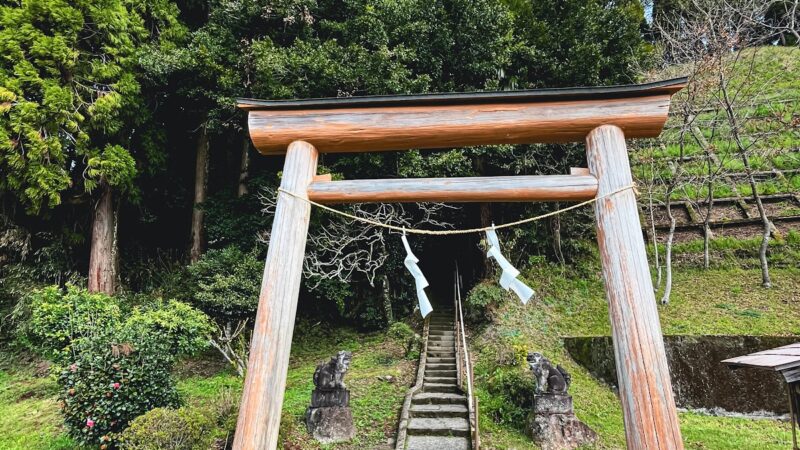
At the entrance to Ichinomiya Shrine stands an old torii gate that evokes a sense of history. Despite being located in a residential area, passing through the torii gate envelops you in a tranquil atmosphere, as if entering a different world. Climbing the stone steps of the approach leads to the shrine grounds, where a peaceful space unfolds, unlike what you might expect from a shrine in an urban area.
The Sacred Grove of Ancient Camphor Trees
The most distinctive feature of Ichinomiya Shrine is the forest of ancient camphor trees surrounding the grounds. Despite being located in an urban area, the shrine grounds are surrounded by ancient camphor trees, forming a magnificent sacred grove. These camphor trees not only tell the story of the shrine’s long history but also possess environmental value as a precious green space in an urban area.
The abundant greenery and quiet, tranquil atmosphere provide peace of mind to visitors. Especially in summer, the shade of the trees is cool, making it a healing spot that allows you to forget the hustle and bustle of the city.
Shrine and Worship Hall
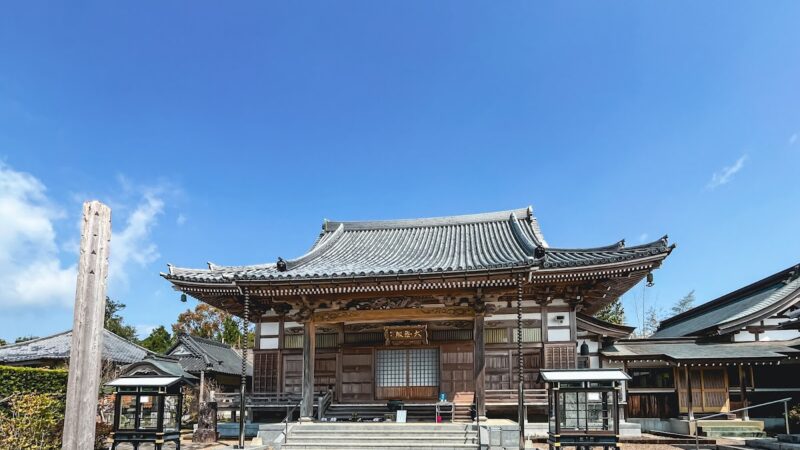
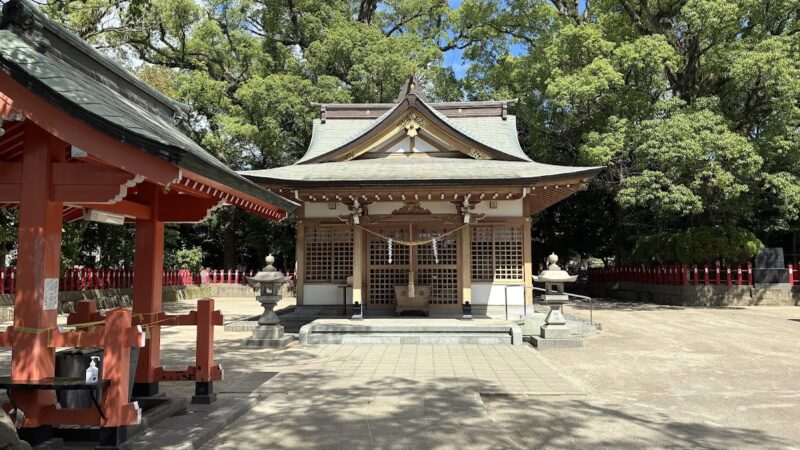
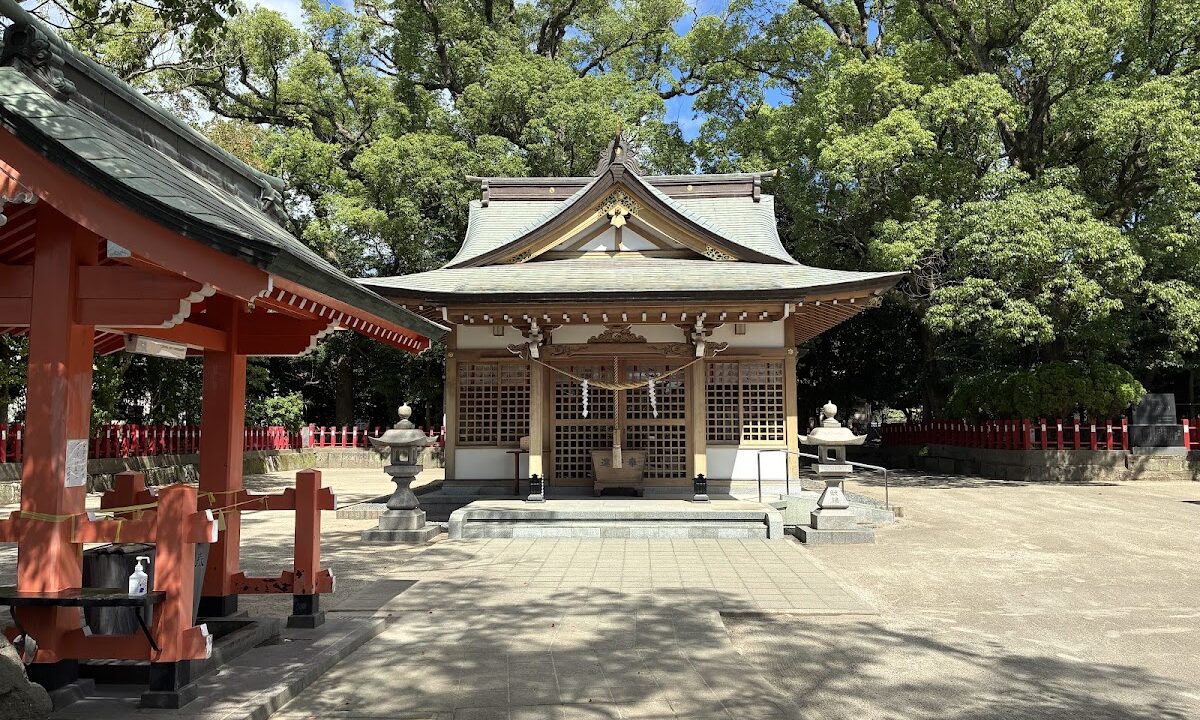
At the top of the stone steps sits the shrine. While not large in scale, the neatly maintained shrine conveys a sense of being carefully preserved by the faith of the local people. In the worship hall, you can pay your respects to the enshrined deities, including Amaterasu Omikami, and many visitors come daily.
Subsidiary Shrines and Stone Monuments
Besides the main shrine, several subsidiary shrines and stone monuments are scattered throughout the grounds, each with its own history and significance. Visiting these facilities allows you to feel the layered history of faith at Ichinomiya Shrine.
Goshuin (Shrine Seals) and Gifts
About Goshuin
At Ichinomiya Shrine, you can receive a Goshuin (shrine seal). Receiving a Goshuin serves as proof of your visit, creating a tangible record of your connection with the shrine. Goshuin are available at the shrine office and are carefully written.
The Goshuin will bear the name of “Ichinomiya Shrine,” the date of your visit, and the shrine’s seal. Bringing your Goshuincho (seal book) will allow you to record the Goshuin of Kagoshima City’s oldest shrine.
Gifts
Ichinomiya Shrine also offers gifts such as amulets and ema (votive tablets). There are amulets for various wishes, including traffic safety, family safety, and academic success, which can be received as a memento of your visit or to pray for the fulfillment of your wishes.
Access and Parking Information
Access by Public Transportation
By Tram
The shrine is approximately a 5-minute walk from the Kagoshima City Tram “Korimoto” stop. The Korimoto tram stop is served by the City Tram Line 2 (Taniyama Line) and is approximately 15 minutes from Kagoshima-Chuo Station. Walking west from the tram stop towards the residential area, you will see the torii gate of Ichinomiya Shrine.
By Bus
The Korimoto bus stop, served by Kagoshima City Bus and Nangoku Kotsu Bus, is within walking distance. Multiple bus lines pass through, making it easily accessible from various parts of the city.
Access by Car and Parking
Access by Car
The shrine is approximately 10 minutes by car from Kagoshima-Chuo Station and approximately 40 minutes from Kagoshima Airport. It is easily accessible from National Route 225 and Prefectural Route 20.
Parking
Ichinomiya Shrine has two free parking lots. Despite being a shrine in the city center, parking spaces for visitors are provided, making it convenient for those arriving by car. However, parking is limited, so it may be full during peak seasons such as New Year’s Day.
Surrounding Facilities
Ichinomiya Shrine is adjacent to Kagoshima City Nakagori Elementary School, and the surrounding area is a quiet residential neighborhood. Kagoshima University’s Korimoto Campus is also nearby, making it a familiar shrine visited regularly by students and local residents.
Annual Events and Festivals
Ichinomiya Shrine holds various festivals and events throughout the year. As the local guardian shrine, it also plays a role in strengthening community bonds through seasonal festivals.
Main Annual Events
New Year’s Day Visit
Many worshippers visit the shrine for New Year’s Day. As the oldest shrine in Kagoshima City, it is bustling with people praying for happiness and safety in the new year.
Annual Grand Festival
The annual grand festival features a portable shrine procession and dedication ceremonies, making it a community-wide celebration. It’s an important event that deepens community bonds while preserving tradition.
Shichi-Go-San (7-5-3 Festival)
In autumn, families can be seen visiting for Shichi-Go-San. This important ceremony expresses gratitude to the gods for the children’s growth and prays for their continued healthy development.
Cultural Value and Regional Role of Ichinomiya Shrine
Value as the Oldest Shrine in Kagoshima City
Ichinomiya Shrine is the oldest shrine in Kagoshima City, said to have been founded during the reign of Emperor Tenji. With a history of over 1300 years, this shrine is indispensable to understanding Kagoshima’s history and holds significant value as a regional cultural heritage.
Its history of attracting worshippers across ancient, medieval, early modern, and modern times is a testament to Kagoshima’s regional history itself. As a historically significant shrine with records preserved in ancient documents such as the “Illustrated Guide to Famous Places in the Three Provinces,” it is a valuable resource for historical research.
Value as a Green Space in an Urban Area
Despite its location in an urban area, the large camphor tree grove surrounding the shrine grounds provides a valuable green space within the city. It is important from an environmental conservation perspective and also functions as a habitat for wild birds and insects. In the midst of increasing urbanization, such a lush green space serves as a spiritual haven for local residents.
As a Center of the Local Community
Ichinomiya Shrine is not merely a religious facility; it also plays a central role in the local community. Through festivals and annual events, local residents gather, creating a place for intergenerational exchange. Especially because it is adjacent to Nakagori Elementary School, it is a familiar presence for children and functions as an educational place to learn about local history and culture.
Manners and Points for Visiting the Shrine
Basic Etiquette for Visiting the Shrine
When visiting Ichinomiya Shrine, please observe the following basic etiquette.
- Bow before passing through the torii gate: As a sign of respect before entering the sacred area, bow before the torii gate.
- Walk along the edge of the path: The center of the path is considered the path of the gods, so it is proper etiquette to walk along the edge.
- Purify yourself at the water basin: If there is a water basin, purify your hands and mouth before praying.
- Two bows, two claps, one bow: In front of the main hall, bow deeply twice, clap your hands twice, and finally bow deeply once.
Consideration for maintaining a quiet environment
Ichinomiya Shrine is located in a residential area, and the grounds maintain a tranquil atmosphere. Please avoid loud conversations and noise, and be considerate of other worshippers and nearby residents. When taking photographs, please be careful not to disturb other worshippers.
Recommended Visiting Times
Ichinomiya Shrine is open for worship at any time during the day, but the quiet hours of early morning offer a particularly refreshing atmosphere. The morning, when the trees are lush and green, and the evening, when the soft light shines through, are also recommended. For those who want to avoid crowds and worship at their own pace, weekday mornings are ideal.
Nearby Tourist Attractions
When visiting Ichinomiya Shrine, why not extend your trip to some of the nearby tourist attractions?
Kagoshima University Korimoto Campus
Kagoshima University’s Korimoto Campus, within walking distance, is a large comprehensive university with extensive grounds. The campus is full of greenery, making it a pleasant place for a stroll.
Kagoshima City Museum of Art & Kagoshima Prefectural Historical Materials Center Reimeikan
These cultural facilities, located a few tram stops away, offer opportunities to learn about Kagoshima’s history and art. They are well worth visiting to gain a deeper understanding of Ichinomiya Shrine’s historical background.
Kotsuki Riverbank
The banks of the Kotsuki River, which flows through Kagoshima City, are perfect for a stroll. A promenade is maintained along the river, allowing visitors to enjoy the changing seasons.
Summary: The Charm of Ichinomiya Shrine
Located in Korimoto, Kagoshima City, Ichinomiya Shrine boasts a history of over 1300 years, making it the oldest shrine in Kagoshima City, said to have been founded during the reign of Emperor Tenji. As the foremost of the three major shrines of Kagoshima, it attracts the faith of the local community and enshrines Ohirume-no-Mikoto (Amaterasu-Omikami), Sarutahiko-no-Mikoto, and Emperor Tenji as its principal deities.
Despite being located in the city center, the surrounding camphor tree grove creates a tranquil space that allows visitors to forget the hustle and bustle of the city, providing peace of mind to worshippers. Free parking is available, and its convenient location, just a 5-minute walk from the Korimoto tram stop, is another attractive feature.
You can also receive a Goshuin (shrine stamp), making it a must-visit spot for history buffs and those who enjoy visiting shrines and temples when visiting Kagoshima. Why not experience the passage of time at Ichinomiya Shrine, which preserves the history and culture of the region?