Eboshidake Shrine (Kagoshima Prefecture) Complete Guide | History, Deities, Hiking Access, and Benefits Explained in Detail
Located on the summit of Mount Eboshidake, overlooking Kinko Bay in southern Kagoshima City, Eboshidake Shrine is a historic shrine affectionately known locally as “Otake-sama (Takesaa).” With deep ties to the Shimazu family and flourishing as a sacred site for Shugendo (mountain asceticism), this shrine has two faces: the main shrine at the summit and a branch shrine at the foot of the mountain. This article thoroughly explains everything visitors want to know about Eboshidake Shrine, from its history and enshrined deities to hiking routes and benefits.
Basic Information about Eboshidake Shrine
Location and Access Overview
Main Shrine (Summit)
- Address: 4960 Hirakawa-cho, Kagoshima City, Kagoshima Prefecture 891-0133
- Elevation: 564m (Eboshidake Summit)
- Phone Number: 099-261-2105
Branch Shrine (Foot of the Mountain)
- Address: Hirakawa-cho, Kagoshima City, Kagoshima Prefecture (near Hirakawa Minami Intersection on National Route 226)
- Nearest Station: Approximately 6 minutes on foot (approx. 465m) from Hirakawa Station on the JR Ibusuki-Makurazaki Line
Deities and Divine Status
Eboshidake Shrine enshrines two powerful deities.
Takehayasusano-no-Mikoto
- A heroic deity in Japanese mythology
- God of protection against misfortune, disaster, and plague
- A god of martial prowess known for slaying Yamata no Orochi
Ame-no-Tachikarao-no-Mikoto
- God of strength who opened the rock cave in the Amano-Iwato myth
- God of good fortune, success in competitions, and overcoming difficulties
- Guardian deity of sports and competitions
The combination of these two deities is believed to bring powerful blessings, such as warding off misfortune and powerfully forging a path forward.
Shrine Rank and Common Name
- Former Shrine Rank: Village Shrine
- Common Name: Takesaa
- Annual Festival Day: Middle day of the spring and autumn equinoxes
- Affiliation: Kagoshima Prefectural Shrine Association
Locally, it is affectionately called “Takesaa” and has long been a center of local faith.
History and Origins of Eboshidake Shrine
Deep Connections with the Shimazu Family
An essential part of understanding the history of Eboshidake Shrine is its connection to the Shimazu family, the lords of the Satsuma Domain.
Founding Legend from the Tenbun Era (1532-1555)
During the Tenbun era, in the reign of Lord Shimazu Takahisa, he showed deep faith in Eboshidake Okami when setting out to battle to pray for peace and pacification throughout the country. It is also said that Takahisa’s father, Lord Nisshin (Shimazu Tadayoshi), was a devout believer and dedicated a wooden statue as the principal image.
The Shimazu family unified Satsuma Province and was a prestigious family that dominated Kyushu as a Sengoku daimyo. The fact that the Shimazu family chose Eboshidake Shrine as a place to pray for victory in battle and national peace speaks volumes about the shrine’s spiritual power.
History as a Sacred Site of Shugendo
Relocation in 1557
It is believed that in 1557, the Shugendo practitioner Nagano Musashibo invited the deity from the Mihoko Cedar to Fukiharu-mine (present-day summit of Eboshidake Mountain), located in the direction of the rat and ox, and enshrined the deity there. At this time, a relocation to a more stable location was ordered to prevent damage from wind and rain.
From Shugendo to Shinto Shrine
During the anti-Buddhist movement in the early Meiji period, Shugendo was abolished. Eboshidake, which had flourished as a sacred site of Shugendo, a syncretic religion combining mountain worship and Buddhism, came to be known as “Eboshidake Shrine” during this period and restarted as a Shinto shrine.
This historical transformation represents a major turning point in the history of Japanese religion, and Eboshidake Shrine, while retaining traces of Shugendo, continues to protect the local faith as a Shinto shrine.
The Origin of the Branch Shrine Along the National Highway
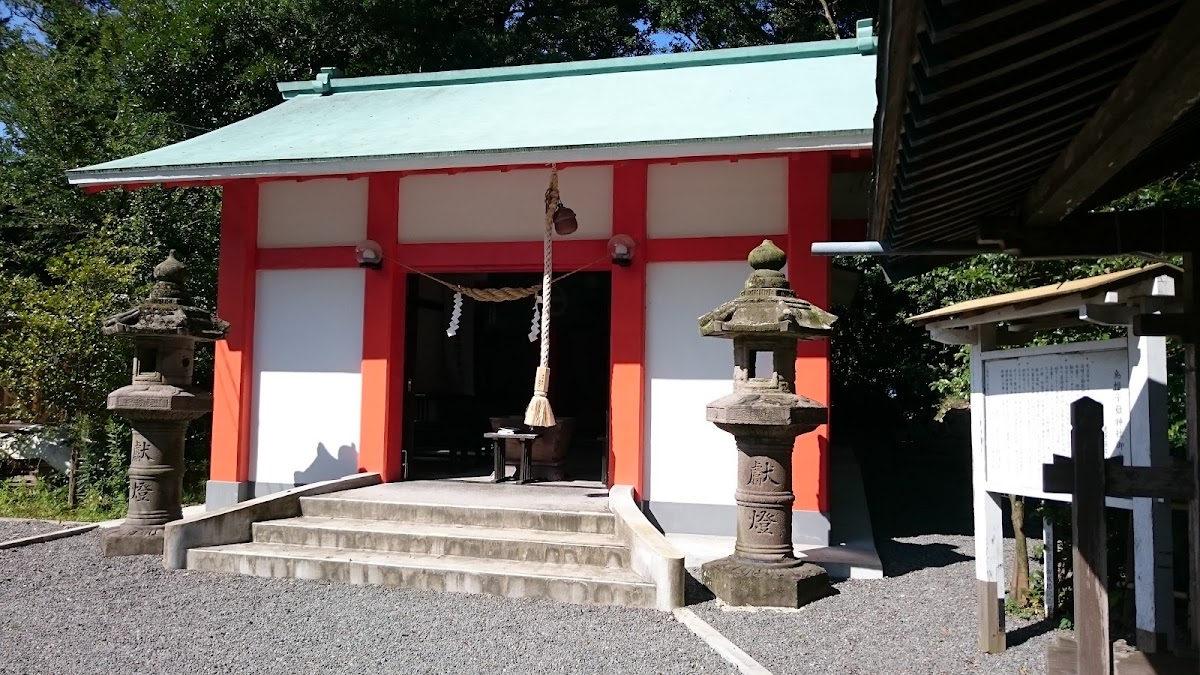
A branch shrine was established at the foot of the mountain for worshippers who found it difficult to visit the main shrine at the summit. This branch shrine, known as Hirakawa Tsunozaki Daimyojin, located along National Highway 226, is a familiar place of daily worship for local residents.
The relationship between the main shrine and the branch shrine is similar to the relationship between the “inner shrine” and the “village shrine” in mountain worship; the main shrine at the summit is the source of spiritual power, while the branch shrine at the foot of the mountain serves as a place of daily prayer.
Hiking Routes and Worship Methods for Mount Eboshi
To visit the main shrine of Eboshidake Shrine, you need to hike Mount Eboshi (elevation 564m). There are several routes, which can be chosen according to your physical strength and purpose.
Hiking Route from Hirakawa Station (Eboshidake Nature Trail)
Most Popular Pilgrimage Route
- Starting Point: JR Ibusuki-Makurazaki Line Hirakawa Station
- Time Required: Approximately 1 hour 30 minutes to 2 hours one way
- Difficulty Level: Intermediate (Suitable for experienced hikers)
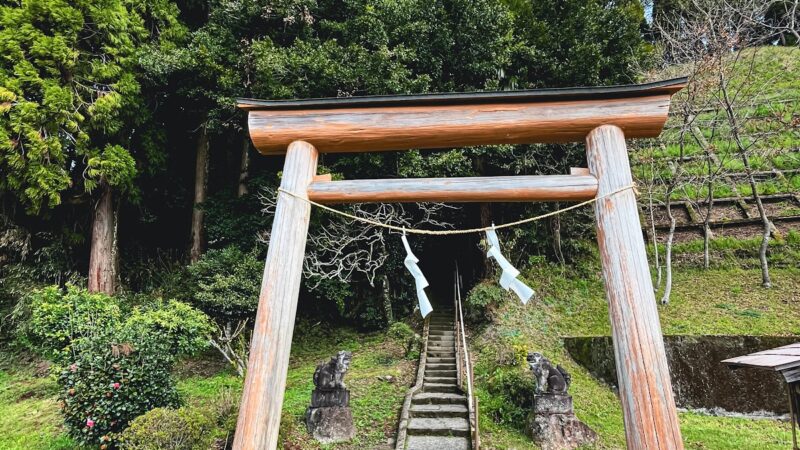
- Features: A traditional pilgrimage route passing through three torii gates
Highlights of the Route
- First Torii Gate: Near the trailhead, this is where you enter the sacred area
- Second Torii Gate: Midway up the mountain, where you can see endemic plants such as *Satsumainamori*
- Third Torii Gate: Just before the summit, a habitat for *Ginryosou* (Ghost Mushroom)
- Summit Worship Hall: Eboshidake Shrine Main Hall
This route is maintained as the “Hirakawa Eboshidake Nature Trail,” allowing you to enjoy nature observation while visiting the shrine. Especially from spring to early summer, you can see the lovely flowers of *Satsuma-inamori* and the mystical appearance of *Ginryosou*.
Access from Ibusuki Skyline
Convenient Route for Car Users
- Starting Point: Trailhead along the Ibusuki Skyline
- Time Required: Approximately 30 minutes to 1 hour one way
- Difficulty Level: Beginner to Intermediate
- Features: Reaching the summit in a relatively short time
Using the Ibusuki Skyline allows you to start your climb from a high altitude, making it suitable for visitors with time and physical limitations. However, since access is by car, those using public transportation will need to choose the Hirakawa Station route.
Precautions for Hiking
Equipment and Preparation
- Hiking boots or trekking shoes are essential.
- Bring plenty of drinking water (no water source at the summit).
- Carry rain gear and warm clothing.
- Take insect repellent in summer.
Safety Precautions
- Avoid hiking alone; hike in groups.
- Cancel hiking in bad weather.
- Plan your time to descend before sunset.
- Check cell phone signal strength beforehand.
Environmental Preservation
- Always take your trash with you.
- Collecting plants is strictly prohibited.
- Stay on the hiking trail.
View from the Summit
While a magnificent view of Kinko Bay was once available from the summit, the view is now limited due to tree growth. However, depending on the season and weather, you can still catch glimpses of Sakurajima and Kinko Bay through the trees. Rather than the view, the true charm of this shrine lies in enjoying the sacred atmosphere and tranquility of the summit.
Benefits and Faith of Eboshidake Shrine
Main Benefits
Based on the divine attributes of the enshrined deities, the following benefits are believed to be offered:
Divine Virtues of Takehaya Susanoo-no-Mikoto
- Protection from misfortune and disaster
- Extermination of disease and healing from illness
- Family safety
- Matchmaking and marital harmony
- Protection of agriculture and fishing
Divine Virtues of Ame-no-Tajikarao-no-Mikoto
- Good fortune and prosperity
- Success in competitions and prayers for victory
- Overcoming difficulties and opening new paths
- Improvement in sports
- Safety in physically demanding work
Prayer for victory in battle and lasting military fortune
Due to the history of the Shimazu family’s faith in the shrine for peace and pacification of the country, it is considered particularly efficacious for prayers for victory in battle and for guaranteed success. In modern times, many worshippers visit the shrine to pray for success in important life events such as passing entrance exams, job interviews, and sports competitions.
Aspects of Mountain Worship
Eboshidake Shrine, with its history as a sacred site for Shugendo (Japanese mountain asceticism), also possesses elements of mountain worship, where the mountain itself is considered the deity. The act of climbing to the summit is itself a form of spiritual practice, and the underlying belief is that worshippers purify their minds and bodies through the climb, drawing closer to the gods.
Annual Festivals and Events
Spring and Autumn Equinox Festivals
Eboshidake Shrine’s annual festivals are held on the middle day of the spring and autumn equinoxes.
Spring Festival (Spring Equinox)
- Date: Around March 20th
- Characteristics: Season of fresh greenery, ideal time for mountain climbing
Autumn Festival (Autumn Equinox)
- Date: Around September 23rd
- Characteristics: Beginning of autumn foliage, refreshing weather
The middle day of the equinox is the day when the sun rises directly in the east and sets directly in the west. In Buddhism, this is considered the day when this world and the other world are closest. The fact that Eboshidake Shrine, with its history of syncretism between Shinto and Buddhism, holds its annual festival on the middle day of the equinox (Higan) reflects this historical background.
Daily Visits
Even outside of the annual festival, visits are possible throughout the year. The following times are particularly suitable for visits:
- Spring (March-May): Observe plants such as *Satsuma-inamori* and *Ginryosou*
- Autumn (October-November): Enjoy the autumn foliage and refreshing weather
- Winter (December-February): Fewer visitors, allowing for a quiet visit
- Summer (June-September): Lush greenery, but be prepared for the heat and insects
Nearby Attractions and Tourist Information
Hirakawa Zoological Park
Hirakawa Town, where Eboshidake Shrine is located, is home to Hirakawa Zoological Park, one of Kyushu’s leading zoos. Visiting the zoo in conjunction with your shrine visit will make for a fulfilling day.
- Distance: Approximately 2km from the branch office
- Features: Many popular animals such as koalas and white tigers
Kinko Bay and Sakurajima
From the area around Mt. Eboshi, located in southern Kagoshima City, you can enjoy magnificent views of Kinko Bay and Sakurajima. Driving along the coastline after hiking is also recommended.
Ibusuki Onsenkyo
South of Mt. Eboshi lies Ibusuki Onsenkyo, one of Japan’s leading hot spring resorts. It’s perfect for relaxing your tired body after hiking.
- Distance: Approximately 30 minutes by car
- Features: Famous for its sand bath hot springs
Model Course for Visiting Eboshidake Shrine
Day Trip Hiking and Pilgrimage Course
Morning Start Plan
- 8:00 Meet at JR Hirakawa Station
- 8:15 Begin hiking (Eboshidake Nature Trail)
- 10:00 Arrive at the summit, visit Eboshidake Shrine main building
- 10:30 Rest and lunch at the summit
- 11:30 Begin descent
- 13:00 Arrive at Hirakawa Station
- 13:30 Visit branch shrine
- 14:00 Visit Hirakawa Zoological Park (optional)
Course Using a Car
Via Ibusuki Skyline
- 9:00 Arrive at Ibusuki Skyline trailhead
- 9:15 Begin hiking
- 10:00 Arrive at the summit, visit shrine
- 10:45 Descent begins
- 11:30 Arrive at trailhead
- 12:00 Visit branch shrine on National Route 226
- 12:30 Depart for Kagoshima City or Ibusuki
Visitor Voices and Reviews
Evaluation from Hiking Enthusiasts
Many activity logs from hikers who visited Eboshidake Shrine have been posted on hiking apps such as YAMAP. Many comments mention “the atmosphere of the shrine at the summit is wonderful” and “the hiking trail is well-maintained and easy to walk.”
Impressions from Shrine Visitors
Many comments praise the history and spiritual power of the shrine, such as “a sacred place worth climbing to the summit,” “you can feel the history associated with the Shimazu family,” and “you can feel the blessings even at the branch shrine.”
Perspective from Nature Observation
Many visitors come for nature observation purposes, as endemic species and rare plants such as *Satsumainamori* and *Ginryosou* can be seen. Comments include “a treasure trove of plants” and “you can enjoy nature in all four seasons.”
Guidelines for Visiting Eboshidake Shrine
Basic Etiquette for Visiting a Shrine
How to Pass Through the Torii Gate
- Bow once before the torii gate
- Walk along the sides of the path; the center is the path for the gods.
- Bow once at each of the three torii gates.
How to Perform the Purification Ritual (There may not be a purification fountain at the summit)
- Purify yourself at the branch shrine at the foot of the mountain beforehand.
- Prepare your mind and body before climbing.
Worship at the Main Hall
- Bow twice, clap twice, and bow once.
- Recite your address and name silently.
- Pray with gratitude.
Mindset as a Mountain Worship Site
Eboshidake Shrine is a sacred site of mountain worship. It is important to understand that the climb itself is a form of worship and spiritual practice.
- Gratitude and reverence for nature
- Entering the mountains with a humble heart
- Consideration for other climbers and worshippers
- Cooperation in environmental conservation
Cultural Properties and Treasures of Eboshidake Shrine
Wooden Statue Donated by the Shimazu Family
A wooden statue, said to have been donated by Lord Shimazu Nisshin, is preserved as the principal image of the shrine. While details of its preservation, after the anti-Buddhist movement of the Meiji era, are not publicly available, it is carefully protected as an important treasure of the shrine.
The Legend of the Three-Sparrow Cedar
There is a legend that before the enshrinement in the third year of Koji (1557), a deity was enshrined at a place called the Three-Sparrow Cedar. It is unknown where this Three-Sparrow Cedar was located or whether it still exists today, but it is passed down as an important legend indicating the origin of Eboshidake Shrine.
Relationship with Other Shrines in Kagoshima City
Differences from Terukuni Shrine
Terukuni Shrine is a representative shrine of Kagoshima City, but it differs in character from Eboshidake Shrine.
- Terukuni Shrine: A special government-sponsored shrine dedicated to Shimazu Nariakira, located in the city center.
- Eboshidake Shrine: A village shrine dedicated to Takehaya Susanoo-no-Mikoto, associated with mountain worship.
Comparison with Kirishima Shrine
Compared to Kirishima Shrine, another sacred site of mountain worship, Eboshidake Shrine is more rustic and retains a stronger atmosphere of Shugendo (mountain asceticism).
The Role of Eboshidake Shrine in Modern Times
Center of the Local Community
For the residents of Hirakawa Town, Eboshidake Shrine is the center of faith and a bond of community. Local people gather on the festival day, continuing to preserve tradition.
Promotion of Mountain Climbing Culture
Due to the recent mountain climbing boom, Eboshidake Shrine has also gained attention as a mountain climbing destination. Numerous activity logs are posted on mountain climbing apps such as YAMAP, and awareness is spreading among younger generations.
A Hub for Nature Conservation
The existence of the shrine is crucial for protecting the natural environment of Eboshidake. By being protected as a sacred area, valuable plants and ecosystems are maintained.
Detailed Access Information to Eboshidake Shrine
Using Public Transportation
Using JR
- Approximately 20 minutes from Kagoshima-Chuo Station on the JR Ibusuki-Makurazaki Line
- Get off at Hirakawa Station, then a 6-minute walk to the branch shrine
- To reach the main shrine, hike from Hirakawa Station (approximately 1 hour 30 minutes to 2 hours)
Using Local Buses
- Kagoshima City Buses and Iwasaki Bus Network operate towards Hirakawa
- Get off at the “Hirakawa Zoological Park” bus stop
Using a Car
From Kagoshima City Center
- Head south on National Route 226 for approximately 30 minutes
- Turn onto the side road at Hirakawa-Minami intersection to reach the branch shrine
Using Ibusuki Skyline
- Take the Ibusuki Skyline from Kagoshima IC
- Approximately 20 minutes to the trailhead
Parking Information
- Branch Shrine: Limited parking space available
- Ibusuki Skyline Trailhead: Parking available
- Hirakawa Station: Paid parking available
Summary: The Charm of Eboshidake Shrine
Eboshidake Shrine is a historical shrine associated with the Shimazu family, located on the summit of Mt. Eboshidake in Hirakawa-cho, Kagoshima City. It enshrines Takehaya Susanoo-no-Mikoto and Ame-no-Tajikarao-no-Mikoto, and is known for its blessings of protection against misfortune, good fortune, and victory.
It has a history of flourishing as a sacred site for Shugendo (mountain asceticism), and after the anti-Buddhist movement of the Meiji era, it has continued to attract local faith as a shrine to this day. It has two faces: the main shrine at the summit and a branch shrine at the foot of the mountain, allowing visitors to choose their method of worship according to their physical strength and purpose.
Visiting the shrine through mountain climbing is a valuable experience that purifies the mind and body and allows one to become one with nature. You can also enjoy nature observation, as you can see endemic plants such as Satsuma-inamori and Ginryosou. The annual festival is held on the middle day of the spring and autumn equinoxes, bringing together local people.
When you visit Kagoshima City, be sure to stop by Eboshidake Shrine and experience the sacred atmosphere of the Shimazu family’s history and mountain worship. Whether you worship from the mountaintop or at the branch shrine at the foot of the mountain, you will feel the divine blessings of Eboshidake Okami.