Complete Guide to Makizaki Hachimangu Shrine (Kumamoto Prefecture) | History, Benefits, Access, and Highlights Explained in Detail
Makizaki Hachimangu Shrine, located in Yamato-cho, Kamimashiki-gun, Kumamoto Prefecture, is a historic shrine that has been cherished by the local people for centuries. This article provides detailed information useful for those planning a visit, including the history of Makizaki Hachimangu Shrine, its enshrined deities, benefits, highlights within the grounds, annual events, and access methods.
What is Makizaki Hachimangu Shrine?
Makizaki Hachimangu Shrine is located in Yamato-cho, Kamimashiki-gun, Kumamoto Prefecture, and has a long history as a guardian deity of the region based on Hachiman faith. Yamato-cho is located in the central part of Kumamoto Prefecture, surrounded by the rich nature of the Kyushu Mountains. In this area, Makizaki Hachimangu Shrine has played an important role as the center of faith and a spiritual anchor for the local residents.
While there are many Hachiman shrines throughout Japan, each is deeply intertwined with the history and culture of its respective region. Makizaki Hachiman Shrine is no exception, having walked hand-in-hand with the history of Yamato Town.
History of Makizaki Hachiman Shrine
Origin of Founding
According to local traditions, Makizaki Hachiman Shrine has been worshipped as the guardian shrine of the Makizaki area since ancient times. Hachiman worship, with Emperor Ojin as its principal deity, spread throughout Japan as a god of war, agriculture, and national protection.
The Kamimashiki region, including Yamato Town, was a region through which important transportation routes passed from ancient to medieval times, and where life revolved around agriculture. It is believed that Makizaki Hachiman Shrine was founded as a place to pray for the safety of the region and a bountiful harvest within this context.
Historical Changes
During the medieval period, under the patronage of local samurai groups and feudal lords, it developed as a center of faith in the local community. From the Sengoku period to the Edo period, it is presumed that the shrine was maintained under the influence of the daimyo who ruled Higo Province.
Even with the separation of Shinto and Buddhism and the reform of the shrine system during the Meiji era, it survived as a local shrine and continues to attract the faith of local residents to this day. Even as times changed from Showa to Heisei and Reiwa, Makizaki Hachimangu Shrine has remained a central presence in the local community.
Deities and Benefits
Deities
The main deities enshrined at Makizaki Hachimangu Shrine are the following gods, central to Hachiman worship:
Honda-wake-no-mikoto
A deified version of Emperor Ojin, the 15th emperor, and the central figure of Hachiman. While possessing characteristics as a god of war, he is also worshipped as a god of national protection and industrial development.
Hime-no-Okami
One of the three Hachiman gods, she is often identified with the Munakata Three Goddesses or Tamayori-hime-no-mikoto.
Empress Jingu
She was the mother of Emperor Ojin and is known for the legend of the conquest of the Three Kingdoms of Korea. She is also worshipped as a goddess of safe childbirth and child-rearing.
Benefits
The benefits you can expect from visiting Makizaki Hachimangu Shrine are diverse.
Victory and Success
As a goddess of war, you can pray for success in all kinds of competitions, such as sports, exams, and business.
Family Safety and Protection from Evil
As a guardian deity of the region, you can pray for the safety of your family and protection from disaster.
Abundant Harvest and Business Prosperity
As a goddess of agriculture, you can pray for a bountiful harvest and the prosperity of your business.
Safe Childbirth and Child-Rearing
As Empress Jingu is enshrined here, many visitors come to pray for safe childbirth and the healthy growth of their children.
Highlights of the Shrine Grounds
Shrine Buildings
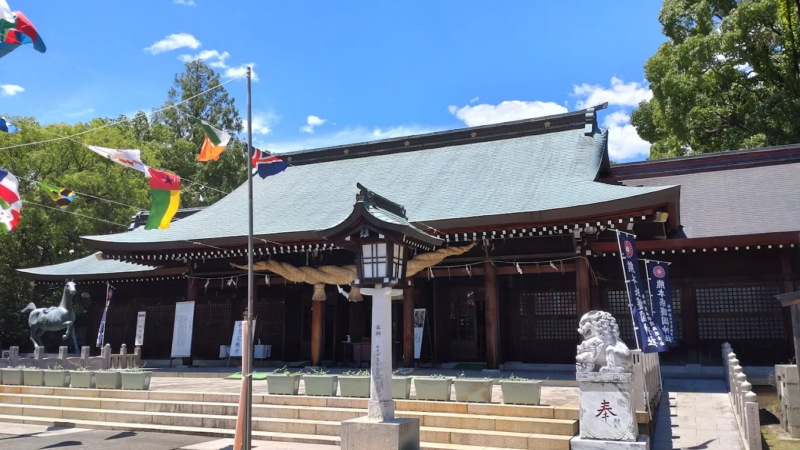
The shrine buildings of Makizaki Hachimangu Shrine retain the characteristics of traditional shrine architecture in the region. The main hall harmonizes with the natural environment of Yamato Town, quietly welcoming visitors. At the worship hall, you can express your daily gratitude and prayers to the gods.
Nature of the Shrine Grounds
The shrine is surrounded by abundant nature, allowing visitors to enjoy the scenery of each season. Spring brings fresh greenery, summer brings deep green, autumn brings vibrant foliage, and winter presents a serene snowscape, each season offering a different view.
The trees on the grounds have grown over many years, creating a sacred atmosphere befitting a divine place.
Stone Steps and Approach
The approach leading to the shrine buildings guides visitors away from the hustle and bustle of everyday life into a sacred space. Climbing the stone steps one step at a time allows you to compose your mind and prepare to face the gods.
Annual Events and Festivals
Makizaki Hachimangu Shrine holds various Shinto rituals and festivals throughout the year.
Annual Grand Festival
The annual grand festival, held every autumn, is the most important festival at Makizaki Hachimangu Shrine. Local residents participate in the procession of the portable shrine and various offerings. This festival strengthens community bonds and is an important opportunity to pass on traditional culture to the next generation.
New Year’s Visit
Many people from the community visit the shrine for the New Year’s visit. They pray for safety throughout the year, the health of their families, and the prosperity of their businesses, reporting the start of the new year to the gods.
Other Annual Events
Seasonal Shinto rituals such as the Spring Grand Festival, Summer Purification Ceremony, and Niiname-sai (harvest festival) are held. These events convey the traditional Japanese belief of giving thanks for nature’s blessings and cherishing the turning points of the seasons.
Manners and Etiquette for Visiting a Shrine
When visiting a shrine, it is important to observe basic manners and etiquette.
How to Pass Through the Torii Gate
The torii gate is the entrance to the sacred area. Before passing through the torii gate, bow once. Since the center of the path is considered the path of the gods, walk along the sides.
How to Wash Your Hands at the Water Basin
Purify yourself at the water basin. Take the ladle with your right hand and wash your left hand, then switch the ladle to your left hand and wash your right hand. Switch the ladle back to your right hand, receive water in your left hand, rinse your mouth, and finally hold the ladle upright to wash the handle.
Worship at the Main Hall
At the main hall, the basic procedure is “two bows, two claps, one bow.” Bow deeply twice, clap your hands twice, and then bow deeply one more time. Do not throw your offering; quietly place it in the offering box.
Access Information
Location
Makizaki Hachimangu Shrine is located in Yamato-cho, Kamimashiki-gun, Kumamoto Prefecture. For the exact address, we recommend checking with the Yamato-cho tourist information center or local information before your visit.
Access by Car
From Kumamoto City
It takes approximately 1 to 1.5 hours from central Kumamoto City via national highways. Access is also possible via National Route 445 from the Mifune or Matsubashi Interchanges on the Kyushu Expressway.
Parking
There is parking available for visitors around the shrine. During events such as the annual festival, congestion is expected, so we recommend visiting with ample time.
Access by Public Transportation
Yamato-cho can be accessed by bus from Kumamoto City. However, you may need to walk from the nearest bus stop to the shrine, so please check the timetable and route in advance.
Public transportation may be limited, so it is important to plan your trip including your return time.
Nearby Tourist Attractions
When visiting Makizaki Hachimangu Shrine, combining your visit with a tour of other tourist spots in Yamato Town will make your trip even more fulfilling.
Tsujun Bridge
Tsūjun Bridge, a representative tourist attraction of Yamato Town, is a stone arch aqueduct bridge built during the Edo period and designated as a National Important Cultural Property. The sight of water being released from the stone bridge, which is over 20 meters high, is breathtaking and is a valuable cultural heritage that speaks to the high level of Japanese civil engineering technology.
Soyō Gorge
Soyō Gorge, also known as the “Grand Canyon of Kyushu,” is a deep V-shaped gorge formed by the erosion of the Gokase River. The view from the observation deck is spectacular, and many tourists visit, especially during the autumn foliage season.
Nature and Culture of Yamato Town
Yamato Town is blessed with abundant nature, making it a great place to enjoy hiking and trekking. The local traditional culture and regional cuisine are also attractions. Enjoying dishes made with local ingredients and specialty products will allow you to experience the charm of Yamato Town more deeply.
History and Culture of Yamato Town
Formation of Yamato Town
Yamato Town was formed in 2005 through the merger of Yabe Town, Soyo Town, and Seiwa Village. Located in the central part of the Kyushu Mountains, it is characterized by its high altitude and cool climate. Forestry and agriculture have flourished since ancient times, and the cultivation of high-altitude vegetables is particularly well known.
Cultural Assets and Traditions
The stone bridges, including the Tsujun Bridge, are an important cultural heritage of Yamato Town. These stone bridges, constructed from the Edo period to the Meiji period, are the culmination of the wisdom and efforts of the engineers of the time, and some are still in use today.
Furthermore, Kagura (Shinto music and dance) and traditional performing arts have been passed down in the region, and various cultural events are held throughout the year.
Attire and Items to Bring When Visiting Shrines
Attire
There are no specific dress code rules for visiting shrines, but it is desirable to wear clean and modest clothing, showing respect for the sacred place. Avoid revealing or overly flashy clothing.
Yamato Town is at a high altitude, and temperatures can be low depending on the season. Especially in winter, take precautions against the cold. Even in summer, it can get chilly in the mornings and evenings, so bringing a jacket is recommended.
What to Bring
- Offering: It’s a good idea to bring coins considered lucky, such as 5-yen or 50-yen coins.
- Camera: To record the beautiful shrine grounds and surrounding nature. However, please refrain from taking photos in areas where photography is prohibited.
- Goshuincho (Stamp Book): Bring one if you collect Goshuin (shrine stamps). However, please check in advance regarding Goshuin services at Makizaki Hachimangu Shrine.
- Drinks: Staying hydrated is especially important in summer.
Connection to the Community
Makizaki Hachimangu Shrine is not merely a tourist spot, but a place of faith deeply rooted in the lives of local residents. Festivals and events are supported by the local community, providing a place for intergenerational exchange.
When visiting as a worshipper, it is important to show respect to the local people and maintain a quiet and polite demeanor. Respect the local culture and traditions, take your trash with you, and avoid making loud noises; observe basic manners.
Things to do after your visit
Local Cuisine
Yamato Town offers delicious cuisine using local ingredients. Vegetables grown in the high-altitude region are sweet, and you can enjoy dishes made with fresh ingredients. You can also savor regional cuisine unique to Kumamoto Prefecture.
Hot Springs
There are also hot spring facilities around Yamato Town. It’s a good idea to soothe your tired body in a hot spring after visiting the shrine and sightseeing. You can also enjoy interacting with local people at local hot spring facilities.
Souvenirs
We recommend buying Yamato Town’s local specialties as souvenirs. These include locally grown vegetables, processed goods, and traditional crafts. You can purchase fresh agricultural products and local specialties at roadside stations.
Makizaki Hachimangu Shrine Through the Seasons
Spring (March-May)
Spring at Makizaki Hachimangu Shrine is a beautiful season of fresh greenery. When the cherry blossoms bloom, the shrine grounds are adorned in a soft pink hue. The Spring Grand Festival is also held, celebrating the start of a new season. The temperature is mild, making it an ideal time to visit the shrine.
Summer (June-August)
Summer is a season enveloped in deep green, where you can feel the vitality of the trees. Because Yamato Town is at a high altitude, it remains relatively cool even in midsummer. During the Summer Purification Ceremony, the impurities of the past six months are cleansed, and prayers are offered for good health and protection from illness for the remaining half of the year.
Autumn (September-November)
Autumn is an important season when the Grand Festival is held. The autumn leaves are beautiful, and the shrine grounds and surrounding mountains are dyed in red and yellow. Befitting the harvest season, it is also a time to offer thanks for the harvest. The climate is stable, making it ideal for sightseeing.
Winter (December-February)
In winter, Makizaki Hachimangu Shrine is enveloped in silence. Snowfall is common, and the silvery-white landscape further enhances the sacredness of the shrine grounds. Many worshippers visit for Hatsumode (first shrine visit of the year) to offer prayers for the new year. Be sure to dress warmly when visiting.
Summary
Makizaki Hachimangu Shrine is a historic shrine located in Yamato-cho, Kumamoto Prefecture, and has long been revered by the local people. It offers blessings for victory, family safety, and abundant harvests based on Hachiman faith, and various events are held throughout the year.
The shrine grounds, surrounded by the rich nature of Yamato-cho, showcase the beauty of each season, offering healing and strength to visitors. Visiting it in conjunction with nearby tourist spots such as Tsujun Bridge and Soyo Gorge allows you to fully experience the charm of Yamato-cho.
When visiting a shrine, it is important to observe basic manners and etiquette, and to show respect for the local culture and traditions. Shrines are the heart of the local community, and we, as visitors, are expected to treat them with respect as part of that community.
Through a visit to Makizaki Hachimangu Shrine, you can experience traditional Japanese culture, find peace of mind, and enjoy the wonderful nature and culture of Yamato Town. It will surely be a special and memorable experience.