Complete Guide to Kumano Shrine (Kokubu, Nankoku City, Kochi Prefecture) | Detailed Explanation of History, Deities, Access, and Benefits
Kumano Shrine, located in Kokubu, Nankoku City, Kochi Prefecture, is a historic shrine that has been cherished by the local people for centuries. This article provides detailed information you should know before visiting, including the history of Kumano Shrine, its enshrined deities, benefits, highlights of the shrine grounds, and access methods.
Basic Information on Kumano Shrine (Kokubu, Nankoku City)
Kumano Shrine is located in Kokubu, Nankoku City, Kochi Prefecture, near Tosa Kokubunji Temple. Nankoku City is located in the central part of Kochi Prefecture and is known as a transportation hub with Kochi Ryoma Airport and Kochi University School of Medicine.
Location and Contact Information
- Location: Kokubu, Nankoku City, Kochi Prefecture
- Nearest Station: JR Dosan Line “Tosa Kokubunji Station”
- Parking: Available (details below)
The Kokubu area is a historical region that flourished as a temple town for Tosa Kokubunji Temple, which was built during the Nara period. Kumano Shrine is deeply intertwined with the history of this region.
History and Origins of Kumano Shrine
Kumano Faith and Tosa Province
The name Kumano Shrine originates from the enshrinement of deities from the Kumano Sanzan (Kumano Hongu Taisha, Kumano Hayatama Taisha, and Kumano Nachi Taisha) in Kii Province (present-day Wakayama Prefecture). Kumano faith spread throughout Japan from the Heian period to the Kamakura period, and many Kumano Shrines were founded in Tosa Province.
Connection to the Kokubu District
Kokubu in Nankoku City is the site of Tosa Kokubunji Temple, established in 741 AD by order of Emperor Shomu. Many shrines were built around Kokubunji temples to protect them and pray for the peace and security of the region, and Kumano Shrine is believed to have been founded under this background.
During the era of syncretism of Shinto and Buddhism, Kokubunji Temple and Kumano Shrine had a close relationship and functioned as the center of local faith. Even after the Meiji Restoration’s separation of Shinto and Buddhism, Kumano Shrine has continued to attract worshippers as the local tutelary deity.
A Faith Rooted in the Community
From the Edo period to the Showa era, Kumano Shrine was the tutelary deity of the Kokubu district, cherished by local residents as a place to pray for bountiful harvests, family safety, and protection from evil. Even today, it is carefully preserved by local residents, and various festivals are held throughout the year.
Deities and Blessings
Deities
The deities enshrined at Kumano Shrine are believed to be those invited from the Kumano Sanzan (Three Grand Shrines of Kumano). The following deities are generally enshrined at Kumano Shrines:
- Izanagi-no-Mikoto: The god of creation in Japanese mythology
- Izanami-no-Mikoto: The wife of Izanagi-no-Mikoto
- Ketsumiko-no-Kami: The local deity of Kumano
- Hayatama-no-O-no-Kami: The principal deity of Kumano Hayatama Taisha (Grand Shrine)
These deities possess divine attributes such as the source of life, matchmaking, purification, and regeneration.
Main Benefits
Kumano Shrine is believed to offer the following benefits:
- Family Safety and Harmony: Due to the divine status of Izanagi-no-Mikoto and Izanami-no-Mikoto as a married couple.
- Protection from Evil and Disaster: Protection through the powerful spiritual energy of the Kumano deities.
- Matchmaking and Successful Relationships: Prayers for success in love and good relationships, given the enshrinement of a married couple.
- Health and Longevity: Divine virtue as the god of life.
- Abundant Harvests and Business Prosperity: Role as the guardian deity of the region.
- Purification and Regeneration of Mind and Body: The power of “resurrection,” the core of Kumano faith.
Highlights of the Shrine Grounds
Main Hall and Worship Hall
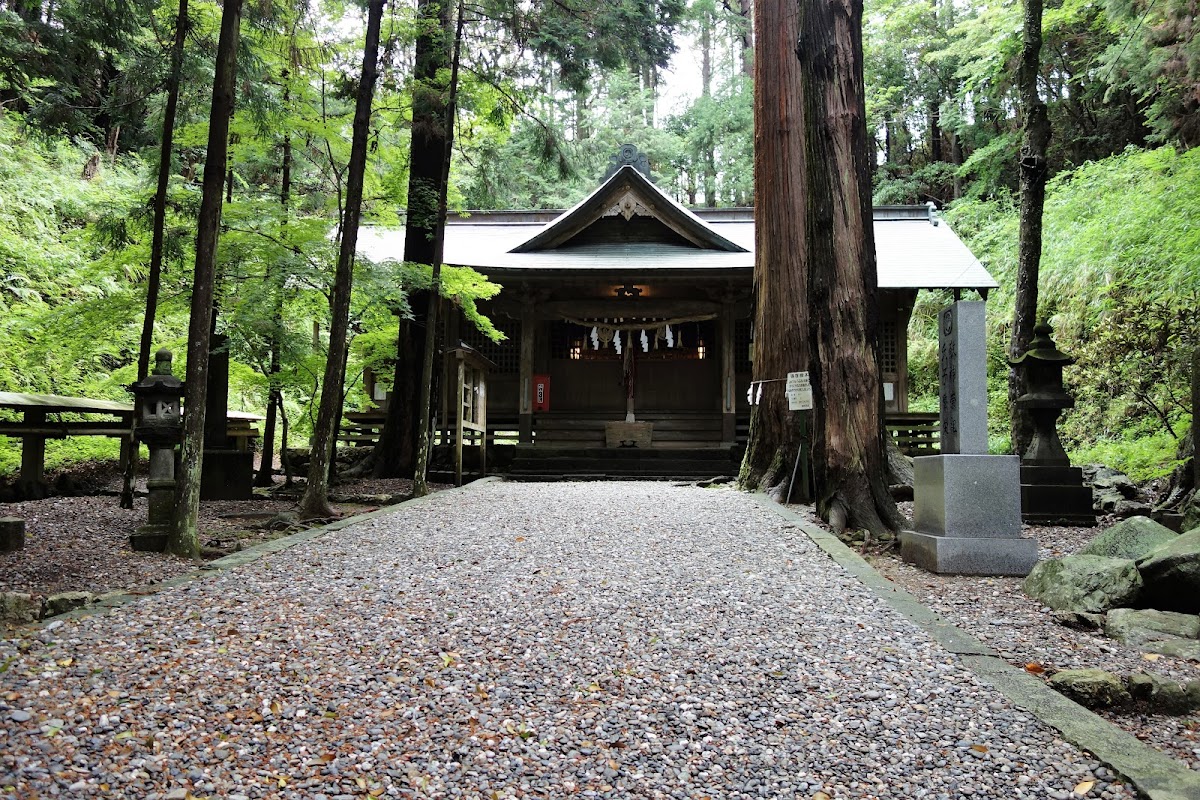
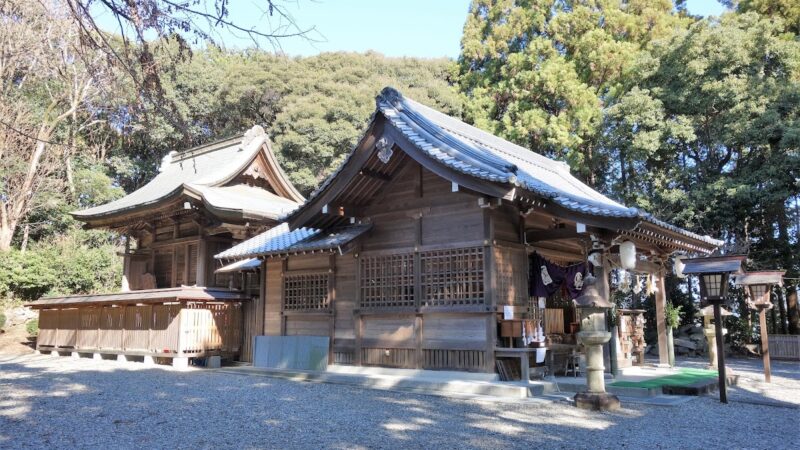
The main hall of Kumano Shrine is built in the traditional style of shrine architecture. In the worship hall, worshippers can offer prayers and find peace of mind in a tranquil atmosphere.
Sacred Trees and Natural Environment
The shrine grounds are home to many ancient trees, creating a sacred atmosphere. Large trees, in particular, are revered as sacred trees, making this a place where one can feel the power of nature.
Guardian Dogs and Stone Monuments
The shrine grounds are dotted with guardian dogs and stone monuments that evoke a sense of history, telling the story of the region’s history and deep faith. These cultural artifacts are valuable resources for understanding the history of the shrine.
Annual Events and Festivals
Annual Grand Festival
Kumano Shrine holds its annual grand festival every year. Local parishioners and worshippers gather, and there are sometimes processions of portable shrines and dedication ceremonies. The specific dates are determined by the shrine and local customs.
New Year’s Visit
At the start of the new year, many worshippers visit the shrine for their first visit of the year, praying for good health and safety for their families throughout the year. It is an important place for local residents to welcome the new year.
Other Annual Events
- Setsubun Festival: A ceremony to ward off evil and invite good fortune
- Summer Purification Ceremony: A Shinto ritual to cleanse away the impurities accumulated over the past six months
- Autumn Harvest Festival: A ceremony to express gratitude for a bountiful harvest
Access Information
Access by Train
Access from JR Dosan Line “Tosa Kokubunji Station”
- Get off at JR Dosan Line “Tosa Kokubunji Station”
- Approximately 10-15 minutes on foot from the station
- Head towards Kokubunji and follow the signs
Tosa Kokubunji Station is approximately 15 minutes from Kochi Station, making it easily accessible.
Access by Car
From Kochi City
- Proceed along National Route 32 towards Nankoku City.
- Follow the signs for the Kokubu area of Nankoku City.
- Travel time: Approximately 20-30 minutes from central Kochi City.
From Kochi Ryoma Airport
- Approximately 10-15 minutes by car from the airport.
- Use National Route 32 or a prefectural road.
Parking Information
The shrine has parking spaces for visitors. However, congestion is expected during major events such as the annual festival, so please consider using public transportation.
Nearby Tourist Attractions
Tosa Kokubunji Temple (No. 29 of the Shikoku 88 Temple Pilgrimage)
This is the 29th temple of the Shikoku 88 Temple Pilgrimage, located within walking distance of Kumano Shrine. It is a historical temple founded in 741 AD and designated as a national historic site. The temple grounds retain remnants of a Kokubunji-style temple layout, making it a must-see spot for history buffs.
Ki no Tsurayuki Residence Site
The site of the residence of Ki no Tsurayuki, a poet of the Heian period, when he served as governor of Tosa Province, is located in Nangoku City. It is a historically significant site as the setting for his famous novel, “Tosa Nikki” (The Tosa Diary).
Kochi Prefectural Museum of History and Folklore
This museum, located in Okutoyo-cho, Nangoku City, offers insights into the history and folk culture of Tosa Province. It is also adjacent to the ruins of Okutoyo Castle, the former residence of the Chosokabe clan.
Ryugado Cave
This limestone cave, designated a national natural monument and historical site, is approximately 30 minutes by car from Nangoku City. It is a scientifically valuable cave where artifacts from the Yayoi period have been discovered.
Manners and Etiquette for Visiting a Shrine
Basic Etiquette for Visiting a Shrine
- Bow at the Torii Gate: Bow before passing through the torii gate to signal your entry into the sacred area.
- Purification at the Water Basin: Purify your left hand, then your right hand, then your mouth.
- Walking the Path: Walk along the edge of the path, as the center is considered the path of the gods.
- Worship at the Main Hall: The basic procedure is two bows, two claps, and one bow.
- Bow deeply twice.
- Clap your hands twice.
- Recite your wish silently.
- Finally, bow deeply once.
Regarding Attire
There are no specific dress code requirements, but it is desirable to wear clothing that reflects the sacred nature of the place. If you are receiving a formal prayer, try to avoid overly casual attire.
Regarding Photography
Photography is generally permitted within the shrine grounds, but it may be restricted inside the main hall or in certain sacred areas. If unsure, please check with shrine staff. ## Amulets and Goshuin (Seal Stamps) Offered at Kumano Shrine
Amulets and Offerings
Kumano Shrine offers various amulets to fulfill the wishes of worshippers:
- Family Safety Amulet: For the safety and happiness of the family
- Exorcism Amulet: For those in their unlucky year or those seeking protection from misfortune
- Matchmaking Amulet: For those seeking a good match
- Health Amulet: For the health and longevity of the family
- Traffic Safety Amulet: For safe driving of cars and motorcycles
About Goshuin (Seal Stamps)
Some shrines offer Goshuin. When requesting a Goshuin, bring your Goshuincho (seal stamp book) and politely ask at the shrine office after your visit. A Goshuin is not merely a commemorative stamp, but a sacred token of your worship.
Fun Facts about Visiting Kumano Shrines
Characteristics of Kumano Faith
The most distinctive feature of Kumano faith is the belief in “resurrection.” Since ancient times, Kumano has been considered a gateway to the “Underworld” and has been revered as a sacred place of death and rebirth. There is a belief that by visiting the shrine, one can purify the mind and body and gain new vitality.
Connection with Crows
In Kumano faith, the three-legged crow, “Yatagarasu,” is considered a messenger of the gods. Yatagarasu is known from the myth of guiding Emperor Jimmu’s eastern expedition and is worshipped as a god of guidance and victory. Currently, it is also known as the symbol of the Japanese national soccer team.
Suitable Time for Visiting
While shrines are generally open for visits from sunrise to sunset, visiting in the refreshing early morning air is a particularly cleansing experience. The quiet grounds at dusk also have a unique charm.
History and Culture of Kokubu District, Nangoku City
As a Temple Town for Kokubunji Temple
The Kokubu district is a historic area dating back to the Nara period. Of the Kokubunji and Kokubun-niji temples established throughout Japan by order of Emperor Shomu, the Tosa Kokubunji Temple was located here, leading to its development as a political and cultural center.
Connection to the Tosa Diary
During the Heian period, Ki no Tsurayuki, serving as governor of Tosa Province, wrote the “Tosa Diary” upon his return to Kyoto. This work is an important piece in the history of Japanese literature. Nangoku City is dotted with places associated with Ki no Tsurayuki, preserving a historical atmosphere.
Modern Nangoku City
Present-day Nangoku City is home to Kochi Ryoma Airport, Kochi University School of Medicine, and Kochi University of Technology, and has developed as a gateway to Kochi Prefecture. It is a fascinating area where tradition and modernity harmonize.
Seasonal Highlights
Spring (March-May)
During cherry blossom season, you can enjoy flower viewing in the surrounding area. The lush greenery of the shrine grounds is refreshing and perfect for refreshing your mind and body.
Summer (June-August)
The verdant shrine grounds offer a cool respite from the heat. During the Summer Purification Ceremony, people pass through a ring of reeds to cleanse themselves of the impurities accumulated over the past six months.
Autumn (September-November)
During the autumn foliage season, the trees in the shrine grounds change color, creating a beautiful landscape. As it is the harvest season, prayers are offered in gratitude for a bountiful harvest.
Winter (December-February)
The shrine is bustling with many worshippers during the New Year’s visit period. The quiet winter grounds are a suitable season for making plans for the year ahead.
Connection with the Community
Role as a Local Deity
Kumano Shrine plays a central role in the local community as the local deity of the Kokubu district. Local festivals and events serve as a place to deepen the bonds between residents.
Preservation of Local Culture
Traditional events and festivals centered around the shrine are important opportunities to pass on local culture to the next generation. Children’s participation in festivals fosters a sense of attachment and pride in their hometown.
Precautions When Visiting the Shrine
Manners on the Shrine Grounds
- Maintain silence and be considerate of other visitors.
- Always take your trash with you.
- Refrain from bringing pets to the shrine, or follow the shrine’s rules.
- Refrain from eating and drinking outside of designated areas.
Weather Precautions
- Be careful as the ground can be slippery in rainy weather.
- Refrain from visiting during typhoons or heavy rain.
- Remember to stay hydrated during summer to prevent heatstroke.
Summary
Kumano Shrine, located in Kokubu, Nankoku City, Kochi Prefecture, is a historic shrine that has been cherished by the local people for centuries. This shrine enshrines deities invited from the Kumano Sanzan (Three Grand Shrines of Kumano) and is believed to offer various blessings, including family safety, protection from evil, and matchmaking.
Located in the historic Kokubu district, close to Tosa Kokubunji Temple, it is deeply intertwined with the region’s history dating back to the Nara period. The shrine grounds are enveloped in a tranquil atmosphere, making it an ideal place for purifying mind and body.
Easily accessible from Kochi Ryoma Airport and central Kochi City, it is surrounded by numerous historical sites, including Tosa Kokubunji Temple. When visiting Kochi Prefecture, be sure to visit Kumano Shrine and experience the history and culture of Tosa.
As a local guardian shrine and a vital part of the Kumano faith, Kumano Shrine continues to be a spiritual haven for many people today. Through worship, you can gain spiritual purification and renewed vitality.