Hoshi Shrine (Kochi Prefecture, Kochi City, Godaisan) Complete Guide | Differences, History, and Visiting Information
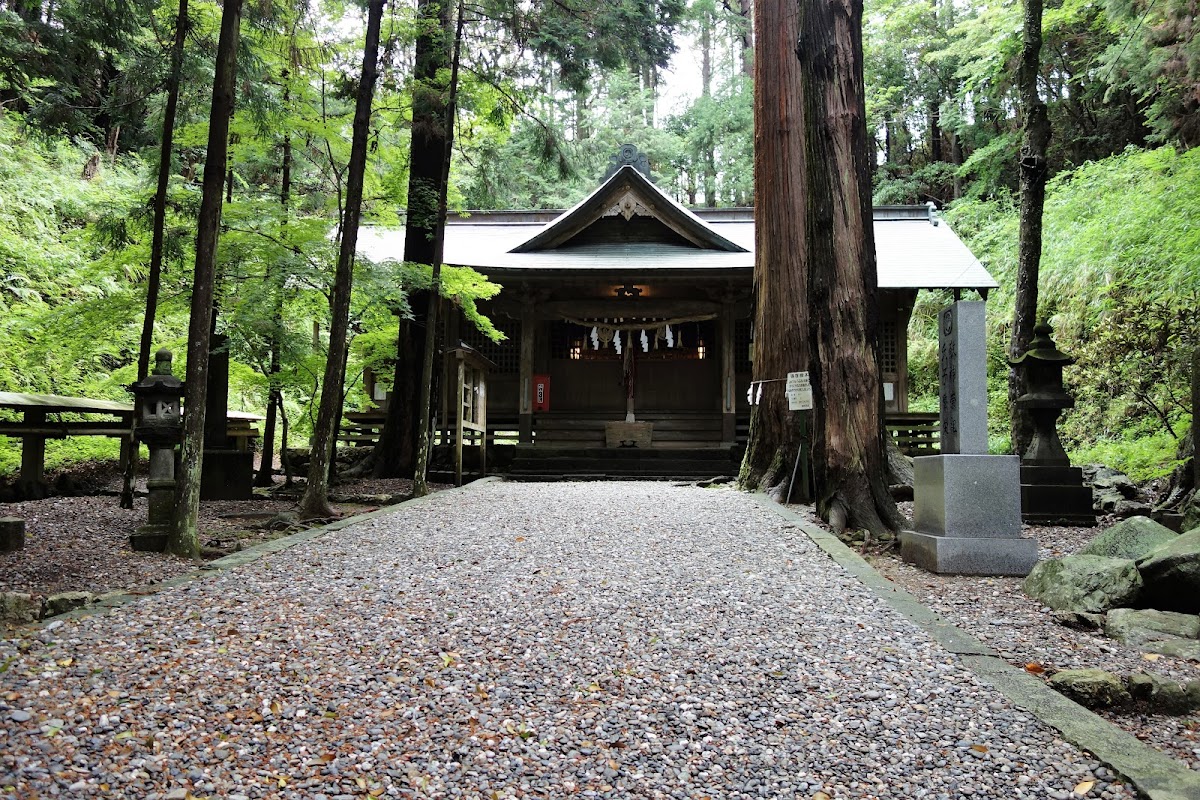
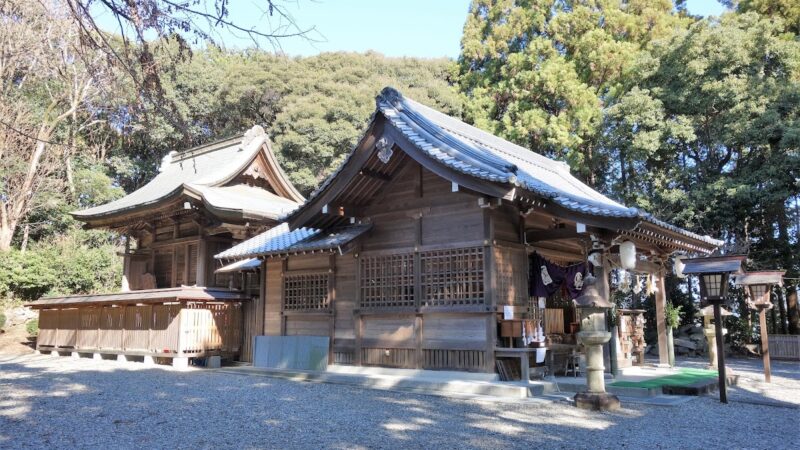
Godaisan, a scenic spot in Kochi City, is actually home to three Hoshi Shrines. These shrines, based on Myoken worship (revering the North Star and the Big Dipper), have long been revered as local guardian deities. This article provides a detailed explanation of the history, characteristics, visiting methods, and autumn festivals of the Hoshi Shrines on Godaisan.
What are the Three Hoshi Shrines on Godaisan?
On Godaisan in Kochi City, there are three Hoshi Shrines, each serving as a different local guardian deity. This unique arrangement is deeply connected to the history of the surrounding community.
Location and Overview of the Three Shrines
Godaisan is a mountain approximately 146 meters high located in the eastern part of Kochi City, with the three Hoshi Shrines situated around it.
Myoken-gu Hoshi Shrine in Narutani District (Southern Slope of Mt. Godai)
Located in the Narutani district on the southern slope of Mt. Godai, Hoshi Shrine is known for its particularly impressive long stone staircase among the three shrines. The shrine building is reached after a steep climb from the foot of the mountain, and the beauty of the approach captivates visitors. Its address is 3689 Yamanobe, Oshima, Godaisan, Kochi City, Kochi Prefecture, and it is also known as Myoken-gu Hoshi Shrine.
Hoshi Shrine in Nagae/Takasu Oshima District (Northeastern Side of Mt. Godai)
Located on the northern slope of Mt. Godai, at the border between the Nagae and Takasu Oshima districts, Hoshi Shrine is worshipped as the tutelary deity of both districts. Its address is near 2301 Godaisan, Kochi City, Kochi Prefecture, and a grand autumn festival is held annually on the third Sunday of October.
Hoshi Shrine in Takasu Otani District (Northwest Side of Godaisan Mountain)
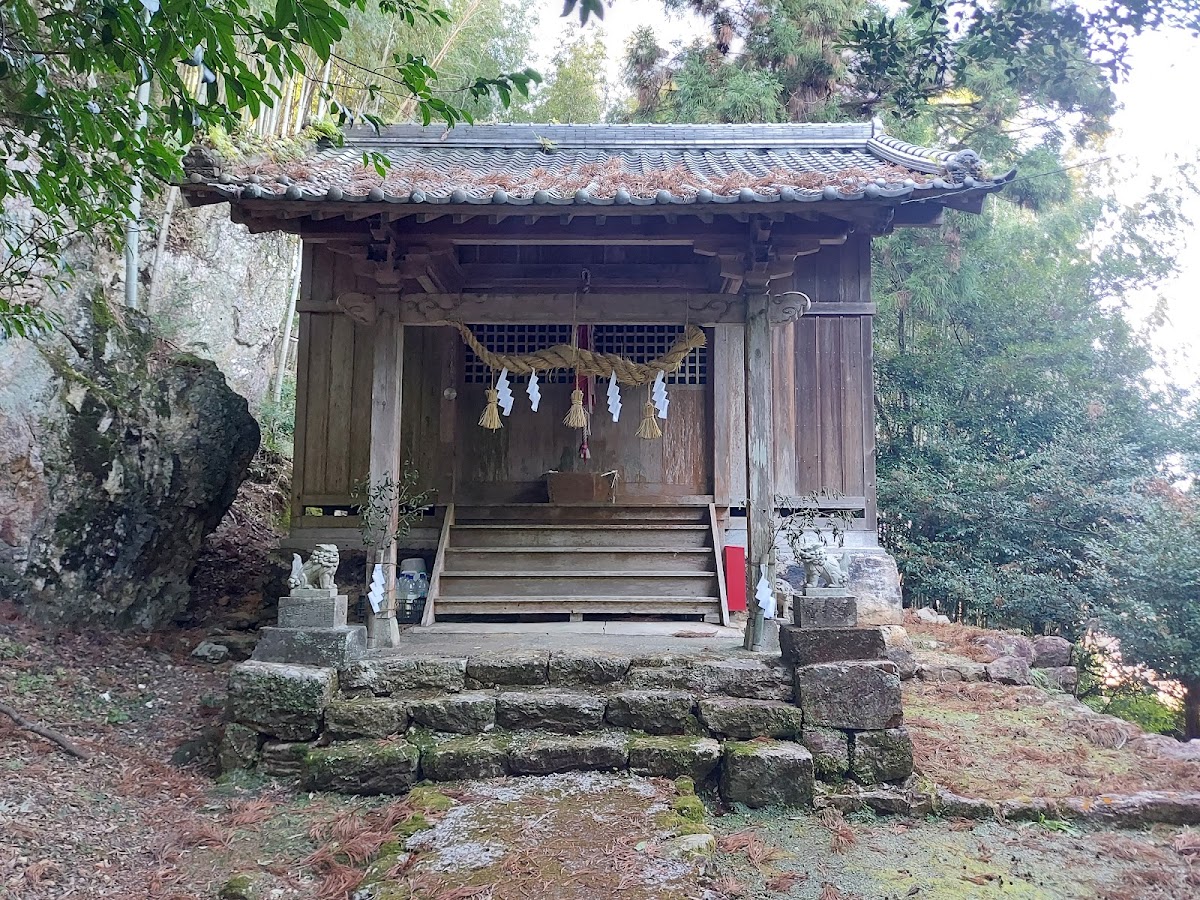
Located in the Takasu Otani district on the northwest side of Godaisan Mountain, Hoshi Shrine is reached by a relatively short flight of stone steps and also connects to the path leading to Chikurinji Temple. It stands quietly as a center of faith for the local residents.
History of Hoshi Shrine and Myoken Faith
At the heart of Hoshi Shrine’s faith lies the worship of the North Star and the Big Dipper, known as Myoken faith.
What is Myoken Faith?
Myoken faith is a syncretic form of Shintoism that worships Myoken Bodhisattva (Myoken Daibosatsu), the deification of the North Star. Because the North Star is the unmoving center of the heavens, it has been revered since ancient times as the guardian deity of direction and the guardian deity of navigation.
The deity enshrined at Hoshi Shrines is often identified as Amenominakanushi-no-kami, a Shinto interpretation of the North Star. Amenominakanushi-no-kami is considered the first god to appear in Japanese mythology and is positioned as a fundamental being of the universe.
The Spread of Myoken Worship in Tosa
The existence of multiple Hoshi Shrines within Kochi Prefecture indicates the widespread prevalence of Myoken worship. Especially in coastal areas with many people engaged in fishing and navigation, the belief in the North Star, the god of direction, was strong, and Hoshi Shrines were revered as guardian deities of the region.
The area around Mt. Godai has long developed as the eastern part of Kochi City, and has been inhabited by people engaged in fishing and agriculture. Each settlement worshipped its own Hoshi Shrine as its tutelary deity, praying for peace and abundance in the region.
Characteristics of Myoken-gu Hoshi Shrine (Narutani District)
Among the three Hoshi Shrines, Myoken-gu Hoshi Shrine in the Narutani district is particularly noteworthy for its magnificent stone staircase and mystical atmosphere.
The Impressive Long Stone Staircase
The most striking feature of Myoken-gu Hoshi Shrine is the long, steep stone staircase leading from the foot of the mountain to the shrine building. This staircase consists of hundreds of steps, requiring considerable physical strength and time to climb. While the steps are relatively well-maintained, the steep incline necessitates caution, especially on the descent, to avoid slipping.
Trees grow densely on both sides of the staircase, and the path, bathed in dappled sunlight, is enveloped in a mystical atmosphere. Many visitors come with the feeling of mountain climbing or hiking, and the sense of accomplishment upon reaching the top is exceptional.
Aspect as a Haunted Spot
Mt. Godai itself is known as a haunted spot, and the combination of Myoken-gu Hoshi Shrine’s long stone staircase and dense forest sometimes makes it the setting for scary stories. However, this doesn’t mean the shrine itself is an ominous place; rather, it’s the atmosphere created by its secluded and tranquil environment.
In reality, it’s cherished as a place of local worship, and regular cleaning and maintenance are carried out. However, visiting alone at night is not recommended for safety reasons.
Access and Visiting Precautions
The most common route to Myoken-gu Hoshi Shrine is to walk up the stone steps from the Narutani settlement on the south side of Mt. Godai. The nearest public transportation is the Tosa Electric Railway’s Prefectural Art Museum Station, but it’s quite a distance to walk from there. If accessing by car, you’ll need to find parking near the settlement at the foot of the mountain.
Points to Note When Visiting the Shrine:
- Appropriate Clothing and Shoes: The stone steps are steep and slippery in places, so athletic shoes or trekking shoes are recommended.
- Hydration: Especially in summer, you will sweat a lot when climbing the stone steps, so bring plenty of water.
- Time Allocation: Plan with ample time, assuming the round trip will take more than an hour.
- Caution Regarding Wild Animals: Wild animals inhabit the mountains, so taking precautions such as walking while making noise is effective.
Hoshi Shrine and Autumn Festival in the Nagae and Takasu Oshima Districts
Located on the border between the Nagae and Takasu Oshima districts on the northern slope of Mt. Godai, Hoshi Shrine is the guardian deity of both districts and enjoys deep-rooted community faith.
Role as a Guardian Deity
This Hoshi Shrine serves as a spiritual anchor for the two community areas of Nagae and Takasu Oshima. It has been a place of prayer for community safety, bountiful harvests, abundant fishing, and family safety, and faith has been passed down through generations.
Autumn Festival on the Third Sunday of October
At Hoshi Shrine in the Nagae-Takasu Oshima district, a grand autumn festival is held every year on the third Sunday of October. This autumn festival is a major event in the community, with many residents participating.
Main contents of the festival:
- Shinto rituals: Solemn Shinto rituals are performed by Shinto priests, praying for a bountiful harvest and peace in the community.
- Procession of the portable shrine: The portable shrine is carried through the community, with the deity visiting the areas where the parishioners live.
- Offering ceremonies: Various offering ceremonies are performed by local children and youth groups.
- Stalls and events: Stalls line the shrine grounds and surrounding areas, creating a lively festival atmosphere.
Evolution of the festival and the present day
While the form of the Hoshi Shrine Autumn Festival has changed with the times, its essential significance has been preserved. While it once had a strong significance in celebrating agricultural and fishing harvests, in modern times it also plays a role in confirming and strengthening the bonds of the local community.
Even amidst depopulation and an aging population, the efforts of local residents dedicated to preserving the festival ensure that the tradition is passed down to the next generation. In recent years, the number of participants from outside the region has increased, contributing to the revitalization of the area.
Hoshi Shrine in Takasu Otani District
Located on the northwest side of Mt. Godai, Hoshi Shrine in the Takasu Otani district is the most modest of the three shrines, but it is an indispensable place of worship for the community.
Connection to the Path to Chikurinji Temple
Hoshi Shrine in the Takasu Otani district is reached by climbing a relatively short flight of stone steps, from which a path leads towards Chikurinji Temple. Chikurinji Temple is an ancient temple known as the 31st temple of the Shikoku 88 Temple Pilgrimage and is a representative temple of Mt. Godai.
The route from Hoshi Shrine to Chikurinji Temple is a daily route used by locals, symbolizing the religious landscape of Mt. Godai where shrines and temples coexist.
A Quiet Place of Worship
Hoshi Shrine in the Takasu Otani district, while not hosting large-scale festivals, functions as a place of daily worship for local residents. People can be seen quietly visiting for New Year’s prayers, annual festivals, and personal prayers.
Geography and Historical Background of Mt. Godai
To understand Hoshi Shrine, it is important to know the geography and history of Mt. Godai itself.
Geographical Characteristics of Mt. Godai
Mt. Godai is located in the eastern part of Kochi City and is a scenic spot overlooking Urado Bay. Although it is a low mountain with an elevation of approximately 146 meters, its appearance, towering independently from the surrounding plains, is impressive. From near the summit, one can enjoy a panoramic view of Kochi city and the Pacific Ocean, and it has long been known as a scenic viewpoint.
The mountain’s name, “Godaisan,” is said to have been derived from Mount Wutai in China (a sacred site of Manjushri Bodhisattva). This name was chosen to reflect the high status of the Chikurinji Temple built on the mountain.
History of the Godaisan Area
The area around Godaisan has been inhabited since ancient times. Its location facing Urado Bay was suitable for fishing, and agriculture was also practiced on the mountain slopes. From the medieval period onward, the region developed under the rule of the Chosokabe clan, and in the early modern period, it came under the control of the Tosa Domain.
The existence of three Hoshi Shrines is due to the fact that each settlement formed its own community and needed to worship its own tutelary deity. The current three-shrine system is a result of the settlements, geographically separated by the mountain, continuing to preserve their respective beliefs.
Practical Aspects and Manners of Worship
This section introduces basic etiquette and manners for visiting Hoshi Shrines.
Basic Etiquette for Visiting a Shrine
- Bow before passing through the torii gate: As a sign of respect before entering the sacred area, bow before the torii gate.
- Avoid walking in the center of the path: The center of the path is considered the path of the gods, so walk along the side.
- Purify yourself at the water basin: If there is a water basin, purify your hands and mouth.
- Worship at the main hall: The basic etiquette is two bows, two claps, and one bow.
- Bow deeply twice.
- Clap your hands twice.
- Pray silently in your heart.
- Finally, bow deeply once.
Points to Note Specific to Hoshi Shrine
- Safety on the stone steps: Be especially careful when ascending and descending the long stone steps at Myoken-gu Hoshi Shrine. The grounds become especially slippery during and after rain.
- Photography: Photography is generally permitted on the temple grounds, but please be considerate of those performing religious ceremonies or other visitors.
- Take your trash home: Trash disposal is a particular issue at mountain shrines. Please be sure to take your trash with you.
- Avoid nighttime visits: For safety reasons and out of consideration for local residents, please refrain from visiting at night.
Tourist attractions around Mt. Godai
When visiting Hoshi Shrine, we recommend also visiting other tourist attractions around Mt. Godai.
Chikurinji Temple
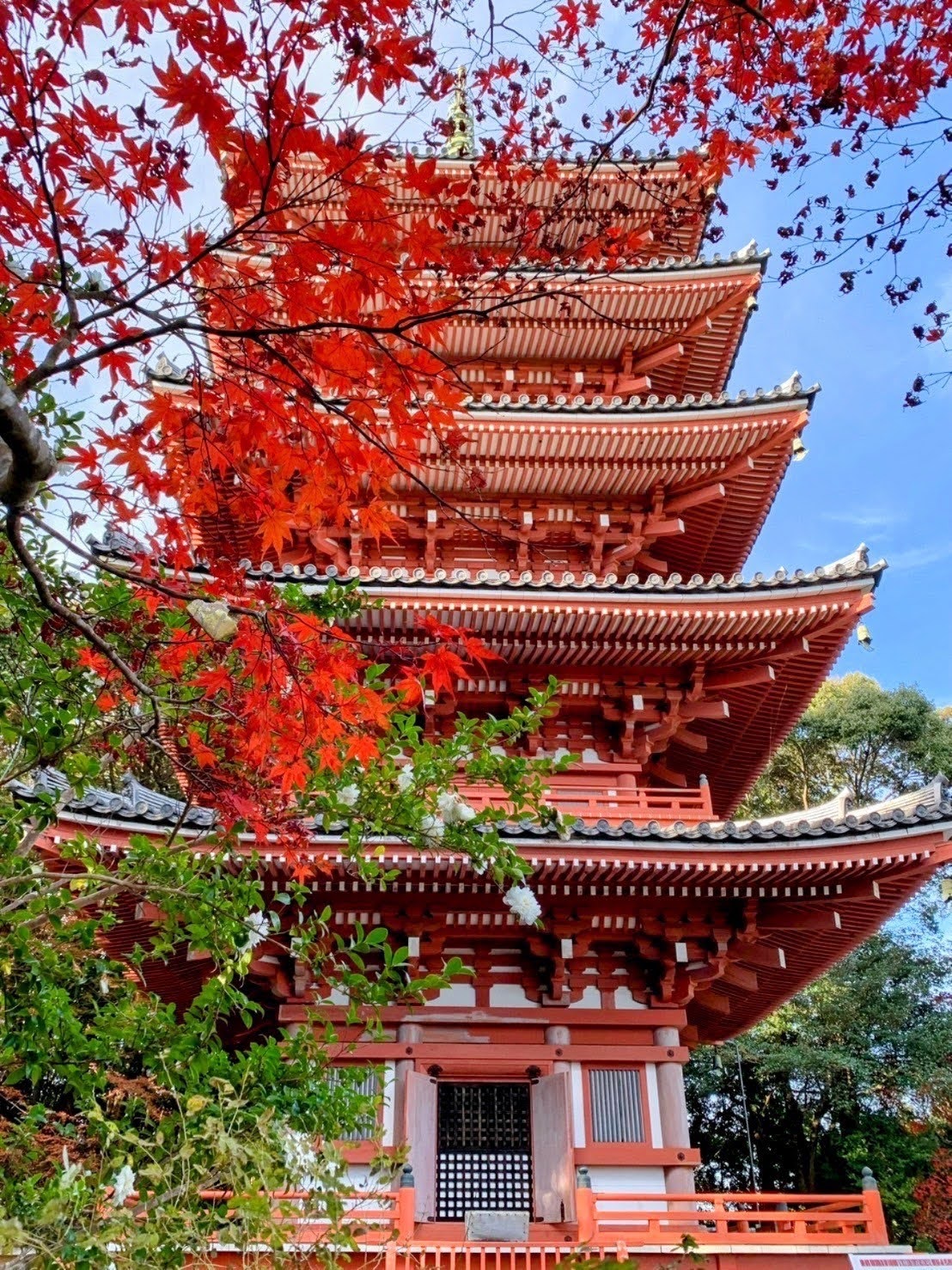
Chikurinji Temple, the 31st temple of the Shikoku 88 Temple Pilgrimage, is an ancient temple said to have been founded in 724 by Gyoki Bodhisattva. Its principal image is Manjushri Bodhisattva, worshipped as the Buddha of wisdom. The temple grounds include the main hall and Daishi Hall, both designated as important national cultural properties, and its magnificent garden is also a highlight.
Kochi Prefectural Makino Botanical Garden
Near the summit of Mt. Godaisan is the Makino Botanical Garden, dedicated to Dr. Tomitaro Makino, considered the father of Japanese botany. Approximately 3,000 species of plants are cultivated on about 8 hectares, allowing visitors to enjoy flowers throughout the seasons. The exhibition hall features extensive exhibits on Dr. Makino’s achievements and plants.
Mt. Godaisan Observatory
From the observatory near the summit, you can enjoy panoramic views of Kochi city, Urado Bay, and the Pacific Ocean. The view at sunset is particularly beautiful, attracting many tourists and locals alike.
Access Information
This summarizes how to access Hoshi Shrine.
Public Transportation
- Tosa Electric Railway: The nearest station is Kenritsu Bijutsukan-dori Station, but it’s quite a distance to each Hoshi Shrine from there on foot.
- Route Bus: The MY Yu Bus (sightseeing loop bus) passes through Chikurinji Temple and Makino Botanical Garden, but it doesn’t stop directly next to the Hoshi Shrines.
By Car
- From Kochi City Center: Approximately 15-20 minutes by car.
- From Kochi IC on the Kochi Expressway: Approximately 20 minutes.
- Parking: Many Hoshi Shrines do not have their own parking lots, so it’s practical to use the parking lots at Chikurinji Temple or Makino Botanical Garden and access them on foot.
Walking/Hiking
Godaisan Mountain, though a low mountain, offers enjoyable hiking courses. Starting from Chikurinji Temple and visiting each Hoshi Shrine, a fulfilling half-day hike is possible.
Summary
The three Hoshi Shrines on Godaisan Mountain in Kochi City have each been revered as local guardian deities for many years. The worship of the North Star based on Myoken faith, deep ties to the local community, and the rich natural environment of Mt. Godai give these shrines a unique charm.
In particular, the long and beautiful stone steps of Myoken-gu Hoshi Shrine in the Narutani district leave a deep impression on visitors. Also, the autumn festival held annually on the third Sunday of October at the Hoshi Shrine in the Nagae/Takasu Oshima district is a valuable opportunity to feel the traditions and bonds of the region.
When visiting Mt. Godai, be sure to visit these Hoshi Shrines in addition to Chikurinji Temple and Makino Botanical Garden. In the quiet forest, you will feel the breath of Tosa’s history and faith. By visiting these places of worship, which have been carefully preserved by the local people, with respect, you will gain a deeper travel experience.