Iyato Shrine (Wakayama Prefecture) Complete Guide | History, Deities, Giant Camphor Trees, and Highlights of the Shrine Grounds
Iyato Shrine is a historic shrine located in Musota, Wakayama City, Wakayama Prefecture. It has a legend that it is the place where Empress Jingu’s arrow landed, and has been revered as the local tutelary deity since ancient times. This article provides a detailed introduction to Iyato Shrine, including its history, deities, and highlights of the shrine grounds.
Basic Information about Iyatome Shrine
Location: 381 Rokujutani, Wakayama City, Wakayama Prefecture
Former Shrine Rank: Village Shrine
Main Deities: Hondawake-no-Mikoto, Okinagatarashihime-no-Mikoto, Amenokaguyama-no-Mikoto, Hitokotonushi-no-Mikoto, Uganomitama-no-Mikoto
Access: Approximately 4 minutes on foot from Rokujutani Station on the JR Kisei Main Line
Phone Number: 073-461-0706
Iyatome Shrine is deeply cherished by local residents as the tutelary shrine of the Rokujutani area and the Arimoto area (Aza Shinde, Aza Funasho) on the south bank of the Kinokawa River. A giant camphor tree stands behind the main hall within the shrine grounds, creating a mystical atmosphere for visitors.
Deities enshrined at Iyatome Shrine
Iyatome Shrine enshrines several deities.
Hondawake-no-Mikoto (Emperor Ojin)
This refers to Emperor Ojin, the 15th Emperor of Japan, widely worshipped as Hachiman-sama. He is revered as the god of military fortune and national protection.
Okinagatarashihime-no-Mikoto (Empress Jingu)
This is Empress Jingu, the mother of Emperor Ojin. Known as the legendary empress who conquered the Three Kingdoms of Korea, she is deeply involved in the founding legend of this shrine.
Amanokaguyama-no-Mikoto
According to the “Nanki Shrine Records,” this deity is said to have descended to Kii Province in ancient times along with Isotakeru-no-Mikoto. He is considered one of the main deities originally enshrined at “Inotome Shrine.”
Hitokotonushi-no-Mikoto
Known as the god who grants a single wish, Hitokotonushi-no-Mikoto is also said to have descended to Kii Province along with Amanokaguyama-no-Mikoto.
Uga-no-Mikoto
This deity is the god of grain and food, and is worshipped as the god who presides over abundant harvests.
The History and Origins of Iya-tome Shrine
Legend of its Founding
There is an interesting legend concerning the founding of Iya-tome Shrine related to Empress Jingu.
According to shrine tradition, in the age of the gods, Amenokaguyama-no-Mikoto and Hitokotonushi-no-Mikoto descended to Kii Province with Isotakeru-no-Mikoto and were worshipped as “Inotome Shrine” on Mount Nagusa. Later, when Empress Jingu returned victorious after the conquest of the Three Kingdoms of Korea, she stopped at O-no-Minato (present-day O-no-Minato area of Wakayama City). It is said that the sun god commanded Hitokotonushi-no-Mikoto to shoot an arrow, which landed in this place.
It is said that Empress Jingu picked up this arrow and founded “Iya-tome Hachimangu Shrine” as a god protecting the nation. This legend is the origin of the shrine’s name, and the unique name “Iyato” (射矢止) is based on this story.
Records in Literature
According to the *Kii Zoku Fudoki* (Continued Topographical Record of Kii Province), Iyato Shrine is identified with “Inotsuchi-no-kami” listed in the *Kii no Kuni Jinmeicho* (Register of Shrines in Kii Province). This is important evidence that a shrine existed in this area since ancient times.
The *Nanki Jinja Roku* (Record of Shrines in Nanki Province) states that “Iyato is a corruption of Iyahiko, and is the same deity as Iyahiko Shrine in Kanbara District, Echigo Province, also known as Ohiko-no-mikoto, or Iyahiko-Amakaguyama-no-mikoto,” and includes a discussion of the changes in the shrine’s name and the enshrined deity.
From the early modern period onward, Hachiman-no-kami was enshrined together with the shrine, and it came to be called Iyato Hachiman-gu. This change reflects the influence of syncretism of Shinto and Buddhism and the transformation of local beliefs.
Former Shrine Rank and Local Positioning
Under the shrine ranking system of the Meiji era, Iyato Shrine was ranked as a village shrine. Village shrines played an important role as the guardian deities of each village and functioned as the spiritual center of the local community.
Even today, they remain the tutelary shrines of the Rokujutani and Arimoto districts, playing a central role in local festivals and annual events.
Highlights of the Shrine Grounds
Main Hall and Shrine Buildings
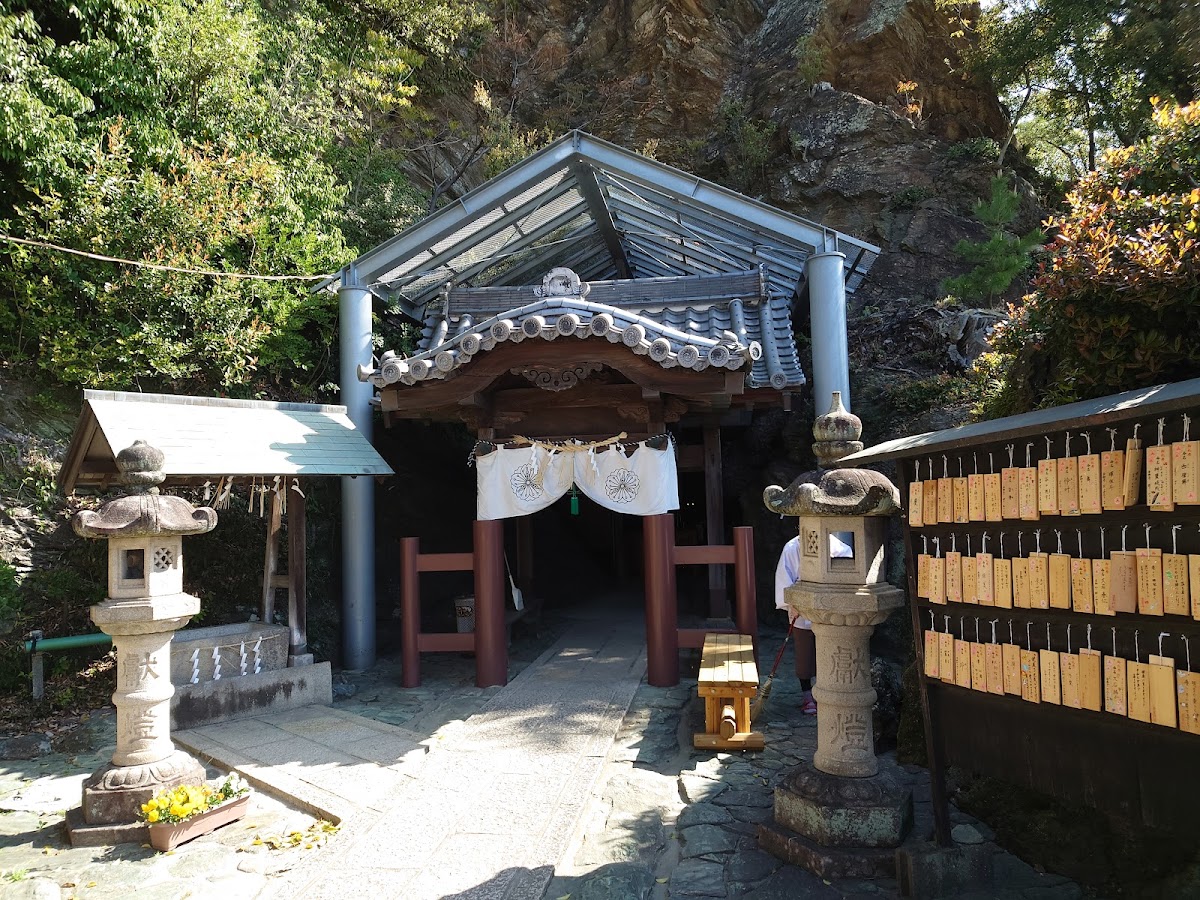
The shrine buildings of Iyatome Shrine maintain the style of traditional shrine architecture. The main hall is protected by a protective structure, making it a valuable building that conveys the history of the region to the present day.
Giant Camphor Tree
One thing that visitors to Iyatome Shrine inevitably see is the giant camphor tree towering behind the main hall. Estimated to be several hundred years old, this camphor tree is a living witness to the shrine’s long history, leaving a deep impression on visitors.
Its massive trunk and spreading branches and leaves further accentuate the solemnity of the sacred grounds, making it a popular spot for many worshippers to take photographs. The camphor tree has been considered a sacred tree since ancient times and has been revered as the sacred tree of the shrine.
Shrine Precincts
Within the grounds of Iyatome Shrine, several subsidiary shrines (absent shrines and minor shrines) are scattered. These shrines enshrine a variety of deities, reflecting the diversity of local beliefs.
While many details about the enshrined deities remain unknown, creating a mystical atmosphere, each has a history of attracting the faith of the local people. Visiting these small shrines while exploring the grounds will provide a deeper religious experience.
Rituals and Annual Events at Iyatome Shrine
Various rituals are held at Iyatome Shrine throughout the year. As the local tutelary deity, seasonal festivals are closely intertwined with the lives of the local residents.
The spring festival includes a ritual praying for a bountiful harvest, and in autumn, a festival is held to express gratitude for the harvest. These festivals are important opportunities to deepen the bonds of the local community. ## Access and Visiting Information
Access by Train
The shrine is easily accessible, located approximately 4 minutes on foot from Rokujutani Station on the JR Kisei Main Line. Upon exiting the station and heading north, the shrine’s grove of trees will immediately come into view.
Access by Car
It takes approximately 15 minutes from central Wakayama City via National Route 24. Parking is available around the shrine, but it may be crowded during festivals.
Visiting Hours
The shrine grounds are generally open for free visits. It is recommended to call ahead to confirm the operating hours of the shrine office.
About Goshuin (Shrine Seals)
Goshuin (shrine seals) are available at Iyatome Shrine. Goshuin are important mementos of your connection with the shrine. It is recommended to bring your goshuincho (seal book) with you.
Please note that the hours and procedures for receiving goshuin may vary depending on the shrine office’s situation. If you wish to be sure to receive a goshuin, it is recommended to call ahead to confirm.
Nearby Tourist Attractions
Kinokawa River
The Kinokawa River, which flows near Iyatome Shrine, is one of Wakayama’s representative rivers. The riverbanks are ideal for strolling, allowing visitors to enjoy the changing seasons.
Mount Nagusa
Mount Nagusa, which appears in the shrine’s history, has been an object of worship since ancient times. Hiking trails are well-maintained, making it a popular spot for nature lovers.
Other Shrines and Temples in Wakayama City
Wakayama City boasts numerous historical shrines and temples, including Kishu Toshogu Shrine, Wakaura Tenmangu Shrine, Hinokuma Shrine, and Kunikake Shrine. Visiting these in conjunction with Iyatome Shrine allows for a deeper understanding of the history and culture of Kii Province.
The Charm of Iyatome Shrine
The greatest charm of Iyatome Shrine lies in its history, steeped in the legend of Empress Jingu, and the mystical atmosphere created by its giant camphor trees. Despite its proximity to the city, stepping onto the shrine grounds reveals a tranquil and sacred space.
A significant characteristic of this shrine is its history as the local tutelary deity, protected by the people of the Rokujutani and Arimoto districts. Because it hasn’t been heavily commercialized for tourism, you can experience the true essence of a shrine here.
Manners and Precautions for Visiting a Shrine
Basic Worship Etiquette
- Bow before passing through the torii gate.
- Avoid walking in the center of the path.
- Cleanse your hands and mouth at the purification fountain.
- Bow twice, clap twice, and bow once in front of the main hall.
Precautions within the Shrine Grounds
- Be mindful that this is a sacred area and worship quietly.
- Do not touch sacred trees such as the large camphor tree.
- Always take your trash with you.
- Take photographs within reasonable limits, avoiding the interior of the shrine buildings.
Iyatome Shrine and the Gods of Kii Province
Isotakeru-no-Mikoto, who appears in the history of Iyatome Shrine, is a particularly important god in Kii Province. According to the Nihon Shoki (Chronicles of Japan), Isotakeru-no-Mikoto is a son of Susanoo-no-Mikoto and is considered the god who sowed tree seeds throughout Japan.
Kii Province is also known as the “Land of Trees” and has been blessed with abundant forest resources since ancient times. The abundance of shrines dedicated to Isotakeru-no-Mikoto reflects the unique characteristics of this region. Iyatome Shrine is also an important shrine, connected to the lineage of the gods of Kii Province.
Iyatome Shrine in Local Beliefs
As a tutelary shrine, Iyatome Shrine is deeply intertwined with the life rituals of the local residents. Many residents visit the shrine at significant life events such as a baby’s first shrine visit, Shichi-Go-San (a traditional rite of passage for children), and exorcisms.
Furthermore, festivals praying for the safety and prosperity of the region have been passed down through generations, strengthening community bonds. Even amidst modernization, the maintenance of these traditional forms of worship is a valuable asset to the local culture.
Summary
Iyatome Shrine is a shrine in Wakayama City with a long history beginning with the legend of Empress Jingu, and is notable for its large camphor trees. Despite its convenient location just a 4-minute walk from Rokujutani Station, it maintains a tranquil sacred space, making it an ideal place to escape the hustle and bustle of the city and find peace of mind.
The shrine enshrines a diverse array of deities, including Hondawake-no-Mikoto, Okinagatarashihime-no-Mikoto, Amakaguyama-no-Mikoto, Hitokotonushi-no-Mikoto, and Uga-no-Mikoto, and attracts a wide range of worshippers, from those seeking national protection to those praying for abundant harvests. Why not visit the Iyatome Shrine, which remains deeply cherished by local residents as the tutelary deity of the region?
When visiting Wakayama Prefecture, be sure to experience the history of Kii Province and the spirit of the gods at this historic shrine. Standing before the giant camphor tree, you’ll feel the sacred atmosphere that transcends centuries.