Hachiman Shrine (Fuchu, Wakayama City, Wakayama Prefecture) Complete Guide | History, Deities, Access, and Annual Events Explained in Detail
Hachiman Shrine, located in Fuchu, Wakayama City, Wakayama Prefecture, is a historical shrine said to have been founded in 902 AD. Situated on the banks of the Kinokawa River, it has been deeply revered by the local people as the tutelary shrine of Fuchu, Taya, Shodoshima, and Hashitani. This article provides a detailed introduction to this historic Hachiman Shrine, covering its history, deities, highlights within the grounds, annual events, and access methods.
Basic Information about Hachiman Shrine
Hachiman Shrine in Fuchu, Wakayama City, Wakayama Prefecture, is officially located at “439 Fuchu, Wakayama City, Wakayama Prefecture,” with the postal code “〒649-6338.” The corporate number is “8170005000715,” and it was assigned on October 5, 2015 (Monday).
Key Data
- Shrine Name: Hachiman Shrine
- Location: 439 Fuchu, Wakayama City, Wakayama Prefecture
- Postal Code: 〒649-6338
- Corporate Number: 8170005000715
- Shrine Rank: Former Village Shrine (Designated as a Village Shrine in April 1873)
- Deities Enshrined: Emperor Ojin (Homudawake no Mikoto), Empress Jingu, Hime Okami
- Founding Date: March 3, 902 (Engi 2)
- Annual Festival Date: End of July in the lunar calendar (Hojo-e)
History and Origins of Hachiman Shrine
Founding in 902 (Engi 2)
Hachiman Shrine is said to have been founded on March 3, 902 (Engi 2). This period corresponds to the mid-Heian period, and it is believed that the deity of Iwashimizu Hachimangu Shrine (Yawata City, Kyoto Prefecture) was invited and enshrined here. Iwashimizu Hachimangu Shrine, founded in 859, is one of the head shrines of all Hachiman shrines nationwide. The Hachiman Shrine in Fuchu, Wakayama City, is a historically significant shrine that enshrines a divided spirit of Iwashimizu Hachimangu Shrine and has been a center of local faith.
Relationship with Iwashimizu Hachimangu Shrine
Because the Hachiman Shrine enshrines the deity of Iwashimizu Hachimangu Shrine, it has a deep connection with Iwashimizu Hachimangu Shrine in Kyoto. Hachiman worship spread throughout Japan as a guardian deity of samurai families, and in this region, it was widely worshipped as a god of military success, national peace and security, and abundant harvests.
Developments since the Meiji Era
In April 1873 (Meiji 6), the Hachiman Shrine was designated a village shrine. This was an official designation under the modern shrine ranking system, indicating the recognition of the shrine’s importance in the region. Since then, it has continued to serve as the tutelary deity of Fuchu, Taya, Shodoshima, and Hashitani, acting as a spiritual pillar for the local residents.
About the Enshrined Deities
Emperor Ōjin (Homudawake no Mikoto)
Emperor Ōjin, the principal deity, is known as the 15th Emperor and is widely revered throughout Japan as Hachiman. He is worshipped as a god of military fortune and victory, as well as a god who guides the development of culture and industry.
Empress Jingū
Empress Jingū, the mother of Emperor Ōjin, is worshipped as a goddess of safe childbirth and child-rearing, and as a goddess of national protection. She is also known for the legend of the conquest of the Three Kingdoms of Korea and is considered a symbol of a brave and courageous woman.
Hime Ōkami
Hime Ōkami, one of the three Hachiman deities, is identified with the three Munakata goddesses and is worshipped as a guardian deity of maritime safety and traffic safety.
Highlights of the Shrine Grounds
Shrine Buildings and Grounds Layout
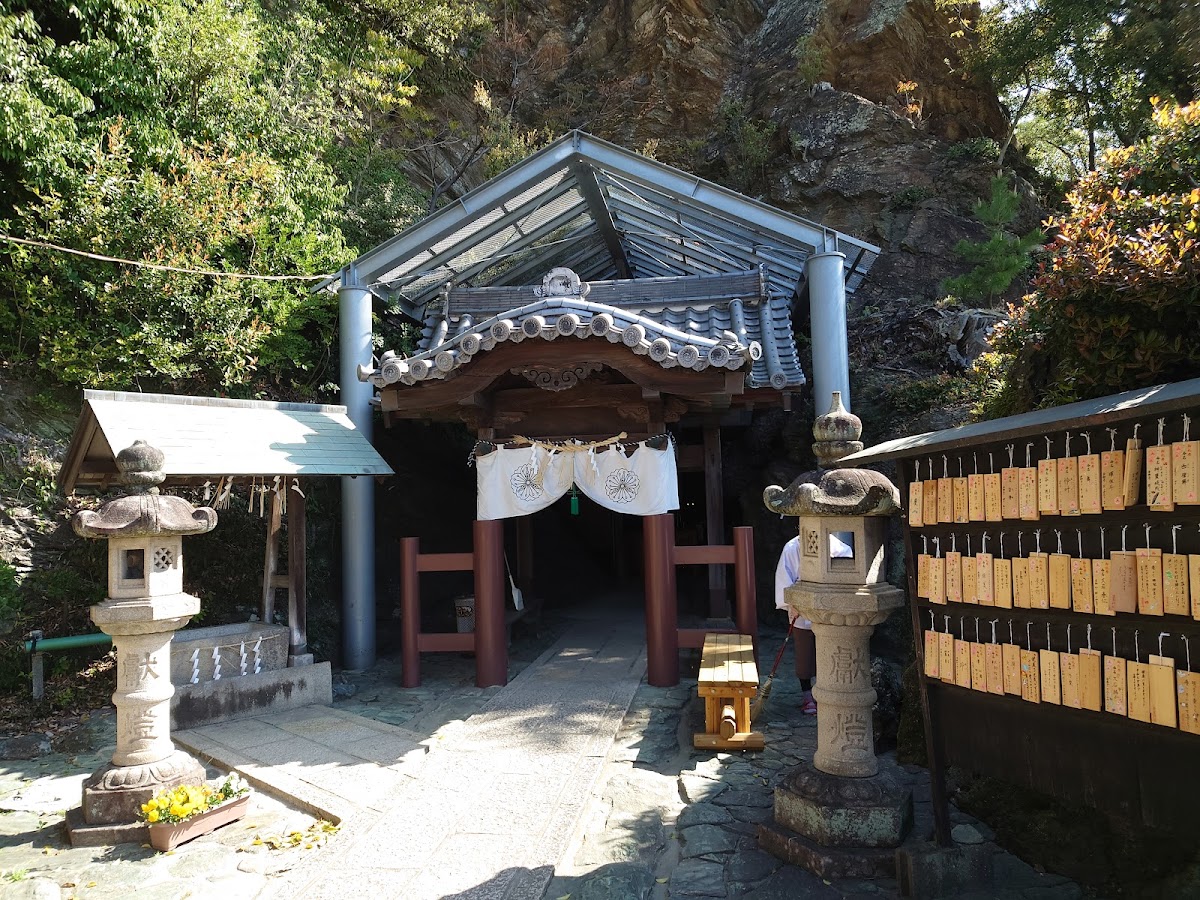
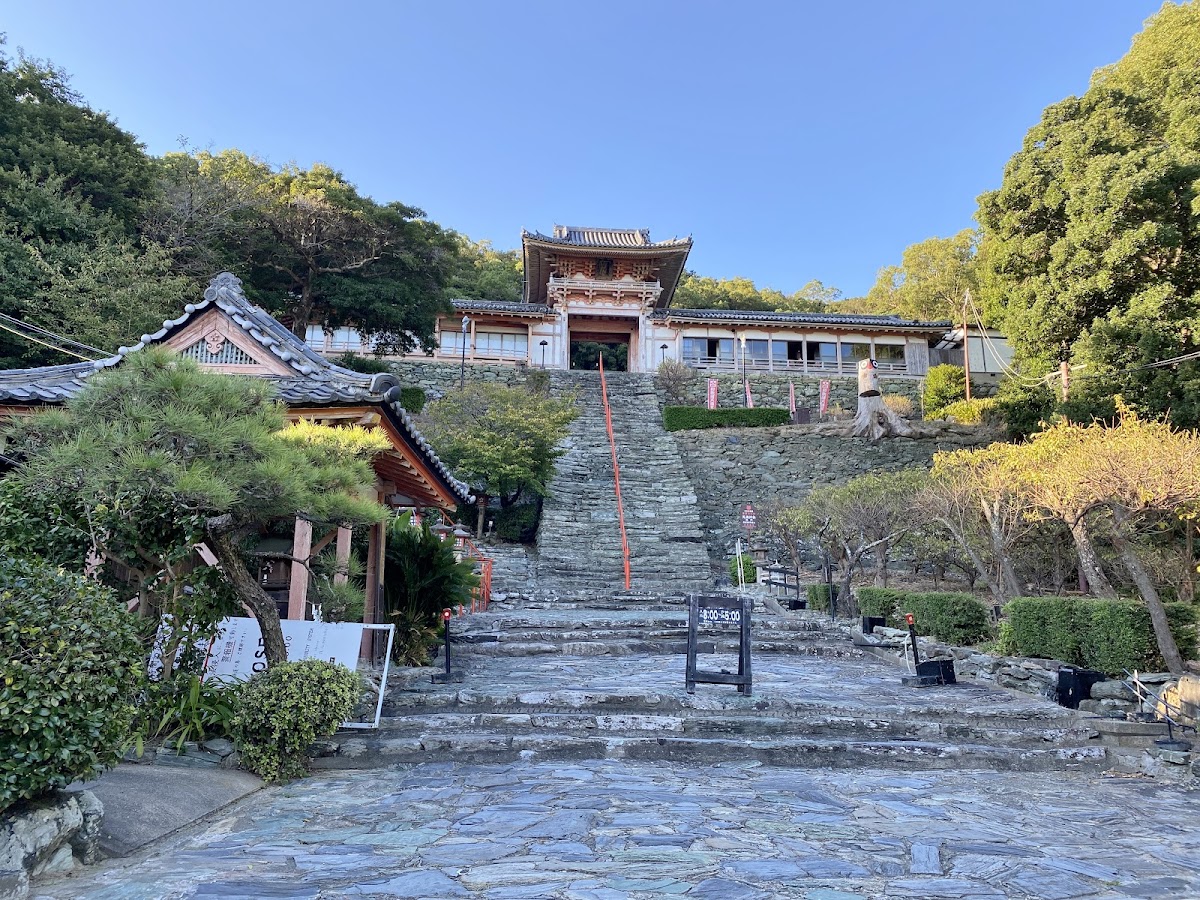
The grounds of Hachiman Shrine are laid out to take advantage of its location on the banks of the Kinokawa River. Centered around the main hall and worship hall, the grounds exude a solemn atmosphere and serve as a spiritual haven for the local people.
Natural Environment
Located near the Kinokawa River, Wakayama Prefecture’s largest river, the shrine has been a vital point for water transport since ancient times and is blessed with abundant nature. The trees on the grounds have a historical presence, and visitors can enjoy the beauty of the four seasons.
Annual Events and Festivals
Hojo-e (Release of Captive Animals)
The most important festival at Hachiman Shrine is the Hojo-e, held annually at the end of the seventh month of the lunar calendar. Hojo-e is a Buddhist ritual in which captured animals are released into the wild to discourage killing and cultivate compassion, but it has become widely practiced at shrines in connection with Hachiman worship. This festival is an important annual event in the region and attracts many worshippers.
Other Festivals
Festivals are held according to the shrine’s calendar, including the New Year’s Day Festival, the Spring Harvest Festival, and the Autumn Harvest Festival. Through these festivals, community bonds are strengthened and traditions are passed down to future generations.
Map and Access to Hachiman Shrine
Detailed Location
Hachiman Shrine is located at 439 Fuchu, Wakayama City, Wakayama Prefecture, on the south bank of the Kinokawa River. The surrounding area is a quiet mix of residential and agricultural land, retaining the atmosphere of an old settlement.
Access
Access by Train
- Approximately 20 minutes on foot from JR Wakayama Line “Fuseya Station”
- Take a bus or taxi from Nankai Electric Railway “Wakayama University Station”
Access by Car
- Approximately 15 minutes from Hanwa Expressway “Wakayama IC”
- Accessible from National Route 24
- Parking: Parking spaces available on the shrine grounds or in the surrounding area (checking on-site is recommended)
Major Facilities in the Surrounding Area
- Kinokawa Riverbed (ideal for nature walks)
- Fuchu District Community Center
- Wakayama City Fuchu Elementary School
List of Nearby Shrines
In addition to Hachiman Shrine, many other historical shrines are scattered throughout Wakayama City and the surrounding area.
Major Shrines in Wakayama City
- Hinokuma Shrine & Kunikake Shrine (Akizuki, Wakayama City)
- A historically significant shrine known as the Ichinomiya (first-ranked shrine) of Kii Province
- A rare form with two shrines standing side by side
- Wakaura Tenmangu Shrine (Wakaura Nishi, Wakayama City)
- Dedicated to Sugawara no Michizane, the god of learning
- Popular with students preparing for exams
- Itakiso Shrine (Itakiso, Wakayama City)
- Worshipped as the god of trees
- One of the Ichinomiya of Kii Province
- Kamayama Shrine (Wada, Wakayama City)
- Dedicated to Hikogose no Mikoto, the elder brother of Emperor Jimmu
- An important ancient shrine in Wakayama City
Hachiman Shrines in the Kinokawa River Basin
- Tomobuchi Hachiman Shrine (Nakatomobuchi, Kinokawa City)
- Holds the status of a former prefectural shrine
- Important Hachiman Shrines in the Kinokawa River Basin
- Sumida Hachiman Shrine (Sumida-cho, Hashimoto City)
- Former Prefectural Shrine, known for its National Treasure, a mirror depicting human figures
- A shrine of high historical value
Hachiman Faith and Hachiman Shrines Nationwide
Spread of Hachiman Faith
Hachiman faith has spread throughout Japan, and it ranks high in the nationwide ranking of shrines with the same name. It is estimated that there are tens of thousands of Hachiman shrines and Hachiman temples nationwide, second only to Inari shrines in number.
Number of Shrines by Prefecture and Wakayama Prefecture
Wakayama Prefecture also has numerous shrines, ranking in the middle of the prefecture-by-prefecture ranking of shrines. Looking at the number of shrines per capita and per area, Wakayama Prefecture can be said to be a region with a relatively high density of shrines. In the ranking of shrines by city/ward/town/village, Wakayama City has a large number of shrines within the prefecture.
Etiquette and Manners for Visiting a Shrine
Basic Etiquette for Visiting a Shrine
- Bow Before Passing Through the Torii Gate
- Show respect before entering the sacred area.
- Purify Yourself at the Water Basin
- Purify your left hand, right hand, and mouth in that order.
- Don’t forget to purify the handle of the ladle as well.
- Etiquette for Visiting a Shrine
- The basic method is two bows, two claps, and one bow.
- Place your offering quietly.
- Make your wish silently in your heart.
- Bow Upon Leaving
- After leaving the torii gate, turn around and bow.
Points to Note When Visiting a Shrine
- Be quiet within the shrine grounds.
- Take photographs only within permitted areas.
- Always take your trash with you.
- Remember that this is a sacred place.
Blessings You Can Receive at Hachiman Shrine
Main Blessings
- Long-lasting Military Fortune and Victory
- Emperor Ōjin is worshipped as a god of war.
- Prayers are offered for success in competitions and examinations.
- National Peace and Protection from Evil
- Hachiman is a god of national protection.
- Prayers are offered for protection from evil and disaster.
- Safe Childbirth and Child-Rearing
- Due to the divine virtues of Empress Jingū.
- Prayers are offered for safe childbirth and the healthy growth of children.
- Abundant Harvests and Industrial Development
- As the local guardian deity, it protects agriculture and industry.
- Also offers blessings for business prosperity.
History and Culture of the Fuchu Area, Wakayama City
Origin of the Place Name Fuchu
The place name “Fuchu” often originates from areas where the provincial capital (national administrative body) was located in ancient times, suggesting that this area was also an important region in Kii Province. It has long been a vital transportation hub utilizing the Kinokawa River, and human activity has continued there since ancient times.
Kinokawa River and Local Culture
The Kinokawa River is a representative river of Wakayama Prefecture, and its basin is covered with fertile farmland. Water transport has flourished since ancient times, with a thriving flow of goods and people. Hachiman Shrine has also benefited from the Kinokawa River, functioning as a spiritual center of the region.
Temple and Shrine Pilgrimages and Hachiman Shrine
Temple and Shrine Culture of Wakayama Prefecture
Wakayama Prefecture is home to nationally renowned religious sites such as Koyasan and Kumano Sanzan. Even looking at lists of all Buddhist temples and shrines, Wakayama Prefecture has numerous temples and shrines, and a rich religious culture is deeply rooted there.
Shrine Search and Information Gathering
Nowadays, online tools such as shrine search engines allow you to easily search for shrine information nationwide. You can view shrine lists by prefecture and municipality from the top page, and use the full-text search function to quickly find specific shrines. The detailed information provided is extremely useful when planning your pilgrimage.
Aerial Photograph and Geographical Characteristics of Hachiman Shrine (439 Fuchu, Wakayama City, Wakayama Prefecture)
Aerial photographs of Hachiman Shrine reveal its location on the plains south of the Kinokawa River. The surrounding area is a harmonious blend of farmland and residential areas, with nearby riverbank green spaces, making it a naturally rich location.
Geographical Characteristics
- Elevation: Flat land approximately 10-20 meters high
- Topography: Alluvial plain along the Kinokawa River
- Surrounding Environment: Farmland, residential areas, riverbanks
- Water System: Area influenced by the Kinokawa River system
Shrine Visit Information in the Digital Age
How to Use QR Codes
In modern shrine visits, using smartphones to gather information is common. Many shrine information websites provide QR codes, allowing users to access detailed information instantly by scanning the QR code with their smartphones.
Utilizing Online Information
- Official Shrine Information: Website of the Wakayama Prefectural Shrine Association, etc.
- Map Apps: Confirm location using Google Maps or Yahoo! Maps
- SNS: Refer to the voices and photos of other visitors
- Review Sites: Check visitor experiences in advance
Hachiman Shrine in Every Season
Hachiman Shrine in Spring
In spring, the trees on the shrine grounds bud, and the fresh greenery is beautiful. Spring festivals such as the Kinensai (Harvest Festival) are held, praying for a bountiful harvest in the new year.
Hachiman Shrine in Summer
Summer, when the Hojo-e (release of captive animals) ceremony is held at the end of the seventh month of the lunar calendar, is the busiest season at Hachiman Shrine. Local people gather and deepen their bonds through traditional events.
Hachiman Shrine in Autumn
In the fruitful autumn, the Niiname-sai (harvest festival) is held, offering thanks for the harvest. It is also a season of beautiful autumn foliage, making it suitable for quiet worship.
Winter at Hachiman Shrine
Hachiman Shrine, which begins its winter season with the New Year’s Day Festival, is bustling with worshippers making their first shrine visit of the year. In a solemn atmosphere, prayers for the new year are offered.
Summary
Hachiman Shrine, located at 439 Fuchu, Wakayama City, Wakayama Prefecture, is a historical shrine founded in 902 AD. It enshrines the deities of Iwashimizu Hachiman Shrine and has been revered by the local people for over 1100 years as the tutelary shrine of Fuchu, Taya, Shodoshima, and Hashitani.
Due to its location on the banks of the Kinokawa River, the annual Hojo-e festival held at the end of the seventh month of the lunar calendar, and the divine virtues of its enshrined deities—Emperor Ojin, Empress Jingu, and Hime-no-Okami—worshippers can receive various blessings, including military success, safe childbirth and child-rearing, and abundant harvests.
As one of tens of thousands of Hachiman shrines nationwide, and as an important cultural asset of Wakayama City, Wakayama Prefecture, Hachiman Shrine will continue to be a spiritual pillar of the region. When you visit Wakayama, why not visit this historic shrine and experience its long history and traditions?
Frequently Asked Questions about Hachiman Shrine in Wakayama City, Wakayama Prefecture
Q1: Who are the deities enshrined at Hachiman Shrine (Fuchu, Wakayama City)?
A1: The deities enshrined at Hachiman Shrine are Emperor Ojin (Homudawake no Mikoto), Empress Jingu, and Hime Okami. The shrine enshrines the three Hachiman deities, who were invited from Iwashimizu Hachiman Shrine, and is believed to offer blessings for military success, safe childbirth and child-rearing, and national peace.
Q2: How do I get to Hachiman Shrine?
A2: By public transport, it is about a 20-minute walk from JR Wakayama Line “Fuseya Station”. By car, it’s approximately 15 minutes from the Wakayama Interchange on the Hanwa Expressway, accessible via National Route 24. The address is 439 Fuchu, Wakayama City, Wakayama Prefecture, and the postal code is 〒649-6338.
Q3: When was Hachiman Shrine founded?
A3: Hachiman Shrine is said to have been founded on March 3rd, 902 (Engi 2). During the mid-Heian period, the deities of Iwashimizu Hachimangu Shrine were invited and enshrined here, making it a venerable shrine with a history of over 1100 years.
Q4: What are the main annual events at Hachiman Shrine?
A4: The most important event is the Hojo-e (release of captive animals) ceremony, held annually on the last day of the seventh month of the lunar calendar. In addition, festivals such as the New Year’s Day Festival, the Spring Prayer Festival, and the Autumn Harvest Festival are held according to the shrine’s calendar.
Q5: What is the rank of Hachiman Shrine?
A5: Hachiman Shrine was designated a village shrine in April 1873 (Meiji 6). As a village shrine under the old shrine ranking system, it has a history of attracting local faith as the tutelary shrine of Fuchu, Taya, Shodoshima, and Hashitani.
Q6: Are there any other shrines to visit around Hachiman Shrine?
A6: Within Wakayama City, there are several well-known shrines such as Hinokuma Shrine, Kunikake Shrine (the Ichinomiya of Kii Province), Wakaura Tenmangu Shrine, Itakiso Shrine, and Kamayama Shrine. There are also Hachiman shrines in the Kinokawa River basin, such as Tomobuchi Hachiman Shrine (Kinokawa City) and Sumida Hachiman Shrine (Hashimoto City).