Tamatsushima Shrine (Wakayama Prefecture, Wakayama City) Complete Guide | A Thorough Explanation of the History, Deities, and Highlights of this Sacred Site of Waka Poetry
Tamatsushima Shrine, located in Wakaura-naka, Wakayama City, Wakayama Prefecture, is an ancient shrine known as a “sacred site of waka poetry” since the Manyo period. It enshrines Sotōrihime-no-Mikoto, a legendary beauty, and, along with Sumiyoshi Myojin and Kitano Tenmangu, is one of the “Three Gods of Waka Poetry,” attracting the reverence of many poets and emperors since ancient times.
This article thoroughly explains the charm of this historic shrine, from its history and enshrined deities to its highlights and access methods.
What is Tamatsushima Shrine?
Tamatsushima Shrine is located at 3-4-26 Wakaura-naka, Wakayama City, Wakayama Prefecture, and is an ancient shrine that has left its mark on history as a nationally recognized shrine. Its former shrine rank was Village Shrine, and it is also written as “Tamatsushima Shrine.”
Since ancient times, it has been called “Tamatsushima Myojin” and has attracted immense devotion as the god of waka poetry. The surrounding area, including the shrine grounds, is designated as a National Place of Scenic Beauty as “Waka-no-ura,” and in 2017 (Heisei 29), it was also recognized as a Japan Heritage site.
The Tamatsushima area is also called “Tamadejima,” and in ancient times, it boasted a scenic landscape where islands and mountains were scattered in the sea like jewels. A line from a long poem composed by Yamabe no Akahito in 724 (Shinki 1), “Tamatsushima Mountain, so noble since the age of the gods,” shows that this place was revered as sacred.
Deities Enshrined | Three Goddesses and the Spirit of Myokoura
Tamatsushima Shrine enshrines three goddesses and one spirit.
Main Deities
Wakahirume-no-Mikoto
A goddess considered to be the childhood name or younger sister of Amaterasu-Omikami. She is revered as a deity symbolizing youthfulness and purity.
Okinagatarashihime-no-Mikoto
This refers to Empress Jingu, a brave woman known for the legend of her conquest of the Three Kingdoms of Korea. She is also worshipped as a goddess of safe childbirth and child-rearing.
Sotorihime-no-Mikoto
A woman of unparalleled beauty, whose beauty is said to have shone through her clothing, and who was also said to have possessed exceptional talent in waka poetry. Since the Heian period, she has been particularly revered as the goddess of waka poetry.
Enshrined Deities
Akanoura-no-Mitama
The spirit of Waka-no-Ura, a deified representation of the scenic beauty of this area.
These four deities are the source of the sacred power that makes Tamatsushima Shrine a “holy site of waka poetry.”
History | A Sacred Site of Waka Poetry Since the Manyo Era
Founding and Ancient Times
Tamatsushima Shrine has an extremely ancient history; according to shrine tradition, the deity of Tamatsushima has resided there since ancient times. While the exact founding date is unknown, it was already recognized as an important sacred site during the Nara period.
In 724 AD, when Emperor Shomu visited Tamatsushima, the court poet Yamabe no Akahito, who accompanied him, composed a long poem about Tamatsushima Shrine, which is included in the Manyoshu anthology. This poem is an essential cultural heritage for understanding the history of Tamatsushima Shrine.
Development from the Heian Period Onward
During the Heian period, the reputation of Tamatsushima Shrine further increased with the flourishing of waka poetry culture. Nobles and poets began to visit the shrine one after another, offering waka poems as votive offerings.
During the reign of Emperor Go-Sakuramachi (1767), the shrine received deep reverence from the Imperial family and court nobles, including a magnificent portable shrine donated by the Konoe family. This portable shrine is still preserved and on display at the shrine.
Modern and Contemporary History
Although it was ranked as a village shrine under the Meiji era’s shrine ranking system, its high historical and cultural value has led to it continuing to attract worshippers as a representative shrine of the region.
In 2010 (Heisei 22), it was designated as part of the nationally designated scenic spot “Waka-no-ura,” and in 2017 (Heisei 29), it was designated as a Japan Heritage site, further reaffirming its value.
In 2024, the 1300th anniversary of Emperor Shomu’s visit to Tamatsushima was commemorated with various events.
Highlights of the Shrine Grounds
The grounds of Tamatsushima Shrine offer numerous points of interest that evoke a sense of history and culture.
Tenguyama Mountain
Tenguyama Mountain, towering behind the shrine grounds, is a must-climb scenic spot for anyone visiting Tamatsushima Shrine. Although relatively low in elevation, the summit offers a panoramic view of the beautiful Waka-no-ura Bay.
It is said that Emperor Shomu also gazed upon the scenery of Waka-no-ura Bay from this mountain, allowing visitors to enjoy the same picturesque scenery as in the Manyo period. A small shrine stands at the summit, exuding a sacred atmosphere.
Manyo Poetry Monument
Within the shrine grounds stands a monument inscribed with a Manyo poem composed by Yamabe no Akahito in 724 AD during Emperor Shomu’s visit. This monument is evidence of Tamatsushima Shrine’s importance as a poetic place name since the Manyo period.
Furthermore, several monuments inscribed with waka and haiku poems by later poets and haiku poets, including Matsuo Basho, are also located here, allowing visitors to enjoy a literary stroll.
Ono no Komachi’s Sleeve-Hanging Wall
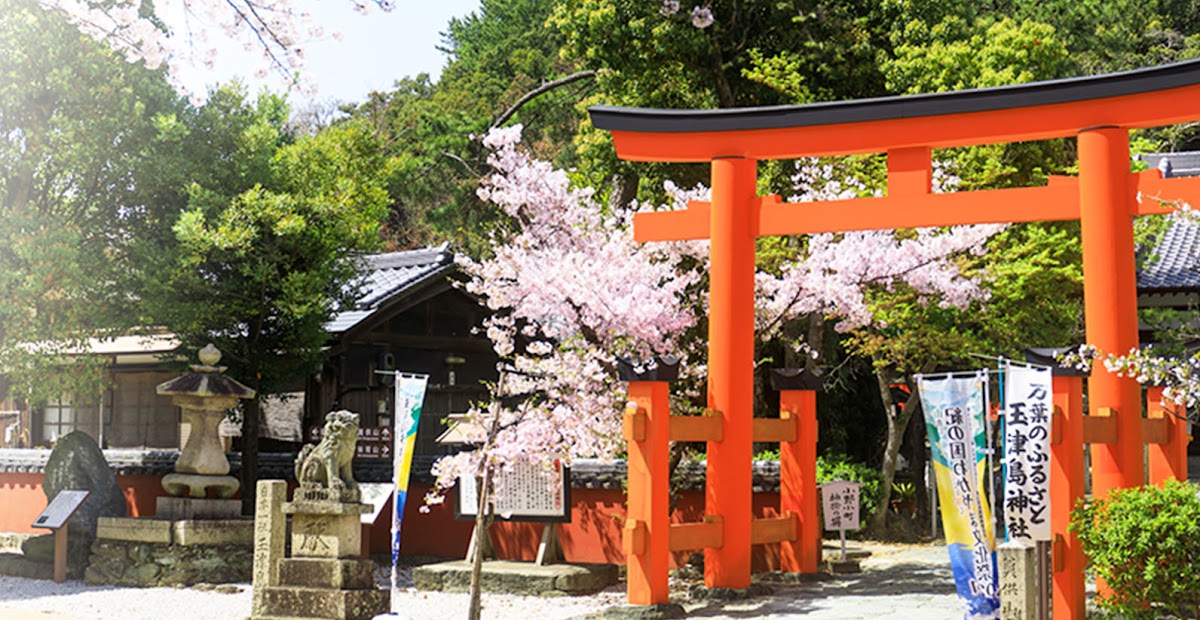
Near the torii gate is a red wall where Ono no Komachi, a renowned beautiful poet of the Heian period, is said to have hung the sleeves of her kimono when visiting the shrine. This structure, known as the “Ono no Komachi Sleeve-Hanging Wall,” is a valuable historical site that tells of the deep connection between Ono no Komachi and Tamatsushima Shrine.
Root-Raised Pine (Crane Pine)
The “Root-Raised Pine” within the shrine grounds, also known as the “Crane Pine” due to its unique shape, is designated a natural monument of Wakayama Prefecture. The intricately intertwined roots exposed above ground convey the vitality of this pine tree that has endured many years.
It is a popular auspicious pine tree among visitors and a popular photo spot.
Kinutōri-no-Himezakura
In spring, the “Kinutōri-no-Himezakura,” named after the enshrined deity Kinutōri-hime, adorns the shrine grounds. The elegantly blooming cherry blossoms evoke the beauty of Princess Kinutohime, renowned as a woman of unparalleled beauty.
Votive Tablets of the Thirty-Six Immortal Poets
The shrine is adorned with votive tablets depicting the Thirty-Six Immortal Poets, selected by Fujiwara no Kinto during the Heian period. This cultural exhibit, befitting a shrine dedicated to the god of waka poetry, delights visitors.
Shiogama Shrine
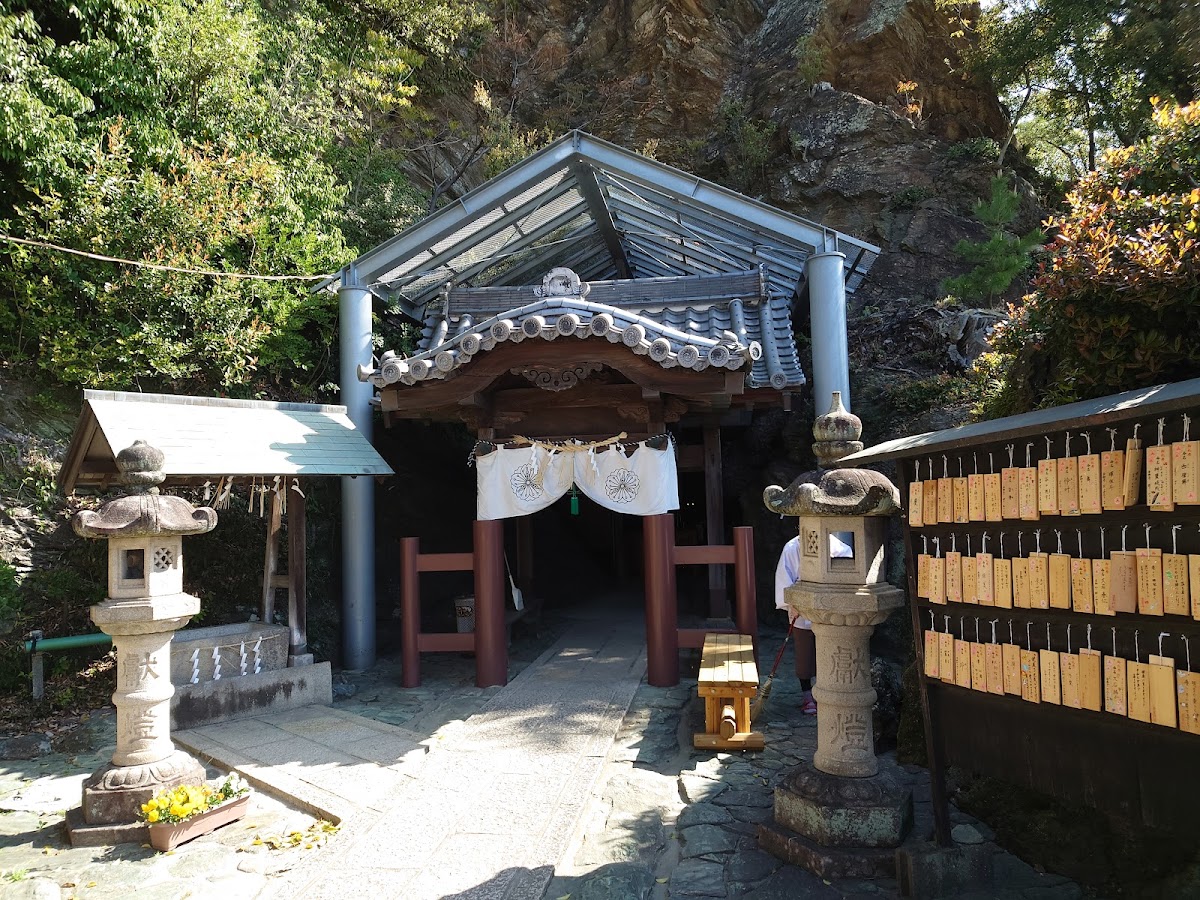
Within the grounds of Tamatsushima Shrine stands Shiogama Shrine, a shrine deeply revered as a deity of safe childbirth and fertility. Many visitors come to pray for safe childbirth and fertility, and it is common to visit both Tamatsushima Shrine and Shiogama Shrine.
Rituals and Annual Events
Tamatsushima Shrine holds various rituals throughout the year.
Hamairi Ritual
The Hamairi Ritual, held annually on September 16th, is the most important festival of Tamatsushima Shrine. This magnificent ritual involves a portable shrine (mikoshi) traveling down the Kinokawa River from Niutsuhime Shrine in Amano, Katsuragi Town, to Waka-no-ura. It is a well-known traditional event with a long history.
This ritual is an important religious event demonstrating the interaction of the gods of Kii Province, and attracts many spectators.
Connection to the Wakayama Festival
Tamatsushima Shrine also has a deep connection to the Wakayama Festival, a representative festival of Wakayama City. While the Wakayama Festival is the annual grand festival of Kishu Toshogu Shrine, shrines throughout the Wakayama-no-ura area also hold related events, enveloping the entire region in a festive atmosphere.
Regular Worship and Prayers
Visiting Hours: 9:00 AM – 5:00 PM
Prayer Reception: 10:00 AM – 4:00 PM
We accept various prayers, including prayers for improvement in waka poetry, literary advancement, safe childbirth (at Shiogama Shrine), family safety, and business prosperity.
Cultural Properties and Designations
Tamatsushima Shrine and its surroundings have received numerous cultural property designations.
National Scenic Spot “Waka-no-ura”
In 2010 (Heisei 22), the Waka-no-ura area, including Tamatsushima Shrine, was designated a national scenic spot. This recognized the value of the landscape, which has been celebrated as a poetic place name since the Manyo period.
Japan Heritage Designation
In 2017 (Heisei 29), it was designated a Japan Heritage site as “Waka-no-ura, a Treasure Trove of Spectacular Scenery.” Tamatsushima Shrine is a central cultural asset that constitutes the story of this Japanese Heritage site.
Natural Monument
The Root-Raised Pine (Tsurumatsu) on the shrine grounds is designated as a natural monument of Wakayama Prefecture.
Portable Shrine
The portable shrine, donated by the Konoe family during the reign of Emperor Go-Sakuramachi (1767), is preserved as a valuable cultural asset that conveys Edo period craftsmanship and is regularly displayed to the public.
Access
Here’s how to access Tamatsushima Shrine.
Access by Train
From JR Wakayama Station
From JR Wakayama Station or Nankai Wakayamashi Station, take the Wakayama Bus bound for “Shin-Wakayamaura” or “Saikazaki,” get off at the “Furobashi” bus stop, and walk for about 5 minutes.
From Nankai Wakayamashi Station
Take the Wakayama Bus bound for “Shin-Wakayamaura” or “Saikazaki” from Nankai Wakayamashi Station and get off at the “Furobashi” bus stop. It’s about a 5-minute walk from there.
The bus journey takes approximately 25 minutes from Wakayama Station and 15 minutes from Wakayamashi Station.
Access by Car
Approximately 20 minutes from the Hanwa Expressway “Wakayama IC” via National Route 42.
There is a parking lot for visitors on the shrine grounds (free). However, on days when congestion is expected, such as during festivals, please consider using nearby paid parking lots.
Address
〒641-0025
3-4-26 Wakaura-naka, Wakayama City, Wakayama Prefecture
Nearby Tourist Attractions
Here are some nearby tourist attractions you might want to visit after visiting Tamatsushima Shrine.
Furobashi Bridge
A beautiful vermilion arch bridge located near Tamatsushima Shrine. It is said that the mother of the Kishu domain lord erected this bridge during the Edo period to pray for longevity, and it is a symbolic landmark of Waka-no-ura.
Kishu Toshogu Shrine
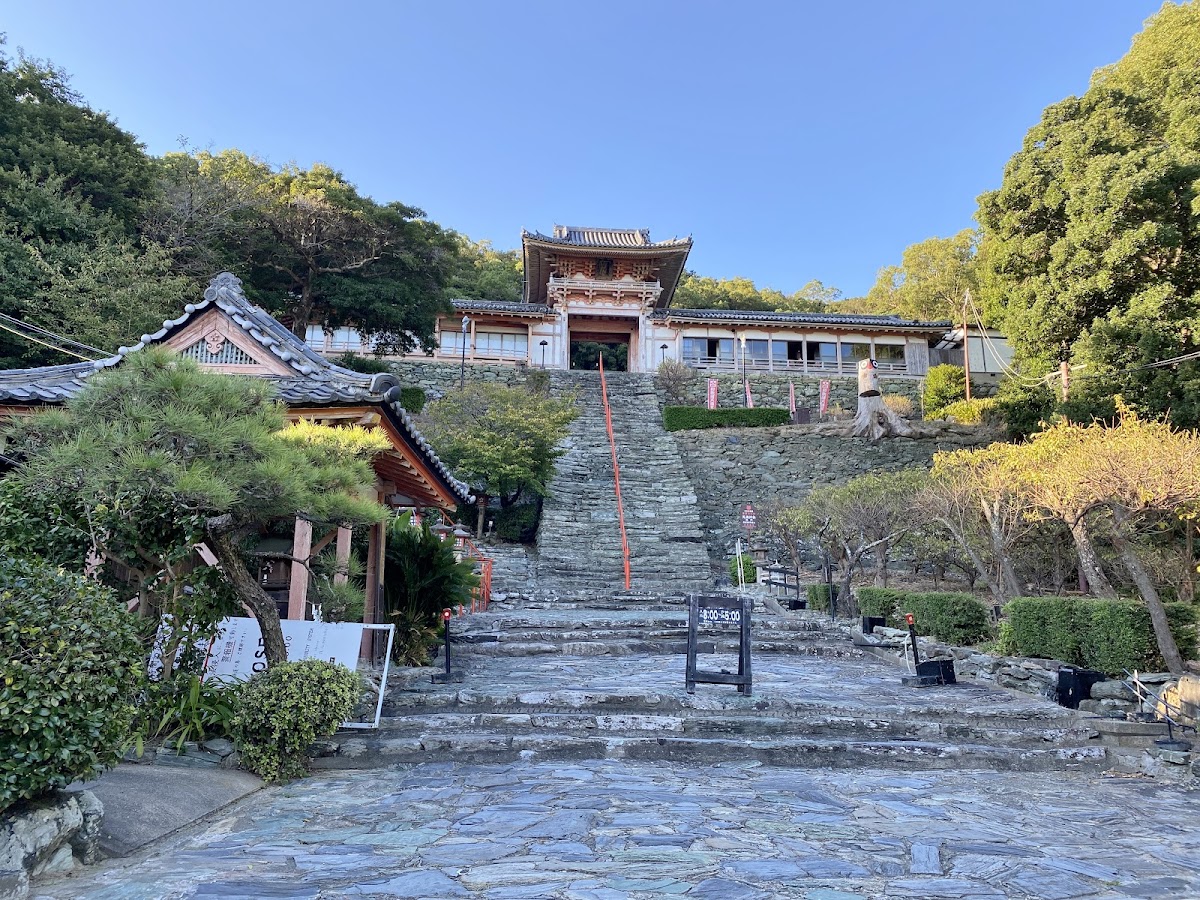
This Toshogu shrine, dedicated to Tokugawa Ieyasu, boasts a magnificent and opulent main hall. After climbing the long stone steps, a solemn space unfolds, evoking the history of Kishu.
Wakaura Tenmangu Shrine
This Tenmangu shrine is dedicated to Sugawara no Michizane, the god of learning. The main hall is designated as a National Important Cultural Property, and the view of Waka-no-ura from the gate tower is spectacular.
Kataonami Beach
A beautiful beach selected as one of the “100 Best Beaches” by the Ministry of the Environment. Enjoy swimming in the summer and strolling during other seasons.
Wakayama Marina City
A complex resort facility featuring the theme park “Porto Europa” and the seafood market “Kuroshio Market.” Recommended for families.
A Summary of the Charms of Tamatsushima Shrine
Tamatsushima Shrine is not merely a tourist destination, but a “living cultural heritage” that conveys the history of Japanese waka poetry culture to the present day.
For over 1300 years, counting from the Manyo period, this shrine has attracted the reverence of many poets and emperors as the god of waka poetry. It offers visitors two treasures: the deep tradition of Japanese literature and the beautiful scenery of Waka-no-ura.
The view of Waka-no-ura from the shrine grounds retains the essential beauty of the landscape seen by Emperor Shomu and Yamabe no Akahito, allowing visitors to experience a timeless and moving experience.
We recommend a visit to Tamatsushima Shrine not only for those interested in waka poetry and Japanese literature, but also for all those who love history and the beauty of nature. The spectacular view from Tenkoyama, the solemnity of the Manyo poetry monument, and the serene presence of the god of waka poetry will leave a deep impression on the hearts of visitors.
When you visit Wakayama, be sure to stop by Tamatsushima Shrine, a “sacred site of waka poetry,” and have a precious experience that allows you to touch upon the essence of Japanese culture.