Kamikoji Shrine (Tottori Prefecture) Complete Guide | History, Festival, Kirin Lion Dance, and Access Information
Kamikoji Shrine, located in Minami-Karō-chō, Tottori City, Tottori Prefecture, is a shrine that has long been revered by local farmers. It is said to have been founded during the Muromachi period and, as a Shinto shrine that enshrined the deities of Ise Grand Shrine, has been deeply intertwined with the lives of the local people. This article provides detailed information you should know before visiting, including the history of Kamikoji Shrine, the festival where the Kirin Lion Dance is performed, the characteristics of the shrine grounds, and access methods.
History and Origins of Kamikoji Shrine
Founding and History as a Shinto Shrine
Based on records such as ridgepole inscriptions, the founding period of Kamikoji Shrine is estimated to be the Muromachi period. From its founding, the shrine has been called “Shinmei-gu” or “Shinmei-sha,” and has attracted worshippers as a shrine that enshrined Amaterasu Omikami, the deity of Ise Grand Shrine.
Shinmei-sha is a general term for shrines that consider Ise Grand Shrine as their head shrine and enshrine Amaterasu Omikami as their principal deity. Kamikoji Shrine is no exception, and has long been a spiritual center for the local people, receiving particularly strong devotion from those engaged in agriculture.
Ise-ko and the Spread of Faith in the Edo Period
Records indicate that several “Ise-ko” existed within the parish area during the Edo period. Ise-ko were popular religious organizations aimed at pilgrimages to Ise Grand Shrine, where members contributed funds for a representative to make the pilgrimage.
The fact that several Ise-ko existed within the parish area of Kamikoji Shrine speaks to the strength of Ise faith in this region and the depth of faith in Kamikoji Shrine, a Shinmei-sha. For those engaged in agriculture, faith in Amaterasu Omikami, the goddess who presides over abundant harvests, was intimately intertwined with their lives.
Renaming and Modernization in the Meiji Era
In 1871 (Meiji 4), the shrine was officially renamed from Shinmei-gu to “Kamikoji Shrine.” This was part of the Meiji government’s efforts to improve the shrine system, and was a process in which shrines throughout the country were integrated into a unified management system.
Construction of New Shrine Buildings and Grounds Improvement in the Taisho Era
In 1923 (Taisho 12), a project was undertaken to construct new shrine buildings and significantly expand the grounds. At this time, 3,000 pine saplings were planted on the grounds, dramatically changing the shrine’s landscape. This tree-planting project is thought to have been intended to develop the shrine not only as a spiritual center for the region but also as a place of relaxation.
Major Renovations in the Showa Era and the Impact of Tottori Airport
In 1986 (Showa 61), Kamikoji Shrine underwent a major turning point. Due to the runway expansion work at Tottori Airport, it became necessary to lower the shrine grounds by 5 meters. Consequently, all the buildings on the shrine grounds, including the main shrine building, had to be rebuilt.
This major renovation went beyond simply rebuilding the shrine; it also included modern improvements such as the installation of a 500-meter promenade and the planting of cherry trees. Through this renovation, Kamikoji Shrine was reborn as a shrine befitting the new era, while still preserving its traditions.
Deity and Divine Virtues
The deity enshrined at Kamikoji Shrine is Amaterasu Omikami. Amaterasu Omikami is the supreme deity in Japanese mythology and is known as the personification of the sun.
Divine Virtues of Amaterasu Omikami
Amaterasu Omikami is believed to possess the following divine virtues:
- Abundant Harvest: As the guardian deity of agriculture, she brings abundant harvests.
- National Security: As the ancestral deity of the Imperial Family, she protects the peace and prosperity of the nation.
- Good Fortune and Prosperity: She wards off all calamities and brings good fortune.
- Family Safety: She protects the health and safety of families.
- Business Prosperity: She leads to the development and success of businesses.
Especially at Kamikoji Shrine, where farmers have long held deep faith, many people have visited seeking the divine virtue of a bountiful harvest.
Annual Festival and Kirin Lion Dance
Annual Festival Schedule and Characteristics
The annual festival of Kamikoji Shrine is held every year on April 28th and 29th. The eve of the festival usually begins around 5 PM on the 28th, and the main festival begins around 10 AM on the 29th. The most distinctive feature of this festival is the dedication of the traditional performing art, “Kirin Shishimai” (Kirin Lion Dance), which is passed down in the Tottori region. The Kirin Shishimai is a unique lion dance originating in the Inaba region (eastern Tottori Prefecture), and its elegant yet powerful dance captivates viewers.
History and Characteristics of the Kirin Shishimai
The Kirin Shishimai at Kamikoji Shrine is said to have originated in the Muromachi period. The lion’s head currently in use was created in the mid-Edo period, making it a valuable cultural asset with a long history.
The defining characteristic of the Kirin Shishimai lies in its unique head shape. Unlike typical lion dances, it has a single horn on its forehead, a long neck, and graceful movements. This appearance is said to originate from the Chinese mythical creature, the “Kirin.”
A Grand Festival Held Once Every Three Years
At Kamikoji Shrine, a grand festival, larger than the usual annual festival, is held once every three years. During the grand festival, the Kirin Lion Dance is performed not only within the shrine grounds but also at the temporary shrine in the town and at local elementary schools.
This grand festival is an important event celebrated by the entire community, and it is a valuable opportunity to deepen the bonds of the parishioners. The sight of the Kirin Lion parading through the town is a symbolic scene of passing on the region’s traditional culture to the next generation.
A Japanese Heritage Site: “An Extraordinary Space Woven from the Dreams of Men Who Crossed the Rough Seas”
The Kirin Lion Dance of Kamikoji Shrine is recognized as one of the cultural properties that make up the Japanese Heritage Site “An Extraordinary Space Woven from the Dreams of Men Who Crossed the Rough Seas ~Kitamae Ship Port Towns and Shipowner Settlements~”.
The Karo district of Tottori Prefecture was once a thriving port town that served as a port of call for Kitamae ships. The Kirin Lion Dance at Kamikoji Shrine is highly regarded as a valuable traditional performing art that conveys the culture of this region, which prospered through maritime trade.
Highlights of the Shrine Grounds
Shrine Buildings
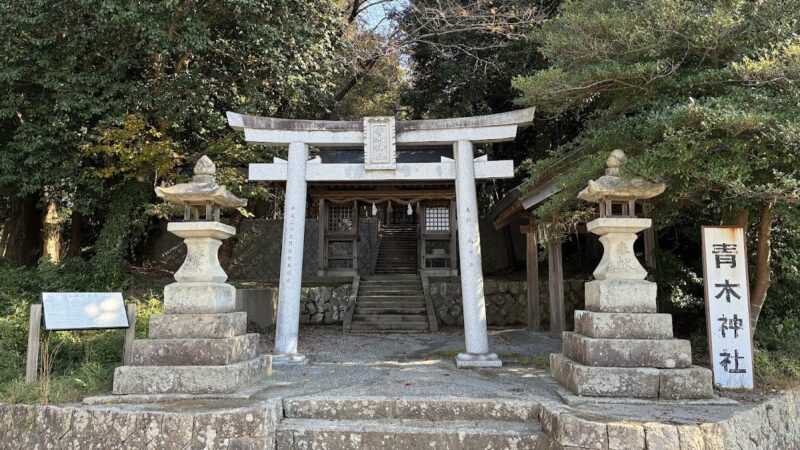
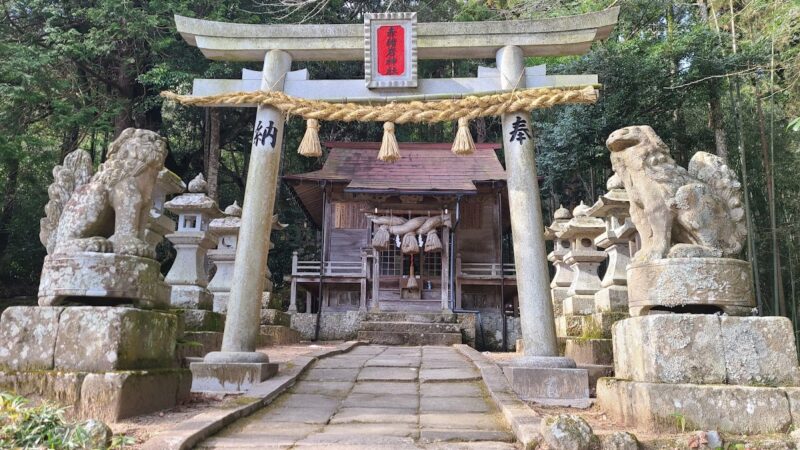
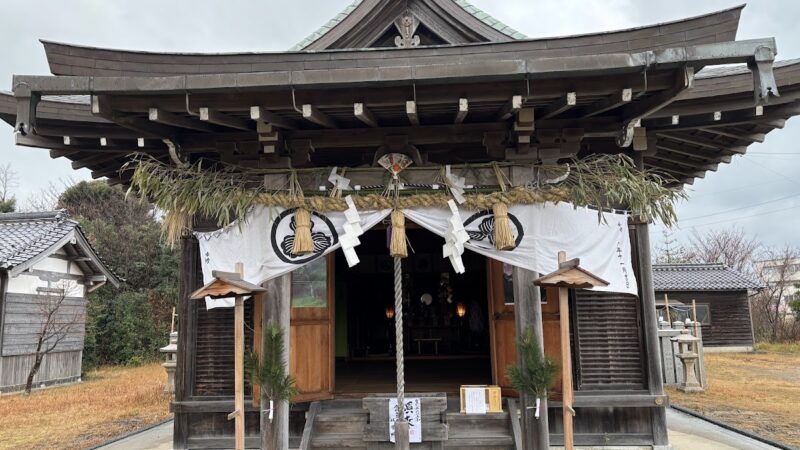
The shrine buildings, newly constructed in 1986, are beautiful structures built with modern techniques while adhering to the traditional style of shrine architecture. Both the main hall and the worship hall are made of wood and are meticulously crafted.
Walking Path and Cherry Blossom Trees
A 500-meter walking path is maintained within the shrine grounds, where cherry blossoms bloom beautifully in the spring. The cherry trees planted during the major renovation in 1986 have now grown splendidly, and during the spring festival, they beautifully adorn the grounds.
During cherry blossom season, local people visit for strolls, demonstrating that the shrine also functions as a place of relaxation for the community.
Pine Grove
Some of the pine saplings planted in 1923 still remain on the shrine grounds, forming a magnificent pine grove. These pine trees have stood quietly for nearly 100 years, watching over the history of the shrine.
Location and Access to Kamikoji Shrine
Basic Information
Location: 1-chome, Karo-cho Minami, Tottori City, Tottori Prefecture
Nearest Station: Approximately 15 minutes by car from JR Tottori Station
Access by Car
- From Tottori Station: Approximately 15 minutes via National Route 9
- From Tottori Airport: Approximately 5 minutes (The shrine is located near the airport)
- From San’in Expressway Tottori West IC: Approximately 20 minutes
There is some parking space on the shrine grounds, but congestion is expected during events such as festivals, so we recommend considering using public transportation.
Access by Public Transportation
Take the “Karo Loop Line” bus from JR Tottori Station, get off at the “Karo-cho Minami” bus stop, and walk for approximately 5 minutes. Since bus services are limited, we recommend checking the timetable in advance.
Nearby Tourist Attractions
Karo Port
Karo Port, located within walking distance of Kamikoji Shrine, is one of Tottori’s leading fishing ports. Fresh seafood is landed here, and you can purchase local seafood at the “Karoichi” market.
Tottori Sand Dunes
Tottori Sand Dunes, located about 20 minutes away by car, is a representative tourist destination in Tottori Prefecture, known as one of Japan’s largest sand dunes. Visiting them in conjunction with a visit to Kamikoji Shrine is highly recommended.
Hakuto Shrine
Hakuto Shrine, known for the legend of the “White Rabbit of Inaba,” is also located about 20 minutes away by car. It is popular as a shrine for matchmaking and attracts many visitors.
Manners and Etiquette for Visiting a Shrine
Basic Etiquette for Visiting a Shrine
When visiting a shrine, please observe the following basic etiquette:
- Bow before passing through the torii gate: This is a sign of respect before entering the sacred area.
- Walk along the edge of the path: The center is considered the path of the gods.
- Purify yourself at the water basin: Purify your left hand, then your right hand, then your mouth.
- Worship at the main hall: Two bows, two claps, and one bow is the basic procedure.
Precautions During the Annual Festival
Many worshippers visit during the annual festival. When watching the Kirin Lion Dance, please observe quietly from the designated area so as not to disrupt the ritual. Photography is often permitted, but please be considerate and refrain from using flash.
Kamikoji Shrine and the Local Community
Kamikoji Shrine plays an important role not only as a place of worship but also as a center of the local community.
Parishioners’ Organization and the Transmission of Festival Traditions
The parishioners’ organization, centered around residents of Kamo-cho Minami, is dedicated to the maintenance and preservation of the shrine and its festivals. In particular, the transmission of the Kirin Lion Dance requires the passing on of skills to younger generations. Local youth associations play a central role in preserving this traditional art form.
Hub for Community Events
Besides the annual festival, various events are held throughout the year, including New Year’s visits, Shichi-Go-San (a traditional rite of passage for children), and summer festivals, providing a place for community interaction. Through these activities, community bonds are strengthened, and traditional culture is passed on to future generations.
Visiting Shrines in Tottori Prefecture
When visiting Kamikoji Shrine, it is also recommended to visit other shrines in Tottori Prefecture.
Ube Shrine (Ichinomiya of Inaba Province)
Ube Shrine, located in Kofu-cho, Tottori City, has long been revered as the Ichinomiya (first-ranked shrine) of Inaba Province. This shrine, dedicated to Takenouchi no Sukune, is known for its divine blessings of business prosperity and longevity. It is approximately a 30-minute drive from Kamikoji Shrine.
Tottori Toshogu Shrine
Located in Kamimachi, Tottori City, Tottori Toshogu Shrine is a shrine dedicated to Tokugawa Ieyasu. Founded in the early Edo period by Ikeda Mitsunaka, the lord of the Tottori domain, it is characterized by its beautiful shrine buildings.
Chokkei Shrine
Located within Chokkei Park in Kamimachi, Tottori City, Chokkei Shrine is a shrine dedicated to the ancestors of the Ikeda family, the lords of the Tottori domain. Situated in a rich natural environment, visitors can enjoy the scenery of each season.
Summary
Kamikoji Shrine boasts a long history dating back to the Muromachi period and is a valuable shrine that conveys the faith and culture of the local people to the present day. While experiencing the wave of modernization brought about by the expansion of Tottori Airport, it has continued to preserve its traditions and has been reborn in a form befitting the new era.
The Kirin Lion Dance, performed annually at the April festival, is a traditional performing art that has continued since the Edo period and is recognized as a component cultural property of a Japanese Heritage site. During the grand festival held every three years, visitors can witness the Kirin Lion parading through the town, experiencing a vibrant manifestation of the region’s traditional culture.
The shrine grounds feature a promenade and cherry tree-lined avenue, which were renovated during a major renovation in 1986, making it a popular spot for cherry blossom viewing in spring. Its convenient location near Tottori Airport and Karo Port makes it easily accessible, and it’s a shrine you should definitely visit when sightseeing in Tottori.
Kamikoji Shrine, cherished and preserved by the local people, will continue to play an important role as a spiritual pillar of Karo-cho Minami and as a place to pass on traditional culture to future generations. When visiting Tottori, be sure to visit Kamikoji Shrine and experience its history, traditions, and the warm faith of the local people.