Complete Guide to Kokuchōura Shrine (Kurayoshi City, Tottori Prefecture) | History and Visiting Information for the Grand Shrine of Hōki Province
Kokuchōura Shrine, located in Kurayoshi City, Tottori Prefecture, is a historically significant shrine adjacent to the site of the ancient Hōki Province’s provincial office. It is an ancient shrine with records indicating it was granted divine rank in 873 AD (Jōgan 15), and it is suggested to have functioned as the grand shrine of Hōki Province. This article comprehensively introduces information you should know before visiting Kokuchōura Shrine, including its history, enshrined deities, highlights within the grounds, and access methods.
History and Origins of Kokuchōura Shrine
A Shrine with a History from Ancient Times
While the exact founding date of Kokuchōura Shrine is unclear, records indicate that it was granted divine rank in 873 AD (Jōgan 15), confirming its existence as an important shrine at least as early as the Heian period. This record of the bestowal of divine rank is important evidence that the shrine was a historically significant shrine recognized by the imperial court at the time.
The shrine’s name, “Kokuchoura,” originates from its location behind the provincial office (the administrative center of the provincial government) of Hoki Province. Under the ancient Ritsuryo system, each province had a provincial government office, and administrative affairs were conducted at the provincial office, which was its central facility. Kurayoshi City is precisely the site where the provincial government of Hoki Province was located, and Kokuchoura Shrine still stands in this historical center.
Role as the Grand Shrine of Hoki Province
Kokuchoura Shrine is highly likely to have been the Grand Shrine of Hoki Province. A Grand Shrine was a shrine established near the provincial government of each province from the mid-Heian period onward, enshrining the deities of the main shrines within the province, allowing the provincial governor to worship at once.
While the first recorded mention of a Sōsha (provincial shrine) is generally considered to be from the late 10th to 11th centuries, if the Kokuchōura Shrine functioned as a Sōsha, then the record of the granting of a divine rank in Jōgan 15 (873) would advance the history of Sōsha by approximately 100 years. Given its name related to the provincial government and its location adjacent to the provincial government, it is certain that it had a deep connection with the provincial government from its inception.
Transition from the Medieval to the Early Modern Period
In the medieval period, the functions of the provincial government declined along with the decline of the Ritsuryo system, but the shrine continued to exist as a center of local faith. After the turbulent Sengoku period, it gained reverence as the local tutelary deity during the Edo period.
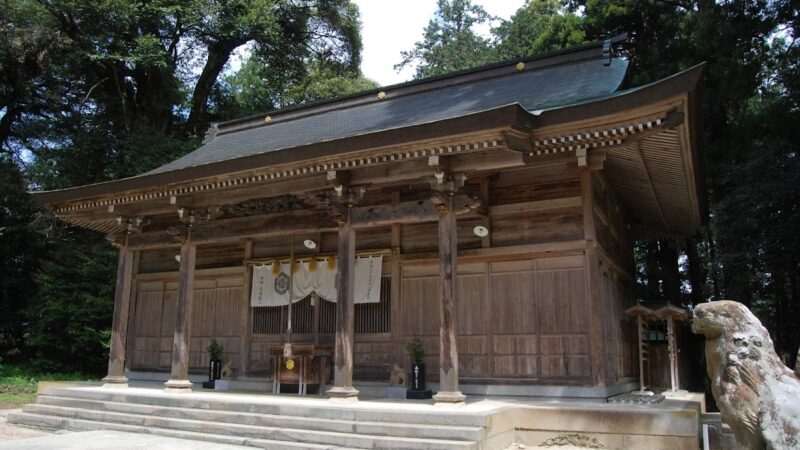
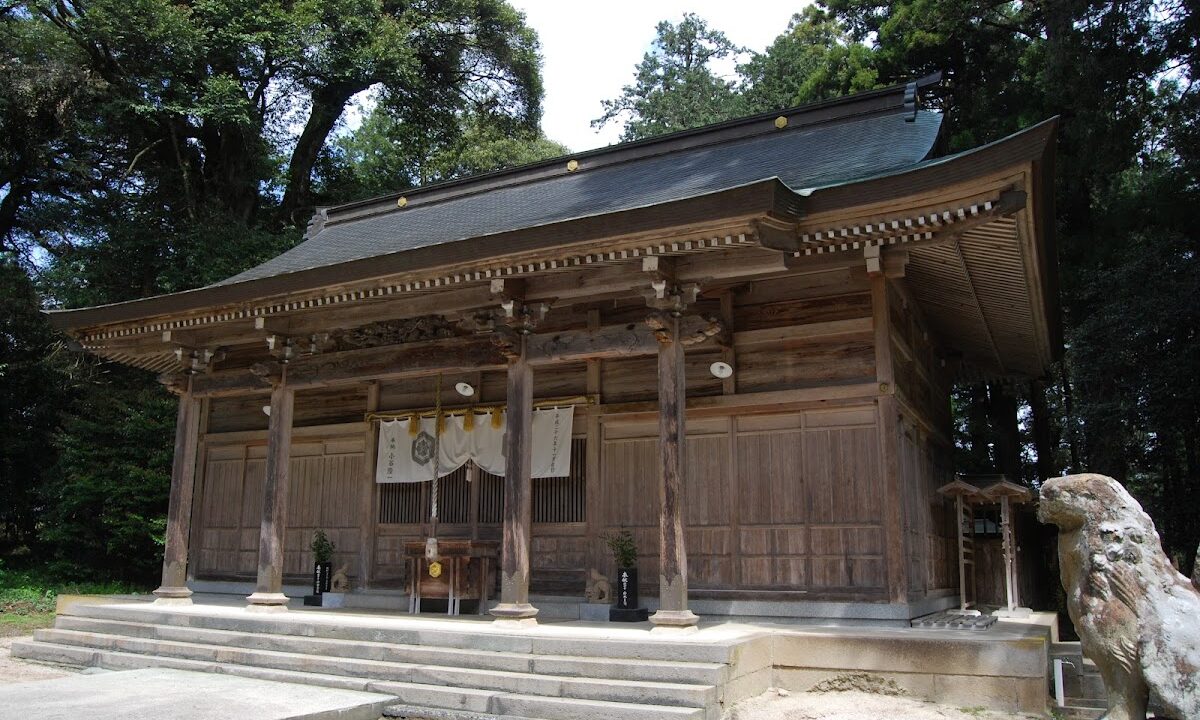
The current main hall was built in Bunkyū 1 (1861). This main hall is a valuable structure that conveys the characteristics of shrine architecture from the late Edo period. Following the separation of Shinto and Buddhism in the early Meiji era, the shrine was renamed “Kokuchōura Shrine” and ranked as a Gōsha (village shrine) under the modern shrine ranking system. A Gosha (village shrine) is a shrine of a rank that positions itself as the central shrine of a county, indicating the importance of the shrine in the region.
Deities and Divine Virtues
About the Main Deity
The deity enshrined at Kokuchoura Shrine has long been worshipped as the guardian deity of the region. Given its character as a Sosha (general shrine), it is possible that the deities of major shrines within Hoki Province are enshrined there, suggesting that a diverse array of gods are worshipped.
In ancient times, Sosha generally enshrined the deities of major shrines, including the Ichinomiya (first-ranked shrine) of the province. The Ichinomiya of Hoki Province is considered to be Shitori Shrine, where Takehazuchi-no-Mikoto is enshrined. It is possible that these deities are also enshrined at Kokuchoura Shrine.
Divine Virtues and Faith
Kokuchoura Shrine has long been revered as a guardian deity of the region, believed to bestow divine virtues such as abundant harvests, family safety, and business prosperity. Given its role as the guardian deity of the provincial capital, it is believed that the shrine was particularly revered for its prayers for regional peace and prosperity.
Even today, it attracts fervent devotion from local residents, with many worshippers visiting during the New Year’s pilgrimage and the autumn festival. The tranquil grounds are a beloved place for locals to escape the hustle and bustle of everyday life and find peace of mind.
Highlights of the Shrine Grounds
Main Hall and Shrine Architecture
The main hall, built in 1861 (Bunkyu 1), is a valuable structure that preserves the architectural style of shrines from the late Edo period. It showcases the pinnacle of carpentry techniques of the time, and the detailed carvings and decorations are particularly noteworthy.
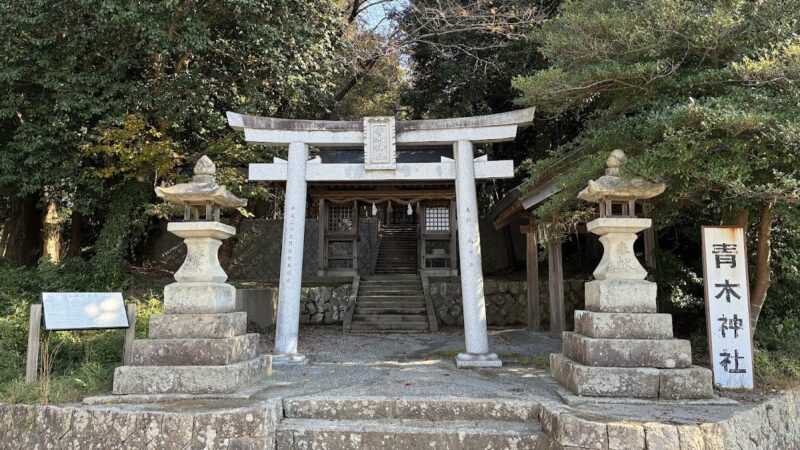
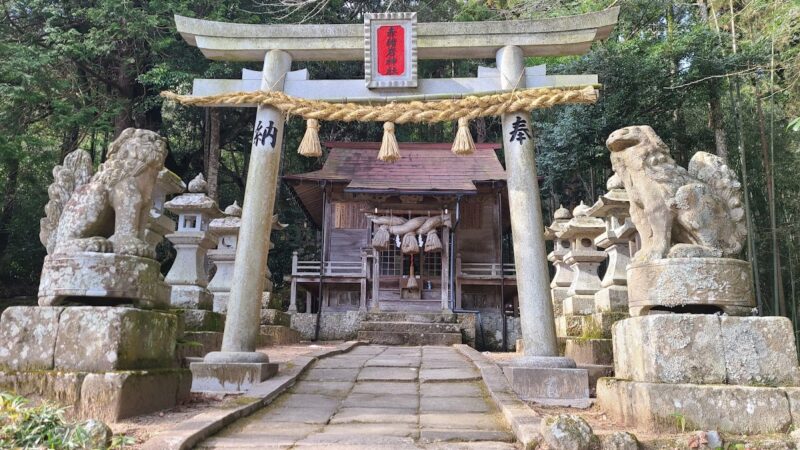
The grounds are relatively spacious, and the neatly arranged shrine buildings welcome worshippers. The path leading from the purification fountain to the worship hall and main hall preserves the ancient layout of shrines. The entire grounds are enveloped in a calm atmosphere, allowing worshippers to offer their prayers in peace.
Relationship with the Provincial Government Site
The most distinctive feature of Kokuchoura Shrine is its proximity to the site of the provincial government office of Hoki Province. The site is currently preserved as a historical site, allowing visitors to see the foundation stones and building remains of the former government office. Visiting the site after paying respects at the shrine allows you to experience what the center of ancient Hoki Province was like.
Other ancient ruins, such as the site of the provincial temple, are scattered around the provincial government site, and exploring these allows you to experience the romance of history from approximately 1300 years ago. There is a theory that the provincial government and provincial temple moved from the Irazuoka area, making this an important area for ancient history research.
Atmosphere of the Shrine Grounds
The shrine grounds are surrounded by trees, allowing you to experience nature in all four seasons. The fresh greenery of spring and the autumn foliage are particularly beautiful, allowing you to enjoy nature along with your visit. The grounds are meticulously clean, maintaining a sacred atmosphere.
You can receive a Goshuin (shrine stamp) at the shrine office (it is recommended to check in advance as staff may be absent). Receiving a Goshuin (temple/shrine stamp) as a memento of your visit allows you to preserve the memory of your visit.
Visiting Information and Access
Basic Information
Location Kokufu, Kurayoshi City, Tottori Prefecture
Visiting Hours Grounds are freely accessible (Shrine office hours may be limited)
Admission Fee Free
Parking Parking available for visitors (limited spaces)
Access Methods
Access by Public Transportation
- Approximately 10 minutes by local bus from JR Kurayoshi Station, get off at “Kokufu” bus stop, then approximately 5 minutes on foot
- Approximately 10 minutes by taxi from JR Kurayoshi Station
Access by Car
- Approximately 40 minutes from Yonago Expressway “Yuhara IC” via National Route 313
- Approximately 15 minutes from San’in Expressway “Kurayoshi Nishi IC”
It is close to the center of Kurayoshi City and can be visited in conjunction with other tourist spots such as the White-Walled Storehouse District. To the west of Kurayoshi City lies the site of the Kokubunji Temple, making it possible to spend a full day exploring ancient historical sites.
Nearby Attractions
Hoki Provincial Government Office Ruins
Located near the Kokuchoura Shrine, the site of the provincial government office was the political center of ancient Hoki Province. Currently, it is maintained as a historical park, with foundation stones and signs indicating the building layout. Archaeological excavations have confirmed remains from the Nara and Heian periods, allowing us to understand the scale and structure of the provincial government at that time.
Hoki Provincial Government Office Ruins
Located on the west side of Kurayoshi City, the Kokubunji Temple ruins are another must-see spot for ancient history enthusiasts. It was one of the Kokubunji temples built throughout Japan by order of Emperor Shomu during the Nara period, and the remains of the Hoki Provincial Government Office still exist. The foundation stones of the seven-story pagoda and other remnants allow us to imagine the magnificent temple of yesteryear.
Kurayoshi White-Walled Storehouse District
The white-walled storehouse district, a representative tourist spot in Kurayoshi City, is a beautiful townscape where merchant buildings from the Edo and Meiji periods remain. It’s about a 10-minute drive from Kokuchoura Shrine, making it ideal for a visit after praying. The landscape, with its rows of red-tiled roofs and white-walled storehouses, is sometimes called the “Little Kyoto of San’in.”
Utsubuki Park
Utsubuki Park, located at the foot of Mt. Utsubuki, a symbol of Kurayoshi City, is a famous cherry blossom viewing spot, selected as one of Japan’s Top 100 Cherry Blossom Viewing Spots. In spring, approximately 4,000 cherry trees bloom, attracting many visitors. The park also contains historical buildings such as the Hiryukaku Pavilion.
Manners and Etiquette for Visiting Shrines
Basic Etiquette for Visiting Shrines
When visiting a shrine, please observe the following basic etiquette:
- Bow before passing through the torii gate: As a sign of respect before entering the sacred area, bow before the torii gate.
- How to walk on the approach to the shrine: Since the center of the approach is considered the path of the gods, it is respectful to walk along the sides.
- How to purify yourself at the water basin: Purify your body and mind at the water basin. Hold the ladle in your right hand, purify your left hand, switch to your left hand and purify your right hand, switch back to your right hand, receive water in your left hand, rinse your mouth, and finally, hold the ladle upright to purify the handle.
- How to bow: The basic ritual in front of the main hall is “two bows, two claps, one bow.” Bow deeply twice, clap twice, and finally bow deeply once.
Regarding photography
Photography is generally permitted on the shrine grounds, but please refrain from taking pictures inside the main hall or in sacred areas. Also, please be considerate of other worshippers. Using a tripod or taking photos for commercial purposes may require prior permission.
Annual Events at Kokuchoura Shrine
Main Festivals
The shrine holds various festivals throughout the year. The following events are particularly important:
Annual Festival (Autumn Grand Festival)
Held every autumn, the annual festival is the most important event for the shrine. Local people gather, and sometimes a portable shrine procession and offering ceremonies take place.
New Year’s Festival
Many worshippers visit the shrine for the first shrine visit of the new year, praying for peace throughout the year. The shrine grounds are bustling with worshippers from New Year’s Day through the third day.
Monthly Festivals
These festivals are held regularly every month and form the basis of the shrine’s daily religious activities.
History and Culture of Kurayoshi City
As the Center of Hoki Province
Kurayoshi City is a historical region where the ancient capital of Hoki Province was located. Under the Ritsuryo system, Hoki Province corresponded to the central-western part of present-day Tottori Prefecture, and Kurayoshi was its political, economic, and cultural center. Kokuchoura Shrine has stood as a witness to this history, watching over the region for over 1000 years.
A Commercial City in the Early Modern Period
During the Edo period, Kurayoshi developed as a commercial city, particularly known for its cotton and soy sauce production. The white-walled storehouses lining the Tamagawa River are a valuable historical streetscape that conveys the prosperity of that time.
Modern Kurayoshi
Modern Kurayoshi City is known as an attractive tourist city where historical streetscapes and nature harmonize. Its proximity to hot spring resorts such as Misasa Onsen makes it a convenient base for sightseeing.
The Significance of Visiting Kokuchoura Shrine
Experiencing Ancient History
Visiting Kokuchoura Shrine has meaning beyond mere sightseeing. This was the center of local governance in ancient Japan, a valuable place that conveys the structure of the Ritsuryo state to the present day. Visiting this site along with the ruins of the provincial government office allows you to experience firsthand the ancient history you learned about in textbooks.
Experiencing Local Beliefs
Visiting a shrine that has attracted the faith of local people for over 1000 years allows you to understand the Japanese spirit and the nature of local communities. As you pray in the quiet grounds, you can feel the continuation of faith from ancient times to the present day.
Finding Peace of Mind
Spending time in the quiet grounds of a shrine, away from the hustle and bustle of modern life, brings peace to the mind. The grounds surrounded by ancient trees, the orderly shrine buildings, and the pure air—all of these calm the mind of visitors and relieve the stress of everyday life.
Summary: A Recommendation to Visit Kokuchoura Shrine
Kokuchoura Shrine, located in Kurayoshi City, Tottori Prefecture, is an ancient shrine that received its divine rank in 873 AD (Jogan 15), and may have played an important role as the principal shrine of Hoki Province. Located in the heart of the ancient provincial government office, it is a valuable site that conveys 1300 years of history.
The main shrine, built in 1861, the tranquil atmosphere of the grounds, and the integrated historical landscape with the adjacent provincial government ruins deeply move visitors. When you visit Kurayoshi City, be sure to visit Kokuchoura Shrine along with other tourist spots such as the white-walled storehouse district, and experience the history and faith that has continued since ancient times.
As you clasp your hands together in the quiet grounds and imagine the ancient people offering prayers in the same place, you will feel a connection that transcends time and space. Kokuchoura Shrine is a special place worth visiting not only for history buffs, but for anyone seeking peace of mind.