Isetama Shrine (Himi City, Toyama Prefecture) Complete Guide | Goshuin (Shrine Seal), History, and Access Information
Isetama Shrine, located in the heart of Himi City, Toyama Prefecture, is a historic shrine whose founding was influenced by Otomo no Yakamochi, a renowned poet of the Manyoshu era. Despite its convenient location just a two-minute walk from Himi Station, it is a valuable shrine that conveys ancient history and tradition, attracting deep devotion from locals and visitors alike.
Overview of Isetama Shrine
Isetama Shrine, located in Ise-Omachi, Himi City, is a shrine with a long history as the guardian shrine of Himi-go. It enshrines Amaterasu Omikami as its main deity and bears the name “Isetama” due to its deep connection with Ise Grand Shrine.
While the current name, “Isetama Shrine,” was adopted in 1844 (Tenpo 15), its origins date back to the Nara period. It is said that the Himi region was founded when the ancestors who settled the area established a “festival garden” and worshipped the gods of the sun and moon. It is also said that in 747 AD, Otomo no Yakamochi, who was serving as the governor of Etchu Province, constructed the shrine buildings.
Initially called “Arisonomiya,” it later became known as “Isemachi Shinmei-gu.” The place name “Ise-Omachi” also originates from the fact that this shrine invited Amaterasu Omikami from Ise Grand Shrine.
Deities enshrined at Isetama Shrine
Isetama Shrine enshrines many deities, each possessing different divine virtues.
Main deity and enshrined deities
Main deity:
- Amaterasu Omikami – The main deity of Ise Grand Shrine and the supreme deity in Japanese mythology. As a deity personifying the sun, this deity bestows blessings of national peace and security, abundant harvests, and good fortune.
Deities Enshrined:
- Izanagi-no-Okami – Known as the god of creation, bestowing blessings for matchmaking and marital harmony.
- Izanami-no-Okami – The wife of Izanagi-no-Okami, bestowing blessings for safe childbirth and fertility.
- Homusubi-no-Kami – As the god of fire, bestowing blessings for fire prevention and industrial development.
- Kotoshironushi-no-Kami – Known as Ebisu, bestowing blessings for business prosperity and maritime safety.
- Ame-no-Uzume-no-Mikoto – As the goddess of performing arts, bestowing blessings for improvement in skills.
- Sugawara-no-Michizane-no-Mikoto – As the god of learning, bestowing blessings for academic success and passing exams.
- Kusunoki Masashige no Mikoto – Known as a loyal retainer, and revered for his divine virtue of lasting military fortune.
- Spirits of War Dead from the Parish – Spirits of those who protect the peace and safety of the region.
By enshrining so many deities, this shrine is able to fulfill the diverse wishes of its visitors.
History of Isetama Shrine
From its Founding to Ancient Times
There are several theories regarding the founding of Isetama Shrine. The oldest origin is said to be when the ancestors who pioneered the Himi region worshipped the gods of the sun and moon.
A reliable record states that in 747 (Tenpyo 19), Otomo no Yakamochi, who was appointed as the governor of Etchu Province and stationed in Himi, constructed the shrine buildings. Otomo no Yakamochi is known as a poet who was involved in the compilation of the Manyoshu, and he left behind many excellent poems during his five years in Etchu. The shrine built by Yakamochi was called “Ariso-no-miya” and attracted the faith of the people as the guardian shrine of Himi village.
The name “Ariso” is thought to originate from the beautiful rocky reefs (iso) along the Himi coastline, and it is also mentioned as “Ariso-umi” in Yakamochi’s poems.
From the Medieval to the Early Modern Period
As time passed, the shrine came to be called “Ise-machi Shinmei-gu.” This is thought to be a name change to clearly indicate that Amaterasu Omikami was invited from Ise Grand Shrine. During this period, the area around the shrine also came to be called “Ise-machi,” forming the basis of the current place name “Ise-Omachi.”
In 1844 (Tenpo 15), the shrine was renamed to its current name, “Ise-Tama Shrine.” There are various theories as to why the character “Tama” was added, including the theory that it represents the spirits of the gods, or that it likens the beauty of the Himi sea to a jewel.
Current Shrine Buildings
The current worship hall was built in 1844 (Tenpo 15), making it a valuable structure with over 170 years of history. The main sanctuary is also believed to have been rebuilt around the same time, preserving the characteristics of late Edo period shrine architecture.
Since the Meiji era, it has continued to welcome many worshippers as the guardian shrine of the region and as a shrine located in the heart of Himi City. After the war, the spirits of war dead from the parishioners were also enshrined, and it now serves as a place of prayer for peace.
Highlights of Isetama Shrine
Historic Shrine Buildings
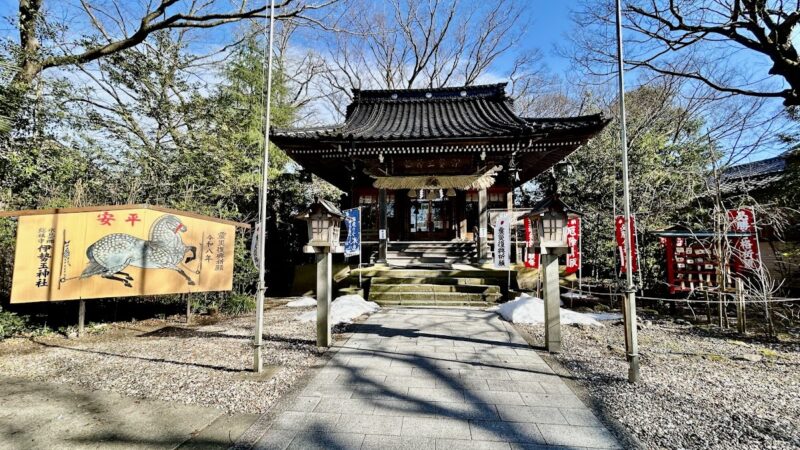
The worship hall, built in 1844 (Tenpo 15), is one of the greatest highlights of Isetama Shrine. It is a valuable structure that retains the architectural style of the late Edo period, and the craftsmanship of the artisans of the time can be seen in the detailed carvings and decorations. Standing before the worship hall, you can feel the weight of history in the building’s dignified presence, which has remained unchanged for over 170 years.
Giant Ema (Votive Tablet)
Isetama Shrine has a giant ema depicting a white snake, a symbol of good fortune. This ema was created in the hope of recovery from the Great East Japan Earthquake, and the white snake has long been revered as a symbol of wealth and business prosperity. Be sure to take a look at this giant ema when you visit the shrine.
Atmosphere of the Shrine Grounds
Despite being located in the heart of the city, just a two-minute walk from Himi Station, a tranquil atmosphere permeates the shrine grounds. The fact that it maintains a space where one can pray peacefully, away from the surrounding hustle and bustle, is a testament to how much it has been cherished by the local community for many years.
Information on Goshuin (Shrine Seals) at Isetama Shrine
Information on Goshuin (Shrine Seals)
Goshuin are available at Isetama Shrine. They can be obtained at the shrine office, but the hours may change during festivals and other events.
Especially during the July festival period, the shrine becomes very busy, so it is recommended to call ahead to confirm before visiting. If you want to be sure to receive a Goshuin (temple/shrine stamp), it is best to visit after 9:00 AM.
Features of the Goshuin
The Goshuin at Isetama Shrine features the shrine’s name and the date of visit written in ink, along with the shrine’s seal. Simple yet dignified, this Goshuin is popular among Goshuin collectors.
When receiving a Goshuin, please bring your Goshuincho (stamp book) and make your request politely. Please check with the shrine office regarding the offering fee.
Annual Events at Isetama Shrine
Grand Festival
The Grand Festival is the most important festival at Isetama Shrine. Held in July, this is the busiest time of year for the shrine. As the guardian shrine of Himi village, important rituals are performed to pray for the peace and prosperity of the region and a bountiful harvest.
Other Annual Events
Various rituals are performed throughout the year, including the New Year’s Day Festival, Setsubun Festival, and the Summer Purification Ceremony. As a shrine deeply rooted in the lives of the local people, we perform Shinto rituals at seasonal turning points, praying for the safety and happiness of our parishioners and visitors.
Basic Information about Isetama Shrine
Location and Contact Information
Address: 1-9-23 Ise-Omachi, Himi City, Toyama Prefecture 935-0015
Phone Number: 0766-72-2947
Nearest Station: Himi Station, JR Himi Line
Visiting Hours
While the shrine grounds are generally open for free worship, the operating hours of the shrine office may vary depending on the day. If you wish to receive a Goshuin (shrine stamp) or prayers, it is recommended to confirm by phone in advance.
Parking
There is parking space around the shrine, but the number of spaces is limited. Since the shrine is conveniently located for public transportation, we recommend accessing it by train whenever possible.
Access to Isetama Shrine
Access by Train
Isetama Shrine is very close to Himi Station, and walking is the most convenient way to access it.
From JR Himi Line “Himi Station”:
- Approximately 2 minutes on foot (approximately 170m)
- Exit the station and head north towards Ise-Omachi
- It is located in the city center, so the directions are easy to follow.
Himi Station is approximately 30 minutes from Takaoka Station on the JR Himi Line. Takaoka Station is one stop from Shin-Takaoka Station (a stop on the Hokuriku Shinkansen) on the Johana Line, or approximately 20 minutes from Toyama Station on the Hokuriku Main Line (Ainokaze Toyama Railway).
Access by Car
If using the Noto Expressway:
- Approximately 5 minutes from Himi Kita IC
- Approximately 10 minutes from Himi IC
After exiting the IC, head towards the city center of Himi and follow the signs for Ise-Omachi. If using a car navigation system, it is convenient to enter the shrine’s phone number (0766-72-2947) or address.
From Toyama City:
- Approximately 40 minutes via National Route 415
From Kanazawa:
- Approximately 1 hour via the Nōetsu Expressway
Combining with Nearby Tourist Attractions
Himi City has many other tourist attractions. Visiting them in conjunction with a visit to Isetama Shrine will allow you to enjoy a more fulfilling Himi sightseeing experience.
Himi Fishing Port Outer Market “Himi Banyagai”: Approximately 5 minutes by car
- A popular spot where you can buy and eat fresh seafood from Himi
- A wide variety of local gourmet food is available, including Himi udon and Himi beef.
Himi City Shiokaze Gallery (Fujiko Fujio A Art Collection): Approximately 10 minutes on foot
- Exhibits works by Fujiko Fujio A, a manga artist from Himi.
Manga Road: Within walking distance
- Character statues by Fujiko Fujio A are scattered throughout Himi city.
Points to Note When Visiting Isetama Shrine
Etiquette for Worship
Please observe basic shrine worship etiquette and pray with sincerity.
- Bow before passing through the torii gate.
- Purify your body and mind at the purification fountain.
- Hold the ladle in your right hand and purify your left hand.
- Switch the ladle to your left hand and purify your right hand.
- Switch the ladle back to your right hand, receive water in your left hand, and rinse your mouth.
- Finally, hold the ladle upright and purify the handle.
- Bow twice, clap twice, and bow once in front of the main hall.
- Bow deeply twice.
- Clap twice at chest height.
- Offer your prayers with sincerity.
- Finally, bow deeply once.
Recommended time to visit
Isetama Shrine can be visited throughout the year, but there is a particularly recommended time.
New Year’s Visit (January 1st-3rd): Many worshippers visit to pray for the New Year.
Annual Grand Festival (July): This is the most lively time for the shrine, and you can witness traditional festivals.
Autumn (September-November): The weather is pleasant, making it a calm season for worship.
Shrine Visit Plan Combined with Himi Sightseeing
Half-Day Course:
- Morning: Arrive at Himi Station → Visit Isetama Shrine → Stroll along Manga Road
- Afternoon: Lunch and shopping at Himi Banyagai
Full-Day Course:
- Morning: Visit Isetama Shrine → Stroll through Himi city center → Shiokaze Gallery
- Afternoon: Lunch at Himi Banyagai → Drive along Himi coast → Hot springs
Benefits of Isetama Shrine
Isetama Shrine enshrines many deities, so you can receive various blessings.
Main Benefits
Good Fortune & Family Safety: Through the divine virtues of Amaterasu Omikami, you can pray for the happiness and improved fortune of your family.
Matchmaking & Marital Harmony: Through the divine virtues of Izanagi-no-Okami and Izanami-no-Okami, you can pray for successful relationships and marital harmony.
Academic Success & Passing Exams: Sugawara no Michizane is enshrined here, and many students and those preparing for exams visit the shrine.
Business Prosperity & Maritime Safety: Through the divine virtues of Kotoshironushi-no-Kami (Ebisu), you can pray for the development of your business and the safety of those involved in fishing.
Safe Childbirth & Fertility: Through the divine virtues of Izanami-no-Okami, many people visit to pray for safe childbirth and fertility.
Improvement in Performing Arts: Through the divine virtues of Ame-no-Uzume-no-Mikoto, this shrine is also recommended for those wishing to improve their skills in the performing arts.
The Connection Between Himi City and Otomo no Yakamochi
When discussing Isetama Shrine, the connection between Otomo no Yakamochi and Himi is essential.
Otomo no Yakamochi served as the governor of Etchu Province (Toyama) for approximately five years, from 746 to 751. During this time, Yakamochi experienced the beautiful nature and lifestyle of the people of Etchu, composing many excellent poems. Approximately 220 of Yakamochi’s poems included in the Manyoshu anthology are believed to date from his time in Etchu.
In particular, the beauty of Himi’s coastline is celebrated in several poems under the name “Ariso-umi,” indicating Yakamochi’s affection for the Himi region. The construction of the Ariso-no-miya shrine, the predecessor of Isetama Shrine, in 747 can also be seen as a manifestation of his deep affection for this area.
In present-day Himi City, sites associated with Otomo no Yakamochi, such as the “Statue of Otomo no Yakamochi” and the “Manyo Road,” have been developed. Visiting these sites along with Isetama Shrine allows you to reflect on the Manyo era.
Summary
Isetama Shrine is a venerable shrine with a history of over 1200 years, with Otomo no Yakamochi having been involved in its founding. Despite its convenient location just a 2-minute walk from Himi Station, it is a precious place where you can pray in a tranquil atmosphere.
Many deities, including Amaterasu Omikami, are enshrined here, and you can pray for various wishes such as good fortune, matchmaking, academic success, and business prosperity. There are also many other attractions, including the historic shrine building constructed in 1844 (Tenpo 15) and a giant ema (votive tablet) depicting a white snake, a symbol of good fortune.
When you visit Himi, be sure to visit Isetama Shrine and experience the history and culture of Himi that has continued since ancient times. You can also receive a Goshuin (temple/shrine stamp), which will surely become a memorable part of your Himi sightseeing trip.
The surrounding area also boasts many other tourist attractions, such as the Himi Fishing Port Outer Market “Himi Banyagai” and the Fujiko Fujio A Art Collection, so please use Isetama Shrine as your starting point to fully enjoy the charms of Himi.