Inari Shrine (Usuda, Saku City, Nagano Prefecture) Complete Guide | History, Deities, and the Charm of the Vermilion Torii Gates
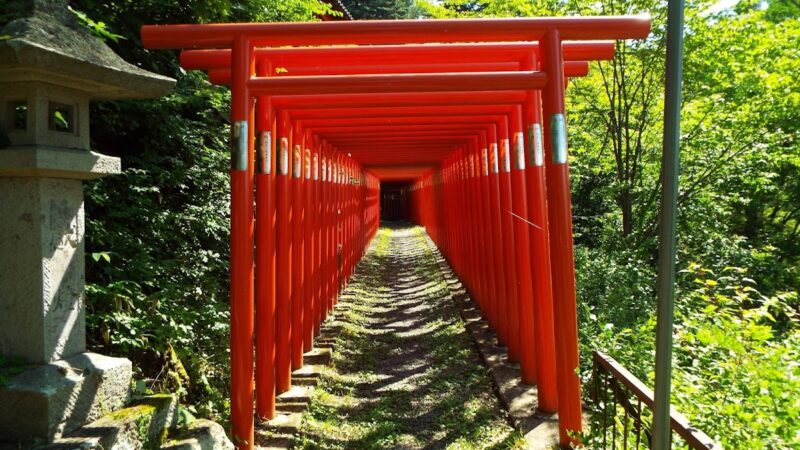
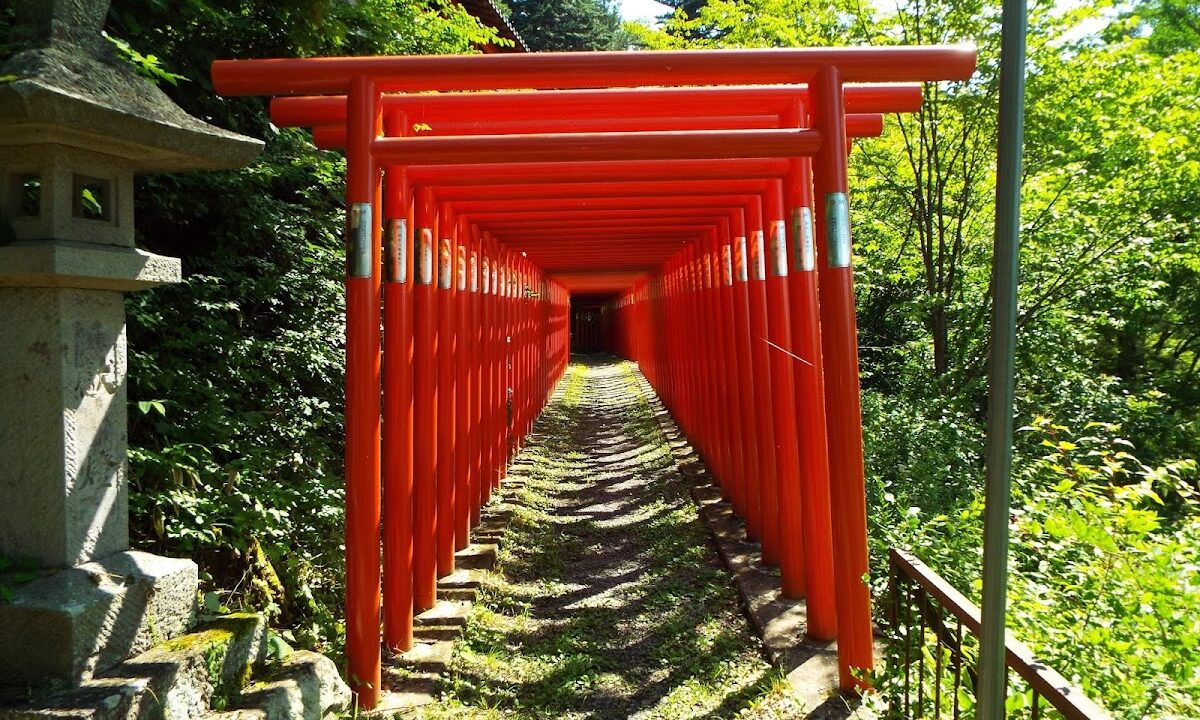
Located within Inariyama Park in Usuda, Saku City, Nagano Prefecture, Inari Shrine is a historic shrine situated on a small hill overlooking the Chikuma River (Shinano River). Said to have been founded in 993 AD, its approach, lined with 130 vermilion torii gates, has attracted attention as an “Instagrammable” spot. This article provides a detailed introduction to Inari Shrine, including its history, enshrined deities, highlights, and access information.
Basic Information about Inari Shrine
Location: 1 Shiroyama, Usuda, Saku City, Nagano Prefecture 384-0301
Corporate Number: 2100005003060 (Designated October 5, 2015)
Nearest Station: Approximately 500m west of Usuda Station on the JR Koumi Line
Nearest Bus Stop: 3-minute walk (228m) from Inariyama-shita bus stop, 4-minute walk (283m) from Usuda bus stop on the Saku-Ueda Line
Parking: Inariyama Park parking available
Inari Shrine is located on the south side of the Usuda Bridge West intersection on the left bank of the Chikuma River, in a corner of Inariyama Park. It is easily accessible on foot from Usuda Station on the Koumi Line and has been a beloved local shrine for many years.
History and Origins of Inari Shrine
History from the Heian Period
Inari Shrine is said to have been founded in the 3rd year of Shōryaku (993), making it an ancient shrine with a history of over a thousand years. One theory suggests that in the 4th year of Tentoku (960), a son of Emperor Murakami descended to Kasuga Village in Saku District, and in the 3rd year of Shōryaku (992) during the reign of Emperor Go-Ichijō, he moved to this location and enshrined a divided spirit from Mount Inari in Kii District, Yamashiro Province (present-day Kyoto Prefecture).
Connection with Takeda Shingen
During the Sengoku period, records show that Takeda Shingen, a famous general of Kai Province, had a crimson fence (vermilion fence) built at this Inari Shrine. During the Eiroku period (1558-1570), Shingen controlled the Saku region, suggesting that the shrine was considered important as a center of local faith.
Connection with Takeda Shingen ### Heisei Restoration Project
In March 2017 (Heisei 29), the restoration work on the torii gate was completed, resulting in the beautiful vermilion gate we see today. Thanks to the donations and efforts of local residents, the traditional landscape continues to be preserved.
Deities and Blessings
The following three deities are enshrined at Inari Shrine:
Ukanomitama-no-kami
Ukanomitama-no-kami, the principal deity, is the god of grain and food, also enshrined at Fushimi Inari Taisha in Kyoto, the head shrine of all Inari shrines. He is believed to bring blessings of abundant harvests, business prosperity, and family safety, and has long been revered by people involved in agriculture and commerce.
Takeminakata-no-kami
This deity is enshrined at Suwa Taisha in Nagano Prefecture and is known as the god of martial prowess and agriculture. Since the Saku region belonged to the Suwa faith sphere, it is thought that he was also enshrined at this Inari Shrine. ### Kotoshironushi-no-Mikoto
A beloved deity of business prosperity and fishing, often referred to as Ebisu-sama. Along with Ukanomitama-no-Kami, he is deeply revered by worshippers praying for business success and prosperity.
Highlights of Inari Shrine
The Impressive 130 Vermilion Torii Gates
The greatest highlight of Inari Shrine is the 130 vermilion torii gates lining the approach to the shrine. The tunnel of torii gates stretching from the foot of the mountain to the main hall is reminiscent of Kyoto’s Fushimi Inari Taisha, and in recent years, it has become an increasingly popular “Instagrammable” spot for photography.
The torii gates were donated by believers and companies, and each bears the donor’s name. The vermilion torii gates stand out against the green of the trees, creating a particularly vibrant contrast on sunny days.
Iron Torii Gate and Roadside Entrance
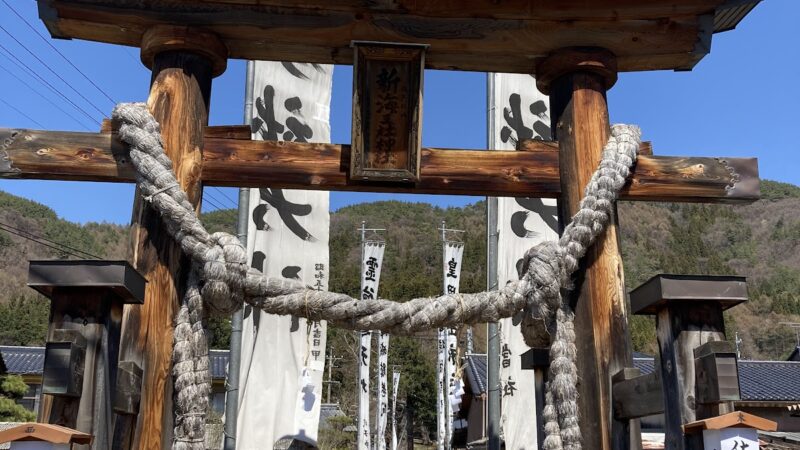
Near the entrance to Inariyama Park, by the roadside at the Shinano River Bridge, stands an iron torii gate. Passing through this gate marks the beginning of a path leading into a small mountain. The unusual material of the iron torii gate speaks to a part of the shrine’s history.
Cliffside Shrine Along the Path
Partway up the path, a small shrine built into a cliff appears. This is a unique architectural style called kakezukuri (cliff-hanging construction), utilizing the steep terrain. From this midpoint, you can look down on the Chikuma River and the townscape of Usuda, making it a spectacular viewpoint.
Worship Hall and Main Shrine
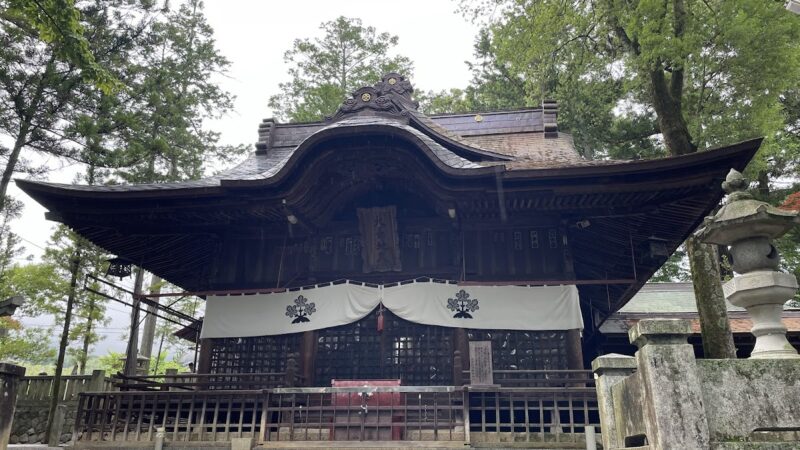
After passing through the torii gate, the worship hall appears at the top of a stone staircase. In front of the worship hall is a water basin where you can purify yourself before praying. Unusual round lanterns are placed around the worship hall, showcasing the beauty of traditional shrine architecture.
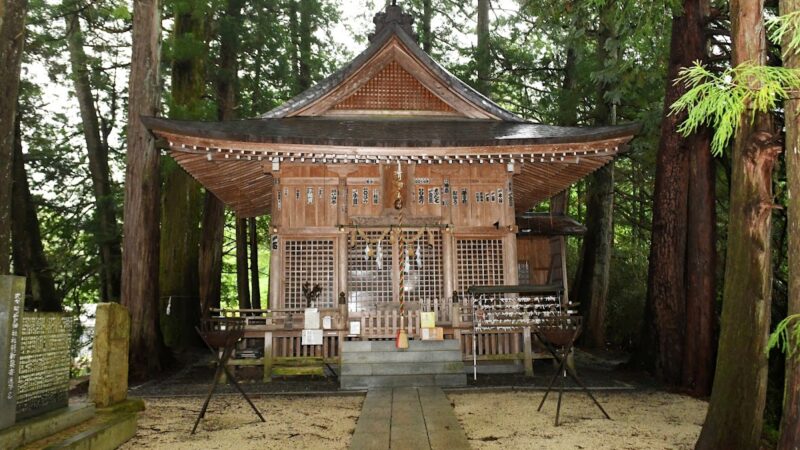
The main shrine is located behind the worship hall, enveloped in a solemn atmosphere. The shrine, predominantly in vermilion, harmonizes with the surrounding nature while still exuding a strong presence.
Adorable Fox Figurines
Fox statues are famous at Inari shrines, and the Usuda Inari Shrine also features adorable fox figurines. These foxes, considered messengers of the Inari god, seem to gently watch over worshippers. The offerings of fried tofu and sake from local residents reflect the deep-rooted faith of the community.
Views of the Chikuma River and Townscape
From the high ground of Inariyama, you can enjoy a panoramic view of the Chikuma River (Shinano River) and the townscape of Usuda. Especially during the autumn foliage season and the fresh green season, the scenery is magnificent, enhanced by the beauty of nature. It’s well worth visiting not only for worship but also to enjoy the view.
Integration with Inariyama Park
The Inari Shrine is located in a corner of Inariyama Park, creating a space where the park and shrine are integrated. The park features walking paths and rest areas, allowing visitors to enjoy a relaxing time amidst nature in conjunction with their shrine visit.
For locals, it’s a regular walking route, and in the early mornings and evenings, it’s a popular spot for nearby residents to unwind. The combination of the park and shrine, showcasing the changing seasons—cherry blossoms in spring, lush greenery in summer, vibrant autumn leaves, and snowscapes in winter—allows visitors to experience the beauty of each season.
Manners and Offerings for Shrine Visits
When visiting an Inari shrine, please observe basic shrine etiquette.
- Bow before passing through the torii gate: As a sign of respect before entering the sacred area, bow before the torii gate.
- Walk along the edge of the path: The center of the path is considered the path of the gods, so walk along the edge.
- Purify yourself at the water basin: Purify your left hand, then your right hand, then your mouth, and finally the handle of the ladle.
- Two Bows, Two Claps, One Bow: In front of the main hall, bow deeply twice, clap your hands twice, and finally bow deeply once.
At Inari shrines, fried tofu and sake are popular offerings. Records from visitors confirm that fried tofu and sake are indeed offered. This is based on the folk belief that foxes, messengers of the Inari god, are fond of fried tofu.
Relationship with surrounding shrines
While there are several Inari shrines in Saku City, the Inari shrine in Usuda-aza-Shiroyama is known for its long history and unique landscape.
Difference from Hanazu Inari Shrine
Also in Saku City is the famous Hanazu Inari Shrine. Located in Iwamurada, Saku City, Hanazu Inari Shrine is a large shrine sometimes counted as one of Japan’s five great Inari shrines. The Inari Shrine is characterized by its cliff-hanging construction, similar to Kyoto’s Kiyomizu-dera Temple, and is known for its magnificent appearance perched on the cliffs of the Yukawa River.
On the other hand, the Inari Shrine in Usuda, Shiroyama, is a more community-oriented shrine, serving as an object of daily worship for local residents. While not as large as the Hanagura Inari Shrine, its 130 vermilion torii gates and tranquil atmosphere are its charm, offering a peaceful environment for worship.
Nearby Shrines
Other shrines are scattered around the Inari Shrine, including Shimogoshi Suwa Shrine (10-minute walk) and Miyuki Shrine (19-minute walk). When touring the shrines of the Saku region, visiting these shrines as well is recommended.
Access
Access by Train
It’s approximately 500m west (about a 7-minute walk) from Usuda Station on the JR Koumi Line. Exit the station and head towards the Chikuma River. Turning south at the Usudabashi West intersection, you’ll see the entrance to Inariyama Park. ### Access by Bus
- Inariyama-shita Bus Stop: 3-minute walk (228m)
- Saku-Ueda Line Usuda Bus Stop: 4-minute walk (283m)
- Santanda Chuo Bus Stop (Nakasendo Line, Saku-Karuizawa-Ueda-Komoro Line, Saku-Ueda Line): 5-minute walk (354m)
- Taguchi-Aonuma Line Inbound/Outbound is also available
Access by Car
Approximately 10 minutes from Saku-Minami IC on the Chubu Odan Expressway, and approximately 15 minutes from Saku IC on the Joshinetsu Expressway. There is a parking lot at Inariyama Park, which you can use. Entering “Inariyama Park” or “1 Shiroyama, Usuda, Saku City” into your car navigation system will guide you.
Attractiveness as a Photo Spot
In recent years, Inari Shrine has attracted attention as an “Instagrammable” spot. The approach to the shrine, lined with 130 vermilion torii gates, is a particularly ideal spot for photography.
Recommended Time for Photography
- Early Morning: Fewer visitors, and the morning sun beautifully illuminates the torii gates.
- Late Morning: Sunlight filters through the trees onto the approach, creating a magical atmosphere.
- Evening: The vermilion torii gates appear even more vibrant in the setting sun.
Photography Tips
- An angle looking up at the tunnel of torii gates from below.
- The Chikuma River and cityscape visible through the torii gates.
- A composition combining fox statues and torii gates.
- The contrast between seasonal flowers or autumn leaves and the torii gates.
When taking photographs, please be considerate of other visitors and remember that this is a sacred place, so please observe proper etiquette.
Annual Events and Festivals
Inari shrines hold festivals throughout the year by local residents. While the exact dates may vary from year to year, the general annual festivals of Inari shrines are often held during the following periods.
- Hatsuumasai: The first day of the horse in February (the most important festival at Inari Shrine)
- Spring Grand Festival: Spring (praying for a bountiful harvest)
- Autumn Grand Festival: Autumn (expressing gratitude for the harvest)
The festivals are primarily run by local residents, preserving the region’s traditions.
Points to Note When Visiting Inari Shrine
Clothing and Equipment
The approach to the shrine has stone steps, and you will need to climb up the mountain, so we recommend wearing comfortable shoes. Particular caution is needed during rainy weather and winter, as the ground can be slippery.
Visiting Hours
The shrine is generally open 24 hours a day, but lighting is limited at night, so we recommend visiting during daylight hours. Also, early mornings and evenings may coincide with local residents’ walking times.
Observing Manners
This shrine is beloved by the local community, so please observe proper etiquette when visiting, refraining from loud noises or littering. Please be considerate and avoid disturbing other visitors while you’re engrossed in taking photos.
Other Tourist Spots in Saku City
When you visit Inari Shrine, why not also explore other tourist spots in Saku City?
- Hanagane Inari Shrine: A famous shrine considered one of Japan’s five major Inari shrines
- Saku Carp: Saku City is famous for its carp dishes, and there are many carp restaurants in the city
- Former Nakagomi School: A Western-style school building from the Meiji era, designated as a National Important Cultural Property
- Goryokaku (Ryūoka Castle): One of only two Goryōkaku fortresses in Japan
- Chikuma River Cycling Road: A cycling course where you can enjoy the scenery along the Chikuma River
Summary
Inari Shrine, located in Usuda, Shiroyama, Saku City, Nagano Prefecture, is a historical shrine founded in 993 AD. This shrine enshrines deities such as Ukanomitama-no-kami, Takeminakata-no-kami, and Kotoshironushi-no-mikoto, and is believed to bring blessings of abundant harvests, business prosperity, and family safety.
The approach to the shrine, lined with 130 vermilion torii gates, is breathtakingly beautiful and has recently gained attention as an “Instagrammable” spot. The view from the hilltop overlooking the Chikuma River is also magnificent, allowing visitors to enjoy the natural scenery along with their worship.
Located within Inariyama Park, this shrine, beloved by locals, is not only a tourist destination but also a cherished center of local faith. Its convenient location, within walking distance of Usuda Station on the JR Koumi Line, is another attractive feature.
When visiting Saku City, be sure to visit this historic Inari Shrine. Passing through the tunnel of vermilion torii gates and quietly offering prayers at this shrine with over a thousand years of history will be a special moment away from everyday life.