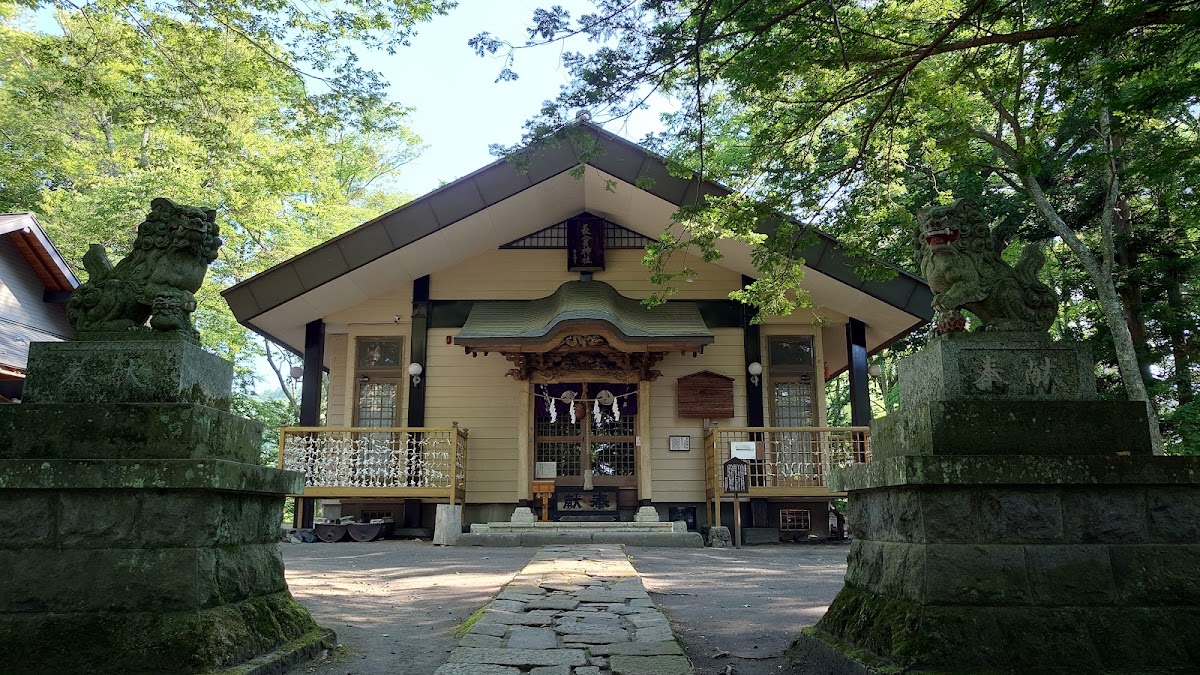
Nagakura Shrine (Karuizawa, Kita-Saku District, Nagano Prefecture) Complete Guide | History, Goshuin (Shrine Seal), and Access Information
Nagakura Shrine, located in Karuizawa, Kita-Saku District, Nagano Prefecture, is a venerable shrine listed in the Engishiki Jinmyocho (a list of shrines compiled during the Heian period). Founded during the Tenchō era (824-834), it has been revered by the local people as the guardian deity and tutelary god of the Nagakura area for over 1700 years.
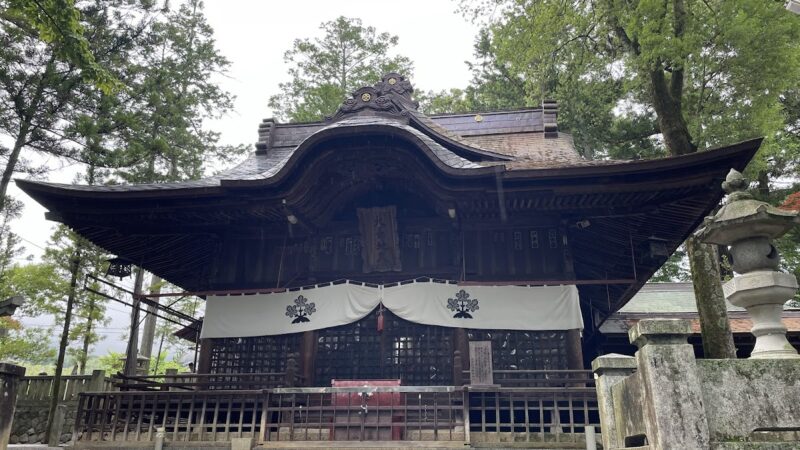
Despite its convenient location, just a 5-minute walk from Naka-Karuizawa Station, the tranquil grounds surrounded by trees offer a respite from the hustle and bustle of Karuizawa. The Edo-period carvings and moss-covered stone Buddha statues remaining in the main hall quietly tell the story of its long history.
This article provides detailed information you should know before visiting Nagakura Shrine, including its history, enshrined deities, highlights of the grounds, goshuin information, and access methods.
History and Origins of Nagakura Shrine
Founding during the Tenchō Era and its Connection to the Tōsandō Road
The exact founding date of Nagakura Shrine is unclear, but according to shrine tradition, it was established on Mount Nagakura during the Tenchō era (824-834), around the time the Nagakura Station on the old Tōsandō Road was developed. The former shrine grounds were called “Moto-Hachiman,” and it was enshrined as a guardian deity in Nagakura, a place that flourished as a transportation hub since ancient times.
The Tōsandō Road was one of the major official roads of ancient Japan, an important transportation route connecting the capital with the eastern provinces. Nagakura Station functioned as one of its post stations, and Nagakura Shrine is thought to have played an important role as a place to pray for the safety of travelers and the prosperity of the region.
Listed as a Shikinaisha (Shrine in the Engishiki)
The most important evidence demonstrating the historical value of Nagakura Shrine is its inclusion in the Engishiki Jinmyōchō (compiled in 927) from the Heian period. The Engishiki Jinmyocho is a document that records historically significant shrines recognized by the imperial court throughout Japan. Shrines listed in this document are called “Shikinaisha.”
In Shinano Province (present-day Nagano Prefecture), 48 Shikinaisha are listed, and Nagakura Shrine is counted as one of them. This listing proves that the shrine held a status recognized by the imperial court at least by the mid-Heian period, indicating a history spanning over 1000 years.
There is also a tradition that Nagakura Shrine is listed in the Engishiki along with Nagakura Station and Nagakura Pasture, suggesting that the ancient Nagakura region was important for both transportation and livestock farming.
“Nagakura Shrine Hachimangu” in the Medieval Period
In the medieval period, it was also known as “Nagakura Shrine Hachimangu.” Hachiman worship was particularly revered in samurai society, and as a shrine dedicated to Emperor Ojin (Homudawake-no-Mikoto), also known as the tutelary deity of the Minamoto clan, it is thought to have attracted the faith of local samurai.
From the Sengoku period to the Edo period, Shinano Province was the stage for numerous wars, but Nagakura Shrine continued to exist as a spiritual center for the community.
Reconstruction in the Edo Period and the Present
The current main hall was renovated in later years, but the elaborate carvings from the time of its construction in 1758 (Hōreki 8) still remain inside. These carvings demonstrate the high level of craftsmanship in the mid-Edo period and enhance the historical value of the shrine.
Under the Meiji era’s shrine ranking system, it was ranked as a village shrine and continued to attract the faith of local residents as the guardian deity and tutelary god of the Nagakura area. Even today, it is visited by many worshippers for New Year’s prayers, Shichi-Go-San (a traditional rite of passage for children), and various other prayers.
Deity and Divine Virtues
Emperor Ōjin (Homudawake-no-Mikoto)
The deity enshrined at Nagakura Shrine is Homudawake-no-Mikoto. Homudawake-no-Mikoto is the divine name of Emperor Ōjin, the 15th emperor of Japan, and is worshipped as Hachiman-jin at Hachiman shrines throughout Japan.
Emperor Ōjin is known in ancient Japan for his efforts in introducing continental culture and strengthening the nation’s power. He is revered as a god of both military and literary arts, and a god of national protection. He is also known as the tutelary deity of the Minamoto clan and was particularly devoutly worshipped in samurai society.
Divine Virtues
The main divine virtues you can pray for at Nagakura Shrine are as follows:
- Long-lasting military fortune and success in competitions: As a god of war, Hachiman, prayers for success in competitions and passing exams.
- National peace and protection from evil: Protection from evil and disaster as a god of national protection.
- Family safety and prosperity of descendants: Safety and prosperity of family as the local guardian deity.
- Traffic safety: Safe travels as the guardian deity of the ancient Higashiyama Road.
- Abundant harvests and business prosperity: Development of industry as the guardian deity of the region.
Nagakura Shrine, which has watched over the region for over 1700 years as the guardian deity of the Nagakura area, is an irreplaceable spiritual support for the local residents.
Highlights of the Shrine Grounds
Hōreki-era carvings in the main hall
The greatest highlight of Nagakura Shrine is the carvings remaining inside the main hall, dating back to its construction in Hōreki 8 (1758). Although the current main hall has been renovated in later years, this carving is preserved as a valuable cultural asset from the mid-Edo period.
The mid-Edo period was one of the most developed periods for decorative carving in shrine and temple architecture, and many works with exquisite technique and rich expressiveness remain. The carvings at Nagakura Shrine are one such example, conveying the high level of skill of the craftsmen of that time.
Moss-Covered Stone Buddhas
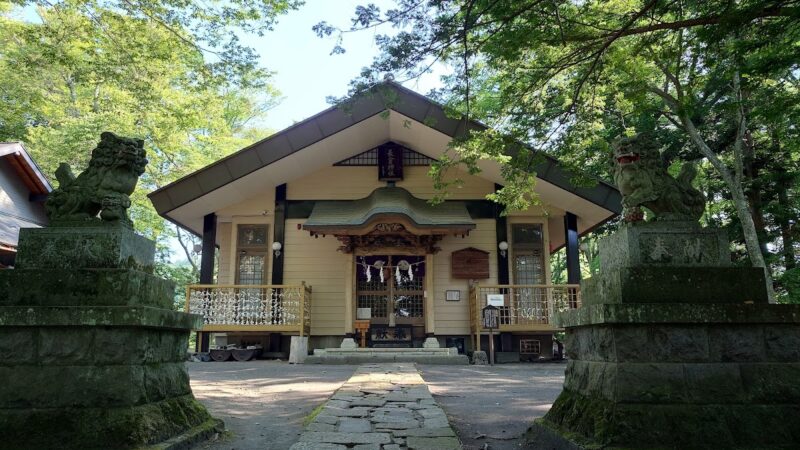
Moss-covered stone Buddhas are scattered throughout the shrine grounds, creating a unique atmosphere that has been shaped by the passage of time. The humid environment of the grounds, surrounded by trees, is ideal for moss growth, and the stone Buddhas, covered in green moss, present a beauty that seems to be one with nature.
These stone Buddhas are precious relics that tell the story of Nagakura Shrine’s long history and the deep faith of generations of people. Looking at the stone Buddhas in the quiet grounds, one feels as if time is flowing slowly.
Shrine Grounds Surrounded by Trees
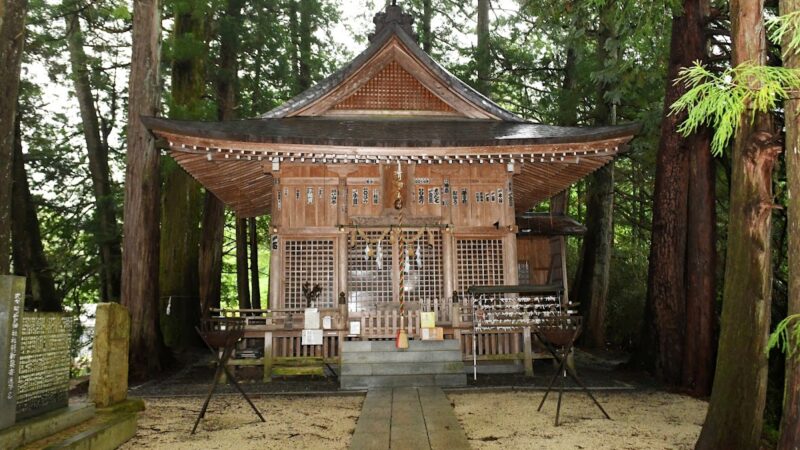
Nagakura Shrine’s grounds are surrounded by lush trees, allowing visitors to worship in a natural environment typical of Karuizawa. The shrine’s forest, a mix of coniferous trees such as cedar and cypress, and broadleaf trees, displays different expressions throughout the seasons.
In spring, the fresh greenery is beautiful; in summer, the shade of the trees provides coolness; in autumn, the autumn leaves color the grounds; and in winter, a tranquil landscape covered in snow unfolds. This quiet environment, slightly removed from the hustle and bustle of Karuizawa’s tourist areas, is ideal for a peaceful and calming visit.
Integration with Nagakura Park
The area surrounding the shrine grounds is developed as “Nagakura Park,” creating a space where the shrine and park are integrated. Because it is a park, walking paths are well-maintained, allowing visitors to enjoy nature walks in conjunction with their worship.
It also serves as a place of relaxation for local residents, allowing visitors to see the shrine integrated into the daily lives of the local people in a peaceful environment.
Goshuin Information
About Receiving Goshuin
At Nagakura Shrine, you can receive a Goshuin (shrine stamp). While it is available at the shrine office, a Shinto priest may not always be present. Therefore, if you definitely want a Goshuin, it is recommended to call ahead to confirm.
When a priest is absent, a pre-printed Goshuin may be available. Even a pre-printed Goshuin is an official stamp with the shrine’s seal, just like a handwritten one, so please accept it gratefully.
Characteristics of the Goshuin
The Goshuin at Nagakura Shrine includes the shrine’s name, the date of visit, and the shrine’s seal. As a shrine listed in the Engishiki Jinmyocho (a historical record of shrines), the Goshuin of this shrine is valuable for Goshuin collectors.
When receiving a Goshuin, the correct etiquette is to first complete your prayers before visiting the shrine office. Bring your Goshuincho (stamp book) and prepare the offering fee (usually around 300-500 yen).
About Goshuincho (Stamp Books)
Please inquire directly with Nagakura Shrine regarding the availability of their original goshuincho. There are several shrines in Karuizawa, and collecting goshuin stamps while visiting Karuizawa is a popular activity, so it’s a good idea to check before your visit.
Annual Events and Festivals
Main Annual Events
Nagakura Shrine holds various festivals throughout the year. The main events include:
New Year’s Day Festival (January 1st)
This festival celebrates the arrival of the new year and prays for safety and prosperity throughout the year. Many local residents and Karuizawa visitors come for their first shrine visit of the year.
Spring Grand Festival
This festival celebrates the arrival of spring and prays for a bountiful harvest and the safety of the community.
Autumn Grand Festival
This important festival expresses gratitude for the autumn harvest and reports the good harvest to the gods. It is a traditional local event that has been passed down through generations.
Shichi-Go-San (November)
This is a celebration of children’s growth and a prayer for their healthy development.
For specific dates and details, we recommend contacting the shrine directly or checking local bulletin boards.
About Individual Prayers
Nagakura Shrine accepts various individual prayers throughout the year:
- Family Safety
- Traffic Safety
- Protection from Evil
- Success in Exams
- Business Prosperity
- Safe Childbirth
Those wishing to request a prayer are advised to contact the shrine office in advance to arrange a date and time.
Basic Information and Access
Basic Information
Shrine Name: Nagakura Shrine
Deity Enshrined: Hondawake-no-mikoto
Former Shrine Rank: Village Shrine
Location: 2283 Nagakura, Karuizawa-machi, Kita-Saku-gun, Nagano Prefecture 389-0111
Founded: Said to be during the Tenchō era (824-834)
Shrine Rank: Listed in the Engishiki Jinmyōchō (a list of shrines compiled in the Heian period)
Access by Train
Nagakura Shrine is easily accessible by public transportation.
Nearest Station: Naka-Karuizawa Station (Shinano Railway/JR Hokuriku Shinkansen)
Distance from Station: Approximately 4-5 minutes on foot (approximately 325-367m)
Naka-Karuizawa Station is the next station to Karuizawa Station and is served by the Shinano Railway line. While the Hokuriku Shinkansen passes through without stopping, you can reach the shrine in just one stop (approximately 3 minutes) by transferring to the Shinano Railway at Karuizawa Station.
The path from the station to the shrine is flat, making it easily accessible on foot. The area around Naka-Karuizawa Station is quieter than the center of Karuizawa, offering a peaceful atmosphere for a stroll.
Access by Car
Using the Expressway: Approximately 15 minutes from the Usui-Karuizawa Interchange on the Joshin-etsu Expressway.
Karuizawa is a popular tourist destination accessible from Tokyo in about 2.5 hours by car, or about 2 hours via the Kan-etsu Expressway. During summer and long holidays, roads can be congested, so it’s recommended to allow ample time for your visit.
Parking: The area around the shrine grounds is developed as Nagakura Park, but please inquire directly with the shrine regarding the availability of a dedicated parking lot. There are also public parking lots nearby that you can use.
Nearby Tourist Attractions
Near Nagakura Shrine, there are various tourist attractions in Karuizawa:
Karuizawa Prince Shopping Plaza (approx. 10 minutes by car)
A large outlet mall with approximately 240 stores on a vast site. Enjoy shopping and dining.
Old Karuizawa Ginza (approx. 10 minutes by car)
A representative tourist street of Karuizawa. It is lined with long-established restaurants and souvenir shops.
Shiraito Falls (approx. 20 minutes by car)
A beautiful waterfall, 3 meters high and 70 meters wide. One of Karuizawa’s representative natural landscapes.
Stone Church Uchimura Kanzo Memorial Hall (approx. 10 minutes by car)
A church with unique architectural beauty, built of stone and glass. It is also a popular wedding venue.
Harunire Terrace (approx. 5 minutes by car)
A complex of stylish restaurants and shops surrounded by a grove of over 100 Japanese elm trees.
Manners and Precautions for Visiting a Shrine
Basic Manners for Visiting a Shrine
Please observe basic manners when visiting a shrine to ensure a pleasant experience.
How to Pass Through the Torii Gate
The torii gate is the entrance to the sacred area. Bow before passing through. The center of the path is considered the path of the gods, so it is considered best to walk along the sides.
Ritual for Washing Hands
- Hold the ladle in your right hand and wash your left hand.
- Switch the ladle to your left hand and wash your right hand.
- Switch the ladle back to your right hand, receive water in your left hand, and rinse your mouth.
- Wash your left hand once more.
- Hold the ladle upright, wash the handle, and return it to its original position.
Ritual for Worshiping at the Main Hall
- Place your offering in the offering box.
- If there is a bell, ring it.
- Perform two bows, two claps, and one bow (bowing deeply twice, clapping twice, bowing deeply once).
Attire for Worship
Unless you are attending a special ceremony or receiving a prayer, everyday clothing is acceptable for worship. However, it is advisable to be mindful that it is a sacred place and avoid overly revealing or flashy clothing.
Karuizawa is a plateau area at an altitude of approximately 1000m, and it can get cold in the mornings and evenings even in summer. There is also snowfall in winter. Please dress appropriately for the season.
Regarding Photography
While photography of the shrine grounds is generally permitted, there are areas and times when photography is restricted, such as inside the main hall or during religious ceremonies. If unsure, please check with the shrine staff before taking photos.
Also, please be considerate of the privacy of other visitors; avoid taking photos that prominently feature people, or obtain their permission beforehand.
Maintaining Tranquility
One of the charms of Nagakura Shrine is its quiet environment surrounded by trees. Please respect the sacred atmosphere and refrain from speaking loudly or making noise. Especially when praying or when other visitors are present, please be mindful of keeping quiet.
Summary of Nagakura Shrine’s Charms
Nagakura Shrine is a venerable shrine with a history of over 1700 years, listed in the Engishiki Jinmyocho (a historical record of shrines), yet it is easily accessible, located just a 5-minute walk from Naka-Karuizawa Station.
Historical Value: Founded during the Tenchō era, listed in the Engishiki Jinmyōchō (a historical record of shrines), and featuring carvings from the Hōreki 8th year (1758), this shrine boasts high historical and cultural value.
Natural Environment: Surrounded by trees, the shrine grounds, moss-covered stone Buddha statues, and its integration with Nagakura Park create a rich, natural environment characteristic of Karuizawa.
Easy Access: Conveniently located just a 5-minute walk from Naka-Karuizawa Station and a 15-minute drive from the Usui-Karuizawa Interchange.
Local Guardian Deity: As the tutelary deity that has watched over the Nagakura area for over 1700 years, it continues to be revered by the local community.
When visiting Karuizawa, why not escape the hustle and bustle of tourist areas and quietly visit Nagakura Shrine, experiencing its history and nature in peace? The solemn atmosphere of this ancient shrine, listed in the Engishiki Jinmyōchō, combined with the rich natural beauty of Karuizawa, will surely create a memorable experience.
As you receive your temple stamp, gaze upon the Edo-period sculptures and moss-covered stone Buddha statues, and reflect on the history that spans over 1700 years, you’ll have a precious moment to escape the hustle and bustle of modern life.