Suwa Shrine (Miyamae, Hotsuchi, Karuizawa-machi, Nagano Prefecture) Complete Guide
The Suwa Shrine, located in Miyamae, Hotsuchi, Karuizawa-machi, Nagano Prefecture, is a historic shrine that has long been cherished by the local residents. While several Suwa Shrines exist in the Karuizawa area, the one in the Hotsuchi district holds a special position as the local guardian deity. This article comprehensively introduces information useful for those considering a visit, including the shrine’s history, enshrined deities, blessings, highlights within the grounds, annual events, and access methods.
Basic Information on Suwa Shrine (Hachi)
Location: Miyamae, Hachi, Karuizawa-machi, Kita-Saku-gun, Nagano Prefecture
Deity Enshrined: Takeminakata-no-kami
Shrine Rank: Village Shrine
Annual Festival Date: Late August (may vary by region)
Suwa Shrine is one of approximately 25,000 Suwa Shrines nationwide, with Suwa Grand Shrine (Upper and Lower Shrines), the Ichinomiya (first-ranked shrine) of Shinano Province, as its head shrine. The Suwa Shrine in the Hachi area, as a shrine stemming from this Suwa faith, has served as a spiritual pillar for the region.
History and Origins of Suwa Shrine
Circumstances of Founding
The exact founding date of Suwa Shrine (Hachi) is unclear due to the loss of historical documents, but based on local traditions and the distribution of Suwa Shrines in the surrounding area, it is presumed to have been established sometime between the medieval and early modern periods.
The Kita-Saku district, including Karuizawa Town, has long been a sacred territory and under the influence of Suwa Grand Shrine. It is believed that agricultural residents invited the Suwa deity to the area to pray for abundant harvests and peace in the region.
Hotchi District and Suwa Faith
The place name Hotchi is said to mean “land of departure” or “land of development,” indicating that it is a land where people have lived since ancient times. Along with the development of this region, Suwa Shrine has also been revered as the guardian deity of the area.
During the Edo period, Hotchi was located at a key transportation hub, surrounding Karuizawa-juku, a post town on the Nakasendo road. Suwa Shrine is thought to have played an important role as a place to pray for the safety of local residents and travelers.
Developments Since the Modern Era
Due to the reform of the shrine system during the Meiji era, Suwa Shrine (Hotchi) was designated a village shrine. After World War II, it became a religious corporation and continues to attract worshippers as the local tutelary deity to this day.
As Karuizawa developed as a summer resort, the surrounding area also changed, but the Suwa Shrine in Hatsuchi continues to be cherished as a guardian of local traditions.
Deities and Divine Virtues
Takeminakata-no-kami
Takeminakata-no-kami, the principal deity of Suwa Shrine, is a god who appears in the Kojiki (Records of Ancient Matters). He is a son of Okuninushi-no-kami and is known for his bravery during the transfer of the land.
He has been revered as a guardian deity of the area around Lake Suwa. He is considered to possess characteristics of an agricultural god, a hunting god, and a war god, and is believed to have diverse divine virtues.
Main Benefits
The main benefits you can pray for at Suwa Shrine (Hachi) include the following:
- Abundant Harvest and Agricultural Protection: As a deity of agriculture, it is believed to bring blessings for a bountiful harvest.
- Good Fortune and Prosperity: Divine blessings that bring happiness in all aspects of life.
- Family Safety: Protection of the health and safety of family members.
- Business Prosperity: Development and prosperity of business.
- Protection from Misfortune and Directional Misfortune: Warding off calamities and removing misfortunes related to directions.
- Good Luck in Competitions: As a deity of war, protection in competitions and contests.
- Traffic Safety: Protection for safe travels.
Highlights of the Shrine Grounds
Shrine Building
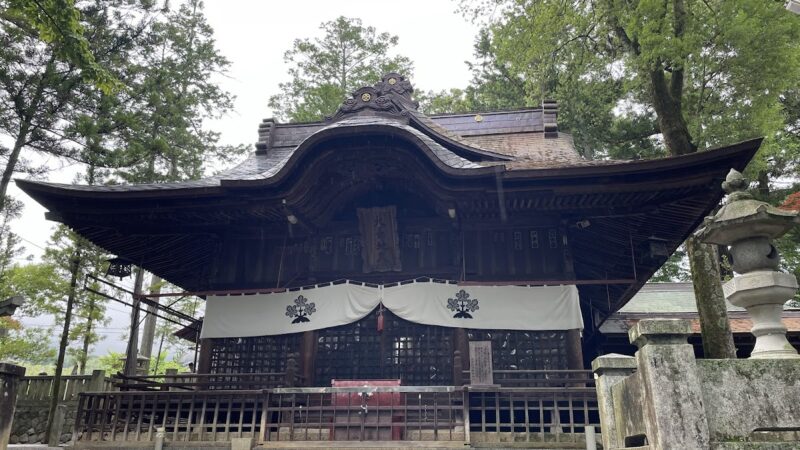
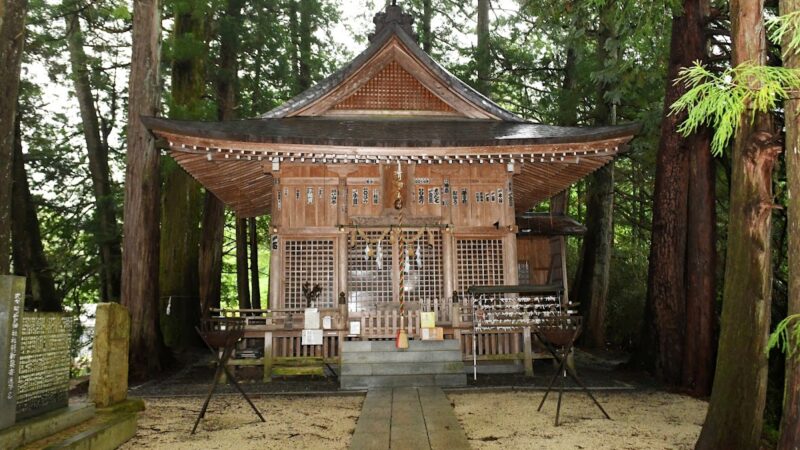
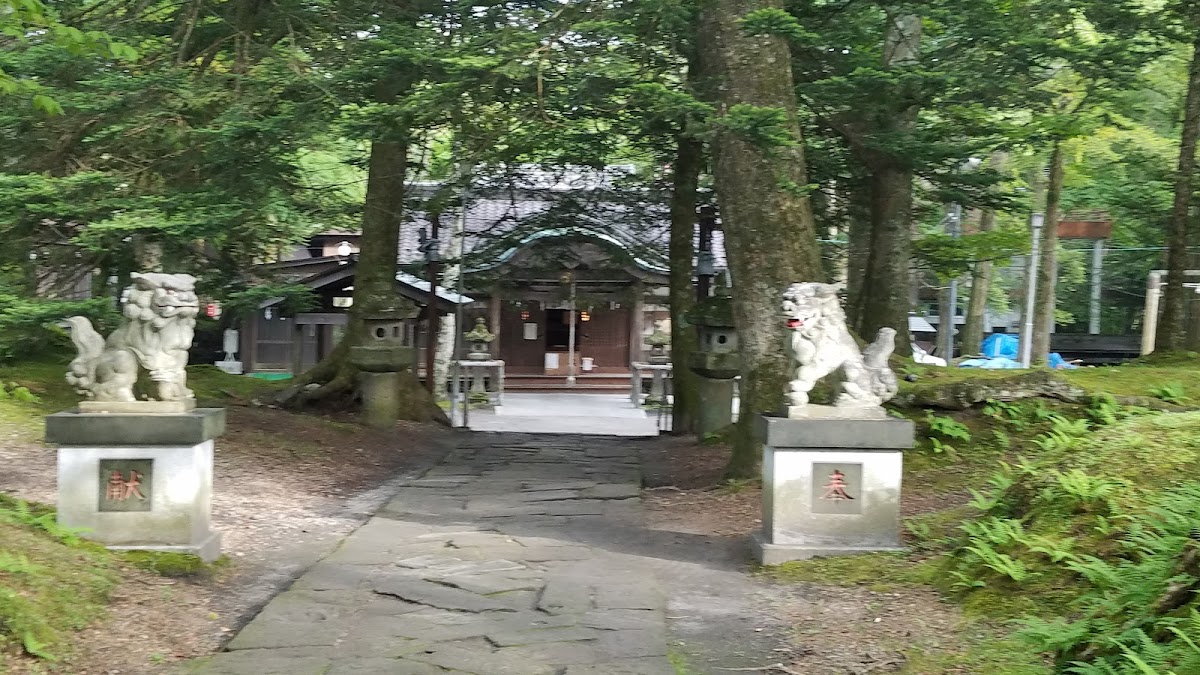
The shrine building of Suwa Shrine (Hachi) preserves the traditional shrine architectural style of the region. While not large in scale, it is carefully maintained, reflecting the deep faith of the local people.
Natural Environment of the Shrine Grounds
The shrine grounds, surrounded by the rich nature of Karuizawa, display different expressions throughout the seasons. Especially:
- Spring: Beautiful fresh greenery and refreshing air.
- Summer: The trees become lush green, creating a cool atmosphere.
- Autumn: Autumn leaves color the grounds.
- Winter: A tranquil atmosphere permeates the snowy landscape.
Located in a plateau area at an altitude of approximately 1,000 meters, it remains cool even in summer, making it an ideal environment for worship.
Stone Monuments and Memorials
Within the shrine grounds, there are sometimes stone monuments and memorials that tell the history of the region. These are valuable historical materials that convey the history of the faith of the local people.
Annual Events and Festivals
Grand Festival
The most important festival of Suwa Shrine (Hachi) is the Grand Festival. Generally held in late August, it is a religious ceremony attended by local residents.
During the annual festival, portable shrines are carried out and dedication ceremonies are held. It is an important opportunity to reaffirm community unity and offer gratitude to the gods.
Other Annual Events
- New Year’s Day Festival: Prayers for peace in the new year
- Spring Festival: Prayers for the start of agricultural work
- Autumn Festival: Thanksgiving for the harvest
For specific dates and details, we recommend checking with your local parishioner organization or the Karuizawa Town information center.
Etiquette and Manners for Visiting a Shrine
Basic Etiquette for Visiting a Shrine
- Bow before passing through the torii gate: Show respect for entering the sacred area.
- Purify yourself at the water basin: Purify your left hand, right hand, and mouth in that order.
- Walk along the edge of the path: The center is considered the path of the gods.
- Etiquette in front of the main hall: Two bows, two claps, and one bow is the basic procedure.
- Bow deeply twice.
- Clap your hands twice.
- Pray with all your heart.
- Bow deeply once.
- When leaving: Turn around and bow once after leaving the torii gate.
Points to Note When Visiting a Shrine
- Visit quietly and avoid disturbing other visitors.
- Refrain from eating, drinking, or smoking on the shrine grounds.
- Always take your trash with you.
- Take photographs only where permitted and be considerate of other visitors.
- If you are bringing a pet, please check the rules for entering the temple grounds.
Access Information
Access by Car
Via Joshinetsu Expressway:
- Approximately 20 minutes from Usui-Karuizawa IC
- Approximately 30 minutes from Komoro IC
The Hotsuchi area is located southeast of Karuizawa Station. It can be accessed via National Route 18 or prefectural roads.
Parking: There may be parking spaces for visitors on the temple grounds or nearby, but the scale is limited. Congestion is expected during festivals, so it is recommended to visit with plenty of time to spare.
Access by Public Transportation
From JR Karuizawa Station:
- By Taxi: Approximately 15-20 minutes
- By Bus: If there is a bus route to Hotsuchi, access is on foot from the nearest bus stop.
Public transportation access is limited, so using a rental car or taxi is convenient.
Nearby Tourist Attractions
Around the Hotsuchi area, there are spots where you can enjoy the nature and culture of Karuizawa:
- Karuizawa Taliesin: A complex resort facility centered around Shiozawa Lake
- Muse no Mori: The Picture Book Museum and the Erz Toy Museum
- Karuizawa Lake Garden: A beautiful garden
- Shiraito Falls: A representative scenic spot of Karuizawa
You can enjoy Karuizawa sightseeing in conjunction with a visit to Suwa Shrine.
Relationship with Other Suwa Shrines in Karuizawa
There are several Suwa Shrines within Karuizawa town:
- Suwa Shrine (Karuizawa): The central shrine in the Old Karuizawa area
- Suwa Shrine (Minami Karuizawa): Located at the foot of Mt. Hanareyama
- Suwa Shrine (Hotsuchi): The shrine introduced in this article
These are all independent shrines serving different regions, but all belong to the Suwa faith lineage with Suwa Grand Shrine as its head shrine.
Each shrine has its own unique history and characteristics specific to its region. A tour of the Suwa shrines in Karuizawa allows you to experience the diversity of local history and beliefs.
Characteristics of Suwa Faith
Suwa Shrines Spread Across Japan
Suwa faith is a uniquely Japanese belief originating around Lake Suwa in Nagano Prefecture. With Suwa Grand Shrine (Upper Shrine Honmiya & Maemiya, Lower Shrine Akimiya & Harumiya) as its head shrine, approximately 25,000 Suwa shrines and Suwa-sha shrines are located throughout Japan.
Characteristics of Suwa Faith
- Onbashira Festival: A grand festival held every seven years (once every seven years in the traditional Japanese age counting system), where giant pillars are pulled from the mountains and erected at the four corners of the shrine grounds.
- Characteristics as a Hunting God: Deeply connected to ancient hunting culture.
- Characteristics as an Agricultural God: Guardian deity of agriculture, including rice cultivation.
- Characteristics as a War God: Also deeply revered by the samurai class.
The Suwa Shrine in Hachi also inherits these traditions of Suwa faith.
Best Season for Visiting
Spring (April-June)
This is the season of fresh greenery, one of the most beautiful times of year in Karuizawa. The temperature is mild, making it ideal for visiting. While there are many tourists during Golden Week, the Hachi area is relatively quiet.
Summer (July-August)
This is Karuizawa’s peak season. Many tourists visit this area as a summer resort, and its high altitude makes it cool and comfortable. It’s also the time of the annual festival, offering the opportunity to witness traditional local events.
Autumn (September-November)
The autumn foliage is at its most beautiful, with the trees on the shrine grounds displaying stunning colors. The best time to visit is from mid-October to early November. It’s a suitable time to offer prayers of gratitude for the harvest.
Winter (December-March)
Enjoy a peaceful visit amidst a snowy landscape. The shrine is bustling with New Year’s visitors on New Year’s Day. However, caution is necessary regarding snow and icy roads; winter tires or chains are essential.
Connection to the Community
Role as a Local Deity
Suwa Shrine (Hachi) is the local deity of the Hachi district, a central figure in the community. Through festivals and annual events, it serves as a place to deepen the bonds among local residents.
Preserving Local Traditions
Even amidst a declining birthrate and aging population, local residents are striving to maintain Suwa Shrine and preserve its festivals. New residents who have moved from urban areas and long-time residents are cooperating to protect the shrine.
Harmony with Tourism
While Karuizawa is an international tourist destination, the Hachi district is a relatively quiet residential area. Suwa Shrine, too, is more of a place of local worship than a tourist attraction. Visitors should be mindful of respecting the tranquility of the area during their visit.
How to Enjoy a Visit to Suwa Shrine and Your Stay in Karuizawa
Example Karuizawa Travel Plan Including Shrine Visit
Day 1:
- Morning: Arrive in Karuizawa, stroll around Old Karuizawa
- Afternoon: Visit Suwa Shrine in Hotsuchi, explore the surrounding nature
- Evening: Check into accommodation
Day 2:
- Morning: Visit natural spots such as Shiraito Falls
- Afternoon: Visit cultural facilities such as Karuizawa Taliesin and Musee no Mori
- Evening: Shopping around Karuizawa Station
The Charm of the Hotsuchi Area
The Hotsuchi area is a tranquil area within Karuizawa. It is home to villas and residential areas, allowing you to enjoy Karuizawa’s nature in a peaceful environment.
- Quiet Environment: A peaceful time away from the hustle and bustle of tourist areas.
- Connecting with Nature: Ideal for forest bathing and walks.
- Authentic Karuizawa Experience: The everyday life of Karuizawa before it becomes a tourist destination.
Advice for Visitors
Clothing and Items to Bring
- Clothing: Casual attire is acceptable, but clean clothing is preferred as it is a sacred place.
- Shoes: Comfortable walking shoes are recommended as the temple grounds may not be paved.
- Seasonal Attire: Karuizawa is at a high altitude, and it can get chilly in the mornings and evenings even in summer. Bring something to wear over your clothes.
- Winter: Take thorough precautions against the cold. If there is snow, wear non-slip shoes.
Regarding Photography
Photography is generally permitted at shrines, but please note the following:
- Do not take photos in areas where photography is prohibited, such as inside the main hall.
- Be considerate and avoid including other worshippers in your photos.
- Refrain from using flash.
- Refrain from taking photos during festivals or ceremonies, or obtain permission beforehand.
Regarding Goshuin (Shrine Seals)
Regarding the issuance of Goshuin at Suwa Shrine (Hachi), there may not always be a resident Shinto priest. If you wish to receive a Goshuin, we recommend checking with shrines or tourist information centers in Karuizawa town in advance.
Karuizawa’s History and Suwa Shrine
Overview of Karuizawa’s History
Karuizawa flourished as a post town on the Nakasendo road during the Edo period. Since the Meiji era, it has been developed as a summer resort by foreign missionaries and has become one of Japan’s leading highland resorts.
Historical Positioning of Hachi
Hachi, as a settlement surrounding Karuizawa-juku, has historically been centered on agriculture. Suwa Shrine served as the center of faith in this rural area, a place for praying for bountiful harvests and the safety of the community.
While Hachi has been developed as a resort and residential area amidst the modern development of Karuizawa, Suwa Shrine has remained unchanged, continuing to exist as a spiritual pillar of the community.
Summary: The Significance of Visiting Suwa Shrine (Hachi)
Suwa Shrine (Hachi, Miyamae, Karuizawa-machi, Nagano Prefecture), though not large in scale, is a shrine with a deep-rooted history and faith in the community.
Visiting this shrine, which has quietly watched over the community amidst the bustling tourist destination of Karuizawa, offers the following significance:
- Experience local history and culture: You can feel the daily life and history of the region, distinct from the touristy Karuizawa.
- A peaceful worship experience: You can worship in a calm atmosphere, avoiding crowds.
- Understanding Suwa faith: You can experience a part of the Suwa faith, representative of Shinano Province.
- Harmony with nature: You can find peace of mind in the shrine grounds surrounded by Karuizawa’s rich nature.
- Respect for the local community: Visiting a place of worship cherished by the local people deepens your understanding of the region.
When visiting Karuizawa, why not visit not only the famous tourist spots but also local shrines like this one? A visit to Suwa Shrine (Hatchi) will be an opportunity to discover a new side of Karuizawa.
Suwa Shrine (Hatchi), which quietly but surely continues to exist as the guardian deity of the region. Please offer your prayers with a heartfelt heart, reflecting on its history and faith. I’m sure your stay in Karuizawa will become even more meaningful and enriching.