Taizan Shrine (Takamori Town, Nagano Prefecture) Complete Guide – Deities, Goshuin (Shrine Seal), Access, and Giant Tree Highlights
Taizan Shrine, quietly nestled in the Yamabuki district of Takamori Town, Shimoina District, Nagano Prefecture, is a shrine that conveys the history and faith of the region. With Hachiman as its main deity, it also enshrines Yamato Takeru no Mikoto, Susanoo no Mikoto, Kodamahiko no Mikoto, and Takeminakata no Kami, and has long been a spiritual center for the people of the Yamabuki district.
This article comprehensively introduces all the information you need to know before visiting Taizan Shrine, including its enshrined deities, history, the giant cedar tree (a highlight of the shrine), goshuin information, and detailed access methods.
Basic Information about Taizan Shrine
Official Name: Taizan Shrine
Location: 1048 Yamabuki-en, Takamori-machi, Shimoina-gun, Nagano Prefecture 399-3101
Deities Enshrined:
- Hachiman (Main Deity)
- Yamato Takeru no Mikoto
- Susanoo no Mikoto
- Kodamahiko no Mikoto
- Takeminakata no Kami
Shrine Rank: Village Shrine
Annual Festival Date: Every September
About the Deities Enshrined at Taizan Shrine
Taizan Shrine enshrines five deities, each possessing different divine virtues.
Hachiman-shin (Hachiman God)
Hachiman-shin, the principal deity, is a deified version of Emperor Ōjin and has been worshipped since ancient times as a god of military fortune and victory. The head shrine of the approximately 44,000 Hachiman shrines nationwide is Usa Shrine in Ōita Prefecture. He is also revered as the guardian deity of a wide range of industries, including agriculture, fishing, and commerce.
Yamato Takeru no Mikoto
A prince of Emperor Keikō, he is a representative heroic god in Japanese mythology. There is a legend that he passed through Shinano Province during his eastern expedition, and he is worshipped as a god of martial prowess and pioneering.
Susanoo-no-Mikoto
The younger brother of Amaterasu Ōmikami, he is known for slaying Yamata no Orochi (the eight-headed serpent). He is revered for his divine powers of warding off evil, protecting against disaster, and matchmaking, and is also worshipped as a god of agriculture.
Kodamahiko-no-Mikoto
A deity deeply rooted in the region, possessing characteristics of a mountain god and tree god. In the Yamabuki district, where forestry flourished, he was worshipped as an object of prayer for safety in mountain work and the bounty of abundant forests.
Takeminakata-no-Kami
A deity known as the principal deity of Suwa Grand Shrine, and particularly important in Shinshu (Nagano Prefecture). He possesses divine virtues as a god of war, agriculture, and hunting, and is enshrined in many shrines throughout Nagano Prefecture.
History and Origins of Taizan Shrine
While there are no clear records of the founding date of Taizan Shrine, it is believed to have been worshipped as the local tutelary deity since ancient times, alongside the development of the Yamabuki district.
The Yamabuki district of Takamori Town is located on a river terrace of the Tenryu River and has developed since ancient times, centered on agriculture and forestry. Taizan Shrine has been closely intertwined with the lives of the people in this region, functioning as a place to pray for abundant harvests, family safety, and safety in mountain work.
The name “Taizan” is thought to originate from Mount Tai, one of the Five Great Mountains of China. Mount Tai has been revered as a sacred mountain since ancient times, and the Taizan Fukun faith spread throughout Japan. This faith is associated with longevity, extended life, and protection from evil, and its influence can be seen in the name of Taizan Shrine.
Even during the Meiji era’s policy of consolidating shrines, Taizan Shrine survived as the center of local faith and continues to be carefully preserved by the people of the Yamabuki district to this day.
Highlights of Taizan Shrine
Giant Sacred Cedar Trees
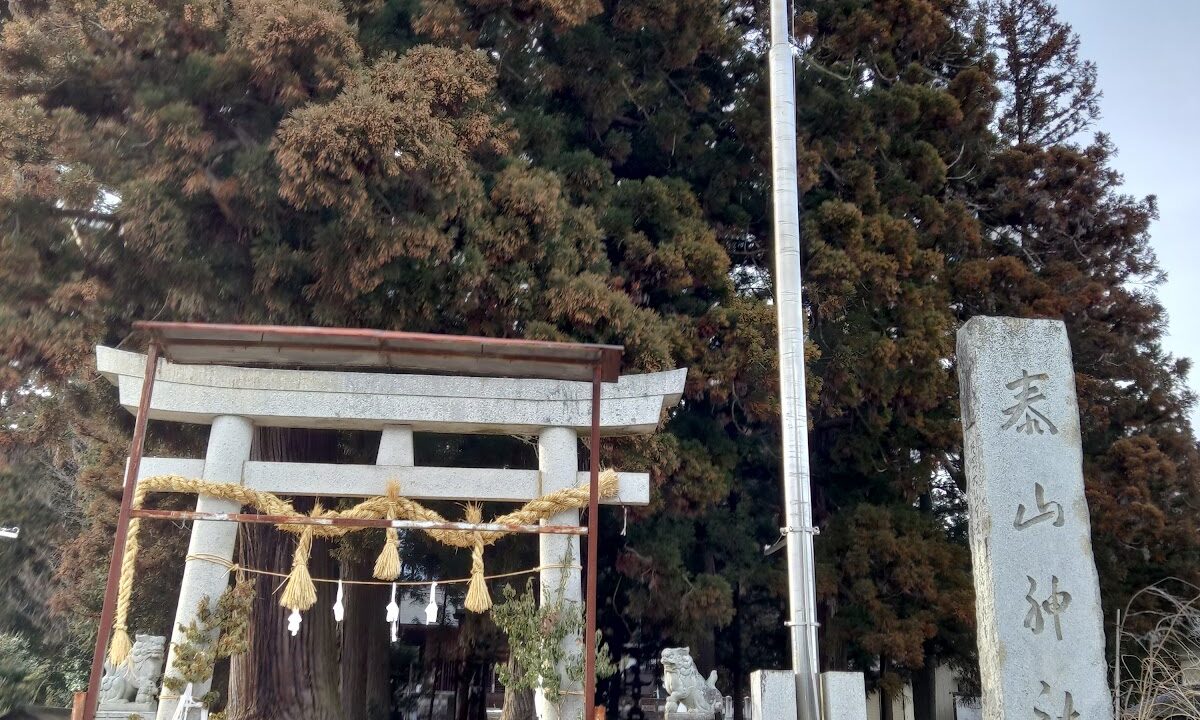
The greatest highlight of Taizan Shrine are the two giant cedar trees that stand protecting the shrine grounds. In particular, the cedar tree standing to the left after passing through the torii gate is a giant, with a trunk circumference of 5.2 meters at eye level (approximately 1.3 meters above the ground), and is estimated to be several hundred years old.
This sacred tree is affectionately known locally as “Taizan Shrine’s Cedar,” and has watched over the shrine for many years. The powerful branches and leaves extending from its thick trunk evoke a sense of natural vitality and sacredness in visitors.
The cedar on the right is also a magnificent giant, and the sight of the two cedars standing on either side of the torii gate truly conveys the dignity of sacred trees guarding the entrance to the sacred area. They display different expressions throughout the seasons: the fresh green of spring, the deep green of summer, the contrast with the autumn foliage, and the snow-covered winter landscape.
Stone Steps and the Atmosphere of the Shrine Grounds
To reach Taizan Shrine, visitors ascend the stone steps that lead from the torii gate. These steps have been maintained and preserved through the faith of the local people. As you climb the stone steps one by one, you can escape the hustle and bustle of everyday life and cleanse your mind.
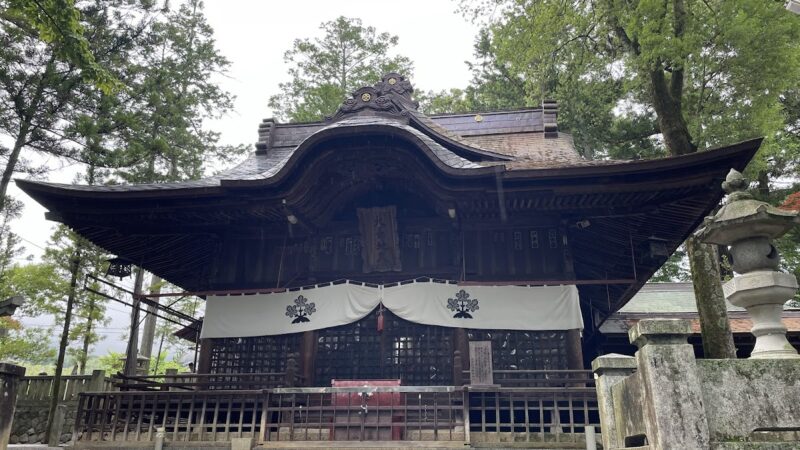
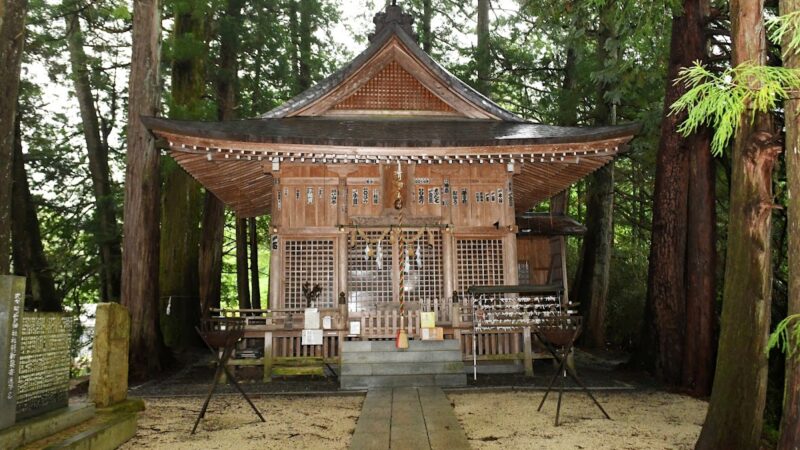
The shrine grounds are enveloped in a tranquil atmosphere, a rich natural environment in harmony with the surrounding forest. The shrine buildings, though simple, are carefully maintained, reflecting the deep faith of the local people.
View
The Yamabuki area is located at a high altitude within Takamori Town, and from Taizan Shrine, you can see the river terraces of the Tenryu River and the mountains of the Southern Alps. On a clear day, you can even see the peaks of the Central Alps in the distance, enjoying the magnificent scenery unique to Shinshu.
About Goshuin (Shrine Seals) and Electronic Goshuin
At Taizan Shrine, you can obtain electronic goshuin. You can receive an electronic goshuin as a record of your visit through the smartphone app “Yaoyorozu no Kami” (Eight Million Gods).
Regarding traditional paper goshuin stamps, prior confirmation is necessary as there is no permanent shrine office at the shrine. We recommend contacting the local parishioners’ representatives or shrine officials in Takamori Town.
Electronic Goshuin (shrine stamps) can be obtained using GPS functionality as proof of your visit, making them a convenient memento of your pilgrimage. Information on how to obtain them can be found on the Yaoyorozu no Kami (Eight Million Gods) website or app.
Access Information
Location
1048 Yamabuki-en, Takamori-machi, Shimoina-gun, Nagano Prefecture 399-3101
Nearest Station/Line
Nearest Station: JR Iida Line, Shimodaira Station
Distance from Station: Approximately 770 meters (about 10 minutes on foot)
Shimodaira Station is a station where local trains on the Iida Line stop. From the station to Taizan Shrine, the route involves climbing a slope in a northwest direction.
Nearest Bus Stops and Routes
While community buses operating within Takamori Town and Ina Bus routes may be available, the number of services is limited. Therefore, it is recommended to check the latest service information in advance on the Takamori Town Hall or Ina Bus websites.
Reference Bus Stops: Bus stops within the Yamabuki area (specific stop names vary depending on the route)
Access by Car
Route from National Route 153:
- Turn northwest at the “Kamifukishita” intersection on National Route 153.
- Go up the hill towards the Yamabuki area.
- Follow the signs and head towards the torii gate of Taizan Shrine.
Access from the Chuo Expressway:
- Approximately 15 minutes from Iida Interchange
- Approximately 10 minutes from Matsukawa Interchange
Regarding parking, due to the narrow roads around the shrine, there may not be designated parking spaces for visitors. To avoid inconveniencing the local community, it is recommended to park in a safe place on the roadside or access on foot. ### Access from Surrounding Facilities
From Takamori Town Hall: Approximately 4 kilometers north-northeast, about 8 minutes by car.
From Iida City Center: Approximately 20 minutes via National Route 153.
Manners and Precautions for Visiting the Shrine
Proper Visiting Etiquette
- Bow at the Torii Gate: Bow before passing through the torii gate to show respect for entering the sacred area.
- Watering Procedure: If there is a watering basin, cleanse your left hand, then your right hand, then your mouth.
- Worship: Worship in front of the main hall using the “two bows, two claps, one bow” method.
- Upon Exiting: Turn around and bow when leaving the torii gate.
Photography
Photography is generally permitted on the shrine grounds, but remember that it is a sacred place and be considerate of other visitors. Photography of the sacred tree is particularly popular, but be careful not to step on the base of the tree.
Attire
There are no specific dress code requirements, but please wear clean clothing appropriate for visiting a shrine. Since the shrine is located in a mountainous area, comfortable walking shoes are recommended.
Seasonal Precautions
- Spring/Summer: Insect repellent spray is recommended.
- Autumn: Fallen leaves can make the ground slippery.
- Winter: Snow and ice are possible, so warm clothing and non-slip measures are necessary.
Nearby Tourist Attractions
Highlights of Takamori Town
Ichida Persimmon Village
Takamori Town is famous as a production area for “Ichida persimmons.” From autumn to winter, you can see the sight of persimmon curtains (the scenery of persimmons hanging to dry).
Matsuoka Castle Ruins
The ruins of a mountain castle from the Sengoku period, a spot where you can feel the history of Takamori Town.
Ruri-ji Temple
An ancient temple said to have been founded in the Heian period, housing Buddhist statues designated as important cultural properties.
Nearby Shrines and Temples
Oshima-yama Ruri-ji Temple: A representative ancient temple of Takamori Town.
Yamabuki-yama Kannon-do Hall: A place of worship in the Yamabuki area.
Shrines in Iida City: With a short drive, you can visit many shrines and temples in Iida City.
About the Yamabuki Area of Takamori Town
The Yamabuki area is located in the northern part of Takamori Town, on a high elevation on the river terrace of the Tenryu River. It is a region that has developed around agriculture and forestry since ancient times, boasting a rich natural environment and a tranquil rural landscape.
The name “Yamabuki” is said to originate from the abundance of Yamabuki flowers that bloomed there, or from the fact that the terrain appeared to be the color of Yamabuki (Japanese kerria). Even today, Yamabuki flowers bloom in spring, adding color to the area.
Although the population is declining, the local community remains strong, and traditional events, including the annual festival of Taizan Shrine, are still carefully preserved.
What You Can Pray for at Taizan Shrine
Based on the divine virtues of the deities enshrined at Taizan Shrine, the following types of prayers are suitable:
- Long-lasting military fortune and good luck in competitions: Divine virtues of Hachiman and Yamato Takeru
- Protection from evil and disaster: Divine virtues of Susanoo
- Family safety and abundant harvests: Characteristics as an agricultural deity
- Safety in mountain work: Divine virtues of Kodamahiko no Mikoto
- Good fortune and prosperity: Divine virtues of Takeminakata no Kami
- Longevity and extended life: Divine virtues derived from the Taizan faith
Annual Festival and Events
The annual festival of Taizan Shrine is held every September. Local parishioners gather, and after a solemn Shinto ritual, a celebratory feast (naorai) is held to deepen community bonds.
The specific dates and contents of the annual festival may vary from year to year, so those wishing to participate are advised to check with the Takamori Town Hall or the local parishioners’ representatives in advance. In addition, the shrine also holds annual events common to Japanese Shinto shrines, such as the New Year’s visit (Hatsumode), the spring harvest festival (Kinensai), and the autumn harvest festival (Niinamesai).
Visitor Feedback and Reviews
Visitors to Taizan Shrine have shared the following comments:
“A quiet and peaceful shrine. I was overwhelmed by the size of the sacred cedar tree.”
“I felt that this shrine is cherished by the local people. A simple yet sacred atmosphere permeates the air.”
“The easy access, within walking distance from Shimohira Station, is also appealing. It’s perfect for a visit while strolling around.”
“The availability of electronic goshuin (shrine stamps) is convenient. It allows you to keep a record of your visit.”
Summary – The Charm of Visiting Taizan Shrine
Located in Yamabuki, Takamori-machi, Nagano Prefecture, Taizan Shrine is a historical shrine dedicated to five deities, including Hachiman. The enormous sacred cedar tree, estimated to be several hundred years old, is breathtaking, allowing visitors to feel the grandeur and sacredness of nature.
Taizan Shrine boasts excellent accessibility, being only about a 10-minute walk from Shimohira Station on the JR Iida Line, making it a convenient stop during a train journey. It’s also easily accessible by car, being close to National Route 153, making it a great option to combine a visit with sightseeing in the Iida and Shimoina regions.
Taizan Shrine, cherished and protected by the local community, possesses a simple charm unspoiled by commercialization. The quiet grounds offer a peaceful retreat, where you can offer prayers to the sacred cedar tree and experience the history and nature of Shinshu, offering a precious escape from the hustle and bustle of everyday life.
When visiting Takamori Town or the Iida/Shimoina region, be sure to stop by Taizan Shrine. It’s sure to be a memorable pilgrimage experience.