Suwa Shrine (Kami-Iida, Iida City, Nagano Prefecture) Complete Guide: History, Deities, Goshuin (Shrine Seal), and Access Information
The Suwa Shrine, located in Kami-Iida, Iida City, Nagano Prefecture, is a shrine that has been cherished by the local people for centuries. It plays an important role as a valuable shrine demonstrating the spread of Suwa faith and as a center of the local community. This article provides detailed information useful for visitors, including the history of the Suwa Shrine, its enshrined deities, highlights of the grounds, festivals and events, goshuin information, and access methods.
Basic Information on Suwa Shrine (Kami-Iida)
The Suwa Shrine is located in the Kami-Iida district of Iida City, Nagano Prefecture, and has a long history as a center of faith for local residents. Iida City is located in the southern part of Nagano Prefecture and is known as the central city of Southern Shinshu. The Kami-Iida district is close to the center of Iida City and is an area where historical streetscapes remain.
Location and Basic Data
- Location: Kami-Iida, Iida City, Nagano Prefecture
- Religious Corporation: Affiliated with the Association of Shinto Shrines
- Main Deity: Takeminakata-no-kami
- Shrine Rank: Village Shrine (Former Shrine Rank)
- Founding: Details unknown (Estimated to be before the Middle Ages)
History and Origins of Suwa Shrine
The Spread of Suwa Faith and the Suwa Shrine in Kami-Iida
Suwa faith is a Shinto faith with Suwa Grand Shrine in Suwa City, Nagano Prefecture as its head shrine, and it spread throughout Japan from the Middle Ages to the early modern period. In particular, there are many Suwa shrines in Nagano Prefecture, and they have been revered as guardian deities of each region.
The Suwa Shrine in Kami-Iida, Iida City, is also thought to have been founded within the context of this spread of Suwa faith. The Iida region in southern Shinano Province (present-day Nagano Prefecture) was within the sphere of influence of the Suwa Grand Shrine and was also influenced by the Suwa clan during the medieval period. Therefore, Suwa shrines were established in various settlements throughout the region, becoming the guardian deities of each village.
Historical Background of the Kami-Iida District
The Kami-Iida district developed as part of the Iida castle town. During the Edo period, it flourished as the castle town of the Iida Domain, serving as a key center for commerce and transportation. The Suwa shrine played an important role as a spiritual anchor for the local residents and a symbol of community unity.
With the Meiji-era reform of the shrine system, the Suwa shrine was elevated to the rank of a village shrine and recognized as an official local shrine. Since then, it has been carefully preserved by parishioners and local residents, continuing to this day.
From the Post-War Period to the Present
After the turmoil following World War II, the Suwa shrine became central to the reconstruction of the local community. During the period of rapid economic growth, urbanization swept through the area, but thanks to the efforts of local residents, traditional festivals, rituals, and beliefs were preserved.
Even today, Suwa Shrine functions as an important cultural and spiritual center in the Kami-Iida district. It is the center of local festivals and events, and a place for intergenerational exchange.
Deities and Divine Virtues
Takeminakata-no-kami
The main deity enshrined at Suwa Shrine is Takeminakata-no-kami. Takeminakata-no-kami is a deity appearing in the Kojiki and Nihon Shoki, and is considered a child of Okuninushi-no-kami.
Takeminakata-no-kami in Mythology
In the myth of the transfer of the land, he resisted Takemikazuchi-no-kami, the messenger of Amaterasu-Omikami, but ultimately retreated to the land of Suwa. This myth is the origin of Suwa Grand Shrine, and Takeminakata-no-kami came to be revered as the guardian deity of the Suwa region.
Divine Virtues (Benefits)
Takeminakata-no-kami is believed to possess the following divine virtues:
- Long-lasting Military Fortune and Good Luck in Competitions: Due to his characteristics as a warrior god in mythology, he is worshipped for success in competitions and contests.
- Abundant Harvests and Agricultural Protection: Suwa faith has a strong aspect as an agricultural deity, and there has been a long-standing belief in praying for bountiful harvests.
- Protection from Misfortune and Good Fortune: As a guardian deity of the region, he is worshipped as a god who wards off disasters and brings good fortune.
- Family Safety: As a local guardian deity, he protects the peace and safety of the families of local residents and parishioners.
- Traffic Safety: He is also worshipped as a god who protects safe travels.
Enshrined Deities
At Suwa Shrines, Yasakatome-no-kami is sometimes enshrined alongside Takeminakata-no-kami. Yasakatome-no-kami is considered the consort of Takeminakata-no-kami, and their worship as a married couple adds to their divine blessings of family harmony and matchmaking.
Highlights of the Shrine Grounds
Shrine Architecture
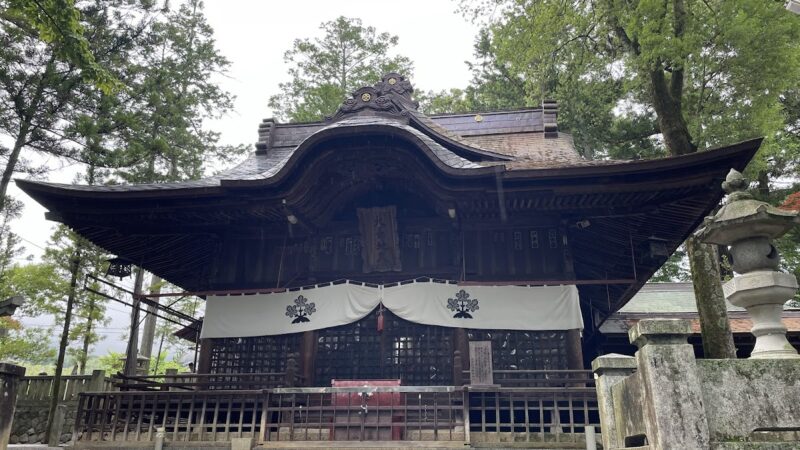
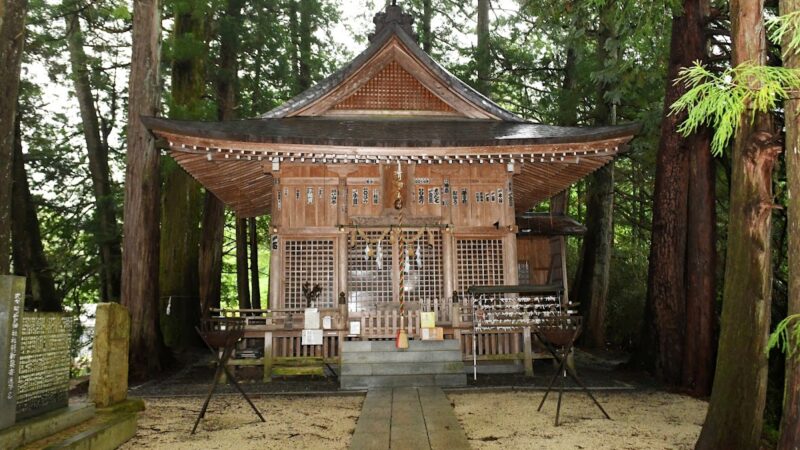
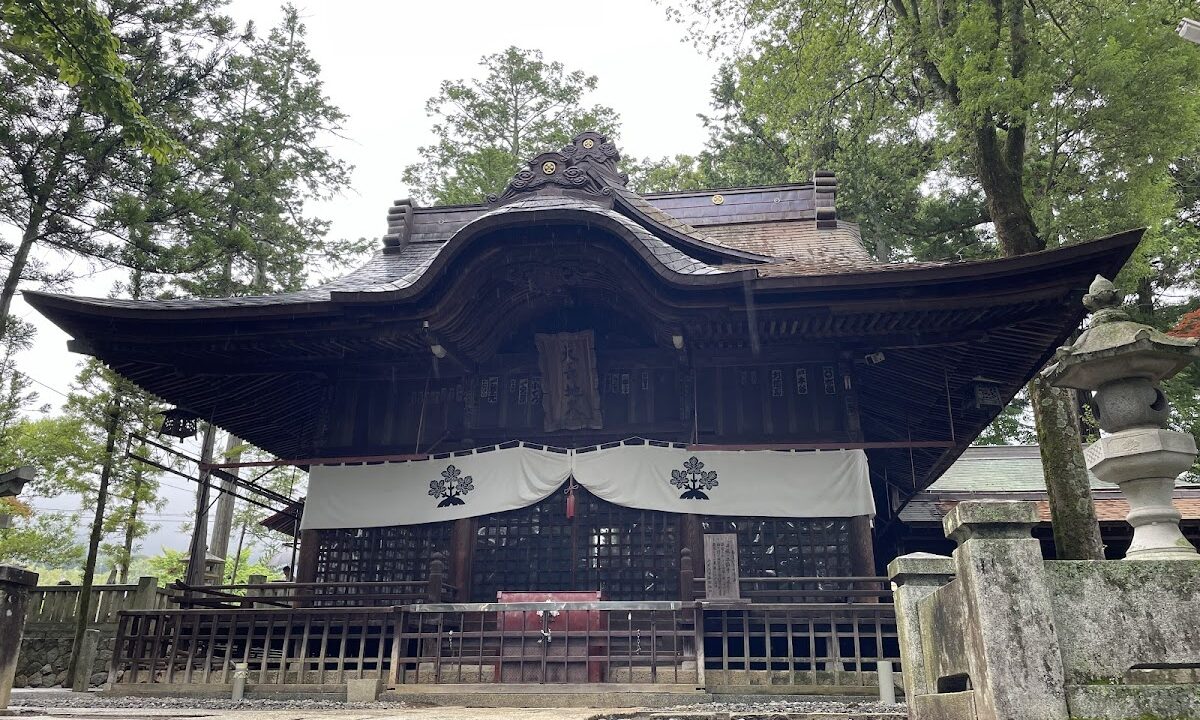
The Suwa Shrine buildings preserve the traditional architectural style of the region. While not large in scale, they are carefully maintained thanks to the faith and maintenance efforts of the local residents.
Main Hall
The main hall is presumed to be in the Shinmei-zukuri or Nagare-zukuri style and is the most sacred place where the enshrined deities are worshipped. Generally, the main hall is located behind the worship hall, and normally, worshippers cannot directly approach it.
Worship Hall
The worship hall, where worshippers offer their prayers, is often designed to be open and accessible, allowing local people to worship easily.
Atmosphere of the Shrine Grounds
Despite being located in a residential area, the grounds of Suwa Shrine maintain a tranquil atmosphere. Trees are planted throughout the grounds, allowing visitors to experience the beauty of nature throughout the seasons. The scenery is particularly beautiful during the fresh greenery of spring and the vibrant autumn foliage.
Torii Gate and Approach
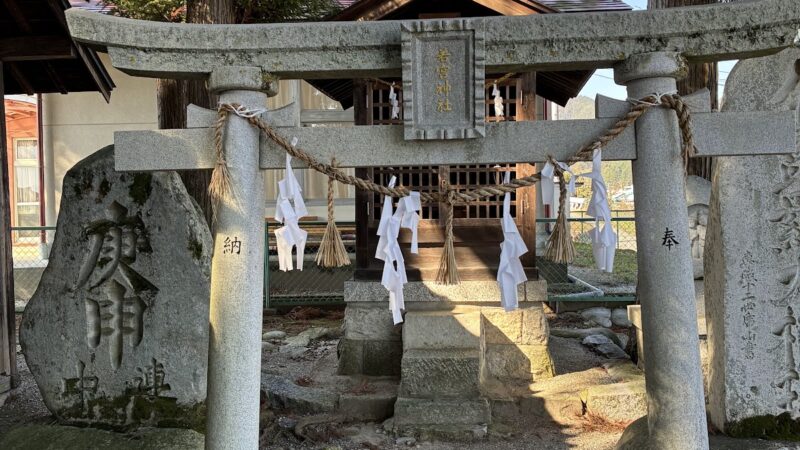
A torii gate stands at the entrance to the shrine, serving as a boundary separating the secular world from the sacred realm. Walking along the approach allows one to escape the hustle and bustle of everyday life and offer prayers in a sacred state of mind.
Water Basin
A water basin is provided for purifying the body and mind before praying. It is recommended to purify your hands and mouth according to the correct etiquette before praying.
Komainu (Guardian Dogs)
Komainu are placed within the shrine grounds, guarding the sacred area. Their style and expressions can help infer the era in which they were donated.
Stone Monuments and Memorials
Stone monuments and memorials donated by parishioners and devotees may remain within the shrine grounds. These are valuable historical documents that provide insight into the region’s history and the evolution of its beliefs.
Annual Festivals and Events
Grand Festival (Autumn Festival)
The most important festival of the Suwa Shrine is the Grand Festival. Many Suwa Shrines hold their Grand Festival in the autumn. It is an important event to express gratitude for a bountiful harvest and to pray for the peace and prosperity of the region.
The following events take place during the annual festival:
- Shinto Ritual: A solemn ceremony including the recitation of prayers by Shinto priests and the offering of sacred branches.
- Portable Shrine Procession: The sacred object is transferred to a portable shrine and paraded through the parish area (the presence or absence of this event varies depending on the scale).
- Offering Ceremonies: Offerings of traditional performing arts such as lion dance, drumming, and Kagura (sacred music and dance).
- Naorai (Feast): A meal after the Shinto ritual where participants share the sacred offerings.
Spring Festival
In spring, a spring festival is sometimes held to pray for a bountiful harvest. This was a particularly important festival during times when agriculture was thriving.
New Year’s Day Festival
To welcome the new year, a New Year’s Day Festival or New Year’s Day Festival is held. Worshippers also visit for their first shrine visit of the year to pray for peace and happiness in the new year.
Monthly Festival
A monthly festival is held on a fixed day each month, offering prayers for daily peace and gratitude to the gods.
Other Annual Events
Depending on local customs, the following events may also be held:
- Setsubun Festival: Expelling evil spirits through bean-throwing, etc.
- Natsukoshi no Harae: Purifying oneself of the impurities accumulated over the past six months through rituals such as passing through a ring of reeds
- Shichi-Go-San: Celebrating children’s growth and praying for their healthy development
- Exorcism Prayer: Prayers for protection against evil spirits for those in their unlucky years
Goshuin (Shrine Seal) Information
Regarding the Issuance of Goshuin
Regarding the issuance of Goshuin at Suwa Shrine (Kami-Iida), prior confirmation is necessary. Smaller shrines may not have resident priests and may not issue Goshuin.
Generally, at village shrines, the following procedures are common:
- In the case of a shrine with a priest serving multiple locations: If the priest also serves at another nearby shrine, it may be possible to receive a goshuin (shrine seal) at that shrine.
- Confirmation with the parishioners’ representative: You can confirm the availability and method of receiving a goshuin by checking the contact information posted on the shrine grounds or by contacting the parishioners’ representative.
- Issuance during annual festivals: During festivals such as the annual grand festival, priests are usually present, and it may be possible to receive a goshuin at that time.
Manners for Visiting Shrines and Temples to Obtain a Goshuin (Shrine Stamp)
When receiving a Goshuin, please observe the following manners:
- First, complete your prayers respectfully before receiving the Goshuin.
- Prepare your Goshuincho (stamp book) (it may also be possible to receive a Goshuin on a small sheet of paper).
- Prepare the offering fee (generally around 300-500 yen).
- Remember to express your gratitude to the Shinto priests and staff.
- Understand that a Goshuin is not just a stamp, but proof of your visit.
Shrine Visit Etiquette and Manners
Basic Shrine Visit Etiquette
Here are some basic shrine visit etiquette rules:
1. Bowing at the Torii Gate
Bow before passing through the torii gate to show respect for entering the sacred area.
2. How to Walk Along the Approach
The center of the approach is considered the path of the gods, so it is preferable to walk along the sides.
3. Proper Ritual of Washing Hands
Purify your body and mind at the water basin:
- Take the ladle with your right hand and wash your left hand.
- Switch the ladle to your left hand and wash your right hand.
- Switch the ladle back to your right hand, receive water in your left hand, and rinse your mouth.
- Wash your left hand again.
- Hold the ladle upright, let water flow over the handle, and return it to its original place.
4. Worship at the Main Hall
- Quietly place your offering in the offering box.
- Ring the bell if there is one.
- Worship using the two bows, two claps, and one bow ritual.
- Bow deeply twice.
- Clap your hands twice.
- Recite your prayer silently.
- Bow deeply once.
5. When Leaving
After leaving the torii gate, turn around and bow once.
Attire and Items to Bring When Visiting the Shrine
- Clean and subdued attire is preferred.
- Avoid revealing or overly flashy clothing.
- Remove hats and sunglasses while on the shrine grounds.
- Prepare small change for offerings.
Photography Etiquette
- Refrain from taking photos inside the main hall or worship hall.
- Be considerate of other visitors.
- Do not take photos in areas where photography is prohibited.
- When posting on social media, remember to be considerate of the shrine and other visitors.
Access Information
Location
Address: Kami-Iida, Iida City, Nagano Prefecture
Access by Public Transportation
Using the JR Iida Line
- Get off at “Iida Station” on the JR Iida Line.
- Walk from the station or take a bus or taxi.
- The Kami-Iida area is approximately 1-2 km from Iida Station (depending on the exact location within the area).
Using Local Buses
You can also use local buses operating within Iida City. Please check the bus routes from Iida Station or the city center towards Kami-Iida.
Access by Car
If using the Chuo Expressway
- Exit the Chuo Expressway at “Iida IC”
- Take National Route 153 (Sanshu Kaido) towards Iida city center
- Proceed to the Kami-Iida area (approximately 5-10 minutes from the IC)
Parking
Depending on the size of the shrine, there may not be a dedicated parking lot. Please use nearby public parking lots, or temporary parking lots may be set up during festivals. Please avoid street parking as it inconveniences local residents.
Nearby Landmarks and Facilities
The Kami-Iida area is close to the center of Iida City and is a mixed residential and commercial area. It is also relatively close to Iida City Hall and Iida Station.
Nearby Tourist Attractions
Iida City and the Southern Shinshu region have many tourist attractions that you might want to visit in conjunction with your visit to Suwa Shrine.
Tourist Attractions in Iida City
Iida Castle Ruins & Iida City Museum of Art
The Iida City Museum of Art is located on the site of Iida Castle, where you can learn about the local history and culture.
Apple Tree-lined Street
Located in the heart of Iida City, this unique street is lined with apple trees grown by local residents.
Old Townscape of Iida City
The townscape retains the atmosphere of an Edo-period castle town.
Moto-Zenkoji Temple
This temple is said to be the origin of Zenkoji Temple in Nagano City, and it is said that “visiting only Zenkoji Temple is an incomplete pilgrimage.”
Tourist Attractions in Southern Shinshu
Tenryukyo Gorge
A scenic spot where you can enjoy the beauty of the Tenryu River gorge. Walking paths and boat trips are available.
Achi Village (Hirugami Onsen & Stargazing)
Known as “the place where the stars shine brightest,” stargazing tours are popular. Staying at Hirugami Onsen is also recommended.
Iida City Zoo
This zoo offers free admission and is popular with families.
Shirabiso Plateau
Located at an altitude of 1900m, this plateau offers stunning views of the Southern Alps.
Visiting Suwa Grand Shrine
Visiting Suwa Grand Shrine (Kamisha Honmiya, Kamisha Maemiya, Shimosha Akimiya, Shimosha Harumiya), the head shrine of the Suwa faith, is highly recommended. It takes approximately 2 hours by car from Iida City to Suwa City.
History and Culture of Iida City
Overview of Iida City
Iida City is the central city of the Southern Shinshu region, located in the southern part of Nagano Prefecture. With a population of approximately 100,000, it has flourished as a transportation hub since ancient times.
Historical Background
Ancient and Medieval Periods
The Iida region was a key point on the Tōsandō road, part of Shinano Province, from ancient times. During the Middle Ages, the area was influenced by the Ogasawara and Suwa clans, and during the Sengoku period, it came under the rule of the Takeda clan.
Early Modern Period (Edo Period)
During the Edo period, it developed as a castle town of the Iida Domain. Although the Iida Domain was a small domain with a 20,000 koku (unit of rice production) yield, it was ruled by hereditary daimyo such as the Hori clan.
Modern Era and Beyond
From the Meiji era onward, it prospered through silk reeling and sericulture, and in the Taisho and early Showa periods, it developed culturally to the point of being called “Little Kyoto of Southern Shinshu.”
Culture of Iida
City of Puppet Theater
Iida City is known as the “City of Puppet Theater,” and every August, the “Iida Puppet Theater Festival” is held, attracting puppet theater troupes and audiences from all over Japan.
Traditional Performing Arts
Many traditional performing arts are passed down in the Southern Shinshu region. In particular, Kagura (Shinto ritual dance) such as the “Shimotsuki Festival” and lion dances are preserved in various locations.
Mizuhiki Craft
Iida City is famous as a production center for Mizuhiki craft, accounting for approximately 70% of the national market share.
The Spread and Characteristics of Suwa Faith
What is Suwa Faith?
Suwa faith is a Shinto faith centered around Suwa Grand Shrine in Suwa City, Nagano Prefecture. It enshrines Takeminakata-no-kami as its principal deity and has maintained its unique form of worship since ancient times.
Spread Nationwide
From the medieval to the early modern period, Suwa faith spread throughout Japan, primarily among the samurai class. The faith expanded particularly for the following reasons:
- Character as a War God: Takeminakata-no-kami was revered as a war god and attracted the faith of samurai warriors.
- Character as an Agricultural God: He was also worshipped as a god who presides over abundant harvests.
- Activities of the Suwa Clan: The Suwa clan, priests of Suwa Grand Shrine, dispersed to various regions, spreading the faith.
- Distinctive Festivals such as the Onbashira Festival: The unique festival culture attracted people’s attention.
Currently, it is said that there are over 5,000 Suwa shrines and Suwa temples throughout Japan.
Suwa Temples in Nagano Prefecture
Nagano Prefecture has a particularly large number of Suwa temples. They have played a central role in local communities as guardian shrines for villages and towns in each region. The Suwa Temple in Kami-Iida, Iida City, is one of the temples that arose from this spread of Suwa faith.
The Role of Shrines in Local Communities
As the Center of the Community
Local shrines like Suwa Shrine have played a role beyond mere religious institutions:
1. Spiritual Sanctuary
They serve as a source of emotional support for local residents and are visited at significant life events (such as a baby’s first shrine visit, Shichi-Go-San, exorcism, and weddings).
2. Place for Social Interaction
They provide opportunities for local residents to gather and interact through festivals, cleaning activities, and other events.
3. Cultural Transmission
They play a role in passing on local history and culture to future generations through traditional festivals and events.
4. Local Identity
The existence of shrines shapes local identity and fosters residents’ attachment to their community.
Modern Challenges and Initiatives
Depopulation and Aging Population
Many local shrines face challenges in continuing festivals and maintaining facilities due to declining and aging parishioners.
Passing on Tradition
Passing on traditional events and beliefs to younger generations is a challenge. Efforts are being made to address this through collaboration with school education and local events.
Collaboration with Regional Development
There is a growing trend to utilize shrines as local resources to promote tourism and revitalize the region.
Etiquette for Worship and Basic Knowledge of Shinto
What is Shinto?
Shinto is an ancient Japanese folk religion that respects nature and ancestors and values purity. It has no scriptures or founder, and is deeply rooted in the lives and culture of the Japanese people.
The Significance of Visiting Shrines
Visiting shrines has the following significance:
- Expressing Gratitude: Expressing gratitude for daily peace and blessings
- Praying: Conveying wishes to the gods
- Purification of the Mind: Escaping the hustle and bustle of daily life and purifying the mind
- Reflecting on Oneself: Facing oneself in a quiet space
Differences Between Shrines and Temples
Shrines and temples are often confused, but there are the following differences:
Shrine
- A Shinto facility
- Has a torii gate
- Deities are enshrined
- Worship etiquette is two bows, two claps, one bow
Temple
- A Buddhist facility
- Has a sanmon gate
- Deities are enshrined
- Worship etiquette is only gassho (no clapping)
Summary: A Recommendation to Visit Suwa Shrine (Kami-Iida)
Located in Kami-Iida, Iida City, Nagano Prefecture, Suwa Shrine, though not large in scale, is a valuable shrine that conveys the history and faith of the region to the present day. It has long been cherished by the local people as a symbol of the spread of Suwa faith and as a center of the local community.
When visiting Iida City, why not visit not only tourist attractions but also these locally rooted shrines? By offering prayers in the quiet grounds, you can escape the hustle and bustle of everyday life and find peace of mind.
Local shrines are mirrors reflecting the history, culture, and lives of the people of that land. We hope that your visit to Suwa Shrine will provide you with an opportunity to experience the history of Iida City, the spread of Suwa faith, and traditional Japanese culture.
When visiting, please observe proper etiquette, show respect to the shrine and local residents, and pray with a quiet heart. We sincerely pray that your visit will be fruitful.