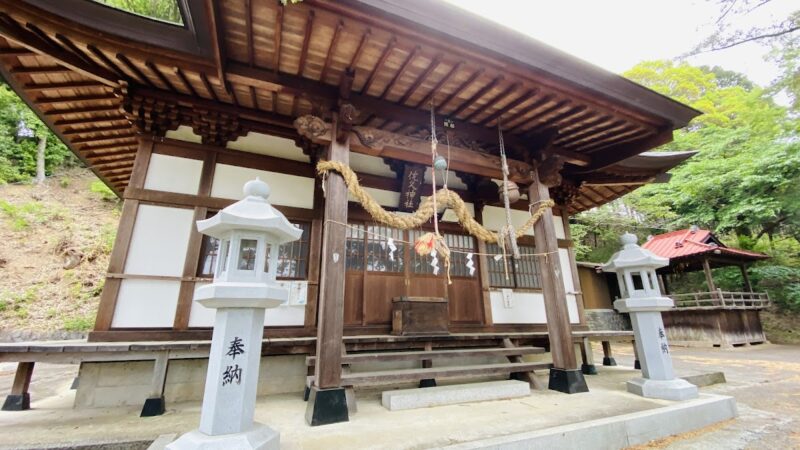
Suwa Shrine (Shimo-Obina-cho, Kofu City, Yamanashi Prefecture) Complete Guide | History, Blessings, and Access Information
Overview of Suwa Shrine (Shimo-Obina-cho)
Located in Shimo-Obina-cho, Kofu City, Yamanashi Prefecture, Suwa Shrine has long been revered as the local guardian deity. While several Suwa Shrines exist within Kofu City, the one in Shimo-Obina-cho has been carefully preserved to this day as a place of worship deeply intertwined with the lives of the local residents.
Shimo-Obina-cho is located in the northern part of Kofu City, a naturally rich area near Lake Chiyoda. Agriculture has flourished in this region since ancient times, and Suwa Shrine has played an important role as a place to pray for abundant harvests and the peace and prosperity of the community.
Basic Information
Location: Shimo-Obina-cho, Kofu City, Yamanashi Prefecture
Postal Code: 400-0082
Deity Enshrined: Takeminakata-no-kami
Shrine Rank: Village Shrine
History and Origins of Suwa Shrine
History of Founding
While there are no clear records regarding the founding date of Suwa Shrine, local traditions suggest it was already an object of worship during the medieval period. Suwa faith, with Suwa Grand Shrine in Shinano Province (present-day Nagano Prefecture) as its head shrine, spread throughout Kai Province (present-day Yamanashi Prefecture) during the Takeda clan’s era.
The Takeda clan had a deep relationship with the Suwa clan, and Lady Oi, the mother of Takeda Shingen, was from the Suwa clan. Due to this historical background, numerous Suwa Shrines were established in Yamanashi Prefecture, including Kofu City, and came to be revered as guardian deities of the region.
Local History of Shimo-Obina Town and the Role of the Shrine
The name Shimo-Obina Town originates from the old place name “Obina.” Located in the northern part of the Kofu Basin, this area has long been a settlement centered on agriculture. Suwa Shrine, as a central presence in the settlement, held festivals at key points in agricultural work, serving as a place to strengthen community bonds.
During the Edo period, it was under the control of the Kofu Domain and was revered by the villagers as their guardian shrine. Even during the Meiji era’s shrine consolidation policy, it maintained its independence and continues to be the local tutelary deity to this day.
Deities and Benefits
Takeminakata-no-kami
Takeminakata-no-kami, the principal deity of Suwa Shrine, is a god appearing in the Kojiki (Records of Ancient Matters) and is considered a son of Okuninushi-no-mikoto. Known for his bravery during the transfer of the land, he possesses characteristics of a god of war and military prowess.
Located in the Suwa region of Shinano Province, Suwa Grand Shrine, which considers Lake Suwa as its sacred ground, enshrines the deity of Suwa Shrine throughout Japan. It also has aspects of an agricultural and hunting deity, and has been worshipped as a god of abundant harvests and bountiful catches.
Main Benefits
- Abundant Harvest: Prayers for a bountiful harvest as the guardian deity of agriculture
- Family Safety: Protection of family health and safety
- Good Fortune: Improved luck and attracting good fortune
- Exorcism: Purification from misfortune
- Long-lasting Military Fortune: Success in competitions and contests
- Traffic Safety: Protection for safe travels
- Business Prosperity: Development and prosperity of businesses
Highlights of the Shrine Grounds
Main Hall and Worship Hall
The main hall of Suwa Shrine is built in a traditional shrine architectural style, giving it an appearance that reflects the history of the region. The worship hall is a place where worshippers offer prayers and is carefully maintained by local residents.
Shrine Precincts
Around the main shrine, there are sometimes shrines that reflect local beliefs. These demonstrate the diversity of the region’s history and the faith of its residents.
Sacred Trees and Natural Environment
The shrine grounds are lined with ancient sacred trees such as cedar and pine, creating a sacred atmosphere. These trees are living witnesses that have watched over the history of the shrine and also play a role in preserving the local natural environment.
Annual Events and Festivals
Grand Festival
Suwa Shrine holds its annual grand festival every year. This festival is an important event in which all local residents participate, and may include a procession of portable shrines and offering ceremonies. It is an important opportunity to deepen community bonds.
First Shrine Visit of the New Year
At the start of the new year, local residents visit the shrine for their first shrine visit of the year to pray for safety and prosperity throughout the year. Although small in scale, this shrine is deeply rooted in the community, offering a warm and welcoming atmosphere for welcoming the New Year.
Other Festivals
- Spring Festival: A festival marking the start of agricultural work
- Autumn Festival: A festival giving thanks for the harvest
- Monthly Festival: A regular festival held every month
Relationship with Other Suwa Shrines in Kofu City
In addition to the shrine in Shimo-Obina-cho, there are several other Suwa shrines in Kofu City, Yamanashi Prefecture. These reflect the historical background of the spread of Suwa faith during the Takeda clan era.
Major Suwa Shrines in Kofu City
- Suwa Shrine (Kami-Obina-cho): Located in Kami-Obina-cho, adjacent to Shimo-Obina-cho
- Suwa Shrine (Koseki-cho): Located in Koseki-cho, Kofu City
- Suwa Shrine (Arakawa-cho): Located in Arakawa-cho, Kofu City
- Suwa Shrine (Komatsu-cho): Located in Komatsu-cho, Kofu City
- Suwa Shrine (Nakahata): Located in Nakahata, Kofu City
- Suwa Shrine (Wada-cho): Located in Wada-cho, Kofu City
These Suwa Shrines are all independent shrines, but they share a common foundation of Suwa faith and have cultivated unique histories and beliefs in each region.
Access Information
Location
Address: Shimo-Obina-cho, Kofu City, Yamanashi Prefecture
Postal Code: 400-0082
Access by Public Transportation
Using the JR Chuo Main Line: From Kofu Station, take a Yamanashi Kotsu bus bound for “Chiyoda Lake,” get off at the nearest bus stop, and walk to the shrine. Since bus service is limited, it is recommended to check the timetable in advance.
Access by Car
Using the Chuo Expressway: It takes approximately 15 minutes from Kofu-Showa IC to the Shimo-Obina-cho area. Access is possible via National Route 20 and then a prefectural road.
Parking: Parking space may be limited depending on the size of the shrine. Temporary parking may be available during festivals.
Landmarks in the Surrounding Area
Shimo-Obina-cho is an area close to Chiyoda Lake. Lake Chiyoda is known as a place of relaxation for the citizens of Kofu, and parks and walking paths are maintained along its shores. When visiting Suwa Shrine, you can also enjoy the nature surrounding Lake Chiyoda.
Manners and Etiquette for Worship
Basic Worship Etiquette
- Bow at the Torii Gate: Bow before passing through the torii gate.
- Purification at the Water Basin: Purify your hands and mouth.
- Walking on the Path: The center of the path is considered the path of the gods, so walk along the sides.
- Worship at the Main Hall: Worship using the two bows, two claps, and one bow ritual.
Attire for Worship
There are no particularly strict dress code regulations, but it is desirable to wear modest attire that reflects the sacred nature of the place. For formal events such as festivals, more formal attire is appropriate.
Local Information for Shimo-Obina-cho
Regional Characteristics
Shimo-Obina-cho is located in the northern part of Kofu City and is characterized by its rich natural environment. It is close to Lake Chiyoda and is a quiet residential area slightly removed from the city center.
Nearby Tourist Attractions
Lake Chiyoda: This artificial lake is known as a water source for Kofu City. A park has been developed along the lakeshore, where you can enjoy cherry blossoms in spring and autumn foliage in fall. It’s an ideal spot for walks and picnics.
Kofu City Center: Located about 15 minutes by car from Shimo-Obina-cho, the city center of Kofu boasts numerous tourist attractions, including Takeda Shrine, Kofu Castle Ruins (Maizuru Castle Park), and the Yamanashi Prefectural Museum of Art.
Local Living Environment
The area around Shimo-Obina-cho has developed as a residential area, offering a quiet and peaceful living environment. Supermarkets and convenience stores, among other facilities necessary for daily life, are readily available.
Suwa Faith in Yamanashi Prefecture
History of Yamanashi Prefecture and Suwa Faith
Yamanashi Prefecture has been strongly influenced by the Suwa Grand Shrine in neighboring Nagano Prefecture. In particular, the Takeda clan during the Sengoku period had marital ties with the Suwa clan and placed great importance on Suwa faith. Therefore, Suwa shrines are widely distributed throughout Yamanashi Prefecture, including Kofu City.
Major Suwa Shrines in Yamanashi Prefecture
Numerous Suwa Shrines exist in Yamanashi Prefecture, not just in Kofu City:
- Kai City: Multiple Suwa Shrines are located here.
- Yamanashi City: Suwa Shrines are worshipped as the local guardian deity.
- Koshu City: Suwa Shrines are scattered throughout the former Katsunuma Town and Shioyama City areas.
- Uenohara City: Suwa faith extends to the eastern part of the prefecture.
- Fujikawa Town: Suwa Shrines in the Fujikawa River basin.
- Ichikawamisato Town: Suwa Shrines reflecting local history.
- Showa Town: Suwa Shrines in an area adjacent to Kofu City.
- Yamanakako Village: Suwa faith around the Fuji Five Lakes.
- Kosuge Village: Suwa Shrines in mountainous areas.
These Suwa Shrines have fostered unique histories and beliefs in their respective regions, playing a central role in their communities.
Characteristics and Significance of Suwa Faith
What is Suwa Faith?
Suwa faith is an ancient Japanese faith originating around Lake Suwa in Nagano Prefecture. It enshrines Takeminakata-no-kami as its principal deity and has been revered as the god of agriculture, hunting, and martial prowess. Suwa Grand Shrine (Kamisha Honmiya, Kamisha Maemiya, Shimosha Harumiya, and Shimosha Akimiya) is the head shrine, and it is said to have over 5,000 branch shrines throughout Japan.
Relationship with the Onbashira Festival
At Suwa Grand Shrine, the Onbashira Festival, a grand festival, is held once every seven years (the seventh year in the traditional Japanese age counting system). This is a magnificent festival in which giant pillars are cut from the mountains and erected at the shrine, and is a symbolic event of Suwa faith. Various Suwa shrines throughout Japan also hold festivals related to the Onbashira Festival, although on a different scale.
Suwa Faith in Modern Times
Even in modern times, Suwa faith remains deeply rooted in local communities. The shrine attracts not only agricultural workers, but also people with diverse wishes, such as family safety, traffic safety, and business prosperity. It continues to play a central role in the local community, providing a place for intergenerational exchange through its festivals.
Points to Note and How to Enjoy Your Visit
Best Time to Visit
Suwa Shrine is open for visits throughout the year, but each season offers a different charm:
- Spring (March-May): Beautiful fresh greenery, and the time for the spring festival
- Summer (June-August): Enjoy the coolness of the lush green grounds
- Autumn (September-November): Beautiful autumn foliage, and the time for the autumn festival and the annual grand festival
- Winter (December-February): A tranquil atmosphere for New Year’s visits and winter festivals
Photography
Photography is generally permitted on the shrine grounds, but please note the following:
- Follow instructions if photography is restricted in certain areas, such as inside the main hall.
- Be considerate of other visitors and avoid disturbing religious ceremonies during festivals.
- Respect the privacy of other visitors.
Goshuin (Shrine Seals)
Depending on the size of the shrine, it may not always be possible to obtain Goshuin. If you wish to receive a Goshuin (temple/shrine stamp), it is recommended to check in advance or visit during events such as the annual festival.
Connection with the Community and Social Role
Role as a Local Guardian Deity
Suwa Shrine serves as the local guardian deity of Shimo-Obina-cho, a spiritual anchor for the local residents. Life rites such as the first shrine visit for a newborn, Shichi-Go-San (a traditional rite of passage for children), and exorcism ceremonies are held here, accompanying the lives of the local people.
Center of the Local Community
The shrine is not only a religious facility but also a central place in the local community. Through preparations for festivals and cleaning activities, interaction among residents is fostered, strengthening community bonds.
Preservation of Traditional Culture
Suwa Shrine’s festivals and annual events are important opportunities to pass on the region’s traditional culture to the next generation. By participating in the festivals, children can learn about the history and culture of the region and cultivate a love for their hometown.
Kofu City’s Shrine Culture
History and Shrines of Kofu City
Kofu City has a history of developing as a castle town of the Takeda clan, and numerous shrines and temples exist within the city. From Takeda Shrine, which enshrines Lord Takeda Shingen, to many other shrines that have attracted worshippers since ancient times, each conveys the history and culture of the region.
How to Enjoy Shrine Visits
By visiting shrines within Kofu City, you can learn about the history and characteristics of each region. After visiting Suwa Shrine in Shimo-Obina-cho, it is recommended to visit Suwa Shrine in Kami-Obina-cho and shrines in the city center. You can feel the unique atmosphere and history of each shrine.
Summary
Suwa Shrine in Shimo-Obina-cho, Kofu City, Yamanashi Prefecture, is a historical shrine deeply rooted in the community. It enshrines Takeminakata-no-kami and is believed to offer blessings for abundant harvests, family safety, and protection from evil.
Inheriting the tradition of Suwa faith that has continued since the time of the Takeda clan, this shrine has been an integral part of the lives of the local residents as their guardian deity. Though small in scale, it plays a vital role as the heart of the community, deepening local bonds through its festivals.
Located in a naturally rich environment near Lake Chiyoda, its quiet and peaceful atmosphere is another appealing feature. When visiting Kofu City, be sure to stop by Suwa Shrine to experience the history and culture of the region.
Numerous Suwa Shrines exist throughout Yamanashi Prefecture, each telling its own story of local history. The Suwa Shrine in Shimo-Obina-cho is one such shrine, and it will undoubtedly continue to be protected and revered by the local people for generations to come.