Complete Guide to Kimimiya Shrine (Yamanashi City, Yamanashi Prefecture) | Thorough Explanation of History, Deities, Access, and Cultural Properties
Kimimiya Shrine, located in Higashigoyashiki, Yamanashi City, Yamanashi Prefecture, is a historical shrine with a history dating back to the Heian period. In its heyday, it was known as “Kinemiya” and was revered as a center of local faith. This article comprehensively explains everything you need to know before visiting Kimimiya Shrine, including its history, deities, highlights within the grounds, cultural properties, festivals, and access methods.
Basic Information on Kimimiya Shrine
Kimimiya Shrine is a former village shrine located in Yamanashi City, Yamanashi Prefecture, registered under corporate number 7090005003586. It is one of five “Kimimiya Shrines” nationwide and is known as a shrine of high historical value within Yamanashi Prefecture.
Location and Contact Information
- Address: 292 Higashigoyashiki, Yamanashi City, Yamanashi Prefecture 405-0012
- Shrine Rank: Former Village Shrine
- Corporate Number: 7090005003586
- Jurisdiction: Yamanashi Prefectural Shrine Association
Nearest Station and Access
Access to Kimiya Shrine is as follows:
Access by Train
- Approximately 15 minutes on foot from JR Chuo Main Line “Higashi-Yamanashi Station”
- Approximately 20 minutes on foot from JR Chuo Main Line “Yamanashi-shi Station”
Access by Car
- Approximately 20 minutes from Chuo Expressway “Ichinomiya-Misaka IC”
- Approximately 15 minutes from Chuo Expressway “Katsunuma IC”
- Parking: Limited parking space available for visitors on the shrine grounds
History and Origins of Kimimiya Shrine
Founding and Ancient Beliefs
Kimimiya Shrine is said to have been founded in December of the fifth year of the Jogan era (863 AD). The Jogan era was the early Heian period, a time when shrines were founded throughout Japan under the reign of Emperor Seiwa. Given this historical context, it is believed that Kimimiya Shrine was also enshrined as a guardian deity of the region under the protection of the imperial court and local powerful families.
From “Kinemiya” to “Kimiya”
Kimimiya Shrine was formerly known as “Kinemiya.” The term “Kinemiya” (杵) refers to a tool used for pounding grain, suggesting a deep connection to agriculture. The area around Yamanashi City has long been a thriving agricultural region, and it’s evident that the shrine attracted the faith of farmers praying for bountiful harvests. While the spelling changed from “Kinemiya” to “Kimiya” over time, the essence of this faith has been passed down to the present day.
Divine Procession with Oimata Shrine
Records indicate that until the Genki era (1570-1573), a divine procession took place annually on August 15th from Oimata Shrine in Yawata, Yamanashi City, to Kimiya Shrine. This procession demonstrated the deep connection between the two shrines and was an important festival welcoming the deities to the entire region. Although it is presumed to have been interrupted by the turmoil of the Sengoku period, this historical fact speaks to the fact that Kimiya Shrine was an important religious center in the region.
Deities Enshrined
The deities enshrined at Kimiyajinja Shrine are believed to bestow divine blessings of protection for the region, abundant harvests, and family safety. According to records of the Yamanashi Prefectural Shrine Association, the following deities are said to be enshrined:
The main deities enshrined are the gods of agriculture and pioneering in the region, who have protected the lives of local residents since ancient times. Including the subsidiary shrine, Nagato Shrine, it is a comprehensive space of worship where multiple deities reside.
Visitors come seeking blessings for family safety, abundant harvests, business prosperity, and protection from evil.
Highlights of the Shrine Grounds
Yamanashi Prefecture Designated Tangible Cultural Property: Nagato Shrine
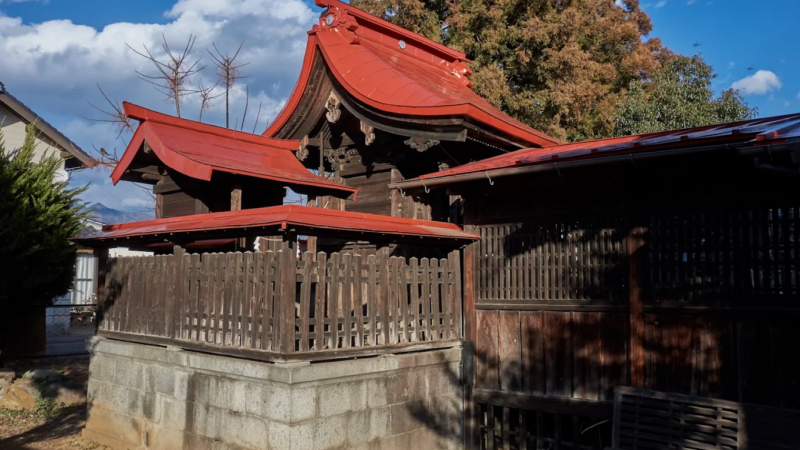
The most noteworthy feature of the Kimiyajinja Shrine grounds is the subsidiary shrine, Nagato Shrine, which was designated a Yamanashi Prefecture Designated Tangible Cultural Property in 1966.
Architectural Style
- Form: Ikkensha Nagare-zukuri (One-Bay Nagare-zukuri Style)
- Roof: Hinoki Bark Roofing
- Features: A valuable building that strongly retains the style of traditional shrine architecture.
The Ikkensha Nagare-zukuri style is a main shrine style with one bay (one space between pillars) at the front, characterized by its elegant shape with a roof that flows long across the front. Hinoki bark roofing is a traditional technique that involves layering thinly shaved cypress bark, requiring advanced skills and regular maintenance.
This building holds high architectural historical value as a typical example of local shrine architecture from the Edo to Meiji periods. It is in good condition as a cultural property, and is a valuable legacy that conveys the technology and aesthetic sense of the time.
Main Hall and Worship Hall
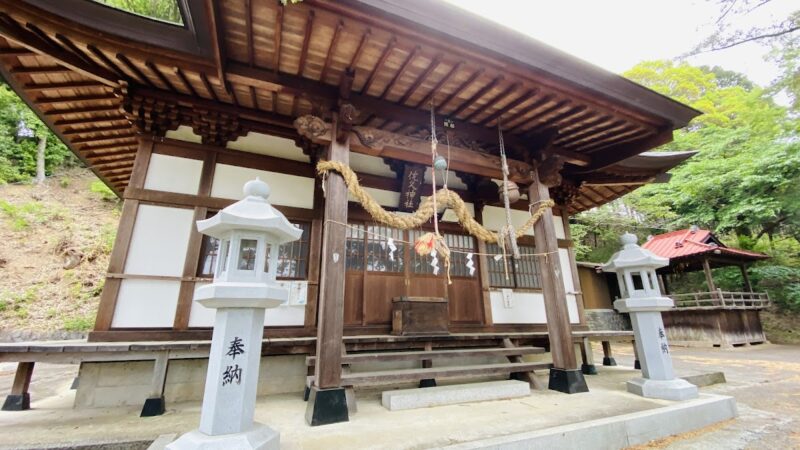
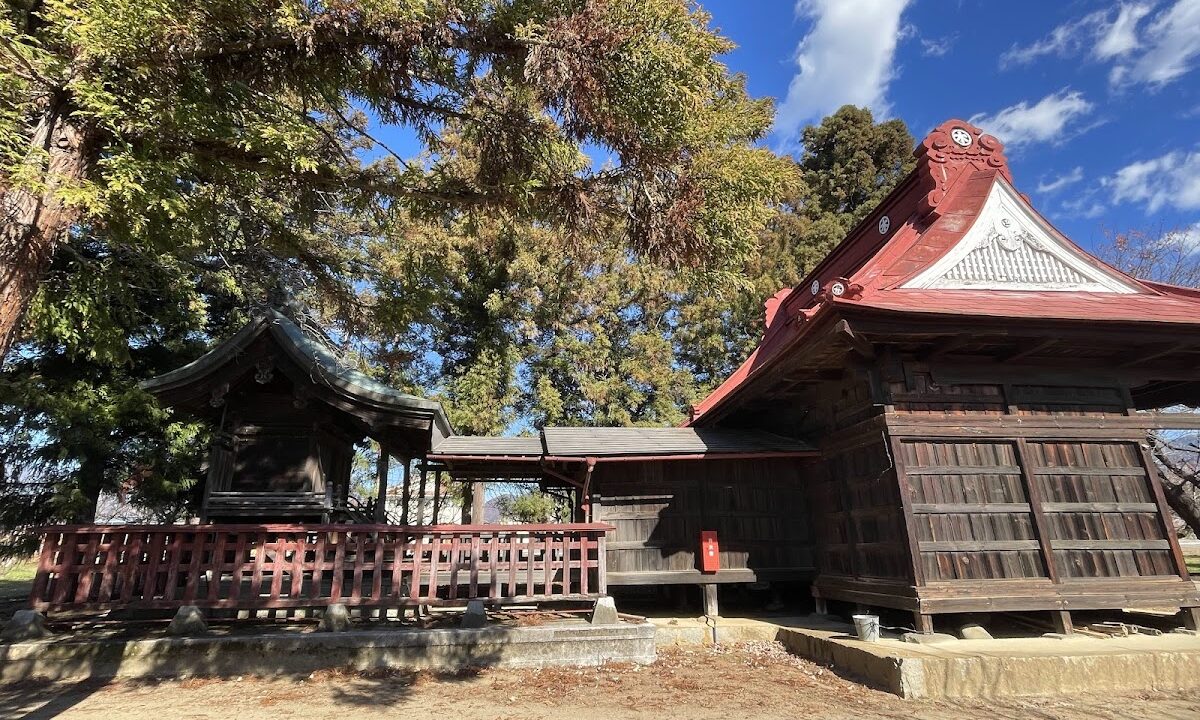
The main hall and worship hall of Kimiya Shrine, along with Nagato Shrine, form the core of the shrine grounds. The history of long-standing devotion as the local guardian deity can be felt from the appearance of the buildings.
The shrine grounds are well-maintained and enveloped in a refreshing atmosphere. Ancient trees are scattered throughout, creating a solemn ambiance befitting a sacred place.
Shrine Office and Goshuin (Shrine Seals)
Kimiyajinja Shrine offers goshuin (shrine seals) to visitors. However, since there may not always be a resident priest, those wishing to receive a goshuin are advised to inquire in advance with the Yamanashi Prefectural Shrine Association or a nearby shrine that also manages the shrine.
Festivals and Events
Spring Festival (March 18th)
The most grand festival held at Kimiyajinja Shrine is the Spring Festival, held annually on March 18th. This festival is considered an important annual event in the region, attracting many parishioners and visitors.
Features of the Spring Festival
- Date: March 18th every year
- Contents: Shinto rituals, Kagura (sacred dance) performances, dedication ceremonies by local residents, etc.
- Significance: Prayers for a bountiful harvest and peace in the community
The Spring Festival is held at the start of the farming season and is an important Shinto ritual praying for a good harvest that year. It also functions as a place to reaffirm the unity of the local community and is a significant event from the perspective of passing on traditional culture.
Other Annual Events
In addition to the Spring Festival, Kimiyajinja Shrine holds various Shinto rituals throughout the year, including the New Year’s Day Festival and the Autumn Grand Festival. For detailed festival schedules, please contact the Yamanashi Prefectural Shrine Association or the local parishioners’ representative.
Shrines near Kimiyajinja Shrine
Besides Kimiyajinja Shrine, many other historical shrines are located in Yamanashi City. Here are some nearby shrines that you may want to visit when you come to Kimiyajinja Shrine.
Oimata Shrine (Yamanashi City, Hachiman)
As mentioned above, this shrine has a deep historical connection with Kimiya Shrine, having held a Shinko-sai (procession festival) with it until the Genki era. It is one of Yamanashi City’s representative ancient shrines, boasting a spacious precinct and magnificent shrine buildings.
Sashideiso Otakeyama Shrine
Located in the south of Yamanashi City, this shrine is known as the “Shrine of Observation.” Situated at a high altitude, it is a popular spot for its spectacular panoramic views of the Kofu Basin. It is known for its blessings related to career success (financial luck), health, and protection from evil.
- Location: 1376-1 Minami, Yamanashi City, Yamanashi Prefecture
- Features: Excellent views, blessings for protection against evil and good fortune
Other Shrines in Yamanashi City
- Hiyoshi Sanno Shrine
- Hakusan Shrine
- Shirahata Shrine
- Hachioji Shrine
- Hachiman Shrine
- Fukunomiya Shrine
- Homutawake Shrine
- Tateishi Shrine
These shrines each have their own unique history and beliefs, shaping the religious culture of Yamanashi City.
Manners and Points for Visiting Shrines
Basic Worship Etiquette
When visiting Kimiya Shrine, please observe the following basic etiquette.
- Bow before passing through the torii gate: As a sign of respect before entering the sacred area.
- Purify yourself at the water basin: Purify your left hand, then your right hand, then your mouth.
- Avoid walking in the center of the approach to the shrine: The center is considered the path of the gods.
- Etiquette in front of the main hall: Two bows, two claps, and one bow are the basic rituals.
- Bow again at the torii gate upon leaving: With gratitude.
Regarding Photography
Photography is generally permitted on the shrine grounds, but please note the following:
- Refrain from taking photos inside the main hall or during religious ceremonies.
- Be considerate of other worshippers.
- Take photos of Nagato Shrine, a cultural property, with respect.
- Avoid using flash photography.
Best Time to Visit
While Kimiya Shrine is open for worship throughout the year, the following times are particularly recommended:
- Spring (March-May): The spring festival season, and the natural beauty of the shrine grounds.
- Autumn (September-November): The weather is pleasant, and you can enjoy the autumn foliage.
- First three days of the New Year: Many worshippers visit for their first shrine visit of the year.
History of Yamanashi City and Kimimiya Shrine
Origins of Yamanashi City
Yamanashi City is located in the northeastern part of Yamanashi Prefecture, and is a municipality that stretches from the eastern part of the Kofu Basin to the Chichibu Mountains. In ancient times, it belonged to Yamanashi County of Kai Province and prospered through agriculture, mainly fruit cultivation, and sericulture.
The current Yamanashi City was formed in 2005 through the merger of the former Yamanashi City, Makioka Town, and Mitomi Village. It is a region that plays a central role in “Yamanashi, the Fruit Kingdom,” with thriving production of peaches and grapes.
The Role of Kimimiya Shrine in the Region
The Higashigoyashiki district, where Kimimiya Shrine is located, is a historical settlement close to the center of Yamanashi City. For over a thousand years, Kimimiya Shrine has served as the guardian deity of this region, a spiritual pillar for the residents.
In Yamanashi City, where agriculture is the main industry, the significance of Kimimiya Shrine, which prays for a bountiful harvest, remains unchanged. Annual events, including the spring festival, are important opportunities to strengthen the bonds of the local community.
Kimimiya Shrine and Cultural Properties of Yamanashi Prefecture
Shrine Architecture in Yamanashi Prefecture
Yamanashi Prefecture has numerous historical shrines, each possessing valuable cultural properties. The Nagato Shrine (a prefecturally designated tangible cultural property) within Kimimiya Shrine is one such example.
The following are some of the main shrine cultural properties in Yamanashi Prefecture:
- Asama Shrine (Fuefuki City): Main hall designated as a nationally important cultural property
- Homi Shrine (Hokuto City): Main hall designated as a prefectural cultural property
- Otakeyama Nagato Shrine (Koshu City): Designated as an important cultural property
These cultural properties are important resources for understanding the development of shrine architecture in Kai Province. ### The Technique of Cypress Bark Roofing
The cypress bark roofing used at the Nagato Shrine within the grounds of Kimiyajinja Shrine is an ancient Japanese roofing technique. It requires advanced techniques to peel thin layers of cypress bark and apply them in multiple layers.
Characteristics of Cypress Bark Roofing:
- Durability: With proper maintenance, it can last for several decades or more.
- Breathability: Allows moisture to escape, protecting the building.
- Aesthetic Appeal: Develops a unique texture through aging.
- Traditional Technique: Protected as a selected preservation technique.
In modern times, the decline in cypress bark roofing craftsmen is a challenge, making the maintenance of cultural heritage buildings increasingly difficult. The Nagato Shrine at Kimiyajinja Shrine also requires regular maintenance, and its preservation continues with support from the local community and government.
Yamanashi City Sightseeing to Enjoy in Combination with a Visit to Kimiyajinja Shrine
Fruit Picking
Yamanashi City is nationally famous as a production area for peaches and grapes. In addition to visiting Kimiyajinja Shrine, you can enjoy seasonal fruit picking.
- Peach Picking: Late June to Early August
- Grape Picking: Early August to Late October
- Cherry Picking: Early to Late June
Hot Springs
There are several hot spring facilities around Yamanashi City where you can relax after visiting the shrine.
- Hottarakashi Onsen: Famous for its open-air bath with a spectacular view
- Fuefukigawa Onsenkyo: Multiple hot spring areas including Isawa Onsen
Winery Tours
Yamanashi Prefecture is also known as a wine-producing region, and there are several wineries around Yamanashi City. You can enjoy wine tasting and winery tours.
Summary
Kimiyajinja Shrine is a historical shrine in Yamanashi City, Yamanashi Prefecture, said to have been founded in 863 AD. In the past, it was called “Kinemiya” and was revered by the local community as a god of agriculture. Within the shrine grounds is the Nagato Shrine (a one-bay nagare-zukuri style building with cypress bark roofing), a Yamanashi Prefecture-designated tangible cultural property, making it a valuable architectural landmark.
Every year on March 18th, a grand spring festival is held, making it an important event for the local community. Furthermore, the historical fact that a procession of the deity was held between this shrine and the Oimata Shrine until the Genki era (1570-1570) indicates that Kimimiya Shrine was a religious center in the region.
Access is convenient, approximately a 15-minute walk from Higashi-Yamanashi Station on the JR Chuo Main Line, making it easy to combine a visit with sightseeing in Yamanashi City or fruit picking. Why not quietly offer your prayers at Kimimiya Shrine, with its history spanning over a thousand years?
When visiting, be sure to admire the beautiful architecture of the Nagato Shrine, a cultural property. Kimimiya Shrine, where traditional techniques and faith still thrive, is a valuable spot to experience the history and culture of Yamanashi Prefecture.