Complete Guide to Shinmei Shrine (Yamanashi City, Yamanashi Prefecture): History, Deities, and Access Information
Shinmei Shrine, located in Yamanashi City, Yamanashi Prefecture, is a historical shrine that has garnered deep faith from the local community. This article provides detailed information you should know before visiting, including the shrine’s history, enshrined deities, features of the grounds, visiting information, and access methods.
Overview and Basic Information of Shinmei Shrine
Shinmei Shrine is a shrine located in Yamanashi City, Yamanashi Prefecture, and enshrines Amaterasu Omikami as its principal deity. The name Shinmei Shrine is commonly found in shrines that have invited Amaterasu Omikami, the deity of Ise Grand Shrine, and while there are many shrines with the same name throughout Japan, each is deeply connected to the history of its region.
Within Yamanashi City, there are several Shinmei Shrines in different districts, each playing a central role in its local community. The Shinmei Shrine featured in this article has a long history of being revered as the tutelary deity of the local residents.
Location and Basic Data
Location: Yamanashi City, Yamanashi Prefecture (Specific locations vary depending on the Shinmei Shrine)
Main Deity: Amaterasu Omikami (Amaterasu Omikami)
Shrine Rank: Village Shrine (Former Shrine Rank)
Annual Festival Date: Varies by region, but mostly held in autumn
History and Origin of Shinmei Shrines
Founding History
Many Shinmei Shrines around Yamanashi City are said to have been founded during the Edo period. Along with rural development and settlement formation at the time, shrines were built as spiritual pillars for residents and as places to pray for abundant harvests and peace in the region.
The name Shinmei Shrine originates from the enshrinement of Amaterasu Omikami, who is enshrined in the Inner Shrine of Ise Grand Shrine. The worship of Amaterasu Omikami, the sun goddess and ancestral deity of the Imperial family, combined with the spread of pilgrimages to Ise Shrine among common people during the Edo period, led to the establishment of Shinmei Shrines throughout Japan.
Shinmei Worship in the Yamanashi Region
Yamanashi Prefecture, formerly known as Kai Province, was historically under the rule of samurai families, including the Takeda clan. During the Edo period, a complex system of governance was in place, with a mix of shogunate-controlled territories and shogunate-controlled territories, and land reclamation projects were carried out throughout the region.
In the process of this development, shrines dedicated to the local guardian deity were always built in new settlements. Shinmei Shrines are a prime example, and for people engaged in agriculture, the worship of Amaterasu Omikami, who brings the blessings of the sun, was a natural progression.
Changes After the Meiji Era
With the Meiji-era separation of Shinto and Buddhism and the introduction of the shrine ranking system, Shinmei Shrines were incorporated into the modern shrine system. Many Shinmei Shrines were designated as village shrines, taking on the role of public religious facilities in the region.
Although State Shinto was dismantled by the post-war Shinto Directive, Shinmei Shrine has continued as a place of independent worship for local residents and is protected by parishioners and devotees to this day.
Deities and Divine Virtues
Amaterasu Omikami (Amaterasu Ōmikami)
Amaterasu Omikami, the principal deity of Shinmei Shrine, is one of the supreme gods in Japanese mythology, a goddess who personifies the sun. According to the Kojiki and Nihon Shoki, she was born from the purification ritual of Izanagi-no-Mikoto and is depicted as the god who rules Takamagahara (the High Plain of Heaven).
Amaterasu Ōmikami is considered the ancestral deity of the Imperial Family and symbolizes the legitimacy of imperial succession through the Yata no Kagami (Eight-Handed Mirror), one of the Three Sacred Treasures of Japan. She is enshrined in the Inner Shrine of Ise Grand Shrine and has been revered as a god who forms the foundation of Japanese spiritual culture.
Divine Virtues and Faith
The divine virtues of Amaterasu Omikami are multifaceted:
- National Peace and Security: As a goddess who protects all of Japan
- Abundant Harvests and Protection of Agriculture: As a goddess who brings the blessings of the sun
- Good Fortune and Protection from Evil: The power to ward off and purify all calamities
- Family Safety and Prosperity of Descendants: Watching over the peace and prosperity of the home
- Business Prosperity: Helping the development of one’s livelihood
Especially in times when agriculture was the main industry, faith in Amaterasu Omikami, the sun goddess, was directly linked to daily life, and rituals for praying for a bountiful harvest and expressing gratitude were actively performed.
Highlights and Features of the Shrine Grounds
Shrine Architecture
The shrine buildings of Shinmei Shrines often adopt the Shinmei-zukuri architectural style. This is one of the oldest shrine architectural styles in Japan, exemplified by Ise Grand Shrine, and has the following characteristics:
- Gable roof
- Hirairi (flat entrance) structure
- Supported by ridge-supporting pillars
- Simple and linear beauty
However, depending on the size and construction period of the local Shinmei Shrine, other styles may be incorporated.
Atmosphere of the Shrine Grounds
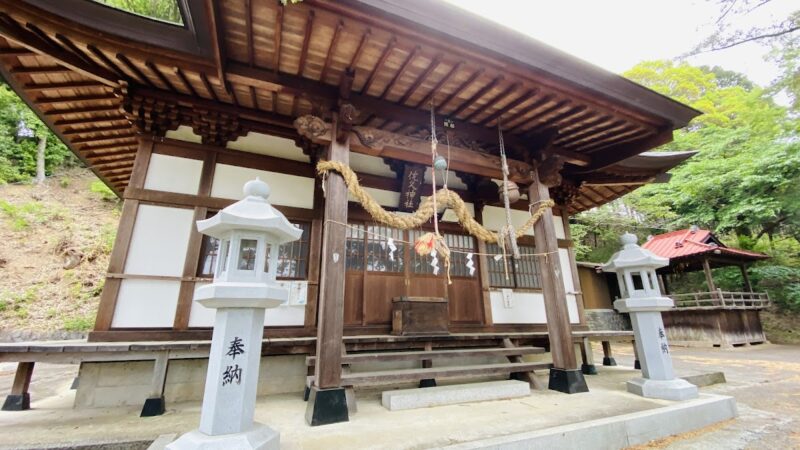
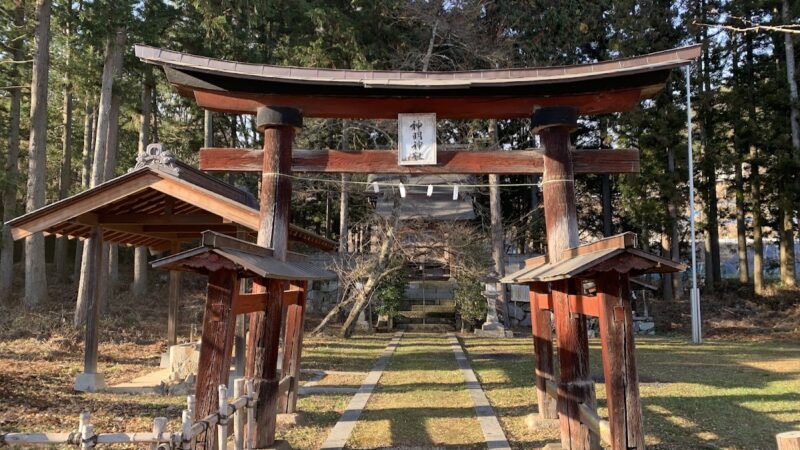
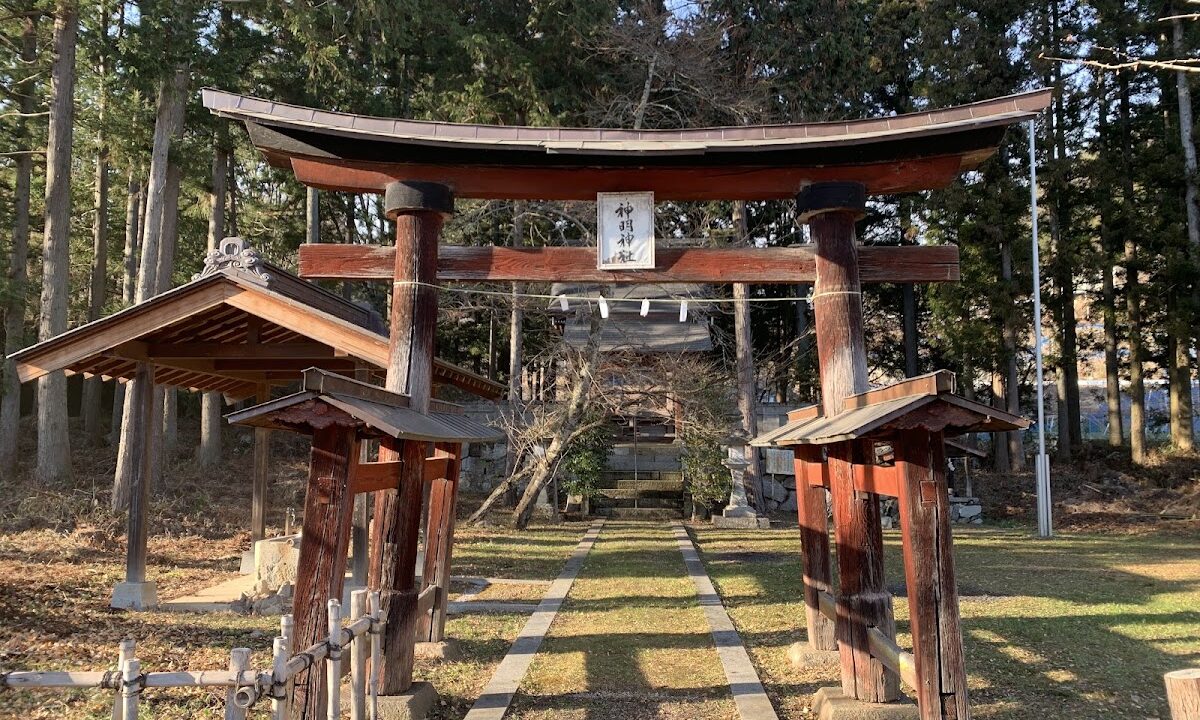
Shinmei Shrines in Yamanashi City are mostly small to medium-sized shrines closely connected to the local community, characterized by a quiet and peaceful atmosphere. The grounds may contain ancient trees considered sacred, or stone monuments that tell the history of the region.
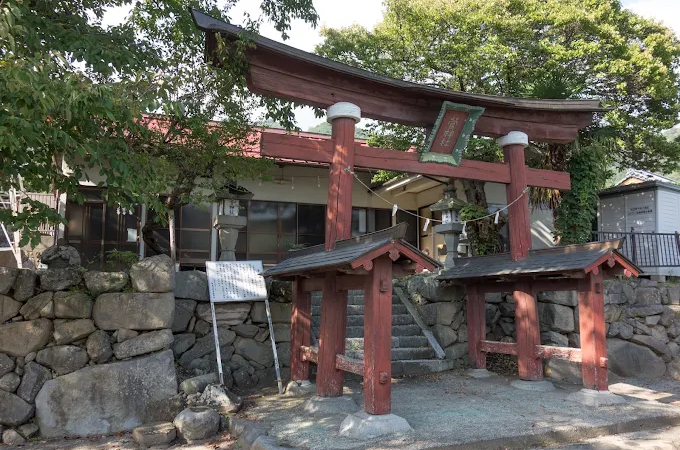
In some areas, shrines are co-located with community centers or meeting halls, and are used as community hubs in addition to religious ceremonies. This demonstrates that shrines are not merely places of worship, but also play a role in supporting the ties of the local community.
Seasonal Scenery
Yamanashi City is a region rich in seasonal changes, and the grounds of Shinmei Shrine also show different expressions with each season:
Spring: A season when cherry blossoms and plum blossoms bloom and new greenery sprouts. Spring festivals are sometimes held.
Summer: Surrounded by lush green trees, a cool breeze permeates the air.
Autumn: The autumn leaves are beautiful, and the annual grand festival is held. Thanks are offered for the harvest.
Winter: The snow-covered grounds are enveloped in silence, creating a solemn atmosphere.
Annual Festivals and Events
Grand Festival
The annual grand festival of Shinmei Shrine is the most important festival of the year. Many Shinmei Shrines hold it in the autumn (September to October), offering thanks for a bountiful harvest and praying for the peace and prosperity of the region.
The following Shinto rituals are performed during the annual festival:
- Mikoshi Togyo (Portable Shrine Procession): The sacred object is transferred to a portable shrine and paraded through the community.
- Dedication Ceremonies: Traditional performing arts such as Kagura (sacred music and dance), lion dance, and taiko drumming.
- Naorai (Feast): A meal held after the Shinto rituals, where gods and humans share a meal together.
In some areas, children’s portable shrines and floats may appear, making it a lively festival with the participation of all residents.
Other Annual Events
New Year’s Day Festival (January 1st): Prayers for happiness and peace in the new year
Setsubun Festival (February): Exorcism through bean-throwing
Spring Festival (Around April): Prayer ceremony marking the start of agricultural work
Summer Purification Ceremony (June 30th): Shinto ritual to purify oneself of impurities accumulated over the past six months
Niiname-sai Festival (November 23rd): Offering thanks for the harvest
Manners and Etiquette for Visiting the Shrine
Basic Etiquette for Visiting the Shrine
When visiting Shinmei Shrine, please follow the etiquette below:
- Bow at the Torii Gate: Bow at the torii gate before entering the shrine grounds.
- Purification at the Water Basin:
- Take the ladle with your right hand and purify your left hand.
- Switch the ladle to your left hand and purify your right hand.
- Switch the ladle back to your right hand, receive water in your left hand, and rinse your mouth.
- Finally, stand the ladle upright and purify the handle.
- Worship at the Main Hall:
- Quietly place your offering in the offering box.
- Ring the bell if there is one.
- Perform the two bows, two claps, and one bow (two deep bows, two claps, one deep bow).
- Departure: Turn around and bow once after exiting the torii gate.
Mindset When Visiting a Shrine
Visiting a shrine is not merely about making a wish, but an act of expressing gratitude and respect to the gods. It is important to prioritize expressing daily gratitude and purifying your heart before making your prayers.
Access Information and Surrounding Environment
Access by Public Transportation
The nearest station to Shinmei Shrine in Yamanashi City is often Yamanashi-shi Station on the JR Chuo Main Line. From the station, you can walk, take a taxi, or use a local bus.
From JR Yamanashi-shi Station:
- Walking: Approximately 15-40 minutes depending on the shrine’s location
- Taxi: Approximately 5-15 minutes
- Local Bus: City loop buses operate (varies by route)
For specific access methods, it is recommended to check the exact location of the Shinmei Shrine you plan to visit in advance.
Access by Car
Using the Chuo Expressway:
- From Katsunuma IC or Ichinomiya-Misaka IC, take National Route 20 towards Yamanashi City
- Travel Time: Approximately 15-30 minutes from the IC (depending on the shrine’s location)
Parking:
Small Shinmei Shrines may not have dedicated parking. Temporary parking may be provided during festivals, so it’s best to check in advance.
Nearby Tourist Attractions
The following are some of the tourist attractions around Yamanashi City:
Fuefukigawa Fruit Park: A park with orchards and observation facilities
Nishizawa Valley: A scenic spot within Chichibu-Tama-Kai National Park
Erinji Temple: A Rinzai Zen temple associated with Takeda Shingen
Wineries: Yamanashi Prefecture is one of Japan’s leading wine-producing regions
Visiting these tourist spots in conjunction with a visit to Shinmei Shrine is highly recommended.
The Relationship Between Yamanashi City and Shinmei Shrine
As a Center of the Local Community
Shinmei Shrine in Yamanashi City has played a role not merely as a place of worship, but as the core of the local community. Annual festivals and events provide opportunities for local residents to gather and deepen intergenerational exchanges.
Especially in rural areas, shrine rituals are linked to the rhythm of agricultural work, and the tradition of agricultural rituals, such as praying for a bountiful harvest at the spring prayer festival and celebrating the harvest at the autumn thanksgiving festival, is still passed down today.
Value as a Cultural Asset
Shinmei Shrine in Yamanashi City sometimes preserves cultural assets that tell the story of the region’s history. Ancient documents, votive plaques, and stone structures are valuable resources for understanding the region’s history and the evolution of its beliefs.
Significance of Visiting Shinmei Shrine
Connection to Ise Faith
Visiting Shinmei Shrine is also a form of worship towards Ise Grand Shrine. During the Edo period, a pilgrimage to Ise was a once-in-a-lifetime aspiration for ordinary people, but it was not easily realized. Therefore, visiting the local Shinmei Shrine served as a substitute for a pilgrimage to Ise Grand Shrine.
Even today, Shinmei Shrine is considered a “branch shrine” of Ise Grand Shrine, a place where one can feel the faith in Amaterasu Omikami up close.
Understanding Local History
Visiting Shinmei Shrine is an entry point to understanding the history and culture of the region. Stone monuments and historical records within the shrine grounds reveal how the land was developed and what kind of lives the people lived. Cherishing local shrines is crucial for preserving and passing on the region’s identity to future generations.
Summary: Visiting Shinmei Shrine in Yamanashi City
Shinmei Shrine in Yamanashi City, Yamanashi Prefecture, is a historic shrine dedicated to Amaterasu Omikami, and has played a central role in the region’s faith and culture. Its long history dating back to the Edo period, its locally rooted festivals, and the quiet, solemn atmosphere of its grounds offer peace of mind to visitors.
When visiting Yamanashi City, be sure to visit the local Shinmei Shrine. You will experience a simple and sincere form of faith that thrives in the region, quite different from large-scale tourist shrines.
We hope that your visit to the shrine will provide an opportunity to reflect on Japan’s traditional culture and local history, and to renew your gratitude for your daily life. Enjoy a peaceful moment at Shinmei Shrine, where Yamanashi’s rich nature and history intertwine.