Complete Guide to Kunitachi Shrine (Fuefuki City, Yamanashi Prefecture) | History, Deities, and Access Information for the Two Shrines
There are two shrines named “Kunitachi Shrine” in Fuefuki City, Yamanashi Prefecture. One is located in Shioda, Ichinomiya-cho, Fuefuki City, and the other is located in Inoue, Misaka-cho, Fuefuki City. These two shrines, sharing the same name, each have different histories and origins, and have attracted local faith.
This article comprehensively introduces information useful for visiting these two Kunitachi Shrines, including their historical background, enshrined deities, features of the grounds, and access methods.
What is Kunitachi Shrine? | The Reason for the Existence of Two Shrines
The existence of two shrines named “Kunitachi Shrine” within Fuefuki City is an interesting case in local history research. Both shrines bear the name “Kunitachi,” which is thought to originate from the fact that they enshrine Kunitokotachi-no-Mikoto, the primordial deity of the land.
The name “Kunitachi” in the shrine’s name reflects the worship of Kunitokotachi-no-Mikoto, the god of land creation, and also suggests a connection to the Kuninomiyatsuko (provincial governor) of ancient Kai Province. In particular, the Kunitachi Shrine in Shioda, Ichinomiya-cho, has a deep connection to Shionoumi-no-Ama, the first Kuninomiyatsuko of Kai Province, and is believed to have an extremely ancient founding.
Detailed Information on Kunitachi Shrine (Shioda, Ichinomiya-cho)
Basic Information and Location
Location: Shioda, Ichinomiya-cho, Fuefuki City, Yamanashi Prefecture
Former Shrine Rank: Designated Village Shrine
Postal Code: 405-0064
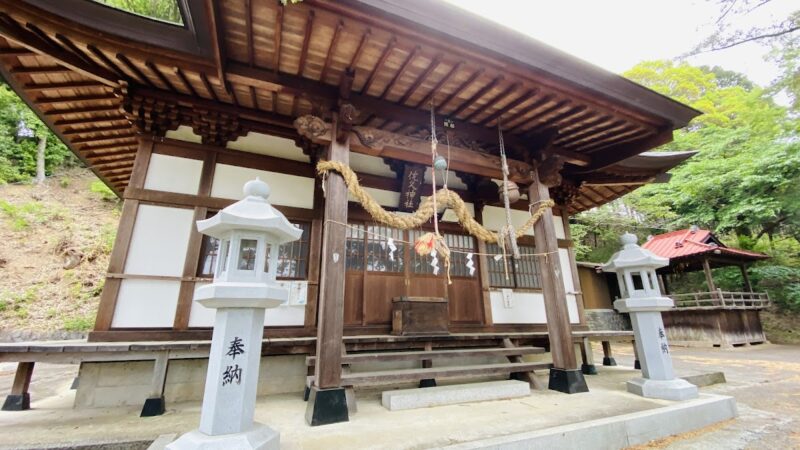
The Kunitachi Shrine in Shioda, Ichinomiya-cho, is located near the Chuo Expressway, south of the point where City Road 303 crosses the expressway. While not always shown on maps, the shrine features a relatively new building and well-maintained grounds.
Deities and History
Main Deities:
- Kunitokotachi-no-Mikoto
- Kuninomiyatsukoshionoumi-no-Ama
Kunitokotachi-no-Mikoto is one of the gods who appeared at the creation of heaven and earth in Japanese mythology, and is revered as the primordial god of the land. He is recorded in the *Nihon Shoki* as the first god to appear, and symbolizes the fundamental power of land formation.
Kuninomiyatsukoshionoumi-no-Ama is considered the first Kuninomiyatsuko of Kai Province, and was an important figure who played a role in regional governance in ancient times. Because these two deities are enshrined here, it has been suggested that the shrine’s founding is extremely ancient, possibly dating back to the founding period of ancient Kai Province.
Legend of the Subsidiary Shrine “Kinkame Myojin”
At the Kunitachi Shrine in Shioda, Ichinomiya Town, there is a subsidiary shrine called “Kinkame Myojin,” and an interesting legend remains there.
According to local legend, Furiya Tsushima-no-kami, known as the Shiota Chōja (salt field millionaire), owned two golden turtles. He enshrined one at this Kokuritsu Shrine and placed the other upstream of the Kanagawa River. The golden turtle is considered a symbol of wealth and prosperity, and has been an object of worship for the region’s abundance.
This legend illustrates the relationship between local influential figures and the shrine from the medieval to early modern periods, and tells the story of how folk beliefs were incorporated into shrine rituals.
Shrine Grounds and Features
The current shrine grounds and buildings are very neatly maintained. This is likely because the shrine grounds may have been moved due to road widening work. It is thought that the shrine’s location was adjusted during the process of regional development, such as the construction of City Road 303 and the Chuo Expressway.
The shrine buildings are relatively new and built using modern construction methods, but they follow the traditional style of shrine architecture. The grounds are kept clean, indicating careful management by local residents.
Detailed Information on Kokuritsu Shrine (Inoue, Misaka-cho)
Basic Information and Location
Location: 925 Inoue, Misaka-cho, Fuefuki City, Yamanashi Prefecture
Postal Code: 406-0803
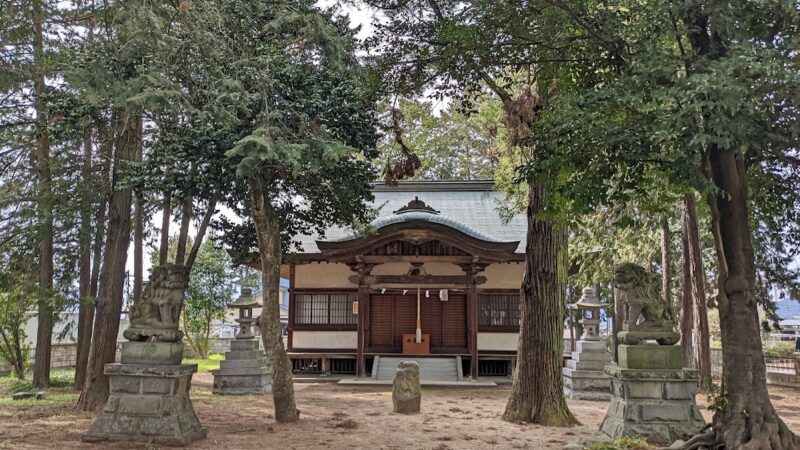
Kokuritsu Shrine in Inoue, Misaka-cho, is located in the Misaka district of Fuefuki City. The place name Inoue is an interesting name that suggests a connection to the former topography and water resources.
Deities and History
It is believed that Kokuritsu Shrine in Inoue, Misaka-cho, also enshrines Kunitokotachi-no-Mikoto as its main deity, but detailed records of its history are not as clear as those for Kokuritsu Shrine in Shioda, Ichinomiya-cho.
There are various theories regarding the relationship between the two shrines, but the following possibilities can be considered:
- Invitation Relationship: The deity was invited (divided) from one of the shrines.
- Independent Founding: Each was founded independently as a shrine dedicated to Kunitokotachi-no-Mikoto.
- History of Consolidation: Due to the Meiji-era shrine consolidation policy, several small shrines were merged and came to share the same name.
Further historical facts may be revealed through research into local oral traditions and ancient documents.
Connection to the Community
The Kunitachi Shrine in Inoue, Misaka-cho, has been revered by residents as the local tutelary deity. The Misaka area is located in the southern part of the Kofu Basin and has long been a region where fruit cultivation thrives. The shrine was an important place for agricultural workers, serving as a place to pray for abundant harvests and the peace of the region.
Relationship between the Two Kunitachi Shrines
There is much discussion among local history researchers regarding the existence of two shrines with the same name within Fuefuki City.
Commonality of Names
The name “Kunitachi” is most likely derived from the enshrined deity, Kunitokotachi-no-Mikoto. Kunitokotachi-no-Mikoto is worshipped throughout Japan as the primordial deity of the land, and shrines with names like “Kunitachi” or “Kunitachi-no-Okami” are found nationwide.
Regional Background
Ichinomiya Town and Misaka Town are now part of the same Fuefuki City, but before the Heisei-era mergers (2004), they were independent municipalities. Although relatively close within the Kofu Basin, both regions have cultivated their own unique histories and cultures.
Distribution of Shrines and Areas of Worship
Many shrines exist within Yamanashi Prefecture, with 107 shrines confirmed in Fuefuki City alone. This abundance of shrines indicates the depth of faith from ancient times and the tradition of local tutelary deity worship.
How to Access Kokuritsu Shrine
Access to Kokuritsu Shrine (Shioda, Ichinomiya-cho)
Access by Train:
- Take a taxi from JR Chuo Main Line “Yamanashi-shi Station” or “Isawa Onsen Station”
- Travel time: Approximately 15-20 minutes
Access by Car:
- Approximately 10 minutes from Chuo Expressway “Ichinomiya Misaka IC”
- Approximately 15 minutes from Chuo Expressway “Katsunuma IC”
- Located along City Road 303, south of the bridge crossing the Chuo Expressway
Parking: Limited space available on the shrine grounds or nearby (checking on-site is recommended)
Access to Kokuritsu Shrine (Inoue, Misaka-cho)
Access by Train:
- Take a taxi from JR Chuo Main Line “Isawa Onsen Station”
- Travel time: Approximately 15 minutes
Access by Car:
- Approximately 5 minutes from Chuo Expressway “Ichinomiya Misaka IC”
- From National Route 137 towards Misaka Town
Address: 925 Inoue, Misaka Town, Fuefuki City, Yamanashi Prefecture
Shrine Culture and Historical Background of Fuefuki City
Overview of Fuefuki City
Fuefuki City was formed on October 12, 2004 (Heisei 16) through the merger of six towns and villages: Isawa Town, Misaka Town, Ichinomiya Town, Yashiro Town, Sakaigawa Village, and Kasugai Town. The city’s name is said to originate from the legend of Yamato Takeru no Mikoto’s eastern expedition.
The city area extends from the central to eastern part of the Kofu Basin, a scenic region offering views of Mt. Fuji and the Southern Alps. Fruit cultivation has long been thriving, and the city boasts one of the highest production volumes of peaches and grapes in Japan.
Distribution of Shrines in Fuefuki City
There are 107 shrines within Fuefuki City, making it one of the areas with a high density of shrines in Yamanashi Prefecture. Major shrines include:
- Kaina Shrine (Kasugai-cho, Kofu): A shrine with a long history as a Shikinaisha (a shrine listed in the Engishiki, an ancient Japanese legal code).
- Asama Shrine (various locations): A shrine related to the worship of Mount Fuji.
- Suwa Shrine (various locations): A branch shrine of the Ichinomiya (first-ranked shrine) of Shinano Province.
- Sanno Shrine: A shrine based on the Hiyoshi Sanno faith.
- Mitsuboshi Shrine: A shrine with unique local beliefs.
These shrines are revered as tutelary deities in their respective regions and play a central role in local communities through festivals and annual events.
History and Shrines of Kai Province
Ancient Kai Province was an important region under the control of the Yamato court. The appointment of Shiomi-ni as the first Kokuzo (provincial governor) under the Kokuzo system indicates that this region was connected to the central government from an early stage.
During the Nara period, a provincial capital was established (near present-day Kofu, Kasugai-cho, Fuefuki City), and it flourished as the political and cultural center of Kai Province. Many shrines of this era were incorporated into the system of State Shinto, and some were listed as Shikinaisha (shrines listed in the Engishiki Jinmyocho, a historical record of shrines).
During the medieval period, the Takeda clan ruled Kai Province, and the shrines also received their protection. Takeda Shingen, as part of his domain management, focused on maintaining the shrines, and many of these shrines have become historical sites associated with the Takeda clan.
Etiquette and Manners for Visiting a Shrine
Basic Etiquette for Visiting a Shrine
The basic etiquette for visiting a shrine is as follows:
- Bow before passing through the torii gate.
- Avoid walking in the center of the approach to the shrine. (The center is the path for the gods.)
- Purify yourself at the water basin.
- Hold the ladle in your right hand and purify your left hand.
- Switch the ladle to your left hand and purify your right hand.
- Switch the ladle back to your right hand, receive water in your left hand, and rinse your mouth.
- Purify your left hand again.
- Hold the ladle upright and purify the handle.
- Bow twice, clap twice, and bow once in front of the main hall.
- When leaving, turn around and bow after passing through the torii gate.
Points to Note at Small Shrines
At small local shrines, such as national shrines, there may not be a resident Shinto priest. Please note the following:
- Goshuin (temple/shrine stamp): May not be available at all times.
- Omamori (amulets/talismans): The shrine office may be closed.
- Maintenance of the shrine grounds: Since the grounds are often managed by local volunteers, please be considerate and avoid littering.
- Photography: Please be aware that photography is prohibited in certain areas, such as inside the main hall.
Nearby Tourist Attractions
Main Tourist Attractions in Fuefuki City
Isawa Onsenkyo: A representative hot spring resort in Fuefuki City, lined with many hot spring inns. Grape and peach picking are popular tourist activities.
Fuefuki River Fruit Park: A park unique to Fuefuki City, where fruit cultivation is thriving, where you can enjoy seasonal fruits and flowers. It is also famous as a night view spot and is counted as one of the “New Three Great Night Views of Japan.”
Monde Brewery: One of Yamanashi Prefecture’s wineries, where tours and tastings are available. Fuefuki City is also one of Japan’s leading wine-producing regions. Kai Kokubunji Temple Ruins
These are the ruins of Kai Kokubunji Temple, built during the Nara period, and are designated as a national historic site. It is an important place for understanding the history of ancient Kai Province.
Orchard Tours
Fuefuki City is also known as a “peach blossom paradise,” and in spring, peach blossoms bloom profusely.
- Peach Picking: Late June to early August
- Grape Picking: Late July to early November
- Cherry Picking: Late May to mid-June
Many orchards operate as tourist farms, allowing visitors to enjoy freshly picked fruit.
Shrine Culture of Yamanashi Prefecture
Characteristics of Shrines in Yamanashi Prefecture
Yamanashi Prefecture has approximately 1,275 shrines, boasting a shrine density higher than the national average relative to its population. This is thought to be due to the following factors:
- Ancient History: A region that was developed early as Kai Province.
- Mountain Worship: Geographical environment surrounded by sacred mountains such as Mt. Fuji, Yatsugatake, and the Southern Alps.
- Dispersed Settlements: Small settlements are scattered throughout the basin and mountainous areas, each enshrining its own tutelary deity.
- Influence of the Takeda Clan: Shrine protection policies by the Takeda clan, a powerful daimyo during the Sengoku period.
Major Shrines
Asama Shrine (Fujiyoshida City)
A central shrine for Mt. Fuji worship, and one of the head shrines of all Asama Shrines nationwide.
Takeda Shrine (Kofu City)
A shrine dedicated to Takeda Shingen, built on the site of the Tsutsujigasaki Mansion.
Kai Zenkoji Temple (Kofu City)
*Although technically a temple, it is an important religious facility with a history of syncretism of Shinto and Buddhism.
Seasonal Highlights When Visiting Kunitachi Shrine
Spring (March-May)
In spring, Fuefuki City is covered in blooming peach blossoms, creating a picturesque “peach blossom paradise.” When visiting Kunitachi Shrine, you’ll be captivated by the beauty of the surrounding peach orchards. Early April is especially beautiful.
Summer (June-August)
This is the season for peach and grape picking in orchards. Combine your shrine visit with enjoying freshly picked fruit.
Autumn (September-November)
This is the harvest season, and the shrine sometimes holds its annual autumn festival. The autumn foliage is also beautiful, with the surrounding mountains ablaze with color.
Winter (December-February)
While Fuefuki City is relatively mild in winter, the snow-covered scenery of Mt. Fuji and the Southern Alps is stunning. Local residents visit the shrine for New Year’s prayers.
Frequently Asked Questions (FAQ)
Q1: Can I visit both Kunitachi Shrines on the same day?
A1: Yes, you can. The Kunitachi Shrines in Shioda, Ichinomiya-cho and Inoue, Misaka-cho are about 15-20 minutes apart by car, making same-day visits possible. However, since both are small shrines, there are no strict restrictions on visiting times, but we recommend visiting during daylight hours.
Q2: Can I get a Goshuin (shrine stamp)?
A2: Kunitachi Shrines are small local shrines, and it’s highly likely there are no resident priests, so obtaining a Goshuin is probably difficult. If you wish to obtain a Goshuin, we recommend visiting another larger shrine in Fuefuki City (such as Kaina Shrine).
Q3: Is there parking available?
A3: Both shrines may have some parking space on the grounds or nearby, but these may not be designated as official parking areas. When visiting, please be considerate of local residents and avoid street parking.
Q4: When are the annual festivals and other religious ceremonies held?
A4: For specific dates of religious ceremonies, we recommend contacting the local community association or the Fuefuki City Tourism Association. For smaller shrines, the annual festival is often held during the autumn harvest season (September to November).
Q5: Is there any connection between Kunitachi Shrine and Kunitachi City (Tokyo)?
A5: No, there is no connection. The “Kunitachi” in Kunitachi Shrine is thought to originate from the enshrined deity, Kunitokotachi-no-Mikoto, and has a completely different origin from the “Kunitachi” in Kunitachi City, Tokyo (named because it is located between Kokubunji and Tachikawa).
Q6: Is there any appropriate attire for visiting the shrine?
A6: There are no specific dress code requirements, but it is desirable to wear clean and subdued clothing, keeping in mind that it is a sacred place. In summer, the sun is strong, so a hat or parasol is recommended, and in winter, warm clothing is advised. Also, since the shrine grounds may be unpaved, comfortable walking shoes are recommended.
Q7: I’d like to visit other shrines in Fuefuki City. Do you have any recommendations?
A7: Fuefuki City has 107 shrines, but the most historically significant is the Kaina Shrine in Kasugai-cho Kokufu. It has a long history as a Shikinaisha (a shrine listed in the Engishiki, an ancient Japanese legal code) and is important for understanding the history of Kai Province. Also, the Suwa Shrines and Asama Shrines in each district are interesting for understanding local beliefs.
Q8: I’d like to bring a foreign friend. Are there any points to be aware of?
A8: It’s a good idea to explain the basic manners of Japanese shrines beforehand (bowing at the torii gate, the proper way to wash your hands, two bows, two claps, one bow, etc.). Also, photography may be prohibited inside the main hall or in certain areas, so be careful when taking pictures. Quiet worship is also an important part of good manners.
Summary
The national shrines in Fuefuki City, Yamanashi Prefecture, are located in two places: Shioda in Ichinomiya-cho and Inoue in Misaka-cho. Each is a valuable cultural asset that conveys the history and beliefs of the region to the present day.
The Kunitachi Shrine in Shioda, Ichinomiya-cho, enshrines Kunitokotachi-no-Mikoto and Shioumi-ni, the first provincial governor of Kai Province, and is said to have an extremely ancient founding. It also incorporates elements of local folk beliefs, such as the legend of Kinkame Myojin. While the shrine grounds may have shifted due to road construction, it is currently a beautifully maintained site where visitors can worship.
Regarding the Kunitachi Shrine in Inoue, Misaka-cho, detailed historical records are limited, but it also enshrines Kunitokotachi-no-Mikoto and has been revered as the local tutelary deity. Further research is needed to understand the relationship between the two shrines, but the common name “Kunitachi” is thought to stem from the worship of Kunitokotachi-no-Mikoto, the primordial deity of the land.
Fuefuki City is known as a peach and grape producing area, and boasts abundant tourist resources, including the scenery of a peach orchard paradise in spring and fruit harvesting experiences. Visiting Kunitachi Shrine in conjunction with enjoying Fuefuki City’s nature and culture will allow you to experience these attractions.
Shrine visits are a valuable opportunity to experience traditional Japanese culture and learn about local history. When visiting Kokuritsu Shrine, observing basic worship etiquette and offering quiet prayers will bring peace of mind and deepen your understanding of the local area.
Fuefuki City boasts 107 shrines, each with its own unique history and story. Why not use Kokuritsu Shrine as a starting point to explore the rich shrine culture of Yamanashi Prefecture?