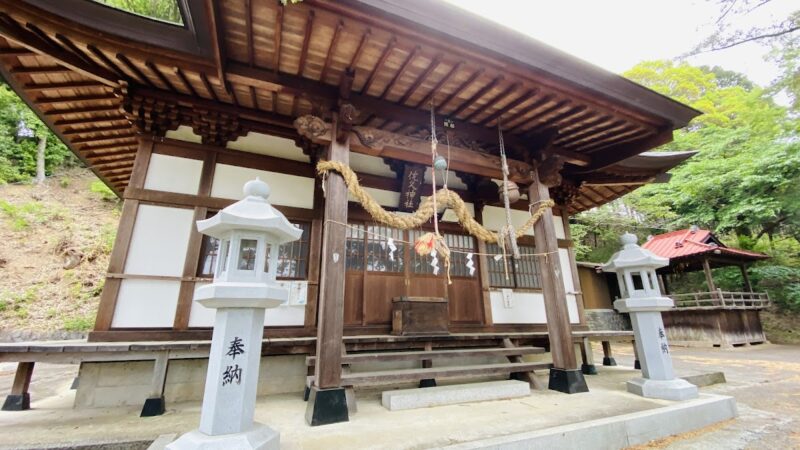
Kumano Shrine (Yashiro-cho Kita, Fuefuki City, Yamanashi Prefecture) Complete Guide | History, Sacred Trees, and Access Information
Kumano Shrine, located in Yashiro-cho Kita, Fuefuki City, Yamanashi Prefecture, is an ancient shrine established in the late 7th century, having been invited from Kumano in Kishu Province. It houses the prefecture’s only precious ancient document, the “Chokan Kanbun,” and is a shrine steeped in history and nature, protected by sacred trees over several hundred years old. This article provides a detailed introduction to Kumano Shrine, including its history, cultural assets, points of interest within the grounds, and access information.
History and Origins of Kumano Shrine (Yashiro)
Founding and Deep Connection to Kumano in Kishu Province
Kumano Shrine is said to have been founded during the Shucho era (around 686 AD). It is believed to have originated from the invitation of the Kumano Shrine from Kishu Province to Yashiro-sho in Kai Province, making it an ancient shrine with a history of over 1300 years. The background to this enshrinement lies in the nationwide spread of Kumano faith during the Heian period, and it can be seen that reverence for the deities of the Kumano Sanzan (Three Grand Shrines of Kumano) was deep in Kai Province.
Kai Province has four Kumano shrines known as the “Four Sacred Sites,” and the Kumano Shrine in Yatsushiro is one of them. The other three shrines are located in Ogawara, Koma District (present-day Kokubo, Kofu City), Yokoi, Yamanashi, and Iwadono, Tsuru District, and these were central to Kumano faith in Kai Province.
Development of Yatsushiro Manor and Kumano Shrines
From the Heian period to the Kamakura period, this region flourished as Yatsushiro Manor. Under the manorial system, the Kumano Shrine served as the spiritual pillar of Yatsushiro Manor, attracting the faith of the local residents. The existence of the shrine was not merely a religious facility, but also played a role in strengthening the bonds between people through festivals and annual events, as the center of the local community.
Deities and Divine Virtues
Main Deity
The main deity of Kumano Shrine is Kumano Kamuro no Mikoto. Kumano Kamuro no Mikoto is said to be a collective name for the deities of the Kumano Sanzan (Three Grand Shrines of Kumano), and is believed to refer to Ietsumiko no Okami (Susanoo-no-Mikoto), Hayatama-no-Okami, and Kotoshige-no-Okami.
Divine Virtues
The divine virtues of Kumano Shrine are diverse:
- Protection from Evil and Disaster: Revered since ancient times as a god that wards off evil and disease.
- Family Safety: Protects the health and peace of the family.
- Abundant Harvest: A place of worship in Yatsushiro, a region known for its thriving agriculture, where people pray for bountiful harvests.
- Matchmaking: Believed to have the divine virtue of bringing good fortune in relationships.
- Good Fortune and Prosperity: Prayers can be offered for good fortune at important turning points in life.
The Value of the Yamanashi Prefecture-Designated Important Cultural Property “Chokan Kanmon”
What is the Chokan Kanmon?
The “Chokan Kanmon,” owned by Kumano Shrine, is a valuable ancient document designated as a Yamanashi Prefecture-Designated Important Cultural Property. This document is a copy compiled from the Kii Kumano Shrine and is considered the only copy in Yamanashi Prefecture.
The Chōkan Kanbun is a document created during the Chōkan era (1163-1165) and records an incident in which the Governor of Kai Province and others attempted to embezzle the Kumano Shrine’s lands. This incident clearly illustrates the conflict between the provincial government (kokuga) and manors (shōen) during the late Heian period.
Historical Significance
The historical value of this document lies in the following points:
- Clarification of the Manor System: A historical document that concretely illustrates the tension between manor management and the provincial government during the late Heian period.
- Spread of Kumano Faith: Proof of the spread of faith from Kumano in Kishu to Kai Province, far from its original location.
- Record of Shinto-Buddhist Syncretism: An important document in the study of Shinto history, as it officially confirms that the deities worshipped at Kumano and Ise are different.
- Valuable Local History Material: An indispensable primary source for understanding the medieval history of Kai Province.
Among researchers, this document is highly valued as an extremely important historical source for understanding the social structure and forms of faith of the time.
Highlights of the Shrine Grounds
Sacred Trees Designated as City Natural Monuments
Within the grounds of Kumano Shrine are two sacred trees designated as natural monuments by Fuefuki City.
Japanese Umbrella Pine (Koyamaki)
The Japanese umbrella pine is an evergreen conifer native to Japan and has been treated as a sacred tree since ancient times. The Japanese umbrella pine at Kumano Shrine is estimated to be several hundred years old, and its majestic appearance overwhelms visitors. Due to its resistance to water and decay, the Japanese umbrella pine is known to have been used as coffin material during the Kofun period (ancient burial mound period).
The fact that this tree, which is also the origin of the name of Mount Koya, is planted at Kumano Shrine can be said to symbolize the deep connection with Kishu (Wakayama Prefecture).
Ginkgo Tree (Icho)
The ginkgo tree on the shrine grounds is also a city-designated natural monument. The ginkgo is an ancient plant sometimes called a “living fossil” and is often planted at shrines and temples. In autumn, the trees turn golden, beautifully adorning the shrine grounds.
Ginkgo trees are known as “fire-preventing trees” due to their fire-resistant properties, and have been planted to protect shrines. The ginkgo trees at Kumano Shrine have thick trunks, witnessing the long history of watching over this land.
Atmosphere of the Shrine and Grounds
Kumano Shrine’s buildings maintain traditional shrine architectural styles, and both the worship hall and main hall are meticulously maintained. The grounds are enveloped in a tranquil atmosphere, and the space surrounded by ancient trees provides a healing place that makes you forget the hustle and bustle of the city.
The shrine buildings, which appear after climbing the stone steps, harmonize with the surrounding nature, inspiring a sense of solemnity in visitors. The grounds are equipped with facilities necessary for worship, such as a purification fountain and lanterns.
Festivals and Annual Events
Annual Festivals
Kumano Shrine holds its annual festivals twice a year:
- Spring Festival: March 25th
- Summer Festival: July 16th
At these festivals, Shinto rituals are solemnly performed, and local residents attend to express their gratitude for the shrine’s divine blessings. The summer festival, in particular, is held during the peak of agricultural work and is considered to have a strong emphasis on praying for a bountiful harvest.
Connections with the Community
Kumano Shrine is the tutelary shrine of the Kita district of Yatsushiro Town and is deeply revered by the local residents. Besides the annual festivals, people visit the shrine for New Year’s prayers, Shichi-Go-San (a traditional rite of passage for children), and for exorcism, playing a vital role as a spiritual pillar of the community.
Basic Information (INFO)
Shrine Information
- Official Name: Kumano Shrine
- Location: 1615 Kita, Yatsushiro-cho, Fuefuki City, Yamanashi Prefecture 406-0822
- Deity Enshrined: Kumano Kamuro no Mikoto
- Founded: During the Shucho era (around 686 AD)
- Annual Festival Dates: March 25th, July 16th
- Shrine Rank: Former Village Shrine
- Cultural Properties:
- Prefectural Designated Important Cultural Property: Chokan Kanbun
- City Designated Natural Monument: Japanese Umbrella Pine, Ginkgo
Visiting Hours and Admission Fee
- Visiting Hours: Open all day (Please check the shrine office hours)
- Admission Fee: Free
- Parking: Limited parking space available around the temple grounds.
Inquiries
For detailed information and prayer requests, please contact the Fuefuki City Tourism Division or your local community association.
Access Information (MAP & ACCESS)
Access by Train
Nearest Station: JR Chuo Main Line, Isawa-Onsen Station
- Walking from Isawa-Onsen Station: Approximately 50 minutes (approx. 4 km)
- Taxi from Isawa-Onsen Station: Approximately 10 minutes
Isawa-Onsen Station is a major station where express trains also stop, making it convenient to access from Tokyo. It takes approximately 90 minutes by express train and approximately 2 hours by local train from Shinjuku Station.
Access by Bus
Distance from the nearest bus stop:
- Fuefuki City Yatsushiro Branch Office Bus Stop: Approximately 4 minutes on foot (279m) – Closest bus stop
- Kami Bus Stop: Approximately 6 minutes on foot (460m)
- Kita-Yatsushiro Bus Stop: Approximately 6 minutes on foot (465m)
Since the number of bus services is limited, it is recommended to check the timetable in advance.
Access by Car
Using the Chuo Expressway:
- From Ichinomiya-Misaka IC: Approximately 15 minutes (approx. 8 km)
- From Fuefuki-Yatsushiro Smart IC: Approximately 5 minutes (approx. 2 km) – Nearest IC
Travel Time from Major Cities:
- From Tokyo: Approximately 2 hours via the Chuo Expressway
- From Nagoya: Approximately 3 hours 30 minutes via the Chuo Expressway
- From Shizuoka: Approximately 2 hours 30 minutes via the Chubu Odan Expressway and Chuo Expressway
Car Navigation Settings
- Address Input: 1615 Kita, Yatsushiro-cho, Fuefuki City, Yamanashi Prefecture
- Phone Number: Can be set using Fuefuki City Hall Yatsushiro Branch (055-265-2111) as a landmark
- Map Code: (On-site confirmation recommended if available)
Parking Information
There are some parking spaces around the temple grounds, but the number is limited. During festivals and other events, congestion is expected, so we recommend using public transportation or nearby parking lots.
Nearby Tourist Attractions
When visiting Kumano Shrine, you can also visit nearby tourist attractions:
- Isawa Onsenkyo: Approximately 10 minutes by car. A representative hot spring resort in Yamanashi Prefecture.
- Fuefukigawa Fruit Park: Approximately 20 minutes by car. A park where you can enjoy orchards and scenic views.
- Peach Blossom Paradise (Spring): Fuefuki City is known as “Japan’s No. 1 Peach Blossom Paradise,” and in April, the area is covered in blooming peach blossoms.
- Grape and Peach Picking (Summer/Autumn): There are many tourist farms in the surrounding area.
History and Culture of the Yatsushiro District, Fuefuki City
Origin of the Place Name Yatsushiro
The place name Yatsushiro indicates that this region has been developed since ancient times. “Yatsu” means many, and “dai” is said to represent generations or eras, telling the story of a land where people have continuously lived since ancient times.
A Region Flourishing with Fruit Cultivation
The present-day Yashiro district of Fuefuki City is known as a region where peach and grape cultivation thrives. The basin’s climate, characterized by long hours of sunshine and large temperature differences between day and night, cultivates fruits with high sugar content. In spring, the peach blossoms bloom all at once, creating a beautiful landscape known as a “peach blossom paradise.”
Its Place in the History of Kai Province
The Yashiro district has been one of the important regions of Kai Province since ancient times. The fertile land of the Fuefuki River basin is suitable for agriculture, and development progressed early on. The existence of Kumano Shrine can be considered evidence of the cultural development of this region from ancient times.
Manners and Points for Visiting a Shrine
Basic Worship Etiquette
- Bow before the Torii Gate: Bow before entering the sacred area.
- Purify yourself at the Water Basin: Purify your left hand, right hand, and mouth in that order.
- Walk along the edge of the path: The center is considered the path of the gods.
- Etiquette at the Main Hall: Two bows, two claps, and one bow are the basic rituals.
Photography
Photography is generally permitted on the shrine grounds, but please note the following:
- Refrain from taking photos inside the main hall.
- Be considerate of other worshippers.
- Show respect when photographing the sacred tree.
- Check in advance if photography is permitted during festivals.
Recommended Time to Visit
Spring (late March to April): The surrounding peach blossoms are in full bloom, creating a picturesque scene. The Spring Festival (March 25th) is also held.
Early Summer (May-June): The fresh greenery is beautiful, and the sacred ginkgo and Japanese umbrella pine trees are lush and green.
Autumn (November): The ginkgo leaves turn a magnificent yellow. During the autumn foliage season, the temple grounds are dyed golden.
New Year’s Visit (January): Many worshippers visit to pray for the New Year.
Kumano Faith and Kai Province
Spread of Kumano Faith Nationwide
From the late Heian period to the Kamakura period, Kumano faith spread from the imperial family and nobility to samurai and commoners. As the saying goes, “Ants make a pilgrimage to Kumano,” pilgrimage to the Kumano Sanzan became an object of faith for many people.
Kumano Faith in Kai Province
Kumano faith spread to the distant Kai Province, and the aforementioned “Four Sacred Sites” were established. These shrines enshrined the deities of the Kumano Sanzan (Three Grand Shrines of Kumano) and served as places of worship for local people who were unable to make the pilgrimage to Kumano itself.
Yatsushiro Kumano Shrine, in particular, boasts a long history and holds an important position in the study of Kumano faith due to its possession of the valuable historical document, the “Chokan Kanbun.”
Summary
Located in Kita, Yatsushiro-cho, Fuefuki City, Yamanashi Prefecture, Kumano Shrine is a venerable shrine with a history of over 1300 years since its founding in 686. The “Chokan Kanbun,” a prefecturally designated important cultural property, is a valuable historical document for understanding Heian period society, and the Japanese umbrella pine and ginkgo trees, designated natural monuments of the city, bring a solemn atmosphere to the shrine grounds.
As one of the four sacred sites of Kai Province, Kumano Shrine has deep ties to Kumano in Kishu (Wakayama Prefecture) and has attracted the faith of local people. Located approximately 4km from Isawa Onsen Station, it can be visited in conjunction with sightseeing in Fuefuki City’s Tougenkyo (Peach Blossom Village).
Why not take a visit to Kumano Shrine, a place where history, nature, and the faith of the local people thrive? You’re sure to feel the passage of time in its tranquil grounds.