Hokotsuki Shrine (Fuefuki City, Yamanashi Prefecture) Complete Guide | Thorough Explanation of Deities, Goshuin (Shrine Seals), Access, and History
Hokotsuki Shrine, located in Yonekura, Yatsushiro-cho, Fuefuki City, Yamanashi Prefecture, is a venerable ancient shrine known as a candidate for the “Hokotsuki Shrine of Yatsushiro-gun, Kai Province,” a Shikinaisha (shrine listed in the Engishiki Jinmyocho). Formerly a Gosha (village shrine), it remains a center of local faith, attracting many worshippers. This article provides a detailed explanation of everything you need to know before visiting Hokotsuki Shrine, including its deities, history, highlights within the grounds, goshuin information, and access methods.
Basic Information on Hokotsuki Shrine
Official Name: Hokotsuki Shrine
Location: 782 Yonekura Gosho, Yatsushiro-cho, Fuefuki City, Yamanashi Prefecture
Former Shrine Rank: Gosha (Village Shrine)
Shikinaisha (Shrine listed in the Engishiki): Hokotsuki Shrine, Yatsushiro-gun, Kai Province (Contender)
Annual Festival Date: November 3rd (Culture Day)
Deity Enshrined: Ame-no-Uzume-no-Mikoto
Hokotsuki Shrine is located in the Yonekura district of Yatsushiro-cho, Fuefuki City, and sits on a hill overlooking the Kofu Basin. The surrounding area is a scenic region with peach and grape orchards, and in spring, visitors are greeted by a landscape of blooming peach blossoms.
About the Deity Enshrined: Ame-no-Uzume-no-Mikoto
The deity enshrined at Hokotsugi Shrine is Ame-no-Uzume-no-Mikoto. Ame-no-Uzume-no-Mikoto is a goddess who played an important role in Japanese mythology, and is particularly known for the myth of the “Opening of the Heavenly Rock Cave.”
The Myth and Divine Virtues of Ame-no-Uzume-no-Mikoto
When Amaterasu Omikami hid in the Heavenly Rock Cave, plunging the world into darkness, Ame-no-Uzume-no-Mikoto became possessed by a god and danced in front of the cave, making the eight million gods laugh. Intrigued by this lively scene, Amaterasu Omikami opened the cave, and light returned to the world.
From this myth, Ame-no-Uzume-no-Mikoto is believed to possess the following divine virtues:
- Goddess of Performing Arts and Arts: Revered by those involved in performing arts as the ancestral goddess of dance and theater.
- Goddess of Matchmaking: Due to the myth of her marriage to Sarutahiko-no-Kami, she is believed to grant blessings for successful relationships.
- Goddess of Good Fortune and Prosperity: Her power to transform darkness into light gives her the divine virtue of overcoming difficulties.
- Goddess of Protection Against Evil: Believed to ward off misfortune and guide people towards a brighter future.
History and Origins of Hokotsuki Shrine
Status as a Shikinaisha Shrine
Hokotsuki Shrine is considered a candidate for the “Hokotsuki Shrine in Yatsushiro District, Kai Province” listed in the Engishiki Jinmyocho, compiled in the early Heian period (927 AD). The Engishiki Jinmyocho is an important historical document recording the official shrines of the time, and the shrines listed here are historically significant shrines recognized by the imperial court since ancient times.
There are several theories regarding the origin of the shrine’s name, “Hokotsuki,” but it is thought that it may be related to the fact that this area was a strategically important military base in ancient times, or that there was a belief in the worship of spears (weapons).
History as a Local Shrine
From the Edo period to the Meiji period, Hokotsuki Shrine developed as a central shrine in the region. Under the Meiji era’s shrine ranking system, it was classified as a “local shrine” and has been revered as the tutelary deity of the Yonekura district of Yatsushiro Town and the surrounding areas.
A local shrine is of higher status than a village shrine and is a rank given to shrines that attract the faith of multiple villages and towns. This indicates that Hokotsuki Shrine was not merely a shrine of one village, but an important shrine that attracted faith from a wide area.
Connections to the Community
Hokotsuki Shrine has long been closely connected to the lives of the people of the Yonekura district of Yatsushiro Town. In this region, where agriculture is thriving, various Shinto rituals have been performed throughout the year, such as the spring Kinensai (harvest festival) and the autumn Reitaisai (grand festival) to pray for a bountiful harvest.
In particular, the annual festival on November 3rd is still a significant local event, attracting many parishioners and worshippers.
Shrine Grounds Guide: Highlights and Points of Interest
Shrine Architecture
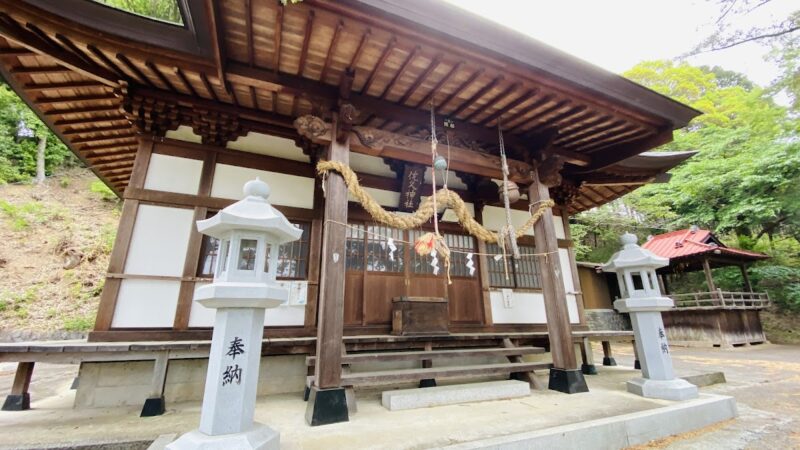
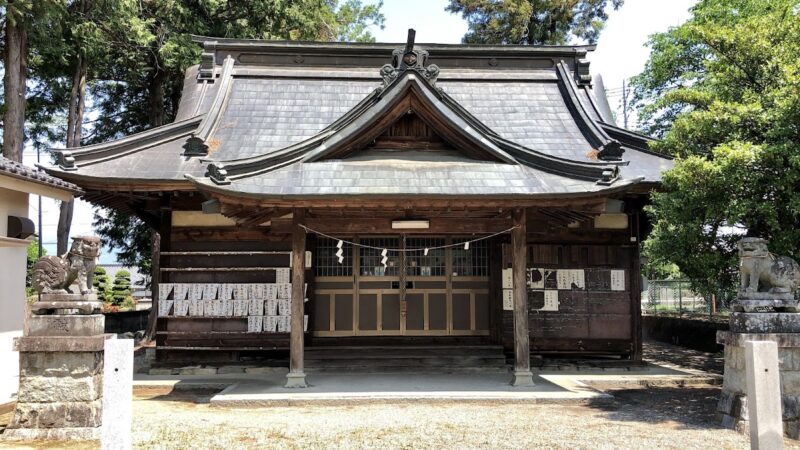
The grounds of Hokotsuki Shrine feature a tranquil atmosphere with historically significant shrine buildings.
The Haiden (worship hall) is where worshippers offer their prayers and maintains a traditional shrine architectural style. The wooden building exudes a sense of aged elegance, telling the story of the region’s faith history.
The Honden (main sanctuary) is located behind the Haiden and is the most sacred place where the deity is enshrined. While the Honden is usually closed to the public, its presence conveys a sense of long history.
Subsidiary Shrines
In addition to the Honden, which enshrines the main deity, several subsidiary shrines are located within the grounds of Hokotsuki Shrine. These subsidiary shrines reflect the local faith and history, and are places worth visiting during your pilgrimage.
Like many Shinto shrines, it’s possible that an Inari shrine or a Tenjin shrine is enshrined within the grounds. Inari shrines are revered as gods of business prosperity and abundant harvests, while Tenjin shrines are dedicated to Sugawara no Michizane, the god of learning. Both are popular among local people.
Nature within the Shrine Grounds
The grounds of Hokotsuki Shrine are surrounded by abundant nature, displaying different expressions throughout the seasons. In particular, in spring, the surrounding peach orchards bloom all at once, creating a breathtaking sight as the shrine emerges from a haze of pink blossoms.
The trees within the grounds also change with the seasons, allowing visitors to enjoy different scenery each time they visit: the fresh green of spring, the deep green of summer, the vibrant autumn foliage, and the tranquility of winter.
Information on Goshuin (Shrine Seals)
Regarding the issuance of Goshuin at Hokotsuki Shrine, prior confirmation is necessary. In the case of small shrines, there may not be a resident priest, and Goshuin may only be available on limited dates and times.
If you wish to receive a Goshuin (temple/shrine stamp), please note the following:
- It is recommended to inquire with the shrine or the Fuefuki City Tourism Association before your visit.
- Goshuin are more likely to be available on special days such as the annual festival.
- It is important to bring your Goshuincho (stamp book) and make your request respectfully.
- Please prepare a donation (around 300-500 yen).
A Goshuin is not merely a stamp; it is a sacred item bestowed by the shrine as proof of your visit. It is important to first offer your prayers with sincerity, and then receive your Goshuin.
Access Methods
Access by Car
Hokotsuki Shrine is easily accessible by car.
From the Chuo Expressway:
- Approximately 15 minutes from Ichinomiya-Misaka IC
- Approximately 20 minutes from Kofu-Minami IC
Take National Route 20 or National Route 137 towards Yashiro-cho, Fuefuki City. For car navigation, please enter “782 Yonekura, Yatsushiro-cho, Fuefuki City, Yamanashi Prefecture” or “Hokotsuki Shrine”.
Parking: There is some parking space on the shrine grounds or in the surrounding area, but caution is advised during crowded times such as the annual festival.
Access by Public Transportation
Public transportation access is limited, but the following options are available:
JR Chuo Main Line:
- Get off at Isawa-Onsen Station, approximately 15 minutes by taxi
- Get off at Yamanashi-shi Station, approximately 20 minutes by taxi
Since bus routes from the station are limited, using a taxi is the most practical option. Alternatively, renting a car allows you to efficiently visit surrounding tourist attractions.
Nearby Tourist Attractions
When visiting Hokotsuki Shrine, we recommend also visiting the tourist attractions in Fuefuki City and the surrounding area:
- Isawa Onsen: A representative hot spring resort in Yamanashi Prefecture with plenty of accommodation options.
- Togenkyo Park: A spectacular spot where peach blossoms bloom in abundance in spring.
- Fuefuki River Fruit Park: A park with sprawling orchards offering panoramic views of the Kofu Basin.
- Erinji Temple: A famous temple associated with Takeda Shingen.
- Katsunuma Budokyo: One of Japan’s leading wine-producing regions where you can enjoy winery tours.
Other Shikinaisha and Major Shrines in Yamanashi Prefecture
Besides Hokotsuki Shrine, Yamanashi Prefecture has many other historical shrines. Visiting Shikinaisha and major shrines is one way to enjoy sightseeing in Yamanashi.
Major Shrines in and around Kofu City
Tamamoro Shrine (Kofu City): Known as the principal shrine of Kai Province, it boasts one of the highest prestige levels in the prefecture.
Homi Shrine (Kofu City): A Shikinaisha (shrine listed in the Engishiki), worshipped as a deity of safe childbirth and child-rearing.
Takeda Shrine (Kofu City): A shrine dedicated to Takeda Shingen, known for its blessings of victory.
Shrines in Koshu City and Yamanashi City
Oishi Shrine (Katsunuma-cho, Koshu City): A shrine dedicated to Oishi Kuranosuke, known from the Chushingura story.
Suwa Shrine (Yamanashi City): A shrine of the Suwa faith, found in various locations, revered as a guardian deity of the region.
Shrines in Kai City
Funagata Shrine (Kamezawa, Kai City): A beloved local guardian deity.
Suwa Grand Shrine (Kai City): One of the central shrines of the Suwa faith.
Visiting these shrines will allow you to gain a deeper understanding of the history, culture, and diversity of beliefs in Yamanashi Prefecture.
Manners and Etiquette for Visiting Shrines
When visiting a shrine, it is important to observe basic manners and etiquette.
Basic Procedure for Visiting a Shrine
- Bow before passing through the torii gate: This is a courtesy before entering the sacred area.
- Purify yourself at the water basin:
- Hold the ladle in your right hand and purify your left hand.
- Switch the ladle to your left hand and purify your right hand.
- Switch the ladle back to your right hand, receive water in your left hand, and rinse your mouth.
- Finally, hold the ladle upright and purify the handle.
- Worship in front of the main hall:
- Bow lightly and then place your offering.
- Ring the bell if there is one.
- Bow twice, clap twice, and bow once (bow deeply twice, clap twice, and bow deeply once).
- Worship at subsidiary shrines: After visiting the main shrine, also worship at the subsidiary shrines.
- Bow when leaving the torii gate: This is a courtesy when leaving the sacred area.
Attire and Mindset for Visiting a Shrine
Shrines are sacred places, so please be mindful of the following points:
- Please dress neatly (avoid excessive exposure).
- Remove hats and sunglasses in front of the main shrine.
- Maintain silence and refrain from speaking loudly.
- Take photographs only in designated areas.
- Please generally avoid bringing pets (except for guide dogs, etc.).
Annual Events at Hokotsuki Shrine
Hokotsuki Shrine holds various Shinto rituals and festivals throughout the year.
Main Annual Events
New Year’s Day Festival (January 1st): A festival to celebrate the New Year and pray for peace throughout the year.
Prayer Festival (Spring): A major spring festival praying for a bountiful harvest, especially important in agricultural areas.
Grand Festival (November 3rd): The most important festival at Hokotsuki Shrine, attracting many parishioners and worshippers. A portable shrine procession and offering ceremonies may also take place.
Niiname-sai (November 23rd): A harvest festival to give thanks, where the year’s new grain is offered to the gods.
Oharai (June 30th & December 31st): A Shinto ritual to purify and cleanse away the sins and impurities accumulated over the past six months.
The dates and content of these festivals may change from year to year, so it is recommended that those wishing to participate check in advance.
History and Culture of Yashiro-cho, Fuefuki City
Yashiro-cho in Fuefuki City, where Hokotsuki Shrine is located, has flourished since ancient times as one of the central regions of Kai Province.
History of Yashiro-cho
The name Yashiro-cho originates from the ancient “Yashiro-gun” (Yashiro County). Under the ancient Ritsuryo system, Kai Province was divided into several counties, and Yashiro-gun was one of them. This region is located in the eastern part of the Kofu Basin, and agriculture has flourished since ancient times, thanks to the fertile land of the Fuefuki River basin.
During the Middle Ages, it came under the rule of the Takeda clan, and in the Sengoku period, it became an important region in the administration of Takeda Shingen’s territory. During the Edo period, it was governed as part of the Kofu Domain and as a direct territory of the shogunate, and flourished as a post town on the Koshu Kaido road.
Fruit Cultivation Village
Present-day Yatsushiro Town is nationally known for its peach and grape cultivation. Especially during the spring peach blossom season, the entire town is dyed pink, creating a beautiful landscape known as a “peach blossom paradise.” Many tourists visit during this time to enjoy the blossoms.
Grape cultivation is also thriving, producing high-quality grapes such as Kyoho and Shine Muscat. From summer to autumn, the town is bustling with tourists enjoying grape picking.
Traditional Culture
Yatsushiro Town also preserves traditional culture passed down through generations. Traditional performing arts such as lion dances and Kagura are sometimes offered at shrine festivals, and efforts continue to pass on the region’s culture to future generations.
The Charm of Visiting Hokotsuki Shrine
The charm of visiting Hokotsuki Shrine lies not only in visiting a historical shrine, but also in experiencing the rich nature and culture of Yamanashi Prefecture.
Finding Peace in the Tranquil Precincts
The grounds of Hokotsuki Shrine are situated in a quiet environment, far removed from the hustle and bustle of the city. Upon entering the grounds, visitors are enveloped in refreshing air and silence. It’s a place where you can escape the busyness of daily life and have time to calm your mind and reflect on yourself.
The Beauty of Nature in Every Season
The surrounding orchards and mountains display different expressions with each season. Spring’s peach blossoms, summer’s lush greenery, autumn’s colorful leaves and harvest season, and winter’s tranquility and snowscapes. No matter what season you visit, you can enjoy the unique beauty of that time of year.
Experiencing Local History and Culture
By visiting Hokotsuki Shrine, a shrine of high status (a Shikinaisha), you can experience the history of Japanese faith that has continued since ancient times. Furthermore, you can feel the strong connection between community and faith in the appearance of the shrine, which has been carefully preserved by the local people.
Things to do after visiting the shrine
After visiting Hokotsuki Shrine, enjoy the charms of Fuefuki City and the surrounding area to the fullest.
Refresh yourself at a hot spring
Fuefuki City has hot spring resorts, including Isawa Onsen. Relaxing your tired body in a hot spring after walking around the shrine is one of the highlights of a trip to Yamanashi. There are also plenty of day-trip bathing facilities, so you can easily enjoy a hot spring bath.
Enjoy local cuisine
Yamanashi Prefecture is a treasure trove of delicious food, including local dishes such as “houtou” and “Yoshida no udon,” fresh fruits, and wine. Savoring dishes made with local ingredients will enrich your travel memories.
Fruit picking experience
Depending on the season, you can enjoy peach picking or grape picking. The taste of fresh fruit you pick yourself is exceptional, and it’s a popular activity for families.
Winery Tour
The nearby Katsunuma area boasts numerous wineries where you can enjoy tours and tastings. This is a unique experience only available in Yamanashi Prefecture, known as a major producer of Japanese wine.
Summary: Experiencing History and Nature at Hokotsuki Shrine
Located in Yashiro-cho, Fuefuki City, Yamanashi Prefecture, Hokotsuki Shrine has a long history dating back to ancient times, and is considered a candidate for a Shikinaisha (a shrine listed in the Engishiki, an ancient Japanese legal code). It enshrines Ame-no-Uzume-no-Mikoto and has been revered by the local people. While maintaining the formal status of a local shrine, the approachable atmosphere of the grounds provides visitors with peace and tranquility.
Visiting Hokotsuki Shrine in conjunction with the surrounding attractions of Fuefuki City—including its beautiful scenery often referred to as a “paradise,” abundant orchards, and hot springs—will make for a more fulfilling travel experience. When visiting Yamanashi Prefecture, be sure to include a visit to Hokotsuki Shrine in your itinerary.
A quiet visit to this historic shrine provides a precious time to escape from daily life and find peace of mind. You are sure to gain new energy by experiencing the bright and positive divine virtues of Ame-no-Uzume-no-Mikoto. At Hokotsuki Shrine, surrounded by the beauty of nature in every season, fully experience the traditional culture of Japan and the charm of Yamanashi.