Goshajinja Shrine (Usaguchi-cho, Kofu City, Yamanashi Prefecture) Complete Guide
Located in Usaguchi-cho, Kofu City, Yamanashi Prefecture, Goshajinja Shrine is a historic shrine dedicated to the five shrines of Kumano Hongu, Kumano Shingu, Kumano Nachi, Hakusan, and Hakone. It is an ancient shrine with connections to the Engishiki (ancient Japanese legal code) and is known as a valuable cultural asset, possessing a main hall dating back to the Muromachi period. This article provides a detailed overview of Goshajinja Shrine, including its history, enshrined deities, architectural features, and access information.
Basic Information on Gosha Shrine
Shrine Name: Gosha Shrine
Alternate Name: Kumano Shrine
Location: 4320-1 Ubaguchi-cho, Kofu City, Yamanashi Prefecture 400-1504
Former Shrine Rank: Village Shrine
Management: Formerly managed by Enraku-ji Temple
Gosha Shrine is located approximately 6 km southeast of Higashi-Hanawa Station on the Minobu Line, in the area where National Route 29 and the Shichikaku River intersect. This area, with its unique place name Ubaguchi, has long been one of the important transportation routes in Kai Province.
Deities Enshrined and Composition of Deities
The name Gosha Shrine originates from the fact that it enshrines the deities of five different shrines. According to shrine records, it enshrines the following five deities:
Five Deities Enshrined
- Kumano Hongu (Deities of Kumano Hongu Taisha)
- Kumano Shingu (Deities of Kumano Hayatama Taisha)
- Kumano Nachi (Deities of Kumano Nachi Taisha)
- Hakusan (Deities of Hakusan Hime Shrine)
- Hakone (Deities of Hakone Shrine)
The Kumano Sanzan (Hongu, Shingu, and Nachi) have long been known as the center of Kumano faith and have deep ties to Shugendo (mountain asceticism). By enshrining these five deities, along with Hakusan and Hakone, the shrine has functioned as a place that combines elements of mountain worship and Shugendo.
Divine Virtues
The following are some of the divine virtues based on Kumano faith:
- Healing from Illness and Longevity: Kumano deities have been worshipped since ancient times as gods of resurrection and regeneration.
- Good Fortune and Family Safety: Comprehensive protection by the deities of the five shrines.
- Traffic Safety: As a shrine situated along an ancient highway.
- Abundant Harvest: As a guardian deity of the region, primarily focused on agriculture.
History and Origins of Goshajinja Shrine
Founding and History
While the exact date of the founding of Goshajinja Shrine and its detailed history are unclear, several important historical clues remain.
Theory of Founding during the Jōgan Era (859-877): Based on the relationship between the shrine grounds and the temple (Enrakuji), and the architectural style of the main hall, it is estimated that the shrine was founded during the Jōgan era. The Jōgan era corresponds to the early Heian period, a time when shrine development progressed nationwide.
Connection to Engishiki Shrines: Some studies suggest that Goshajinja Shrine may be a shrine listed in the Engishiki Jinmyocho (a list of shrines compiled in the Heian period). If it is an Engishiki shrine, it would mean that it was an important shrine recognized by the imperial court as early as the beginning of the 10th century.
Relationship with Enrakuji Temple
An essential aspect of Goshajinja Shrine’s history is its relationship with Enrakuji Temple.
Older documents refer to it as “within the grounds of Enrakuji Temple,” indicating that Enrakuji Temple managed Goshajinja Shrine during the period of syncretism of Shinto and Buddhism. This was a common practice in Japan from the medieval to early modern periods, demonstrating that shrines and temples worked together on religious activities.
Although shrines and temples were separated by the Meiji-era separation of Shinto and Buddhism, remnants of the former syncretism era can still be seen in the grounds and layout of Goshajinja Shrine.
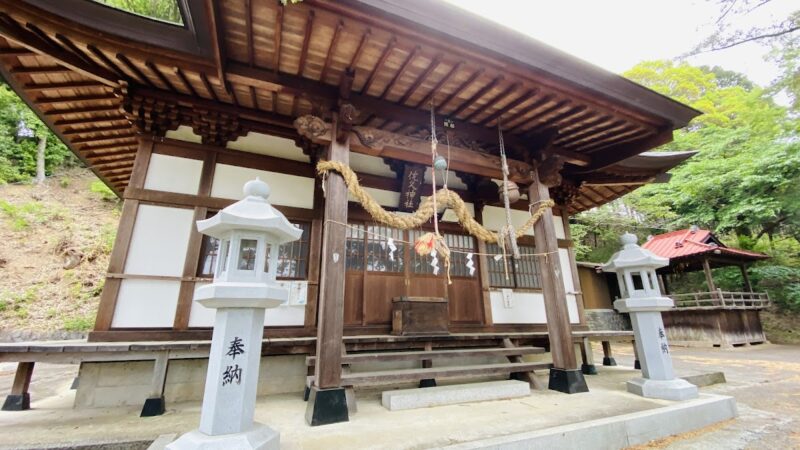
Main Hall from the Muromachi Period
Based on its architectural style, the main hall of Goshajinja Shrine is believed to be a Muromachi period building. The Muromachi period (1336-1573) was a significant period in the history of Japanese architecture, and a unique style of shrine architecture developed during this time.
The main hall, with its centuries-old history, is a valuable example of medieval architecture within Yamanashi Prefecture. Its long-term preservation, despite being a wooden structure, speaks to the deep faith of the local people.
Highlights of the Shrine Grounds
Architectural Style of the Main Hall
The main hall, which conveys the architectural techniques of the Muromachi period, is the greatest highlight of Goshajinja Shrine. It retains the characteristics of medieval shrine architecture, and the detailed carvings and structure reveal the level of technology of the time.
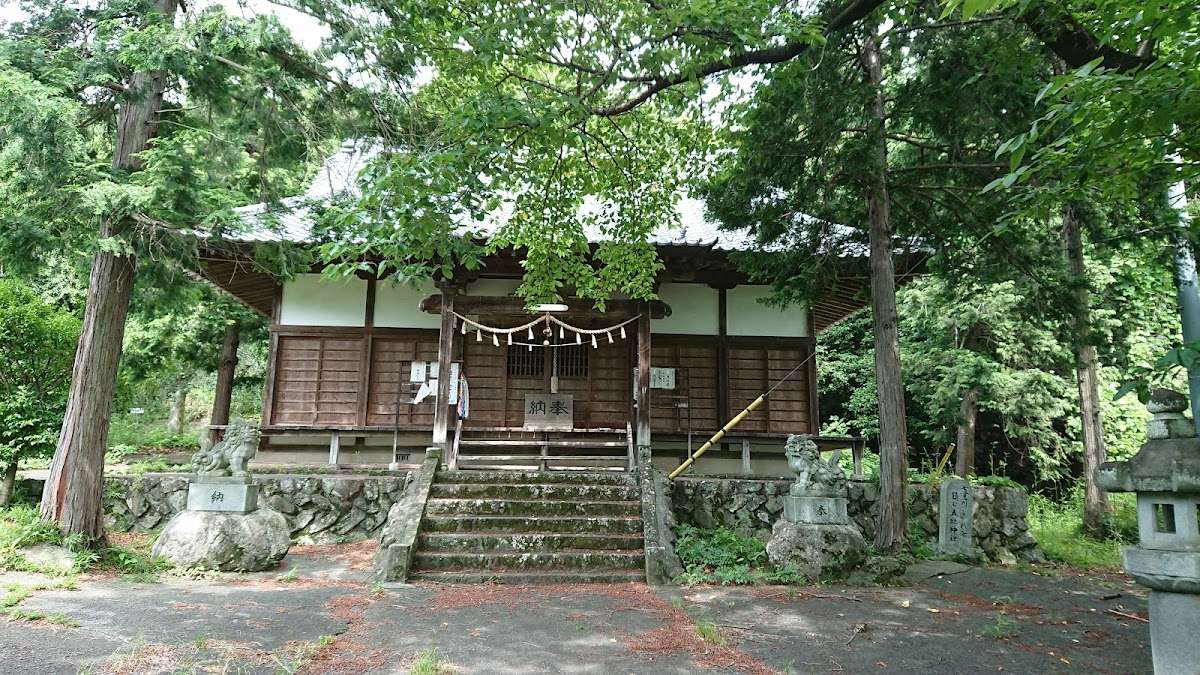
Atmosphere of the Shrine Grounds
Despite its location near the intersection of National Route 29 and the Nanakaku River, the shrine grounds are enveloped in a tranquil atmosphere. Harmonized with the surrounding natural environment, the grounds offer peace of mind to visitors.
Historical Background of the Ubaguchi Area
The place name Ubaguchi indicates that this area has long been a transportation hub. Located along the road connecting the Kofu Basin and the Minobu area, Goshajinja Shrine has also functioned as a shrine protecting the safety of travelers.
Access Information
Access by Train
Nearest Station: JR Minobu Line, Higashi-Hanawa Station
Distance from Station: Approximately 6km southeast (approximately 1 hour 12 minutes on foot, 5.7km)
Due to the distance from Higashi-Hanawa Station, taking a taxi is recommended. A taxi will take approximately 10-15 minutes.
Access by Car
Major Road: National Route 29
Landmark: Near the intersection with the Nanakaku River
Access by car is the most convenient. From central Kofu City, head south on National Route 29 towards Usaguchi-cho. The journey takes approximately 30 minutes.
Parking: There is parking space for visitors on the shrine grounds or in the surrounding area (details should be confirmed on-site).
Access from Major Surrounding Cities
- From Kofu Station: Approximately 30 minutes by car
- From Minobu area: Approximately 20 minutes north on National Route 29
- From Chuo Expressway Kofu-Minami Interchange: Approximately 25 minutes
Points to Note When Visiting
Precautions When Visiting
- Visiting Hours: Daytime visits are recommended
- Dress Code: There are no specific restrictions, but please wear appropriate attire for visiting a shrine
- Manners: Please maintain silence on the shrine grounds and take photographs with moderation.
About Goshuin (Shrine Seals)
Regarding the issuance of Goshuin at Goshajinja Shrine, it is recommended to check with the Yamanashi Prefectural Shrine Association or local shrine officials in advance. Since there may not always be a resident priest, prior contact is necessary if you wish to be sure to receive a Goshuin.
Festivals and Annual Events
Goshajinja Shrine holds festivals based on local traditions. Specific festival dates can be found in local information or on the Yamanashi Prefectural Shrine Association website.
The main annual events are as follows (examples for typical shrines):
- New Year’s Day Festival (January 1st)
- Spring Grand Festival (Spring)
- Autumn Grand Festival (Autumn)
- Monthly Festival (Every month)
Goshajinja Shrines and the Shrine Culture of Kai Province
Goshajinja Shrines in Yamanashi Prefecture
Interestingly, there are several “Goshajinja Shrines” in Yamanashi Prefecture.
- Goshajinja Shrine (Usaguchi-cho, Kofu City): The shrine introduced in this article
- Goshajinja Shrine (Kami-Imai-cho, Kofu City): Another Goshajinja Shrine, this one is related to Miyahara Hachimangu Shrine
These shrines are all independent, and their enshrined deities and histories differ. The name “Gosha” indicates that the practice of enshrining multiple shrines together became common after the Middle Ages.
The Spread of Kumano Faith
The fact that Goshajinja Shrine enshrines the Kumano Sanzan (Three Grand Shrines of Kumano) indicates the nationwide spread of Kumano faith during the medieval period. Kumano faith, intertwined with Shugendo (mountain asceticism), spread widely to eastern Japan.
Kai Province (present-day Yamanashi Prefecture) was one of the centers of Shugendo and a region where mountain worship flourished. Goshajinja Shrine is thought to have functioned as a center of local faith within this religious context.
Nearby Tourist Attractions
When visiting Goshajinja Shrine, you can also visit nearby tourist attractions.
Highlights of the Usagiguchi Area
- Nanakaku River: A naturally rich river with clear waters
- Historical Sites of Usagiguchi Post Town: An area that retains the atmosphere of a former post town
- Surrounding Mountains: An environment suitable for hiking and nature observation
Major Tourist Attractions in Kofu City
- Kofu Castle Ruins (Maizuru Castle Park): Castle ruins associated with the Takeda clan
- Takeda Shrine: A representative shrine of Yamanashi Prefecture dedicated to Takeda Shingen
- Shosenkyo Gorge: A scenic spot boasting one of Japan’s most beautiful gorges
- Kai Zenkoji Temple: A famous temple founded by Takeda Shingen
Significance of Visiting Goshajinja Shrine
Historical Value
Goshajinja Shrine is a valuable historical heritage site with a main hall dating back to the Muromachi period. By directly witnessing medieval shrine architecture, you can experience the faith and skills of our ancestors.
Spiritual Value
The unique feature of Goshajinja Shrine is that you can pay homage to the deities of Kumano Sanzan, Hakusan, and Hakone—three of Japan’s most representative sacred sites—all at once. Even if it’s difficult to visit each shrine individually, you can forge a connection with these deities through a visit to Goshajinja Shrine.
Understanding Local Culture
Visiting Goshajinja Shrine is an entry point to understanding the history and culture of the Usaguchi region. Shrines are not merely religious facilities, but cultural heritage deeply intertwined with the region’s identity.
Advice for Visitors
Preparation
- Check Access: Public transportation is limited, so visiting by car is recommended.
- Check Weather: Located in a mountainous area, be aware of weather changes.
- Check Contact Information: If you wish to inquire about Goshuin (shrine stamps) or festivals in advance, contact the Yamanashi Prefectural Shrine Association.
Mindset for Worship
Shrine visits are not merely sightseeing, but a place for dialogue with the deities. Please keep the following points in mind.
- Bow before passing through the torii gate.
- Purify your body and mind at the water basin.
- Bow twice, clap twice, and bow once before the main shrine.
- Worship with gratitude.
- Maintain the cleanliness of the shrine grounds.
Regarding Photography
Photography is generally permitted on the shrine grounds, but please note the following:
- Refrain from taking photos inside the main shrine.
- Be considerate of other worshippers.
- Respect the sacred atmosphere.
- When posting on social media, be mindful of using language that shows respect for the place and the shrine.
Summary
Goshajinja Shrine, located in Usaguchi-cho, Kofu City, Yamanashi Prefecture, is a historical shrine that enshrines the five shrines of Kumano Sanzan, Hakusan, and Hakone. With a main shrine dating back to the Muromachi period, and with connections to the Engishiki (ancient Japanese legal code), it has long been a center of local faith.
With its deep connection to Enraku-ji Temple and remnants of the Shinto-Buddhist syncretism era, the shrine grounds offer a valuable opportunity to experience Japanese religious history. Despite its relatively accessible location along National Route 29, the tranquil atmosphere of the grounds provides an ideal space for visitors seeking peace of mind.
A visit to Goshajinja Shrine is more than just sightseeing; it’s a valuable experience that touches upon Japanese history, culture, and the faith of our ancestors. When visiting Yamanashi Prefecture, be sure to visit this historic shrine.
Frequently Asked Questions (FAQ)
Q1: Does Goshajinja Shrine offer Goshuin (shrine stamps)?
A1: Regarding the issuance of Goshuin at Goshajinja Shrine, there may not be a resident Shinto priest, so we recommend checking with the Yamanashi Prefectural Shrine Association (Tel: 055-254-0518) in advance. If you want to be sure to receive a Goshuin, please contact them in advance or inquire about the availability at nearby shrines.
Q2: What is the most convenient way to access Goshajinja Shrine?
A2: Access by car is the most convenient. It’s about 6km from the nearest Higashi-Hanawa Station, and it takes over an hour on foot. From central Kofu City, it takes about 30 minutes via National Route 29. If using public transport, we recommend taking a taxi from Higashi-Hanawa Station.
Q3: Which specific shrines are referred to as the “Five Shrines” in Goshajinja?
A3: The “Five Shrines” in Goshajinja refer to the five shrines of Kumano Hongu, Kumano Shingu, Kumano Nachi, Hakusan, and Hakone. These are representative sacred sites in Japan, and it is believed that by enshrining the deities of each shrine together, one can receive comprehensive divine blessings.
Q4: Is it true that the main hall of Goshajinja is a building from the Muromachi period?
A4: Yes, the main hall of Goshajinja is considered to be a building from the Muromachi period (1336-1573) based on its architectural style. As a valuable medieval building with a history spanning several hundred years, it holds significant cultural value within Yamanashi Prefecture.
Q5: When is the annual festival of Goshajinja Shrine held?
A5: For specific dates regarding the annual festival of Goshajinja Shrine, we recommend checking local information or the Yamanashi Prefectural Shrine Association website. Like most shrines, it is highly likely that the grand festival is held in spring and autumn, but please confirm the exact dates in advance.
Q6: What is the origin of the place name Ubaguchi?
A6: There are several theories regarding the exact origin of the place name Ubaguchi, but it is thought to be related to the fact that this area has long been a transportation hub. Located along the road connecting the Kofu Basin and the Minobu area, it may have been named based on its topographical features.
Q7: Please tell me about the relationship between Goshajinja Shrine and Enrakuji Temple.
A7: Goshajinja Shrine was formerly managed by Enrakuji Temple. Older documents refer to it as “Enrakuji Temple grounds,” indicating that during the period of syncretism of Shinto and Buddhism, the shrine and temple operated together as a single entity. Although they were separated by the Meiji-era separation of Shinto and Buddhism, remnants of this can still be seen on the grounds.
Q8: Is Goshajinja Shrine an Engishiki-listed shrine?
A8: While the possibility of Goshajinja Shrine being an Engishiki-listed shrine has been suggested, there is no definitive evidence. The relationship between the shrine grounds and the temple, and the estimated founding period (Jōgan era), are being studied to determine its connection to Engishiki-listed shrines. However, this remains at the academic estimation stage.
Q9: Are there any accommodations near Goshajinja Shrine?
A9: Accommodations near Goshajinja Shrine are limited. If you require accommodation, we recommend using the hot spring resorts in central Kofu City or along the Minobu Line (such as Shimobe Onsen). It’s about a 30-minute drive from Kofu City, making a day trip perfectly feasible.