
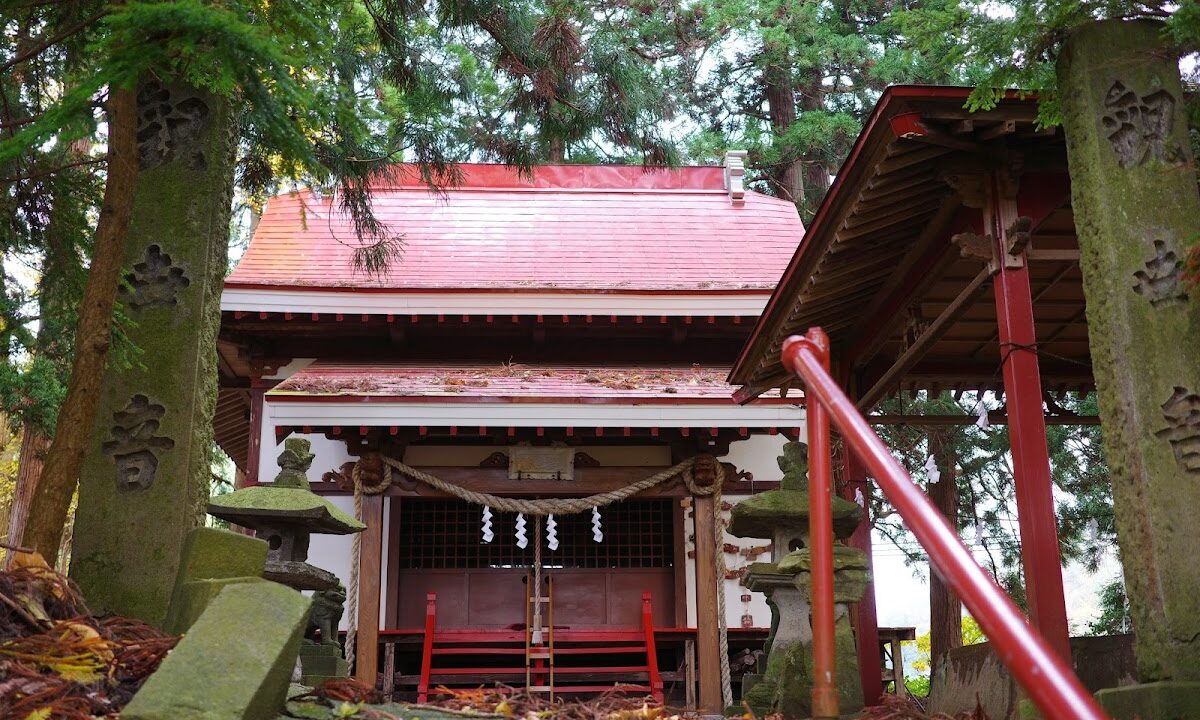
Ashina Shrine (Akita Prefecture) Complete Guide | History, Horse Breeding Faith, and Visiting Information
What is Ashina Shrine?
Ashina Shrine is a historic shrine located in Akita Prefecture, known for its deep connection to horse breeding beliefs. It is said to have been founded in 861 AD (Jōgan 3) with a statue of Kannon (Goddess of Mercy) carved by Jikaku Daishi (Ennin) as its principal image, making it a venerable shrine boasting a history of over a thousand years.
Registered with the Akita Prefectural Shrine Association, it continues to be a central figure in local faith. Especially during the Edo period, it was linked to the Nanbu Domain’s horse breeding promotion policy and attracted many worshippers as the guardian deity of cattle and horses.
Even today, it remains a spiritual center for local residents and is cherished by many as an important cultural asset that conveys the history and culture of Akita Prefecture.
History and Background of Ashina Shrine
Origin of Founding
Ashina Shrine’s founding dates back to the 3rd year of the Jōgan era (861 AD). It is believed to have begun when Jikaku Daishi Ennin, a high-ranking Buddhist monk of the early Heian period, built a Kannon Hall in this area during his pilgrimage through the Tohoku region.
Jikaku Daishi is known as the third head priest of Enryaku-ji Temple on Mount Hiei. He was one of the eight prominent Buddhist monks who traveled to Tang China to study Buddhism. After returning to Japan, he founded many temples, mainly in the Tohoku region, and dedicated himself to spreading Buddhism. Ashina Shrine is one of his legacies, laying the foundation for the region’s spiritual culture.
Development in the Edo Period and Horse Breeding Beliefs
In the Edo period, Ashina Shrine took on a new role. At that time, the Nanbu clan, which ruled this region, actively promoted horse breeding policies to strengthen its military power and promote economic development.
Development in the Edo Period and Horse Breeding Beliefs
In the Edo period, Ashina Shrine took on a new role. The region stretching from northern Akita Prefecture to southern Aomori Prefecture was known for producing high-quality horses, and the Nanbu horses enjoyed nationwide renown. As cattle and horse breeding flourished in this area, the Kannon Hall of Ashina Shrine became associated with horse breeding worship, becoming an object of worship for the health and reproduction of cattle and horses.
Horse dealers and farmers visited Ashina Shrine to pray for the safety of their horses and successful births, and offered thanks. This faith became deeply rooted in the community, and Ashina Shrine transcended being merely a religious institution, becoming an important presence supporting the local economy and livelihoods.
Changes After the Meiji Era
Many temples and shrines were affected by the Meiji-era separation of Shinto and Buddhism, and Ashina Shrine also underwent significant changes during this period. The Kannon Hall, which had strong Buddhist connotations, clarified its character as a Shinto shrine and was reorganized into its current form.
Even amidst the wave of modernization, the faith of the local residents never ceased, and traditional festivals and annual events were passed down. After the war, it came under the jurisdiction of the Akita Prefectural Shrine Association and, as a member of the prefectural shrine network, contributes to the preservation and dissemination of Shinto culture.
Deities and Divine Virtues
While retaining some of the Kannon worship from its founding, Ashina Shrine enshrines Shinto deities after the separation of Shinto and Buddhism. The main deities are primarily those associated with the guardian deities of the region and those related to horse breeding beliefs.
Horse Breeding Beliefs and Divine Virtues
The most distinctive divine virtue of Ashina Shrine is the protection of cattle and horses. Due to the horse breeding beliefs that have continued since the Edo period, the following blessings are believed to be offered:
- Health and Prosperity of Livestock: Protecting the health of livestock, including cattle and horses, and assisting in their reproduction.
- Traffic Safety: In modern times, it protects traffic safety for automobiles and other vehicles, replacing horses.
- Abundant Harvest: Praying for agricultural development and a bountiful harvest.
- Business Prosperity: Promoting the development of the local economy and the success of businesses.
- Family Safety: The health and happiness of the family.
Many people involved in agriculture and livestock farming visit the shrine, and in modern times, many visitors also come to pray for traffic safety.
Highlights of the Shrine Grounds
Main Hall and Worship Hall
The main hall of Ashina Shrine is a valuable building that preserves the traditional style of shrine architecture. The wooden shrine has gained dignity over the long years, leaving a solemn impression on visitors.
The worship hall is where daily prayers are offered and functions as a place of prayer for local residents. The architectural style and sculptures reflect traditional techniques from Akita Prefecture, and the shrine’s cultural value is highly regarded.
Shrines and Monuments
Several shrines and monuments are located around the main hall. These are important historical materials that tell the long history of Ashina Shrine, bearing records of dedications and renovations from the Edo period through the Meiji, Taisho, and Showa eras.
In particular, the dedications and monuments related to horse breeding are valuable historical materials that convey the state of faith at that time.
Annual Events and Festivals
Ashina Shrine holds various festivals throughout the year.
Main Annual Events
- New Year’s Day Festival: A festival praying for happiness and peace in the new year.
- Spring Grand Festival: A prayer for a bountiful harvest as spring arrives.
- Summer Purification Ceremony: A Shinto ritual to cleanse away the impurities accumulated over the past six months.
- Autumn Grand Festival: The most important festival, expressing gratitude for the harvest and praying for a good harvest in the coming year.
- Year-End Purification Ceremony: A ritual to purify mind and body as the year comes to an end.
At these festivals, local residents gather, and traditional Shinto rituals are solemnly performed. The Autumn Grand Festival, in particular, is an important event that strongly reflects the former worship of horse breeding, and attracts many worshippers.
Worship Etiquette and Manners
When visiting Ashina Shrine, observing the correct etiquette will allow you to have a deeper religious experience.
Basic Etiquette for Visiting a Shrine
- How to Pass Through the Torii Gate: Bow before the torii gate and proceed while avoiding the center of the path. The center is considered the path of the gods.
- Procedure for Washing Hands:
- Take the ladle with your right hand and wash your left hand.
- Switch the ladle to your left hand and wash your right hand.
- Switch the ladle back to your right hand, receive water in your left hand, and rinse your mouth.
- Wash your left hand again.
- Stand the ladle upright, wash the handle, and return it to its original position.
- Procedure at the Main Hall:
- Quietly place your offering in the offering box.
- Ring the bell if there is one.
- Two bows, two claps, one bow (bow deeply twice, clap twice, and finally bow once).
Guidelines for Visiting the Shrine
- Choose clean and neat attire.
- Maintain silence on the shrine grounds and refrain from loud conversations.
- Take photographs only in designated areas.
- Check in advance regarding bringing pets.
- Always take your trash with you.
Life Rituals and Shrines
Ashina Shrine offers various rituals for important life milestones.
Main Life Rituals
- Hatsumiyamairi: A ceremony held around one month after birth to pray for the healthy growth of the baby.
- Shichi-Go-San: A celebration and thanksgiving for the growth of children at the ages of three, five, and seven.
- Yakubarai: A prayer to ward off misfortune for those who have reached their unlucky year.
- Kekkonshiki: A traditional wedding ceremony held before the gods.
- Kanreki Celebration: A celebration of longevity for those who have reached the age of 60.
If you wish to perform these rituals, it is recommended that you contact the shrine in advance to discuss the schedule and preparations.
Construction Rituals (Groundbreaking Ceremony/Roof-Raising Ceremony)
Construction rituals for new construction or renovations can also be performed at Ashina Shrine.
Groundbreaking Ceremony
This is a ceremony held before construction begins to pray to the gods of the land for the safety of the construction and the prosperity of the building. Construction personnel and the homeowner attend, and a Shinto priest recites prayers.
Ridgepole Raising Ceremony
This ceremony is held when the framework of a building is completed, and prayers are offered for the safe completion of the construction. In some regions, events such as rice cake scattering are also held.
About Mourning and Death Periods
In Shinto, death is considered a form of defilement, and it is customary to refrain from visiting shrines during the mourning and death periods.
Mourning Period
Generally, when a close relative dies, the mourning period is 50 days. During this period, one refrains from visiting shrines and participating in religious ceremonies.
Mourning Period
Even after the mourning period ends, one year is observed as a period of mourning, during which celebrations and extravagant activities should be kept to a minimum. However, shrine visits are permitted after the mourning period ends.
For details, it is recommended to consult a Shinto priest depending on the situation.
Let’s Worship the Jingu Taima
The Jingu Taima is a sacred amulet from Ise Grand Shrine and is the most important amulet to be enshrined in the household shrine throughout Japan.
The Significance of the Jingu Taima
The Jingu Taima invites the divine virtues of Amaterasu Omikami into the home. By enshrining Amaterasu Omikami, the tutelary deity of all Japanese people, in the home, one prays for the peace and prosperity of the family.
How to Set Up the Shrine
- Location: A clean place where the family can offer daily prayers.
- Direction: South or east facing is ideal.
- Height: Higher than eye level.
- Arrangement of Amulets: The Jingu Taima in the center, the amulet of the local guardian deity to the right, and the amulet of a revered shrine to the left.
Offerings and Worship
Ideally, rice, salt, and water should be offered daily, and prayers should be offered morning and evening. At least once a day, offer a prayer of gratitude.
The Ise Grand Shrine amulet (Jingu Taima) should be replaced with a new one every year. Old amulets should be burned at the shrine during the New Year’s holiday.
About the Akita Prefectural Shrine Association
The Akita Prefectural Shrine Association is an organization that encompasses shrines within Akita Prefecture and functions as a local branch of the Association of Shinto Shrines.
Duties of the Akita Prefectural Shrine Association
- Management and Guidance of Shrines: Supporting the proper operation of shrines within the prefecture
- Training and Development of Shinto Priests: Education to improve the qualifications of Shinto priests
- Distribution of Jingu Grand Shrine Amulets: Distribution of Jingu Grand Shrine amulets to each household
- Guidance on Rituals: Inheritance and guidance of traditional rituals
- Protection of Cultural Properties: Preservation and management of cultural properties owned by shrines
- Public Relations: Promoting understanding of Shinto shrines
History of the Akita Prefectural Shrine Association
Following the enactment of the Religious Corporations Law after World War II, shrine associations were established throughout Japan. The Akita Prefectural Shrine Association was established as an organization overseeing shrines within the prefecture, and since then, it has dedicated itself to the preservation and development of Shinto culture.
The Akita Prefectural Shrine Association’s abbreviated chronology records major events and ceremonies since its establishment, making it an important resource for understanding the history of Shinto in Akita Prefecture.
Related Organizations
The Akita Prefectural Shrine Association works in cooperation with the following related organizations:
- Association of Shinto Shrines: An organization that oversees shrines nationwide
- Akita Prefectural Association of Shrine Representatives: An organization comprised of shrine representatives (representatives of parishioners)
- Shinto Priests’ Association: A training and fellowship organization for Shinto priests within the prefecture
- Shrine Maidens’ Association: A training and fellowship organization for shrine maidens
These organizations cooperate to protect Akita Prefecture’s Shinto culture and pass it on to future generations.
Searching for and Guiding Shrines in the Prefecture
Akita Prefecture has numerous shrines, each with its own unique history and characteristics.
How to Search for Shrines
The Akita Prefectural Shrine Association website allows you to search for shrines within the prefecture using the following methods:
- Search by City/Town: Clicking on a city/town will display a list of shrines in that area.
- Search by Alphabetical Order: You can search by the first letter of the shrine’s name.
- Search by Map: You can search geographically using the location/map function.
Major Shrines in Akita Prefecture
Besides Ashina Shrine, Akita Prefecture has many other historical shrines:
- Taiheizan Miyoshi Shrine: A representative shrine in Akita City, revered as a god of strength.
- Masaya Shrine: An ancient shrine in Oga City, known for its Namahage ritual.
- Yataka Shrine: A shrine located within Senshu Park in Akita City, dedicated to Hirata Atsutane.
- Gozaishi Shrine: A beautiful shrine on the shores of Lake Tazawa.
These shrines also play important roles in their respective regions.
Facts about Shinto Shrines
To gain a deeper understanding of shrine visits, let’s acquire some basic knowledge about Shinto.
What is Shinto?
Shinto is a religion unique to Japan, a polytheistic religion that reveres nature and ancestors. It has no scriptures or founder, and is based on ancient traditions and customs.
Main Concepts
- Eight Million Gods: The belief that gods reside in everything in the natural world.
- Purity: Emphasis on purifying oneself from defilement and maintaining a pure state.
- Gratitude: A heart of gratitude for gods, ancestors, and the blessings of nature.
- Reverence for Gods and Ancestors: A spirit of respecting gods and cherishing ancestors.
Components of a Shrine
- Torii Gate: The boundary separating the sacred realm from the secular world.
- Sando (Approach to the Shrine): The path leading to the gods.
- Temizuya (Water Basin): A place for purifying oneself.
- Haiden (Worship Hall): The building where worshippers pay their respects.
- Honden (Main Hall): The most sacred building where the deity is enshrined.
- Shamusho (Shrine Office): The place where the shrine’s administrative work is conducted.
Shrine Master for Children
Initiatives are also underway to help children learn about shrines and Shinto in a fun way.
Children’s Programs
The Akita Prefectural Shrine Association offers a Shrine Master program for children. This is an educational program that allows participants to learn about shrine etiquette and basic Shinto knowledge through quizzes and games.
What you will learn
- Proper shrine etiquette
- Basic knowledge about deities
- Traditional Japanese culture and annual events
- The importance of cherishing nature
- The importance of gratitude
This program provides children with an opportunity to learn about traditional Japanese culture and become familiar with shrines while having fun.
Radio broadcasts and public relations activities
The Akita Prefectural Shrine Association widely disseminates information about shrines and Shinto through radio broadcasts.
Broadcast content
- Introduction to seasonal festivals and events
- Shrine etiquette
- History and culture of shrines in the prefecture
- Explanation of life cycle rituals
- Shinto teachings and daily life
Through this information, we are working to help the people of Akita Prefecture feel closer to shrines.
Access and location information
For access to Ashina Shrine, please contact the Akita Prefectural Shrine Association or your local tourist information center.
Precautions When Visiting Shrines
- Public transportation may be limited, so please check transportation options in advance.
- Visiting shrines may be difficult during winter due to snow.
- During festivals and special events, procedures may differ from normal; advance confirmation is recommended.
Cultural Properties in Akita Prefecture and the Akita Prefecture Shrine Calendar
Many valuable cultural properties are preserved in shrines throughout Akita Prefecture.
Cultural Properties Owned by Shrines
Cultural properties owned by shrines in the prefecture include the following:
- Buildings: Historical buildings such as main halls, worship halls, and torii gates
- Sculptures: Wood and stone carvings such as Buddhist and Shinto statues
- Crafts: Portable shrines, ritual implements, and offerings
- Ancient Documents: Historical records, ridgepole inscriptions, and offering records
- Intangible Cultural Properties: Festivals, Kagura (sacred dance), and traditional performing arts
These are important materials that convey the history and culture of the region and are carefully preserved and passed down.
Akita Prefecture Shrine Calendar and Festival Calendar
The Akita Prefecture Shrine Association publishes the “Akita Prefecture Shrine Calendar” annually. This calendar lists the dates of major festivals and events at shrines throughout the prefecture, making it convenient for planning visits.
The festival calendar includes the following information:
- Monthly Festivals (Regular monthly festivals)
- Dates of Grand Festivals
- Schedule of Special Shinto Rituals
- Dates of Traditional Events
Priest-Only Page (Password Required)
The Akita Prefecture Shrine Association website has a page exclusively for priests.
Contents of the Priest-Only Page
This page is a private area accessible only to priests within the prefecture, providing the following information:
- Announcements and Notices from the Shrine Association
- Information on Training Sessions and Workshops
- Downloadable Application Forms
- Materials Related to Rituals
- Activity Reports from the Priests’ Association
Passwords are distributed only to registered priests and are used for sharing important information regarding shrine management.
Related Links
For those who want to learn more about Ashina Shrine and other shrines in Akita Prefecture, here are some related resources.
Official Websites
- Akita Prefecture Shrine Association Official Website: Search for shrines in the prefecture, basic knowledge of Shinto, event information, etc.
- Association of Shinto Shrines Official Website: Information on shrines nationwide, detailed explanations of Shinto
Reference Information
- Akita Prefecture Comprehensive Tourism Guide: Planning shrine visits in conjunction with sightseeing information within the prefecture
- Cultural Properties Protection Division: Information on culturally designated shrines in the prefecture
- Local City/Town Tourism Associations: Detailed information on local shrines and festivals
By utilizing these links, you can gain a deeper understanding of Ashina Shrine and other shrines in Akita Prefecture.
Summary
Ashina Shrine is a historical shrine that has attracted the faith of the people of Akita Prefecture for over a thousand years since its founding in 868 AD (Jōgan 3). The legend of its founding by Jikaku Daishi, its connection to horse breeding worship during the Edo period, and its deep ties to the local community up to the present day are major characteristics of this shrine.
The unique form of worship, horse breeding worship, was closely linked to the local economy at the time, and its history, which developed alongside the Nanbu Domain’s horse breeding promotion policies, is an important element in understanding Akita Prefecture’s industrial history. Today, it continues to be cherished by many worshippers as a place of divine protection for traffic safety and family safety.
Under the jurisdiction of the Akita Prefectural Shrine Association, Ashina Shrine is a member of the prefecture’s shrine network, contributing to the continuation of traditional rituals, the preservation of local culture, and the spread of Shinto spirit. By observing the correct worship etiquette and offering prayers with a grateful heart, you can gain a deeper religious experience.
When visiting Akita Prefecture, be sure to visit Ashina Shrine and experience its history and traditions. The form of faith that has been passed down for over a thousand years will surely offer many insights for us living in the modern age.


