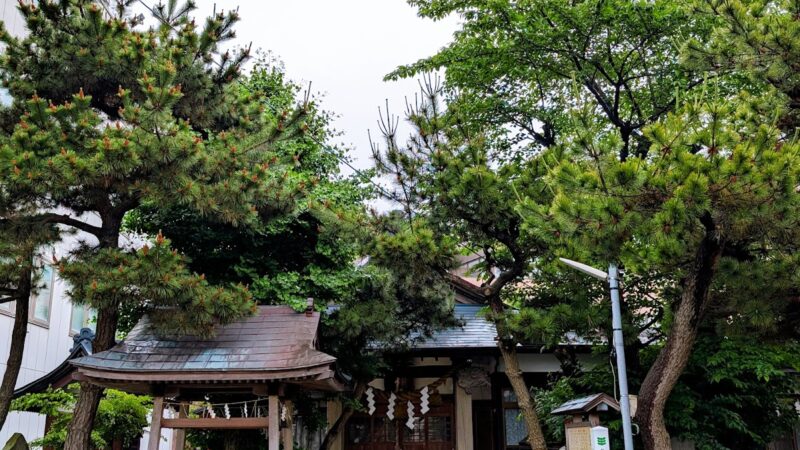
Katsuhira Shrine (Akita Prefecture) Complete Guide | History, Goshuin (Shrine Seals), Access, and Festivals: A Thorough Explanation
Katsuhira Shrine, located in Hodono Teppo-cho, Akita City, is a historic shrine said to have been founded in the early Heian period by Sakanoue no Tamuramaro. Known for its blessings of military success and business prosperity, it is beloved by the local community. This article provides detailed information you should know before visiting Katsuhira Shrine, including its history, enshrined deities, goshuin (shrine seals), annual events, and access methods.
Basic Information about Katsuhira Shrine
Location: 4-28, Hodono Teppomachi, Akita City, Akita Prefecture 010-0913
Phone Number: 018-823-5225
Deities Enshrined: Takemikazuchi-no-kami, Homusubi-no-kami
Shrine Rank: Former Village Shrine
Annual Festival: Mid-May (Jiguchie Lantern Festival)
Katsuhira Shrine is located slightly west of the center of Akita City, in the residential area of Hodono. It’s about a 25-minute walk from Akita Station West Exit, or about a 10-minute drive. Despite being in the city, it’s a quiet and peaceful shrine.
History and Origins of Katsuhira Shrine
Founding History
Katsuhira Shrine is believed to have been founded during the Daido era (806-810). It is said that the shrine originated in the early Heian period when Sakanoue no Tamuramaro, known as the Seii Taishogun (Commander-in-Chief of the Expeditionary Force Against the Barbarians), enshrined Takemikazuchi-no-Kami to protect his camp during his campaign against the Emishi people of the Tohoku region.
Takemikazuchi-no-Kami is also known as the principal deity of Kashima Shrine and has been worshipped by the samurai class since ancient times as a god of war and victory. Tamuramaro’s enshrinement of Takemikazuchi-no-Kami as a war god reflects the reliance on the power of gods and Buddhas in the administration of Tohoku at that time.
Reconstruction by Minamoto no Yoriyoshi
During the Kohei era (1058-1065), the shrine was rebuilt by Minamoto no Yoriyoshi as “Katsuhei Myojin.” Minamoto no Yoriyoshi was a warrior who pacified the Tohoku region during the Zenkunen War (1051-1062), and it is believed that he developed the shrine as a center of worship for the samurai class in this region.
Originally located on Nishisunayama in Katsuhirayama (present-day Katsuhira district) in western Akita City, the shrine’s name originates from the place name “Katsuhira.”
Changes during the Edo Period
During the Edo period, Katsuhira Shrine underwent several relocations. It is believed that the shrine’s location changed due to factors such as the development of the castle town of the Kubota Domain (Akita Domain) and fires.
In particular, during the Great Akita Fire of 1886 (Meiji 19), it was merged with Akiba Shrine. Akiba Shrine, dedicated to Akiba Daigongen, known as the god of fire prevention, was an important object of worship in Akita, which was prone to fires at the time.
Relocation to the Current Location
In 1887 (Meiji 20), Katsuhira Shrine relocated to its current location at 4-28, Hodono Teppo-cho, Akita City. In 1892 (Meiji 25), it was officially renamed “Katsuhira Shrine,” and remains so to this day.
The place name Hodono Teppo-cho originates from the fact that it was the area where the Kubota Domain’s musketeer unit resided, making it a fitting location for the Katsuhei Shrine, which enshrines a god of war.
Deities and Blessings
Takemikazuchi-no-kami
The main deity, Takemikazuchi-no-kami, is one of the strongest gods of war in Japanese mythology. In the Kojiki and Nihon Shoki, he is depicted as the god who, at the command of Amaterasu Omikami, successfully handed over the land of Izumo.
Divine Blessings:
- Long-lasting military fortune
- Improved luck in competitions
- Protection from evil and disaster
- Good fortune and prosperity
This deity is especially recommended for those involved in martial arts and competitive sports, those preparing for entrance exams or job interviews, and those facing crucial moments in life.
Homusubi-no-Kami (Fire-Musubi God)
Homusubi-no-Kami is the god of fire and was added to the enshrined deities of Katsuhei Shrine when it was merged from Akiba Shrine.
Divine Virtues:
- Protection from fire
- Family safety
- Industrial development (industries that use fire, such as blacksmithing and pottery)
This deity is worshipped by those in professions that handle fire and those who pray for the safety of their homes.
Shrine within the Precincts: Zeniza Inari Shrine
Within the grounds of Katsuhei Shrine lies the “Zeniza Inari Shrine.” This Inari shrine is particularly revered as a guardian deity of business prosperity and is deeply worshipped by local business people.
Origin of Zeniza Inari
The name “Zeniza” is said to originate from the place where the Kubota Domain minted coins during the Edo period. Due to its deep connection with currency, it is believed to bring good fortune in finances and business prosperity, and is constantly visited by business owners and shopkeepers.
Divine Blessings of Zeniza Inari:
- Business Prosperity
- Increased Financial Fortune
- Business Success
- Abundant Harvest
Visiting Zeniza Inari Shrine in addition to the main shrine will make your visit more fulfilling.
Information on Katsuhei Shrine’s Goshuin (Shrine Seal)
You can receive a Goshuin at Katsuhei Shrine.
Features of the Goshuin
The Goshuin at Katsuhei Shrine has a simple yet dignified design, with “Katsuhei Shrine” written in ink in the center, “Homage” on the right, and the date of visit on the left. The shrine’s official seal is stamped on the seal.
Goshuin (Shrine Stamp) Reception
Reception Location: Shrine Office
Reception Hours: Approximately 9:00 AM to 4:00 PM (Please call ahead to confirm, as staff may be absent)
Offering Fee: Approximately 300-500 yen
If you do not have a goshuin notebook, you may be able to receive a pre-printed goshuin. However, if the shrine office is unattended, you may not be able to receive a goshuin, so if you definitely want a goshuin, we recommend calling ahead to confirm.
Annual Events and Festivals
Katsuhira Shrine Jiguchi-e Toro Festival
The most important annual event at Katsuhira Shrine is the “Katsuhira Shrine Jiguchi-e Toro Festival,” held every year in mid-May.
Date: Mid-May (usually around the second weekend of May)
Features: Colorful jiguchi-e lanterns decorate the shrine grounds
Jiguchi-e lanterns are lanterns decorated with “jiguchi,” a type of wordplay. This is one of Akita’s traditional folk performing arts, characterized by its humorous combination of pictures and words. During the festival, dozens of lanterns with humorous pictures are displayed on the temple grounds, and at night, they are lit, creating a magical atmosphere.
Each lantern, created by local residents, is ingeniously crafted and a joy to behold. It’s a valuable opportunity to experience Akita’s traditional culture, attracting many worshippers and tourists.
Other Annual Events
- Hatsumode (January 1st-3rd): Bustling with New Year’s worshippers
- Setsubun Festival (Around February 3rd): Events such as bean-throwing
- Shichi-Go-San (Around November 15th): Prayers for the healthy growth of children
- Year-End Grand Purification Ceremony (December 31st): A Shinto ritual to purify the impurities of the year
Highlights of the Shrine Grounds
Approach and Torii Gate
As you walk through the residential area of Hodono, a magnificent torii gate suddenly appears. Passing through the torii gate, a beautifully maintained approach continues, allowing you to feel the tranquil atmosphere of a sacred place despite being in an urban area.
59th National Tree Planting Festival Commemorative Tree Planting
There is a monument on the shrine grounds commemorating the “59th National Tree Planting Festival Commemorative Tree Planting.” This tree was planted in 2008 to commemorate the National Tree Planting Festival held in Akita Prefecture, and symbolizes Akita’s awareness of nature and environmental protection.
Monument at the Site of Akiba Shrine
A monument marking the site of Akiba Shrine, which was merged with other shrines in 1886 (Meiji 19), remains on the shrine grounds. This monument is an important historical site that tells the story of the historical changes of Katsuhei Shrine.
Shrine Building
The current shrine building is based on the one erected after the relocation in 1887 (Meiji 20). Its modest yet dignified appearance reflects how it has been carefully preserved as the guardian shrine of the region.
Access Methods
Access by Train and on Foot
From JR Akita Station:
- Approximately 25 minutes on foot from the west exit of Akita Station
- Head towards Izumigai Asahikawa Station from Akita Station, passing through the Hodono area
From Izumigai Asahikawa Station:
- Approximately 15-20 minutes on foot
If walking from Akita Station, the route goes west through the center of Akita City. Along the way, you’ll pass through shopping streets and residential areas, allowing you to enjoy the Akita cityscape while visiting the shrine.
Access by Bus
If using Akita Chuo Kotsu buses:
- Take a bus bound for “Hodono” from the Akita Station West Exit bus terminal
- Get off at the “Hodono Teppocho” bus stop, approximately 3 minutes on foot
Bus schedules and frequency vary depending on the season and day of the week, so it is recommended to check the Akita Chuo Kotsu website in advance.
Access by Car
From Akita Station:
- Travel time: Approximately 10 minutes
- From the west exit of Akita Station, proceed towards National Route 13 and head towards the Hodono area.
From the Akita Expressway:
- Approximately 15 minutes from Akita Chuo Interchange
- After exiting the interchange, proceed towards the city center via National Route 13.
Parking: There are several parking spaces on the shrine grounds. However, it may get crowded during festivals, so please consider using public transportation.
Landmarks in the Surrounding Area
Katsuhira Shrine is located in the residential area of Hodono Teppo-cho. Nearby are areas such as Hodono Elementary School and Hodono Hachicho. Locals are often happy to provide directions if you ask them.
Manners and Etiquette for Visiting a Shrine
Basic Etiquette for Visiting a Shrine
- Bow before passing through the torii gate: As a greeting before entering the sacred area.
- Purify yourself at the water basin: Purify your left hand, right hand, and mouth in that order.
- Walk along the edge of the path: The center is considered the path of the gods.
- Etiquette in front of the main hall: Two bows, two claps, one bow (two bows, two claps, one bow)
About Offerings
Offerings express gratitude to the gods. There are no set amounts, but 5-yen coins (go-en, meaning good fortune) and 50-yen coins (goju-no-en, meaning fivefold good fortune) are considered auspicious.
Regarding Photography
Photography is generally permitted on the shrine grounds, but please note the following:
- Please refrain from taking photos inside the main hall.
- Please be considerate of other worshippers.
- Photography may be prohibited in certain areas during festivals.
Tourist Attractions Around Katsuhira Shrine
Senshu Park
Senshu Park, located about 10 minutes by car or 25 minutes on foot from Katsuhira Shrine, is a park developed on the site of Kubota Castle. Known as a famous cherry blossom viewing spot, it is bustling with many visitors in spring.
Akita City Folk Performing Arts Museum (Neburi-nagashi Hall)
This facility offers exhibits and experiences related to Akita’s traditional event, the Kanto Festival. It is located about 15 minutes by car from Katsuhira Shrine.
Akita Prefectural Museum of Art
A museum primarily exhibiting works by Tsuguharu Fujita. Located near Akita Station, it is convenient to visit in conjunction with Katsuhira Shrine.
A Stroll Through the Hodono District
The Hodono district, where Katsuhira Shrine is located, is a historic area that was once lined with samurai residences and merchant houses. Even today, old buildings and alleys remain, allowing you to enjoy a stroll while feeling the history of Akita.
Recommended Time to Visit Katsuhira Shrine
Spring (April-May)
The Jiguchie Lantern Festival in May is the best time to visit Katsuhira Shrine. Colorful lanterns adorn the shrine grounds, allowing you to experience Akita’s traditional culture. The season of fresh greenery and pleasant weather also makes it ideal for visiting.
New Year’s Visit (January)
The New Year’s visit is an important event to pray for safety and prosperity throughout the year. Katsuhira Shrine is relatively less crowded, making it a recommended hidden gem for a peaceful visit.
Autumn (October-November)
During the autumn foliage season, the trees on the shrine grounds change color, offering a beautiful landscape to enjoy. It’s also the time of year for Shichi-Go-San (a traditional Japanese rite of passage for children), so you can see children dressed in their finest attire.
Summary of the Charms of Katsuhira Shrine
Katsuhira Shrine, located in the heart of Akita City, is a venerable shrine with a history of over 1200 years. It has deep connections to historical figures such as Sakanoue no Tamuramaro and Minamoto no Yoriyoshi, and has been worshipped as a god of military fortune and longevity.
The subsidiary shrine, Senza Inari Shrine, is known for its blessings of business prosperity and enjoys strong devotion from local business people. Furthermore, the Jiguchie Toro Festival, held every May, is a valuable opportunity to experience Akita’s traditional culture.
It’s easily accessible within walking distance of Akita Station, making it perfect for a stop during sightseeing. When you visit Akita, be sure to visit Katsuhira Shrine. The time spent praying in the quiet grounds, steeped in history and tradition, will be a memorable part of your trip.
Visitor Feedback
Visitors to Katsuhei Shrine have shared the following comments:
- “I was surprised to see the torii gate suddenly appear in the middle of a residential area. The shrine grounds were beautifully maintained, and I had a pleasant visit.”
- “I visited during the Jiguchie Lantern Festival, and the lanterns with their humorous designs were wonderful.”
- “Since visiting Zeniza Inari, I feel like my business has been going well.”
- “I received a goshuin (shrine stamp), and the staff were very polite and helpful.”
Contact Information
For inquiries about Katsuhei Shrine, please contact the following:
Katsuhei Shrine
Address: 4-28, Hodono Teppo-cho, Akita City, Akita Prefecture 010-0913
Phone: 018-823-5225
If you would like to confirm details such as the availability of goshuin or festival information in advance, please contact us by phone. The shrine office may be unattended, so please try calling again at a different time, or if visiting in person, please allow ample time.
—
Katsuhira Shrine is a valuable shrine that preserves the history and culture of Akita. Please visit and pray for blessings of military success and business prosperity.